Wednesday, July 8 2026
Painting the Beauty and Sorrow of Loss – beginning the Close to Home Series
This series will require courage and bravery to honestly and frankly find my balance between beauty and sorrow within loss. I have other painters before me who have faced such challenges through their own brushes, such as “Camille on Her Deathbed” by Monet from 1879 where he stood painting beside his wife Camille, who was dying.
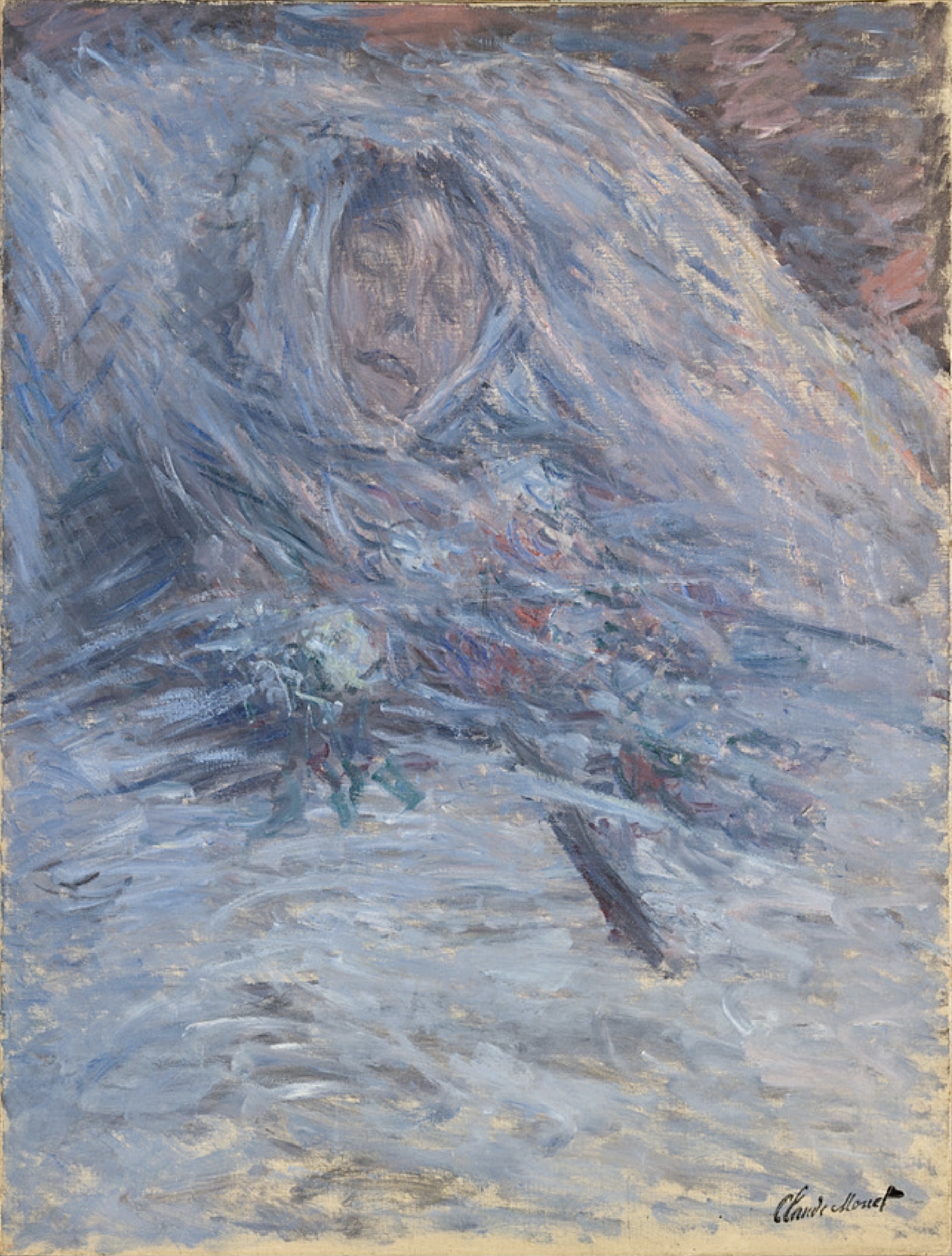
Then there was time Monet was painting the lily pads following the death of his son while the echo from the guns of battle were audible in the distance. There is also Edvard Munch and “Death in the Sickroom” from 1893 when he recorded the death of his sister to tuberculosis.
Though these are more final moments rather than the proceeding journey of knowing and watching and bracing oneself that comes from caregiving someone in the later stages of dementia.
What does the reparative turn (Forrester, 2020) in my painting practice mean under these circumstances? I am surmising it flexes on my desire, for now, to stay grounded and rooted on this earthly plain of existence. I will unpack this further as I continue to work over the months ahead. This is where my first painting in this series begins with painting the portrait of an arbutus tree along the shores of (what is now called) Mayne Island next to the Salish Sea – from the ground up.
The morning began with painting acrylic lemon yellow grounds on a larger 31.5 x 27.5 canvas and three smaller 8 x 10 inch linen boards that will be used for studies and plein air painting.
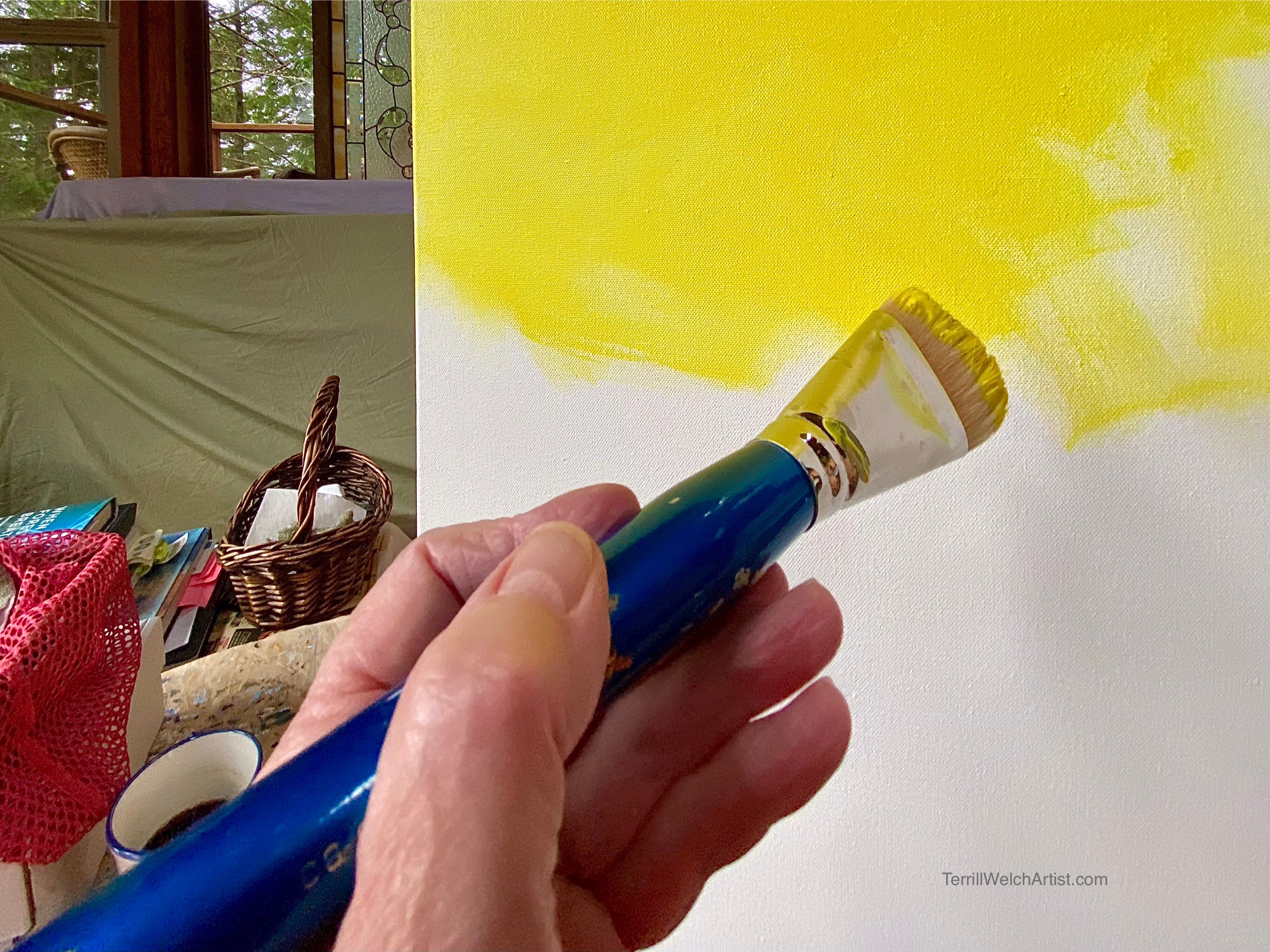
There is something palatably thrilling in the tension that coils up inside the core of my being when I am about to launch into a new body of work.
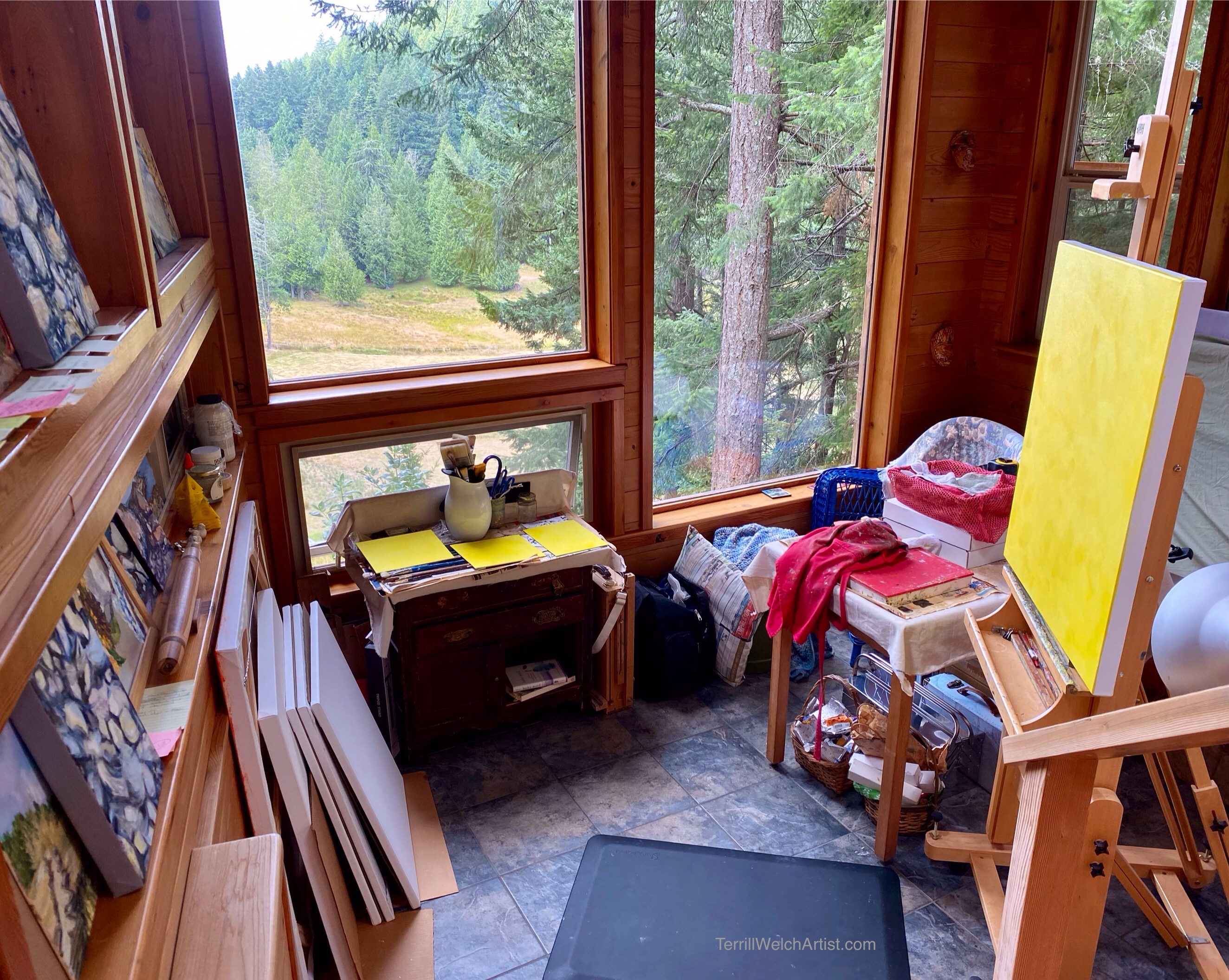
The only question remaining is – do I start the new work or paint the edges of recently finished pieces first?
Reference List:
Forrester, S. (2020). Painting from the Other Side: Tracing the Reparative Turn in Contemporary Practice. Art/Research International: A Transdisciplinary Journal, 5(1), pp.116–147. doi:https://doi.org/10.18432/ari29486

