Seeing and Creating

“Bee in salal blossom” View and purchase full resolution image here.

Yesterday, I discovered a bookmark in my memory that gave rise to a set of questions, when I came across some notes from May 16, 2007 about building the visual field that I had made in an art class taught by Glenn Howarth. The following questions arise from my musings about these notes and the use digital and photoshop tools to create images.

What is this passion we have for cleansing images of anything less than perfect?


Can it possibly damage our ability to trust our viewer to see?

Let me explain, as best I can, without taking us too far down “the science of seeing” rabbit hole. When we “see,” the brain needs to imagine most of our reality through a system of expectation. This is because the human eye has only a 15 degree visual arc of acuity or sharp high-resolution colour visual field. We commonly believe that we “see” everything as if it were in this a 15 degree visual arc called fovea vision. This is not true. Our human eye must build a visual field using rapid eye movements and short-term memory so the brain can “create” the image we “see.” Most of the rest of our visual field has about 50 percent acuity and 50 percent colour perception with the far reaches of our peripheral vision seeing only movement in black and white.

Photographs like the bumble bee in a sala blossom image above hold more information in acuity than our eye actually can see at one time without using rapid eye movement to create the image for us. You may be able to notice how you look at this image and be able to catch the eye movement between the bee and the blossom both of which are in sharp focus and then notice how you can “see” the whole picture that is in focus.

Rapid eye movement happens very quickly, at about 3 times a second, and is something we are not consciously aware of, so if you don’t notice there is a reasonable explanation.

If you want to know more, I found this youtube video “Human Senses Touch and Visionhttp://www.youtube.com/watch?v=S2sWE0qaOjg&feature=related About 3 minutes in they explain and show how our eyes and brain build a visual field.

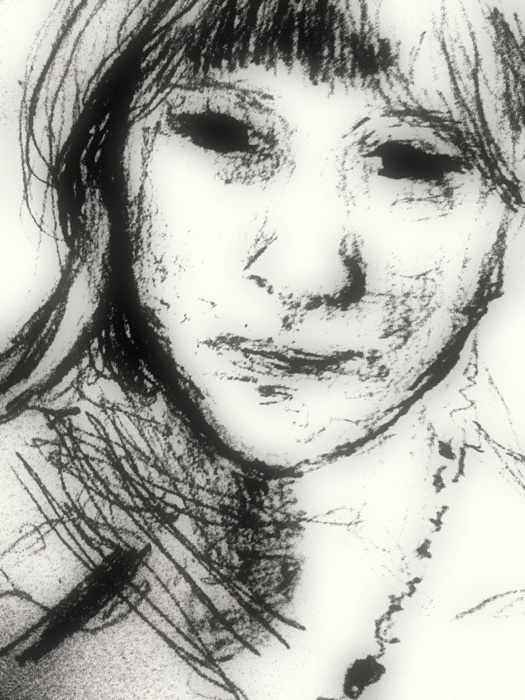
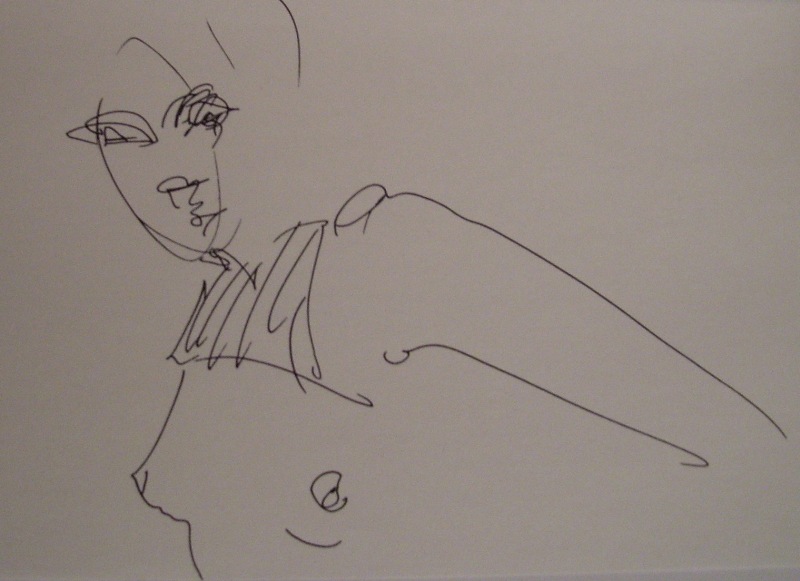
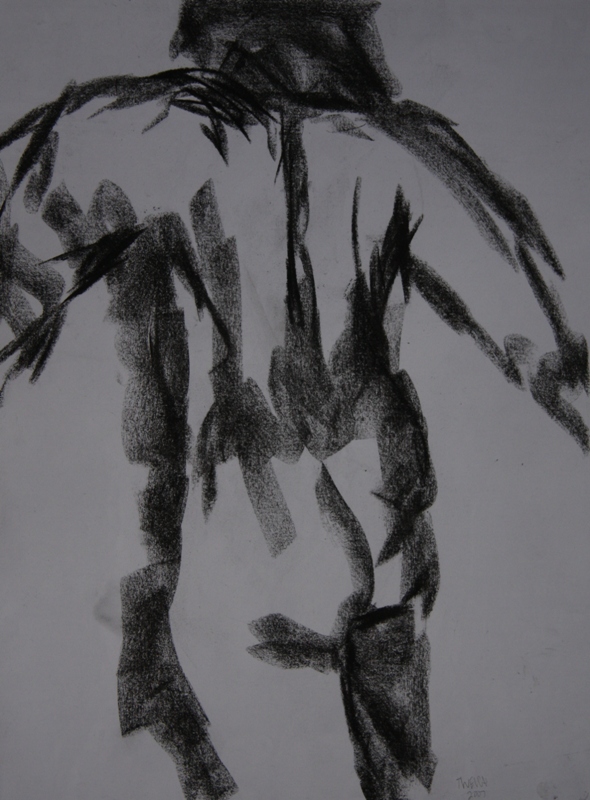
Because our brain must  “create” a sharp, coloured field of vision, it has a selection process for seeing. We fill in blanks and leave out information that history tells our brain is not relevant both consciously AND subconsciously. I am fascinated with the impact this has on our creativity whether it is visual, written or auditory. Here is a series of my quick charcoal sketches from 2007.

wooden forms for making shoes

I did these sketches while purposefully “seeing” using my sight beyond the 15 degree visual arc of acuity by paying attention to what is in my peripheral visual field allowing the hand to record the image with as little as possible interference from my fovea vision.

male nude sitting

This lesson stuck and I continue to create my work while exploring this way of “seeing” or consciously experiencing the world.

reading

It is not too much of a stretch then, to consider that when we create an image that has high-resolution colour and sharp focus over a larger area we are doing the work of the viewer’s brain “to see” or create that image. If we go the next step and take out “irrelevant information” we are also choosing for the viewer’s brain what is important to see. Your created work has become a powerful editing filter for the viewer. To some extent this is what happens anytime we create. The question I pose is more about how much of a filter is too much filtering and can it actually interfering with the viewer’s ability “to see” what we want to express? And can we hold the viewer’s attention when we do the work of the viewer’s brain to build most their visual field when experiencing our work?

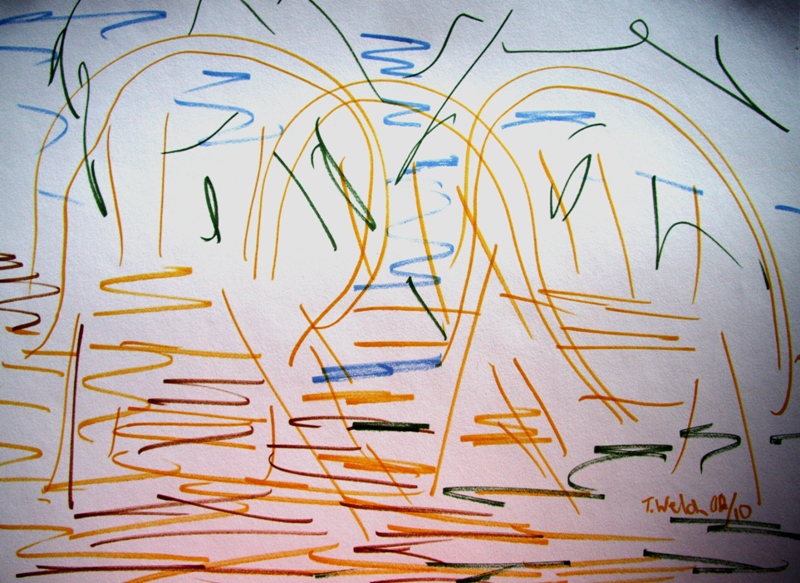
Could it be that the gaps in our expression are of as much interest to the viewer as the sharp clarity? Like say this image….
finding the figure quickly

Sprout Question: How does your way of “seeing” impact your creativity?

On Thursday, I am going to explore further how our human visual system must learn to create spatial relationship between objects through touch and memory and what ways this learning may relate to our creativity.

© 2010 Terrill Welch, All rights reserved.

Liberal usage granted with written permission. See “About” for details.

Purchase photography at http://www.redbubble.com/people/terrillwelch

Creative Potager – where imagination rules. Be inspired.

From Mayne Island, British Columbia, Canada

Summer is coming

Creative Potager’s summer blog schedule begins the first week of May

budding possibilities - wild rose

The first post for Creative Potager was December 27, 2009. I have been posting a blog Monday to Friday, except for power outages caused by windstorms battering our little island in the Pacific Northwest. Including today, there are 83 posts each with their own sprout question. There are 1,165 comments documenting our creative conversations and 8, 596 times you have come to visit. Creative Potager has become an enjoyable habit to wake up to during the week where I say to myself “what shall I post today?” However summer is coming. I yearn to be outside in the garden, tramping the trails and painting on site rather than inside snuggled up to my laptop. Like the summer wild flowers in this post, I bloom best in untamed places.

each day is precious - wild tiger lily

So after giving it some serious thought, I am changing my posting schedule to twice a week on Tuesdays and Thursdays from the beginning of May until the beginning of September. I may on occasion post an additional submission. But these will be bonus or value-added posts rather than an expectation.

petite lady slipper

I am hoping you can live with this change and that we both will benefit from my scrambling around in the valleys and on the hills and down the beaches of Mayne Island and afar. I am hoping that we can still have rich and engaging conversations between posts even during the long days of summer. I am hoping that the sprout questions will be juicy enough to keep us inspired for the in-between times. I am hoping that you will trust that winter will come with its short days and unpredictable weather and we shall again be glad for our Monday to Friday sprout conversations fueled by the fruits of summer experiences.

drops of rain on white fawn lilies

Please let me know what YOU are hoping and what you think of this change – because most of the fun of this blog is my conversations with you!

Sprout Question: Does your creativity have a summer schedule?

© 2010 Terrill Welch, All rights reserved.

Liberal usage granted with written permission. See “About” for details.

Purchase photography at http://www.redbubble.com/people/terrillwelch

Creative Potager – where imagination rules. Be inspired.

From Mayne Island, British Columbia, Canada

Creative Community

As I mentioned on Monday, I have been reading about Camille Pissarro and admiring his work and that of other impressionist painters that were part of his community. There was Monet, Manet, Renoir, and Cezanne to name a few. The influence of these fellow artists in Pissarro’s work is sometimes mentioned when author Linda Doeser discusses a particular painting.

Ah, to have been part of these passionate (and at the time unacceptable notions) about rendering the quality of light by exploring the spontaneity and immediacy of lively colour and rapid brush strokes with no hint of drama or sentimentality.

“spring salad” photograph rendered coarsely in oils – view full resolution and purchase here.

Then I thought about Creative Potager and those of you who regularly through your comments and my connections to your own sites are part of my creative community. To name just a few…

The use of line and creating greater connection between drawing and painting. Jerry Shawback http://www.thewhole9.com/jerryshawback

Always giving our best and writing from a place of showing rather than telling. Laurie Buchanan. http://holessence.wordpress.com

Bringing the flow of her everyday into focus for the rest of us. Kathy Drue http://upwoods.wordpress.com

Sharing the exquisite world of film as a creative medium of expression. Sam Juliano http://wondersinthedark.wordpress.com

Discusses the practicalities of promoting and selling art work. Itaya http://itaya.blogspot.com

Shares her studio process and her success while celebrating and acknowledging yours. Martha Marshall http://artistsjournal.wordpress.com

Sprout Question: With whom are you presently discussing your creative ideas?

© 2010 Terrill Welch, All rights reserved.

Liberal usage granted with written permission. See “About” for details.

Purchase photography at http://www.redbubble.com/people/terrillwelch

Creative Potager – where imagination rules. Be inspired.

From Mayne Island, British Columbia, Canada

The Essence of Things

“You should paint the essence of things” Pissarro instructs a younger artist.

“Where we are separate” quick water-colour painting sketch by Terrill Welch

Last evening I was having a love affair with the work of  Camille Pissarro (1830-1903). I have often had comments on my work about its impressionist style. However, having not formally studied art, or the history of art, my self-taught-ways left me replying “I don’t know much about the principles of impressionism. I just like to capture the light and the essence of my subject. The energy in a work should be alive and vibrant even if it means sacrificing correctness.”  Last night when I read The Life and Works of C. Pissarro by Linda Doeser (1994) I understood why people smiled knowingly at my comment and said no more.

“sitting” quick water-colour painting sketch by Terrill Welch

Exactness is not the same as expressing the exact emotion in your work.

Sprout Question: Is there a particular method you use to capture the essence of things?

Note: Due to Easter Creative Potager will post Monday to Thursday this week and Tuesday to Friday next week.

© 2010 Terrill Welch, All rights reserved.

Liberal usage granted with written permission. See “About” for details.

Purchase photography at http://www.redbubble.com/people/terrillwelch

Creative Potager – where imagination rules. Be inspired.

From Mayne Island, British Columbia, Canada

Distortion

Exactness is not the same as expressing the exact emotion in our work.

Our discussion in yesterday’s post “Shadow Memories” entered into my dreams, leaving various images and reflections scatter around at dawn where small birds and coffee tell me it is now morning. Shadow memories are distorted reflections, yet their fleeting brilliance, can engage our emotional responses more deeply than the original image or experience.

From my training and experience as a counselor, I know that some memories are stored in our brains differently. These memories can be trauma memories or any experience that is overwhelming. We store these experiences without “feeling” first. When the time is right, we can “reflect” on those memories and experience the emotions connected with that moment for the FIRST time.

Why am I telling you this? What does this have to do with writing, painting, photography or other forms of creativity? I believe it may have everything to do with creativity. Creative work that moves us, positive or negative, must elicit an emotional response. Countless examples tell us that it is not the perfection or accuracy with which the creator has captured the original experience but rather, the accuracy with which an emotion is captured that makes, impactful work. The entrance to that emotional connection is likely a distorted emphasis or reflection of a subject.

Take for instance the sketches above. When sketching, I have little ability to edit. I sketch quickly. My marks are made in rapid succession on the paper. I “feel” rather than show you exactly what I am seeing. The feelings are not just the ones present at the moment but also the ones that flicker in the shadows connecting through all time and space that I define as my experience. The sketches are far from being an exact replication of the nude male model I was drawing. Yet, in the distorted strokes of the charcoal on paper there is little doubt that they reflect a nude masculine form. Shadow memories flicker through or prance in the forefront of our creativity providing passages into deep emotions for ourselves and then for others.

Today I shall write as I sketch. I shall not edit. I shall write and allow the distorted brilliance of shadow memories to catch my imagination with vivacious autonomy.

Sprout Question: How do you access the exact emotion expressed in a piece of work?

© 2010 Terrill Welch, All rights reserved.

Liberal usage granted with written permission. See “About” for details.

Purchase photography at http://www.redbubble.com/people/terrillwelch

Creative Potager – where imagination rules. Be inspired.

From Mayne Island, British Columbia, Canada

Talking Bread Loaves PART 2

“Talking Bread Loaves” PART 2 and artist Stacy Ericson

Sketch of Terrill Welch by Stacy Ericson

One of my first interactions with Stacy Ericson was when she asked “tweet friends” to volunteer for her to sketch. Of course, I put my “tweet” up right away. Above is the delightful result.  Below part two of “Talking Bread Loaves” you will find more about Stacy and her creative talents as an artist, poet, and photographer.

Now Continuing with part two of “Talking Bread Loaves” If you missed the first part you can read it here.

Next, a little flour goes into the yeast mixture. My mother’s arms flexed with the strain of stirring the long wooden spoon around and around the bowl. Her other arm holds the bowl at an angle to make the stirring easier. She stops occasionally to add more flour and as she does, she looks at me with one eye, making sure I don’t have my hands in the open flour container. Or worse, I’ve made finger roads through the crater of flour that she has ready on the table.

When she feels that the dough is thick enough to pour she lifts the large bowl up with one arm and tips it into the floor crater. Using the other arm, she maneuvers the wooden spoon, scrapping the leftover dough out as quickly as she can. Timing is critical. She needs to put down the bowl and be able to fold the flour into the warm dough before it runs over the edge of the flour barrier.

This was my chance. I sink my hands into the soft flour and as I do this I shout “Oh look mom! It is coming over the edge!” and then I place my little palms along the area where the dough is about to overflow. Mom’s strong hands slide in between mine and the flour and the dough. With a graceful swoop she begins kneading the flour in. When just “the right amount of flour” has been added, she “lets it rest” while washing out the bowl. I am given the gigantic bowl “to grease” while she kneads the dough. Then she placed the smooth, elastic ball of dough back into the greased bowl and sets it aside in a warm place “away from drafts” to rise until it has doubled in size.

Read the Conclusion PART 3 here

Sprout Question: When do you experience a feeling of awe?

Bonus: Stacy Ericson is unpretentious and engaging. She quietly, in cumulative small engagements, warms your heart. There is a vivacious vibrancy to Stacy that rings through into her art, photography and her writing. Her perception is somewhat like that of an arrow’s quiver. We are caught in the blur yet we know she has captured the intended target – beautifully. Following are a few of Stacy’s images and reflections.

Stair Shadow by Stacy Ericson

“The dead and the discarded, dry wisps, and fallow fields, industrial textures, and rural detritus are transformed by a distillation into line and light.”

Elise chicken looking by Stacy Ericson

“Images make me happy. Getting what I want out of a photo, or getting close to it, to me is simply joyful.”

Confusion of the Watchmaker by Stacy Ericson

“I want to experiment with many forms, but I do have a passion for blur — often even photographs that seem to be in focus capture light differently when the camera itself is in movement.”

Sun by Stacy Ericson

“I have a feeling that the static object holds a life-force within that is revealed with the introduction of a random element of moving time. I prefer a slight point of focus to a completely abstract blend of colors in my blurs photos.”

Who is Stacy Ericson?

Stacy Ericson’s arrived late to the visual arts. After growing up in a household devoted to the theater, her educational background includes the study of ancient languages, Etruscan culture, and World Religion. The onset of a genetic disease began a slide into the visual arts, which began to gel while experimenting with the photographic technique of intentional blur, captured through camera movement. Recently Stacy began a small portrait business, and is currently working with both digital SLR and the iPhone camera.

After the Haitian crisis Stacy began The Images without Borders project with Laura Bergerol. This innovative non-profit makes art prints from world class photographers available at a low cost to the public with all the proceeds benefiting Doctor’s without Borders.

© 2010 Terrill Welch, All rights reserved.

Liberal usage granted with written permission. See “About” for details.

Purchase photography at http://www.redbubble.com/people/terrillwelch

Creative Potager – where imagination rules. Be inspired.

From Mayne Island, British Columbia, Canada

Talking Bread Loaves

“Talking Bread Loaves” PART 1 and artist Jerry Shawback

Self Portrait (18″X24″) by Jerry Shawback

For many of you that regularly read Creative Potager and its “sprouts,” artist Jerry Shawback’s contributions are a familiar sight. There is no direct connection between “Talking Bread Loaves” and Jerry Shawback. I am simply impressed with his work, his community building and his support of artists. Later in today’s post, Jerry is featured along with a few more images of his work.

“Talking Bread Loaves” will be told in three parts over the next three days. I am considering it for inclusion in my new book Mona’s Work.

Mona’s influence is multi-generational. My mother, Mona’s daughter, learned the art of amusing children, while she was cooking, from her mother. This is how I end up knowing about talking loaves of bread. At the age of five my family and I lived eighty miles from the nearest store. We went to town for supplies once a month. Good homemade bread was a staple. It was also my favourite food, particularly still warm from the oven, cut thick and slathered in butter with wild raspberry jam dripping off the edges and running down between my fingers.

Each week my mother would use her “magic “to make eight fresh loaves of bread. The reason mom needed magic was mostly to keep me amused, not because it was necessarily part of making bread…

Wrestling my way out from under a mountain of covers, I make my way to the kitchen. I know bread is going to be made by the bowls and pans already on the counter. Mom has the yeast set aside to soften in a very large, heavy bowl. The melted lard and yeast are floating on the warm sugar water. Standing on a stool, I stick my nose right over the bowl. I can smell the beginnings of bread. Mom makes a crater shape out of the flour on the table.

I put my fingers in the flour but mom scolds “Ahk! You will make the dough run out and spoil the magic.”

I knew that to spoil the magic meant the loaves of bread wouldn’t be able to tell her when they were done. So I take heed, carefully twisting my fingers together to keep them out of the flour crater.

Continued in PART 2 …

Sprout Question: How do you use your creativity to arouse the imagination of others?

Bonus: I connected with Jerry Shawback through his twitter account and was blown away by his generous “retweeting” of links tweeted by artists he is following (his support of Creative Potager tweets has been incredible). Sometimes I spend an hour or more just viewing the links he has sent along. However, one of my challenges has been getting to see Jerry’s work because his tweets about his own work are minimal. This is one of the reasons I asked Jerry if I could feature him on today’s post. I want us to pause and take note of Jerry Shawback’s art as we recognize his support of other artists.

sketch by Jerry Shawback

sketch by Jerry Shawback

More of these exquisite daily line drawings can be viewed in Jerry’s flickr portfolio. I suggest watching them as a slideshow.

Self Portrait (11″X18″) by Jerry Shawback

On March 13, 2010 Jerry’s portraits will be shown as part of the Gallery 9 “FACES” exhibit. Gallery 9 is affiliated with thewhole9.com, an international community for creative people where Jerry is a recognize community builder and active participant on the site.

p.s. Who is Jerry Shawback?

“Self portraits have the inherent ability to expose the depth and breath of human nature.” – Jerry Shawback

The artist’s self portrait series explores identity through multiple approaches to the same subject matter. Stylistically varied, they reveal the strange and vulnerability essence of the human condition.

His affinity for people, observation of life and strong draughtmanship is apparent in his depiction of the human form and informs Jerry’s painting. Other influences include: Rico Lebrun, Egon Schiele, Francis Bacon, Lucien Freud and his mentor Cornelius Cole III.

After studying communication design in Los Angels at the Otis Art Institute of Parsons School of design, a division of the New School for Social Research, Jerry worked as a freelance designer, commercial artist, and animator for the entertainment industry.

In 2007, after a ten year hiatus from the art world, Jerry returned to painting as a primary focus. He is currently working on a series of self portraits encompassing various artistic motifs, while maintaining an underlining vision, cohesion and emotional honesty. Jerry also produces works on paper documenting the lives and experiences around him, and his continuing study of the human form. His work has been featured in shows throughout Southern California as well as in private collections.

© 2010 Terrill Welch, All rights reserved.

Liberal usage granted with written permission. See “About” for details.

Purchase photography at http://www.redbubble.com/people/terrillwelch

Creative Potager – where imagination rules. Be inspired.

From Mayne Island, British Columbia, Canada

Wabi

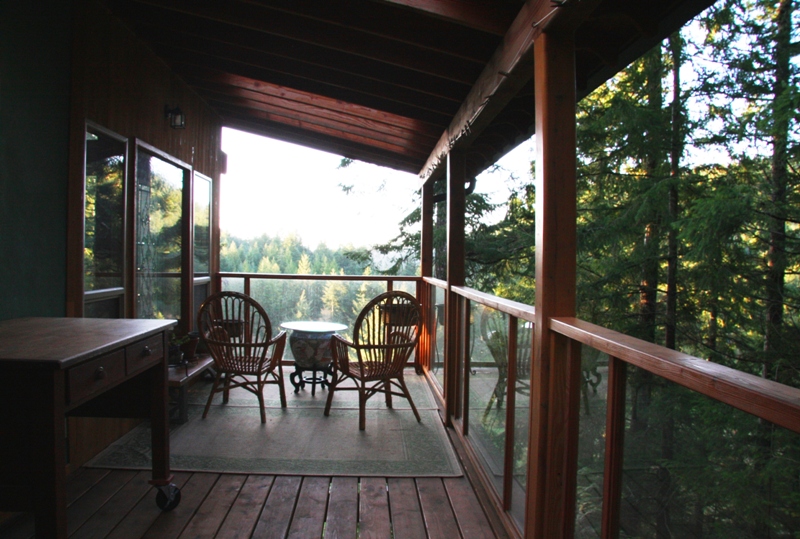
Today’s winter wabi room quick sketch 8″x11″ artist pen .

Wabi-sabi is a difficult concept (particularly for westerners) which can have reverberating impact on our creativity. We have been dancing gently around wabi-sabi in recent Creative Potager posts.  In particular, Laurie Buchannan has repeatedly articulated and demonstrated a link between minimalism and her creative clarity. In North America, such a practice is counter to material capitalism, advertising and socialization. Yet, when we experience wabi-sabi – when we live in humble, harmony with natural decay and the beauty of imperfection – we know an inner peace that the latest gadgets can never provide – because it would be contrary to their purpose. I believe wabi-sabi is a creative necessity and fuels for originality and creative resilience.

What is wabi-sabi?  I will break it down into several posts over the next few days. Though there is much to read on the subject, since we are focus on the theme of “home” for the month of February, my primary source is The Wabi-Sabi house: the Japanese Art of Imperfect Beauty (2004) by Robyn Griggs Lawrence.

Wabi began as a literary concept in fifth and sixth century Japan poetry to reflect melancholy. Wabi has come to mean simple, minimalist, humble and in tune with nature. It is often said that if you are a wabi person you are content with very little. However, it is more than being content… it is the enjoyment of very little with an appreciation and the awareness about how “less is more” in a way that bubbles from the inside over the sparse surfaces of our outside. Wabi is a preference for very little in recognition of its unequaled abundance in the face of all else.

One winter wabi room at dawn this morning…

Tomorrow, we will look at “sabi” and its connection with wabi.

Sprout Question: Does wabi have any part in your creativity?

© 2010 Terrill Welch, All rights reserved.

Liberal usage granted with written permission. See “About” for details.

Purchase photography at http://www.redbubble.com/people/terrillwelch

Creative Potager – where imagination rules. Be inspired.

Everyday objects

Our creative journeys are journeys shared with other creative human-beings. Even if we tend to be reclusive, their presence is with us in our homes, in our everyday objects. A sensual blue image combined with a thought-provoking article Epreuve 05 :: Epreuve d’Artiste :: Altered States by Ian Talbot of London UK, inspired my still life sketch this morning of an everyday object. Thank you Ian.

8″x11″ graphite quick sketch

As I was standing at the counter doing my “awakener” sketch of our medium-sized Bialetti stovetop (Yes it has the little man on it but it is on the other side – I’m left handed. Handles are always on the opposite side of what one usually expects.) I started thinking more about Ian’s article and how I often overlook the creativity and artistic qualities of my favoured everyday objects. Yet, aesthetics and wabi-sabi charm generally influences my choice in the first instance when acquiring the object. Why is it that the creative care embodied in the stovetop coffee maker doesn’t leap out at me before my fingers can grip its black handle? I adore my coffee ritual with a zest that not much else can compete – particularly at 6:00 am. I can see its every detail with my eyes half closed. Well, that is mostly how I see it so that isn’t much of a revelation. However, I think you get the idea….

Though living is often a messy process, simplicity and functionality attract my sense of a world-as-should-be. This simplicity can be in everyday object or in everyday nature as in the image below.

View and purchase full resolution image of “amazement” here.

Sprout Question: When was the last time you recognized the creativity in everyday objects?

p.s. I was interviewed this past week by Stephan Weidner COO of Noomii for coaching blog article “Dealing with your Spouse’s Stroke: Terrill Welch’s Coaching Journey” The interview provides a concise account of how Creative Potager came to be.

© 2010 Terrill Welch, All rights reserved.

Liberal usage granted with written permission. See “About” for details.

Purchase photography at http://www.redbubble.com/people/terrillwelch

Creative Potager – where imagination rules. Be inspired.

Possible

Creative possibility comes from getting it wrong.

Studio mess – my home – time to de-clutter. 8’X11″ charcoal quick sketch.

“Oh, I could never draw or paint like that.”

“I’m not a writer like you.

“My photographs don’t compare to yours.”

If I had a dime for each time I heard these comments or others like them, all of my creative work could be used for charity fundraising because I would be independently wealthy. The sad thing is these statements are not true. They are lies we come to believe because we compare our attempts with finished products rather than the process that lead to their creation.

Here is a best kept secret: creative excellence comes from getting things wrong. Yes, wrong. As I commented on Coffee Messiah’s blog this morning, one of my drawing teachers, Glenn Howarth, was fond of saying things like: “It is the shoulder or wrist you struggle to draw that teaches you the anatomy of an arm.”

This is why I have committed to showing you my first morning “awakener” sketch. These first sketches are to engage me in the creative process. My sleepy eyes begin to frame, compose and dig at the relationship between elements I am about to sketch. My stiff arm and hand begin to respond to these relationships. In these first sketches, few mental barriers about “getting it right” have been erected. My judgment is left aside – these are not “keepers” they are “awakeners.”

In a three-hour drawing class, I often do 30 quick sketches that progressively increase in length until it is time to settle into the last hour-long sketch. When I am doing a photo shoot, I may take 150 images with maybe three becoming “keepers.”

Hours and days of exploring “that which is not yet quite right” leads to the creative possibility for success. This is where we discover our unique creative expression. This is where we learn our craft. We learn what is possible by getting it wrong.

My first quick sketch of the day is to inspire you to say to yourself – “hey, I can do that!” And you can.

Here is the last of my chosen three out of 150 shots of mist…

View and purchase full resolution image here.

Sprout Question: What do you do to strengthen your creative possibility?

p.s. Glenn Howarth was the most outstanding art instructor I have had the pleasure of working under. I am forever grateful for the few short years I was in his figure drawing classes. Glenn Howarth died last year at the age of 62. Very little of his thinking and work is on-line but here is an article he wrote that was published in  Canadian Art and Art Resource Directory: “Pictophile – Plein Air Painting”


© 2010 Terrill Welch, All rights reserved.

Liberal usage granted with written permission. See “About” for details.

Purchase photography at http://www.redbubble.com/people/terrillwelch

Creative Potager – where imagination rules. Be inspired.