East

Quietly I close the door behind me and step out onto the sandstone walk. Dawn requests softness as my body, stiff from sleep, stretches into the morning.

East is the direction of the door I’ve just closed. East is the direction my head faces when I sleep. East is the first direction I seek when I rise. Where am I? I look east. East is the direction my studio window faces. When I work, I mostly keep east in front of me or to my left shoulder. I write, take photographs and paint mostly during the first few hours of a day. I edit in the afternoon and late evening. Sunsets, the gloaming and dinner are for enjoying and chats – not working.

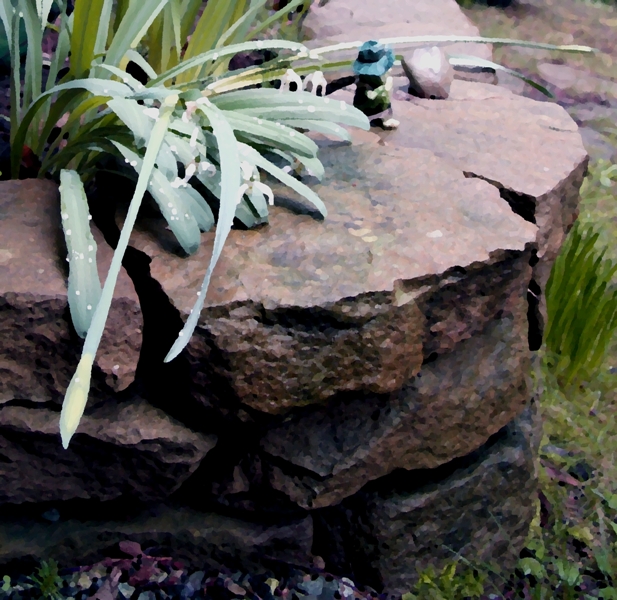
I admire the sparse early garden as I head out for a walk.

View and purchase full resolution image (photograph rendered in oils) here.

If we are able to follow the natural rhythms of our body, they are often different from each other. Not everyone has the same orientation to the various times of day.

Sprout Question: Following your natural body rhythms, what part of the day is yours?

© 2010 Terrill Welch, All rights reserved.

Liberal usage granted with written permission. See “About” for details.

Purchase photography at http://www.redbubble.com/people/terrillwelch

Creative Potager – where imagination rules. Be inspired.

From Mayne Island, British Columbia, Canada

DWELLING

With David L. Colussi’s permission, I share his poem “DWELLING” with you today as part of my creative focus in February on the theme of “home.” I will be placing this poem in a new page I’m developing for the Creative Potager blog about la casa de inspiracion – our home.

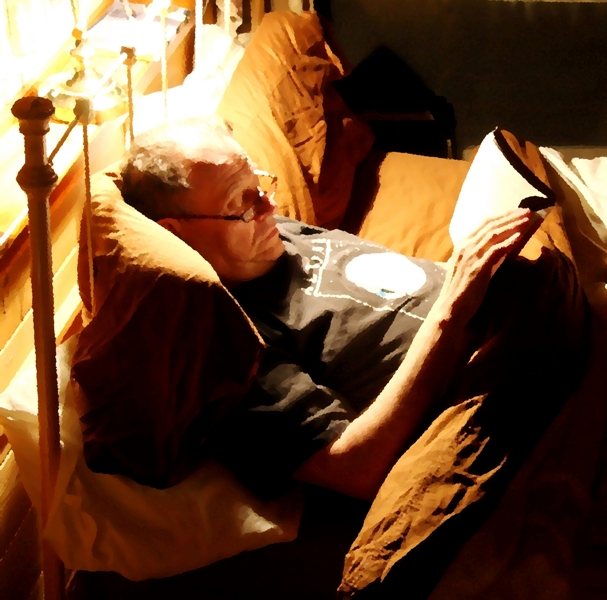
This first image of David is a personal favourite of mine rendered as an oil painting. David is reading with his drug-store glasses which he likes better than his prescription lens. They are usually slightly askew as he softly turns the pages.
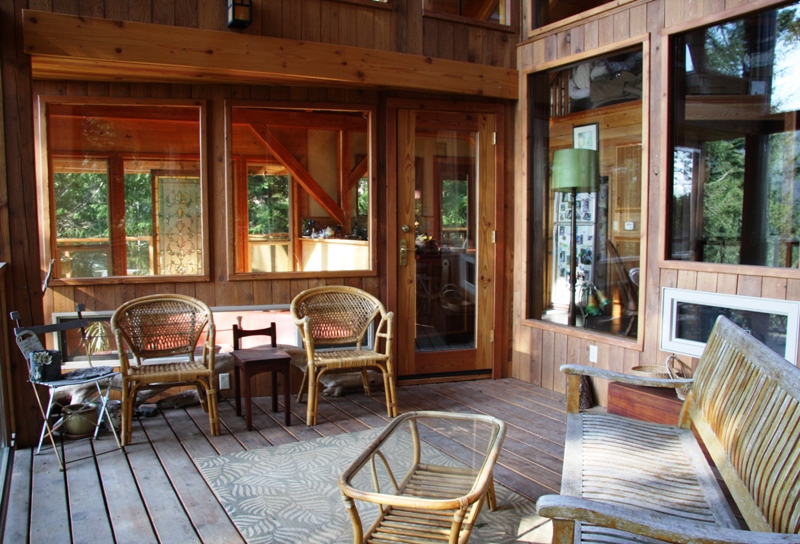
This next image best introduces the poem which reflects on the reflections of la casa de inspiracion and the meaning of “to dwell.”

DWELLING

[1 DWELLING = ERROR]

Watching sunlight and darkness from this house of glass

suspended on the ridges of a valley,

the human history of dwelling plays across the scene in drama or in documentary.

Darkness dwells the way that we once did in wandering across the land.

Its home is east of the sun, where it moves ahead in gypsy fashion,

and west of the sun, where it follows as a hunter.

The hunter waits for the sunlight to hit the tops of western valley cliffs at progressively acute angles,

and when the sunlight overshoots the cliffs completely

the darkness rushes over the valley walls like water over Niagara Falls

and submerges all the valley into one big reservoir of night.

Presently it rises up and silvers all the windows and the stained glass tears.

This house of glass becomes a house of mirrors.

[2 DWELLING = INTROVERSION OBSESSION]

Now every light inside the house is captured in the window glass.

Everything that we illuminate is gathered and sent back for us to dwell on and elucidate.

The corner window down the hall shows part of my face in profile.

I look up through the skylight and against the tree tops seen in silhouettes

my hands are on the keyboard moving in some stopped-action like some marionettes.

The corners of the windows in the room downstairs contain some pieces of me I forgot were even there beneath the table.

I am all picassoed over on the window walls in fragments and distorted in stained-glass tears

because this house of glass has turned into a house of mirrors.

[3 DWELLING = HOME]

I work away at putting all my pieces back together.

Memories of things that happened decades long ago appear in casement window frames –

I turn my head

And see myself in childhood and remember questions that I thought I’d answered years ago.

They’re all still there waiting to present their supplementaries.

I wonder how I managed to survive with all these pieces some are missing some still there.

They fit together best when you are here.

………………………

According to David’s notes, which record his history of development and changes to the poem, David started researching “to dwell” and writing this poem on July 24, 2009. I knew he was researching “to dwell” as we had discussed it at length on more than one occasion. He had also told me he was writing a poem for my birthday and that he was just about finished. I begged for clues as to what it was about but as usual he just laughed and held to his secret surprise. My birthday is on August 28th. It wasn’t until I was back home on Mayne Island for a mere 24 hours on Saturday, September 5, 2009 that I happened to open his blue notebook, which he had innocently placed on his desk, and discovered David’s latest work that he had last revised the night he had his stroke August 9, 2009.

Sprout Question: Who champions your creativity?

p.s. Who is David L. Colussi?

David L. Colussi retired in 2002 after an expansive career in education and management in both the provincial/federal government(s)… His background includes:

– Master of Arts degree in English

– Diploma in Alternative Dispute Resolution from the Canadian Institute for Applied Negotiation in Ottawa

– Teaching English and critical thinking for 3 years at Niagara College, Ontario

– Internal management consultant with federal government in Ottawa for two years

– BC provincial government manager for almost 30 years, with the ministries of Attorney-General, Health, Advanced Education, and central agencies including as Executive Director of Human Resources in the Ministry of Health

– With his late wife, founded a private non-profit Montessori pre-school and elementary school in Victoria 1979-1998, served as its first board chair, and remains an honorary member of its Foundation board

– Member of the patron group of Pearson World College of the Pacific

– Chair of BC StudentAid Appeal Committee for the past 5 years.

With children and step-children grown, some with partner’s and children of their own, David now lives a quiet life on Mayne Island in B.C. Canada with his wife Terrill Welch, executive leadership coach, writer, photographer and artist.

© 2010 Terrill Welch, All rights reserved.

Liberal usage granted with written permission. See “About” for details.

Purchase photography at http://www.redbubble.com/people/terrillwelch

Creative Potager – where imagination rules. Be inspired.

From Mayne Island, British Columbia, Canada
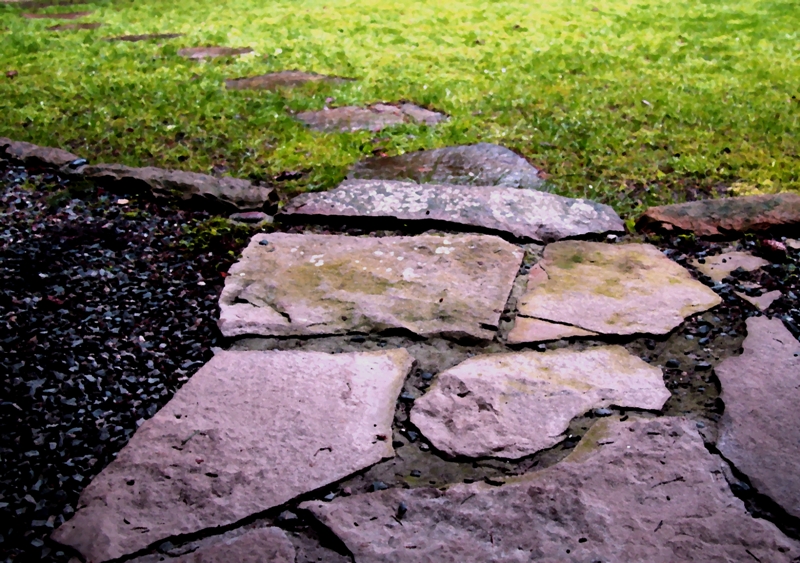
Path of No Return

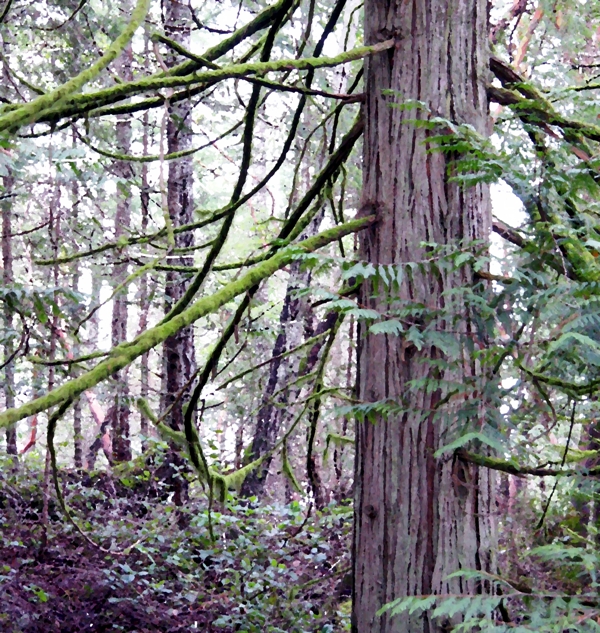
View image in full resolution here.

Yesterday I wrote about redefining the concept of “underpainting” and “overpainting” to include moving from a digital photo through digital processes leading to depicting other art forms such as oil painting and ink drawing.

Today, the image I share with you has little resemblance to the original digital image. Yet it feels more like what I experienced in that moment than the original photograph. With rising tension, I digitally worked to create this image, changing one thing, then another and yet another. Like the children in the fairy tale, I was so delighted and excited about what I was doing that I place no marks on the path for my return. Yes, I have the original photograph. But the here-to-there is lost in the same mental processing as happens when I physically paint.

In the image above, Cedar in oil, I now have only the one image left that is the voice of what I want to express.

Dr Bob Deutsch states “The creative communicator is an alchemist of thought, attending to the reasoning of emotion” in “Marketers Need to Better Understand Creativity” This statement seems right – validating. (Note: this reference is to incredible well-written article about creativity published today January 13, 2010)

Sprout Question: Accepting that you are a creative alchemist, what do you want to express in your art that isn’t available before you start?

© 2010 Terrill Welch, All rights reserved.

Liberal usage granted with written permission. See “About” for details.

Purchase photography at http://www.redbubble.com/people/terrillwelch

Creative Potager – where imagination rules. Be inspired.

Redefining Underpainting

View image in full resolution here.


View image in full resolution here.

In focusing on creativity as a main adventure in my day, I am facing an internal struggle with what is “true creativity” in my creative process. Technology allows me to create in new ways I couldn’t have imagined ten years ago. In this process, I want to redefine “underpainting” to include the first selected and chosen photographic image.

This takes me to my passion for the concept of “underpainting” which I tend to use even when painting with watercolours. What has got me musing, and experimenting, is the technological advances that allow me to start with an image I’ve captured in a digital photograph and then begin “overpainting” until it is rendered as an oil painting or ink sketch in further digital applications.

( I’m not a photoshop artist nor have I yet ventured in the direction of actual layering images to gain a photograph that gives me a desired finished product. I may at some point – but it has not come to that yet.)

This is my question to self: “Is the finished work (which I am pleased with) having begun with a photographic “underpainting” and resulting in an oil or ink “overpainting” while never picking up a brush or hand-mixing a colour a legitimate creative process?”

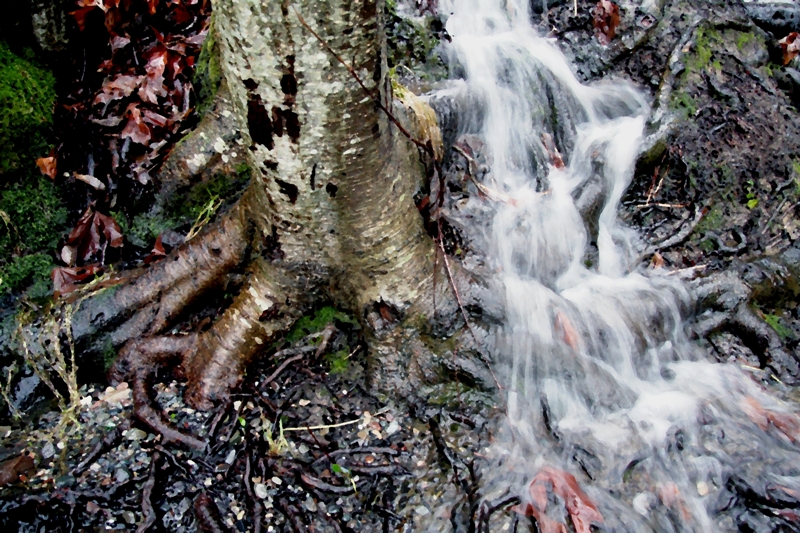
Here is another example where I am equally satisfied with the “overpainting” and the original photographic “underpainting.”

View image in full resolution here.


View image in full resolution here.

Sprout Question: How do you define legitimate creativity in your own creative processes?

© 2010 Terrill Welch, All rights reserved.

Liberal usage granted with written permission. See “About” for details.

Purchase photography at http://www.redbubble.com/people/terrillwelch

Creative Potager – where imagination rules. Be inspired.

Surprised Oil Painting

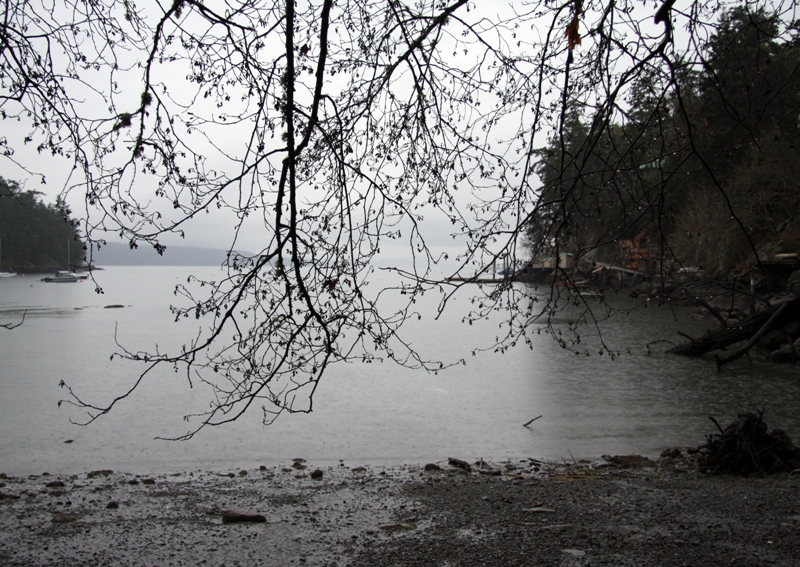
My photo shoot yesterday produced mixed results in the low and uneven afternoon light. However, sitting quietly with one of the images, during the editing process, lead me down an interesting path. After several turns, a shoreline photo is transformed  into a black and white oil painting of Bennett Bay on Mayne Island.

View the full resolution of Bennett Bay Mayne Island  here.

When we are prepared to be surprised and allow an image to call us forward, not just in the beginning of the creative process but all the way to the end, sometimes magic happens. I almost through this original photo image away even though I liked the composition because the mood was different than I wanted. But I just couldn’t get myself to press the delete button and I started to play with the image instead. First, I made the image black and white (as it was almost there already). Then I used a simple program to change it into an oil painting – nothing complicated, just editing tools I had at hand. With a bit more fine tuning, I now have an image that is no longer “really” a photo or ‘really” an oil painting. Setting these judgments aside – I am happy with the end results.

Sprout Question: What creative process might you try if you set your initial judgment about what is legitimate “creative work” aside?

© 2010 Terrill Welch, All rights reserved.

Liberal usage granted with written permission. See “About” for details.

Purchase photography at http://www.redbubble.com/people/terrillwelch

Creative Potager – where imagination rules. Be inspired.