Down the Road a Way

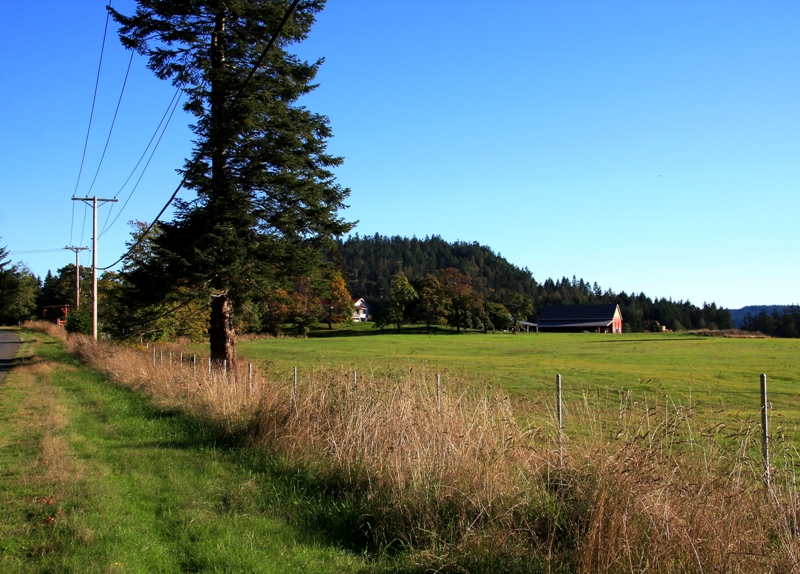
Down the road a way there is a farm.

It was established in 1872 just a year after British Columbia joined the Canadian Confederation. Around here it’s known as Punch’s place. I hear tell that he sold it a bit back on the condition that he could stay on and live out the rest of his life on the place.

I’ve always admired the spot myself. The new owners have put up a real fine fence but it really didn’t seem to change things much. Saved a few apples from the deer is all.

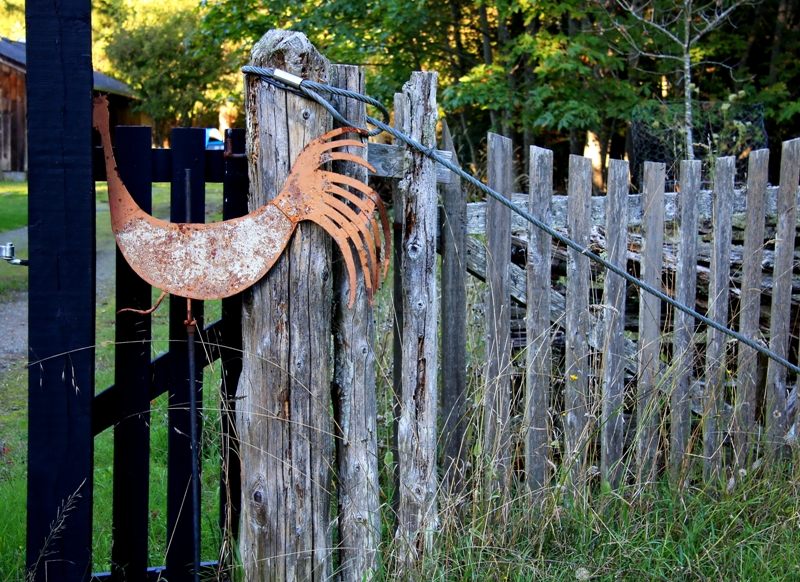
The new gate is right pretty as well.

We was walking so as to really get a good look at things.

On a way past Punch’s these mail boxes popped up and we almost fell sideways across the centre line from laughing. No one puts mail in them. They’re just for show.

About this time, we decided to go all the way to the public boat launch.

Caught sight of a rooster trying to get through the fence. Ah, I’m just kidding. It’s not a real bird.

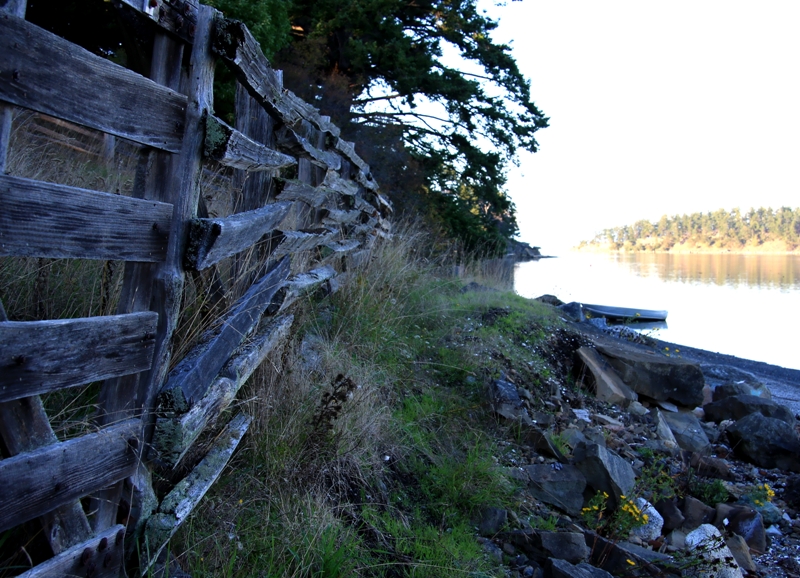
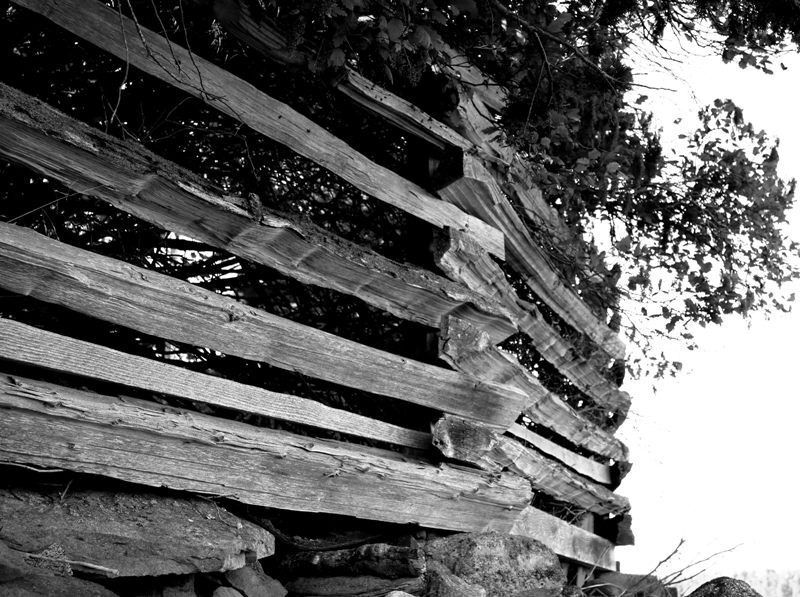
Seems like there must have been an agreement awhile ago

to keep the same old fence right on down to the  sea.

When we looked across at the calm, sure didn’t feel like leaving.

But we did.

Saw a sign about not peeking.

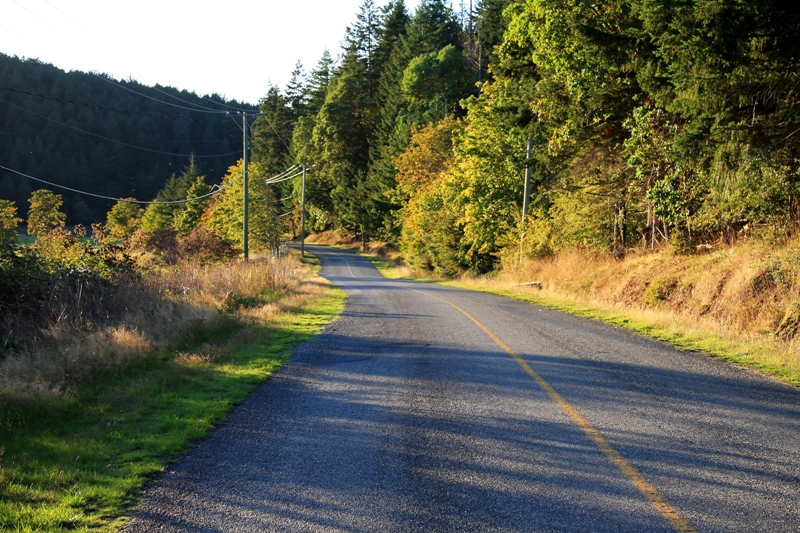
Nothing can anyone do about walking on the road though. It is public property all the way to the other side of the ditch. Some ditches are just wider than others is all. Not that we stepped across a wide ditch or anything… just saying.

The road was even nicer on the walk back. Best part is it was down hill a little right back to where we parked the truck.

Sprout Question: Whose voice shows up in your creative work?

© 2010 Terrill Welch, All rights reserved.

Liberal usage granted with written permission. See “About” for details.

Purchase photography at http://www.redbubble.com/people/terrillwelch

Creative Potager – where imagination rules. Be inspired.

From Mayne Island, British Columbia, Canada

Beauty in Death

“Spirit always stands still long enough for the photographer It has chosen.” Minor White

View and purchase full resolution image here.

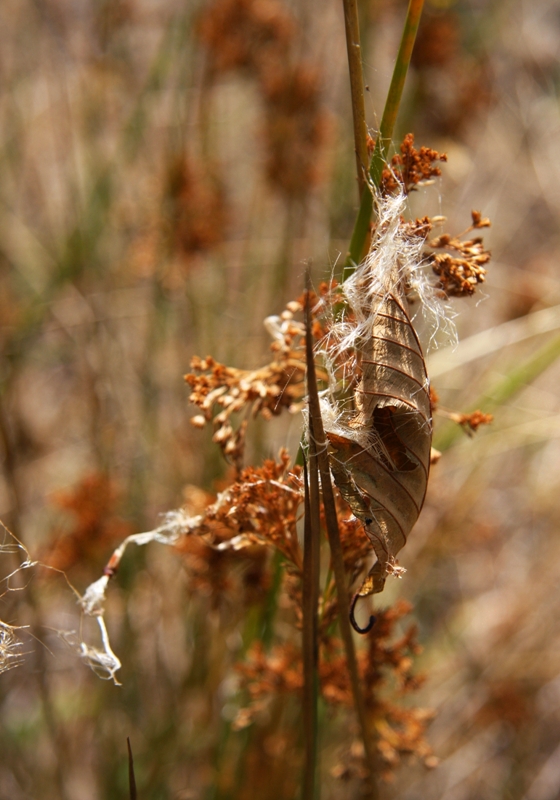
The arbutus leaves have died from drought not because it is fall. Arbutus leaves stay green all year except for those that are lost from the heat of summer. These leaves remind me of words from those left behind: “She looks so beautiful now that death has released the pain of disease from her face.”

Sprout Question: Where have you witnessed beauty in death?

© 2010 Terrill Welch, All rights reserved.

Liberal usage granted with written permission. See “About” for details.

Purchase photography at http://www.redbubble.com/people/terrillwelch

Creative Potager – where imagination rules. Be inspired.

From Mayne Island, British Columbia, Canada

Catching Fall

Even though it is a holiday Monday here in Canada and in the U.S.A., I am ready to resume my Monday to Friday posting schedule with more frequent and shorter posts. Today it is raining. The soft soaking kind of calm that leaves us reaching for our book and putting on a pot of homemade soup. Yesterday, the sun was out but the shade cool as we saw the beginning of the leaves falling.

Warm browns traced the edges of summer.

View full resolution and purchase catching fall here.

This week I will post images about catching fall as it sashays through on every breeze.

Sprout Question: Where is your focus right now?

P.S. The opening of Sea, Land and Time was a wonderful success with two large prints and one medium print selling along with cards and calendars. Plus, I had an offer to have my cards and calendars in a local décor store and possibly photograph prints as well. We shall see. Of course, two oil paintings had sold as part of the presales for the show. The best part is that we all had a great time. Family, friends and colleagues came from away. New friends, colleagues and acquaintances from Mayne Island came by and several helped with the opening. It was fabulous! Wish you could have been there.

© 2010 Terrill Welch, All rights reserved.

Liberal usage granted with written permission. See “About” for details.

Purchase photography at http://www.redbubble.com/people/terrillwelch

Creative Potager – where imagination rules. Be inspired.

From Mayne Island, British Columbia, Canada

BC Ferries share the Salish Sea sometimes to its own peril

Yesterday’s post introduces the first blog clip about a series I am compelled to paint about the newly named Salish Sea. Today I am going to take us on a photo journey where BC Ferries share these busy waters, sometimes to its own peril.

The main thoroughfare between Vancouver, the Gulf Islands and Vancouver Island is Active Pass and it is as busy as the name implies. BC Ferries share these waters with fishing boats, freighters, kayakers, pleasure boats, sail boats, whale watching boats, tug boats and float planes… in addition to whales, seals, salmon, sea lions, sea otters, eagles, cormorants and seagulls.

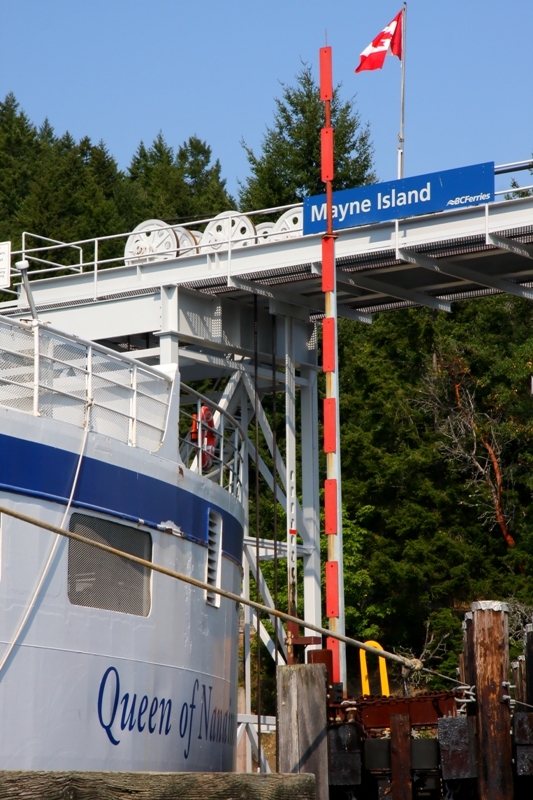
Often, whether on the one of BC Ferries vessels or on shore, the three blasts of the ferry horn can be heard warning another sea traveler to get out of its path. But an accident like yesterday morning where rope tangled around the propeller of the Queen of Nanaimo preventing her from slowing adequately as she came into the Village Bay berth at Mayne Island is, thankfully, a rare occurrence.

Four passengers and one or possibly two crew members were injured as a result of the accident. The vessel is reported to have sustained damage to the rubbing strake and bow door frame. The terminal sustained damage to the wingwalls, which are part of the berthing structure, as well as to the ramp apron. Village Bay has two berths, so the terminal remains operational.

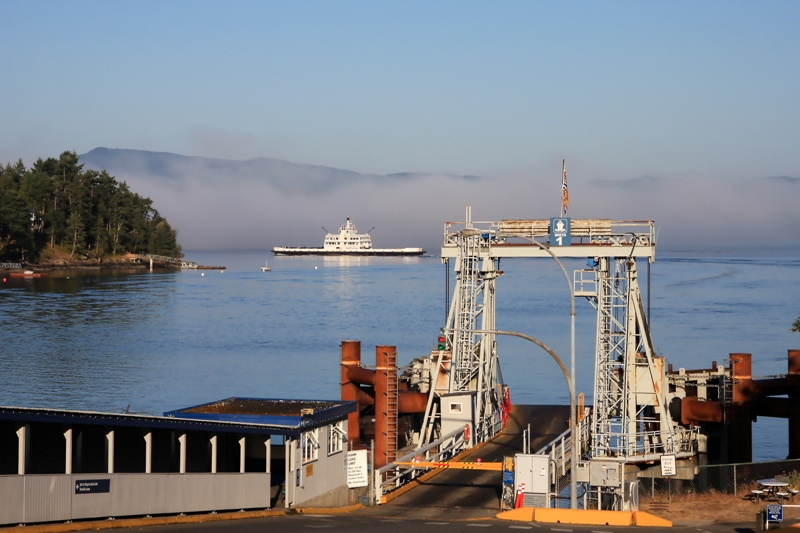
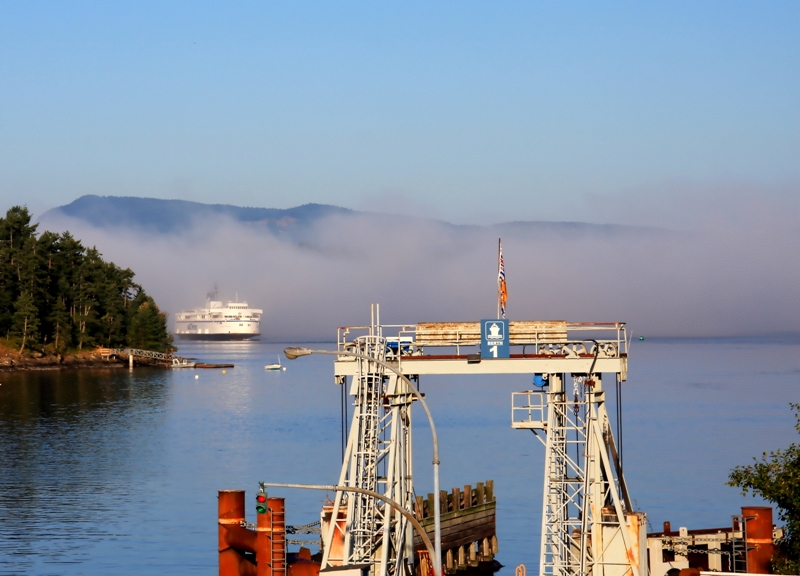
On Friday July 30, 2010, I left Mayne Island for a long weekend visit to Oroville Washington high desert. The ferry terminal was waking with stunning beauty as BC Ferries vessels and fishing boats appeared and disappeared in the drifting fog.

The Mayne Queen departs after dropping off passengers and vehicles from Saturna Island who join us in the wait for the Queen of Nanaimo. Blasts from the ship’s whistle can be heard as she navigates through the thick mist

I slip into the back of my pickup truck “Miss Prissy” to get a better view as the vessel that left Salt Spring Island and then Pender Island approach the Village Bay terminal. I am on my way to Vancouver. The Queen of Nanaimo is the ferry that will take me there after another stop on Galiano Island.

In minutes we are on board and I move around the outer decks taking photos…

Morning coffee aboard the Queen of Nanaimo

fishing boat and BC Ferries

View and purchase full resolution image here.

and the mist hanging on Galiano Island as we enter Active Pass.

View and purchase full resolution image here.

Yesterday, on my scheduled return trip, BC Ferries staff wait to reach me before I get to the Tsawwassen ticket booth. Do I have a reservation? I did. The Queen of Nanaimo has been in an accident. The ship can’t be moved. I am being rerouted to Victoria. I will be given priority on sailings going to Mayne Island at 3:00 pm and 4:25 pm. I won’t be charged any extra fare. I move forward in the line.

My mind begins to scramble with making all the necessary changes – make sure David has food for lunch, cancel my afternoon coaching sessions and all the other details that come to mind when our plans are set aside in the immediacy of the unexpected. I reach the ticket booth and hand over my credit card to verify my reservation.

Numbly I ask the ticket agent what happened. She gave me a brief rundown. The ferry hit the berth hard on its approach. The cause is under investigation. I ask if anyone was hurt. My heart sank as she confirmed that “yes, people had been hurt.” I line up in row 40 to wait for the large new Coastal Celebration ferry that will drop me at Swartz Bay around noon… just about the same time as I had expected to be home. I start making phone calls sorting out the changes to my day. It is summer tourist season. Many people around me are from someplace else speaking a language I don’t understand. I look for familiar faces and find one. We recap the morning sharing bits of information as we try to create a new reality that is different than the one we had imagined.

The rest of morning and afternoon I continue to make ongoing adjustments. No I can’t go into Victoria. The scheduled runs are overloaded. We are told to proceed directly to the terminal area for the Gulf Islands. Extra trips are scheduled but by the time it is decided who will go on which ferries and extra staff are found we leave at the scheduled 3:00 pm time only stopping at Mayne Island first before the Mayne Queen continues on to Saturna Island.

By the time I arrive home and see the Queen of Nanaimo still sitting in the berth at Village Bay – the very vessel that was to bring me home five hours earlier – I was exhausted but pleased with my ability to ride with the changing currents with the sun at my back and the wind in my face.

The Vancouver Sun reports:

Injuries to the passengers ranged from a concussion to a possible broken ankle and possible cracked ribs.

Mike Corrigan, B.C. Ferries executive vice-president and chief operating officer, said the preliminary investigation points to “a significant amount of rope in the propellers, especially in the port propellers.”

He said the rope, likely from crab or prawn traps, made it impossible for the crew to adjust the propellers. “So when the captain tried to go astern to slow the vessel down, basically the propeller was stuck in a forward position and wouldn’t let him do that.”
Read more: http://www.vancouversun.com/health/Ferries+Ropes+tangling+props+caused+ferry+dock+hard/3354052/story.html#ixzz0vfG5tFE5

The Queen of Nanaimo will have to undergo sea trials before it is back in operation. A smaller vessel will try and do some of the regular schedule but it won’t nearly be enough at the height of the tourist season. This story won’t be news today. The world will have moved their attention on to other events. But if you live in the Southern Gulf Islands or were planning on coming to our beautiful part of the Salish Sea the waves of this incident will continue to ripple for days.

Sprout Question: When was the last time your day ran ahead of you while you skidded along behind hanging on to its tail?

© 2010 Terrill Welch, All rights reserved.

Liberal usage granted with written permission. See “About” for details.

Purchase photography at http://www.redbubble.com/people/terrillwelch

Creative Potager – where imagination rules. Be inspired.

From Mayne Island, British Columbia, Canada

Squishy hug of thanks WORDPRESS

Thank you WORDPRESS for your user-friendly interchange and freely hosting blogs that can become small virtual communities such as Creative Potager has become. A big squishy, passionate hug is coming your way through cyberspace!

As of this hour today the wordpress Creative Potager blog has met a new milestone. Since its first post, on Dec 27 2009, the Creative Potager blog has published 102 posts and 1,605 comments AND (drum roll please) has had over 12,000 views. I am doing the happy dance (ta, ta, ta) all around the social networks with friends, casual acquaintances and passionate lurkers who are Creative Potager regulars.

Thank you especially to those who regularly respond to the Sprout Question that accompanies each post. Thank you to all of you who comment above and beyond the Sprout Question.  Thank you to all readers who lurk in the shadows. Your views are counted. You are part of the Creative Potager community.

My life and creativity is richer because of each and every one of you. Thank you, thank you thank you.

May the sun continue to rise, in all its glory, over our creative inspiration.

I decided we need a little visual toe-tapping to help us celebrate offered up by Andy the Daft Hermit from the Black Bus in the Highlands of Scotland. The music starts about 30 seconds in so wait for it and enjoy Andy’s photography video…

With much humble appreciation.

Terrill:)

Sprout Question: If WORDPRESS is the host and Creative Potager the post, who are you?

© 2010 Terrill Welch, All rights reserved.

Liberal usage granted with written permission. See “About” for details.

Purchase photography at http://www.redbubble.com/people/terrillwelch

Creative Potager – where imagination rules. Be inspired.

From Mayne Island, British Columbia, Canada

The Crone’s Passion

The Crone’s Passion – a woman’s story (a longer than usual read)


I read an invitation I received from Hystersisters to participate in the Bloom study: “The primary purpose of this study is to determine the safety and effectiveness of LibiGel®, an investigational medication for Hypoactive Sexual Desire Disorder (HSDD).” Today, I savoured the last lines of Sidonie-Gabrielle Colette’s 1928 novel Break of Day. And today, I am compelled, driven by a compulsion, to write to you about a coming of age story. This is not the usual pimply-awkward coming of age story. Rather it is about the full-bloom-turning-at-the-climax-of-life coming of age story.

As with the finest stories, I shall begin by sharing with you the end I have in mind. The question is posed by Colette near the close of the one-hundred and forty-one page publication of Break of Day, which Judith Thurman clarifies in the introduction: it is not really entitled Break of Day but more accurately translates as Birth of Day. The question is “how many of us see the day appear?” The narrator does not stop to allow pondering of an answer – she gives it immediately, as freely as a lover’s kiss on our naked skin. Her reply: “the ageing of the sun, which each morning shortens its course, takes place in private.” I agree. Too often this is true.

Thurman’s introduction to the novel imparts “here, as throughout [Colette’s] oeuvre, the male of the species is the weaker but nobler creature, while the female monopolizes the ‘will to survive.’” I have not enough knowledge of Colette’s work to argue this analysis. However, I propose that perhaps Break of Day is not about the male species at all. Perhaps Break of Day is primarily about desire. About love! In fact, perhaps it is primarily about female desire and love. Not precisely about the womanly desire or love for another but the actual physical ability to hormonally suffer lust at the expense of common sense. Perhaps Colette’s male character, Vial, and possibly all the characters in the novel, are props to bring our attention to what all women shall experience – if they live long enough, no matter how many “investigational medications” are invented, – the  loss of sexual desire. Contemporary medicine’s concoction of “hypoactive sexual desire” as an unbecoming “disorder,” may well be a defining outbreak caused by a society which is unwilling to see the day appear. Is it possible that we have willingly sold our crone rites of passage for the mythology of an endless summer in youth?

Beyond the financial fortunes to be harvested by soliciting our fear of aging, why might this be? Wine cannot be made if the grapes are left to wither on the vine past their full plumpness. Do we want those plump grapes so badly that we are willing to forgo their picking, tramping and bottling into sustaining comfort during the second half of our lives? This is my fear – your answer will be “yes.” I am compelled – driven – before even waiting for your reply to barter with you, in fair trade, for a chance that you may be able to bottle your best! Come with me . . .

From the beginning of Break of Day, Colette winds inseparably between the light of day, and the passage of time as desiring women… “A little wing of light is beating between the two shutters, touching with irregular pulsations the wall or the long heavy table where we write or read or play, that eternal table that has come back from Brittany, as I have come back.” In the middle of her long paragraph describing such things as her favoured yellow plates, she states “a woman lays claim to as many native lands as she has had happy loves. She is born, too, under every sky where she has recovered from the pain of loving.” Colette concludes that her time that she now has under the blue sky is “doubly” hers with its light air and grapes that have ripened so quickly – except, she has spent a lot of time “not knowing of it!” I ask of what she has not known. Colette’s narrator answers: “That noble bareness that thirst sometimes confers on the soil, the refined idleness that one learns from a frugal people – for me these are late-discovered riches.”

The story’s mistral brings the beginning of transformation with “a strange tribute of withered petals, finely sifted seeds, sand and battered butterflies” being pushed under the door – as with the Bloom study, conjuring up our fear of the worst, not so much the fear of dying but more the death of our youth:

Be off with you, I’ve discouraged other tokens before now; and I’m no longer forty, to avert my eyes at sight of a fading rose. Is that militant life over and done with then? There are three good times for thinking of it: the siesta, a short hour after dinner when the rustling of the newspaper, just arrived from Paris, seems oddly to fill the room, and then the irregular insomnia of the small hours before dawn… Humble as I always am when I’m faced with anything I don’t understand, I’m afraid of being mistaken when I imagine that this is the beginning of a long rest between myself and men. Come Man, my friend, let us simply exist side by side! I have always liked your company. Just now you’re looking at me so gently. What you see emerging from a confused heap of feminine cast-offs, still weighed down like a drowned woman by seaweed (for even if my head is saved, I cannot be sure that my struggling body will be), is your sister, your comrade: a woman who is escaping from the age when she is a woman.

She goes on to describe the bodily changes that come with the middle-of-our-supposed-age, then declares “let us remain together; you no longer have any reasons now for saying goodbye to me for ever.” With fact and possibly astonishment, she imparts her final recognition: “love, one of the great commonplaces of existence is slowly leaving mine.”

Instead of succumbing to the palatable urges to grasp, strain and cling to desire, such as the Bloom Study will rely on to fill their voluntary study quota, Colette grips her truth as  “the arrogant song of a blackbird comes rolling up to me like big round pearls dropping from a broken thread.” I ask us as women and as women leaders to do the same. Why you might ask – when science, cosmetics, drugs and fashion can forestall this necessary and eventual truth? I ask us because I fear we may misplace gifts we have to receive beyond our bodily sexual desire. For there will come a time, as the mother of Colette’s narrator confirms, when we will be and may want to be alone:

it’s the final return to single life when you refuse to have any longer in your house, especially if it’s a small one, an unmade bed, a pail of slops, an individual – man or woman – walking about in a night-shirt. Ugh! No, no, no more company at night, no more strangers breathing, no more of that humiliation of waking up simultaneously! I prefer to die, it’s more seemly.

If we should spend our middle years gripping and clinging to our youthful expression of sexual desire, we shall again, as with our youth we are grieving, miss out. We shall miss out on the rich harvest available to us. If only we have the courage to press and bottle our voluptuous memories, sipping and tasting their lushness frequently, before time passes and we must make the final passage to death solo, single, alone.

In our time that finds us void of nature yearning, we may cry “if only I had known!”  In fact, I did lament and grieve with such a cry. Colette’s eloquent rendering of this struggle is reflected in my own journal writings from a few years ago:

I am obliged to face this alone-place amidst so much beauty and love. I am forced to acknowledge an old and familiar feeling of being bound, trapped and held too tight. What is it that creates this dis-ease – this desire to break free? What is it that has kept me still and waiting this time? A waiting that holds the belief that this too shall pass, and I will arrive on fresh uncultivated ground and rediscover something of great value under the virgin soil. Stay still I tell myself. Breathe into it! I am birthing another phase of my life in which I am virtually baron of sexual sensation. The well traveled paths of intimacy have been erased from the surface of my breasts, thighs, and pelvis through the removal of all that is female. I can climax it is true but without the deep tremor and contractual satisfaction that was granted my body before surgery. Loving hands are met at best with curious compliance and at worst with clawing and scratching reminiscent of running my hand backwards over the coat of a cat. I no long greet these trespasses with involuntary moans and straining-rhythmic pleasure as these gifts are so freely and lovingly given. I can no longer slide close and nuzzle these caresses to my love without involuntary gasping and franticly fighting to free myself of every blanket and point of body contact. I grieve this loss! If only I had known, I would have engaged with even greater abandon in the arms of my many lovers! I would have stored these delights with the vivid vibrancy only afforded trauma memories. I would have found a way to keep these sometimes rash and sometimes delicate human contacts from becoming only ghostly glimpses just barely retrievable in my present day thoughts. Damn it anyway!!

The age of forty-eight seems much too young to be groping around in the dark for lost sensations of pure pleasure. Whose body is this anyway?! I want mine back! I want my body that sang from the touch of boys, men, women and the sensation of a child nursing my breast! How cruel to say in such calm repose, “Let’s take your ovaries as you are so close to menopause”. Could it not have been said “I am so sorry; we recommend this life saving measure knowing that one of life’s great pleasures will go with these small body parts?” I wonder if I would be less angry, experience less sorrow if I had known? The answer is probably not… for I could not have foreseen the loss until after, when it is too late. I selfishly grieve for me and in great compassion I grieve for my love/my lover/my partner/my friend – my friend who forlornly replies “you know it is the same for men.” I know that he feels this to be true and to some degree it may be true. Impotency is common for men. “Drugs help” he says, “they are working on these drugs for women as well.” But my heart is breaking. I silently cry… how can I express my love to you without my body?!!! How will you be able to express your love to me! We are so much more than “just friends.” How will we discover new ways of intimacy? Where are the possibilities? As you stay cloistered in your den below and leave me to toss back the covers alone in the open attic of our sleep chamber – I wonder how we will discover new intimacy? As you sleep late and I wander the downstairs with care not to disturb you – I wonder how we will discover new intimacy. I can hear the cast iron bed shift under your waking. I must leave to face the day and smile, remember to smile as the sun kisses the valley floor!

I can assure you, in the months and years that followed this lament, we did find new ways of expressing our love and experiencing our intimacy – welcoming surprising, lush late-blooming beauties with nonsensical abandon, carefully bottling them for long twilight sips. I beg of us not to wile away precious years clutching the last rose of our sexual desire. Sip your wine that you have put down before the grapes withered on the vine! For as Colette surmises “‘autumn is the only vintage time’ – perhaps that is true in love too.”

Complete your rite of passage. Enjoy the crone’s passion. As you admire the last shriveling treasure of your desire smile and proclaim as Colette’s narrator proclaims, “in future I shall gather nothing except by armfuls. Great armfuls of wind, of coloured atoms, of generous emptiness that I shall dump down proudly on the threshing floor.” Seek to be awake to see the day appear – even if it means you are chilled from sitting through the night air so not to miss its arrival. In the natural rhythm of life, you will have time for sleep later.
Note: References are hyperlinked. Originally posted with image of “Last Rose in October 2009 on the now-defunct Gaia Community website.

Sprout Question: Has the passage of time influenced your creativity?

© 2010 Terrill Welch, All rights reserved.

Liberal usage granted with written permission. See “About” for details.

Purchase photography at http://www.redbubble.com/people/terrillwelch

Creative Potager – where imagination rules. Be inspired.

From Mayne Island, British Columbia, Canada
Walk by the Sea

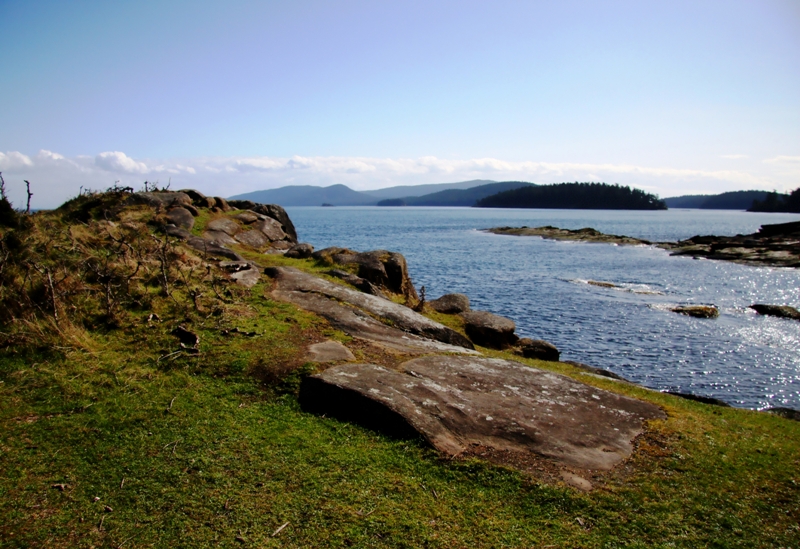
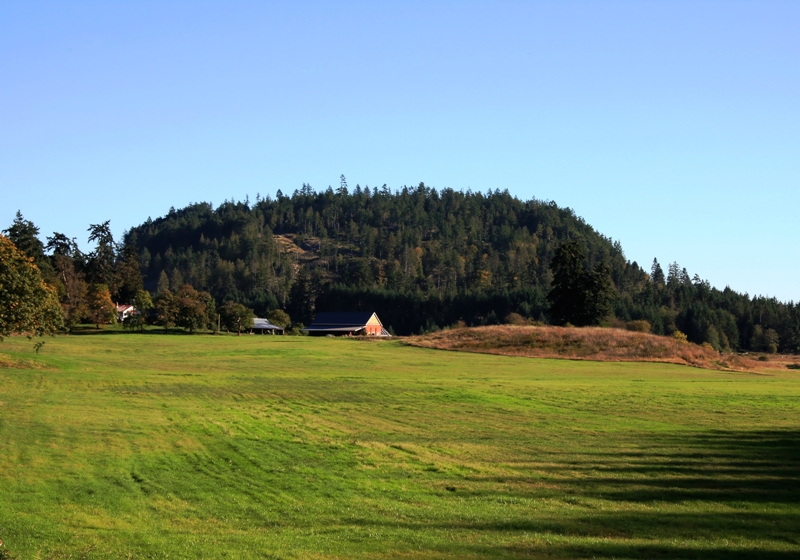
I never tire of walking trail along the sea. I hope you are not yet tired of my images from these walks. The photos today are from a walk that you won’t find on any map. The walk is only known by locals. It is on private land and permission is granted at your own risk. It is a privilege and a honour that I do not take for granted. So I am not going to tell you exactly where this is on Mayne Island. If you know, smile wisely and enjoy the photo essay along with everyone else.

Come with me….

The trail is rugged in places. I often stop to be able to look up from placing my feet carefully between tree roots and sandstone sticking up on the rough trail. In the next few years, you won’t see many photos like this one where to show the trail in the deep shadows, the sea and sky over exposed. We will all know how to do HDR... but when we look in real time we must choose what we can see at one time… so I have also chosen in this photograhy.

As I walk, a sea lion surfaces off the shore. I know it is there because when it breathes I can feel it on the back of my neck. I look. There she is. I do not try to take photos as past experience tells me, my lens won’t reach. She rolls up to the surface. Breathes. Then rolls her long sleek body over and down she goes, surfacing again many yards ahead of me. I don’t see her the next time she surfaces.

About 45 minutes later I make my way to the point.

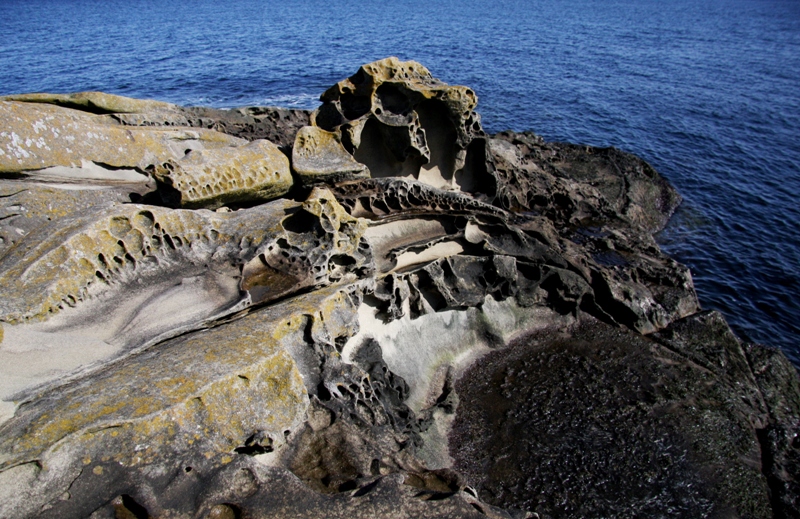
The sandstone is warm from the sun. I sit and wonder at the beauty of its shape.

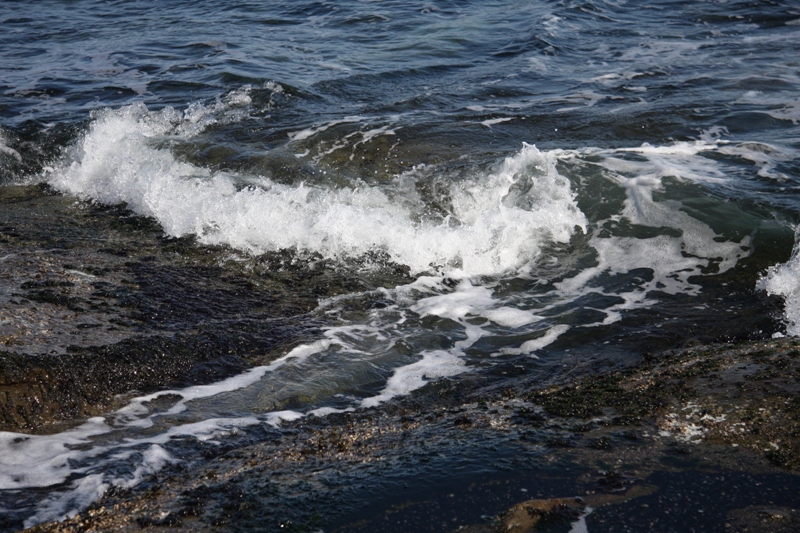
Looking over on the other side I catch a wave coming in.

And then I think I know…

High tides and winter storms have carved out such a place where I now admire its beauty.

I don’t want to go. I want to stay and be part of the sandstone and then part of the sea, then part of the sandstone… until day becomes night and night day and time has no relevance.

I do go though. I am not sure what makes me leave, but I do.

Two hours later, I am putting the key back into the ignition. I go home. I make lunch. I leave these images in my mind until last night… or rather early this morning as I was still editing at 1:00 am. Now I have savoured them long enough… I can now share them with you.

Sprout Question: If you could do only one more creative of work in your life time – what would you do?

© 2010 Terrill Welch, All rights reserved.

Liberal usage granted with written permission. See “About” for details.

Purchase photography at http://www.redbubble.com/people/terrillwelch

Creative Potager – where imagination rules. Be inspired.

From Mayne Island, British Columbia, Canada

Shadow Memories

Shuffling the source material for my new book Mona’s Work, I’m having difficulty deciding what story to write next. It is not the material that is difficult. The bits of paper, the scribbler and the recipe book are all straight forward. It is the shadow memories.

The memories I want for the book are also connected to ones I would rather not revisit. Is this why I have been working on Mona’s Work since 2007 with only a slim volume of stories to show for my efforts?  I have seen enough therapists, made my way through enough healing circles and drawn enough pictures about these experiences to feel the work I need to do is done. I wish not to haunt my readers with these stories as it seems unnecessary. The memories are not related to the same people, or the same places just the same time in my life.

I’m determined that these shadow stories not become part of the final cut but will I need to write them anyway – so that I can mine deeper into the my memory for the stories I do want to retrieve? Or can I just note them and place the memory on a “parking lot list” such as I use when facilitating so that groups do not derail? Items placed on a parking lot list are revisited at the end of a process to see if there is anything that must be done with them. They are seen as valuable in the first instance – just not part of the immediate work. They are placed in the parking lot so as not to be lost (as if that is ever going to happen).  Can I do this with the shadow memories? Or should I write through the memories, allowing the darkness in behind the bright colours of Mona’s Work?

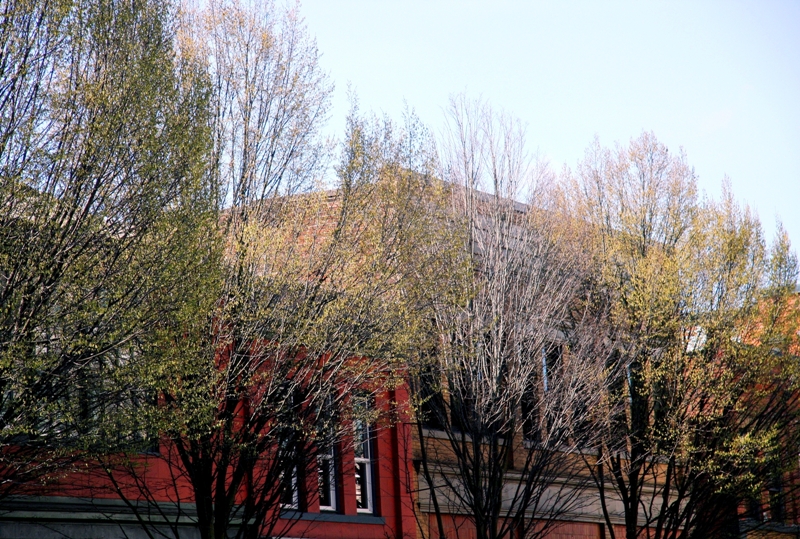
I wonder if, as in the image below of “city morning in spring,” I can find the balance and beauty of my shadow memories – as is evident in the buildings showing their shadowy bulk behind the trees illuminated in the morning sun.

View and purchase full resolution image here.

Sprout Question: How do your shadows impact or influence your creative process?

© 2010 Terrill Welch, All rights reserved.

Liberal usage granted with written permission. See “About” for details.

Purchase photography at http://www.redbubble.com/people/terrillwelch

Creative Potager – where imagination rules. Be inspired.

From Mayne Island, British Columbia, Canada
DWELLING

With David L. Colussi’s permission, I share his poem “DWELLING” with you today as part of my creative focus in February on the theme of “home.” I will be placing this poem in a new page I’m developing for the Creative Potager blog about la casa de inspiracion – our home.

This first image of David is a personal favourite of mine rendered as an oil painting. David is reading with his drug-store glasses which he likes better than his prescription lens. They are usually slightly askew as he softly turns the pages.

This next image best introduces the poem which reflects on the reflections of la casa de inspiracion and the meaning of “to dwell.”

DWELLING

[1 DWELLING = ERROR]

Watching sunlight and darkness from this house of glass

suspended on the ridges of a valley,

the human history of dwelling plays across the scene in drama or in documentary.

Darkness dwells the way that we once did in wandering across the land.

Its home is east of the sun, where it moves ahead in gypsy fashion,

and west of the sun, where it follows as a hunter.

The hunter waits for the sunlight to hit the tops of western valley cliffs at progressively acute angles,

and when the sunlight overshoots the cliffs completely

the darkness rushes over the valley walls like water over Niagara Falls

and submerges all the valley into one big reservoir of night.

Presently it rises up and silvers all the windows and the stained glass tears.

This house of glass becomes a house of mirrors.

[2 DWELLING = INTROVERSION OBSESSION]

Now every light inside the house is captured in the window glass.

Everything that we illuminate is gathered and sent back for us to dwell on and elucidate.

The corner window down the hall shows part of my face in profile.

I look up through the skylight and against the tree tops seen in silhouettes

my hands are on the keyboard moving in some stopped-action like some marionettes.

The corners of the windows in the room downstairs contain some pieces of me I forgot were even there beneath the table.

I am all picassoed over on the window walls in fragments and distorted in stained-glass tears

because this house of glass has turned into a house of mirrors.

[3 DWELLING = HOME]

I work away at putting all my pieces back together.

Memories of things that happened decades long ago appear in casement window frames –

I turn my head

And see myself in childhood and remember questions that I thought I’d answered years ago.

They’re all still there waiting to present their supplementaries.

I wonder how I managed to survive with all these pieces some are missing some still there.

They fit together best when you are here.

………………………

According to David’s notes, which record his history of development and changes to the poem, David started researching “to dwell” and writing this poem on July 24, 2009. I knew he was researching “to dwell” as we had discussed it at length on more than one occasion. He had also told me he was writing a poem for my birthday and that he was just about finished. I begged for clues as to what it was about but as usual he just laughed and held to his secret surprise. My birthday is on August 28th. It wasn’t until I was back home on Mayne Island for a mere 24 hours on Saturday, September 5, 2009 that I happened to open his blue notebook, which he had innocently placed on his desk, and discovered David’s latest work that he had last revised the night he had his stroke August 9, 2009.

Sprout Question: Who champions your creativity?

p.s. Who is David L. Colussi?

David L. Colussi retired in 2002 after an expansive career in education and management in both the provincial/federal government(s)… His background includes:

– Master of Arts degree in English

– Diploma in Alternative Dispute Resolution from the Canadian Institute for Applied Negotiation in Ottawa

– Teaching English and critical thinking for 3 years at Niagara College, Ontario

– Internal management consultant with federal government in Ottawa for two years

– BC provincial government manager for almost 30 years, with the ministries of Attorney-General, Health, Advanced Education, and central agencies including as Executive Director of Human Resources in the Ministry of Health

– With his late wife, founded a private non-profit Montessori pre-school and elementary school in Victoria 1979-1998, served as its first board chair, and remains an honorary member of its Foundation board

– Member of the patron group of Pearson World College of the Pacific

– Chair of BC StudentAid Appeal Committee for the past 5 years.

With children and step-children grown, some with partner’s and children of their own, David now lives a quiet life on Mayne Island in B.C. Canada with his wife Terrill Welch, executive leadership coach, writer, photographer and artist.

© 2010 Terrill Welch, All rights reserved.

Liberal usage granted with written permission. See “About” for details.

Purchase photography at http://www.redbubble.com/people/terrillwelch

Creative Potager – where imagination rules. Be inspired.

From Mayne Island, British Columbia, Canada

Simplicity

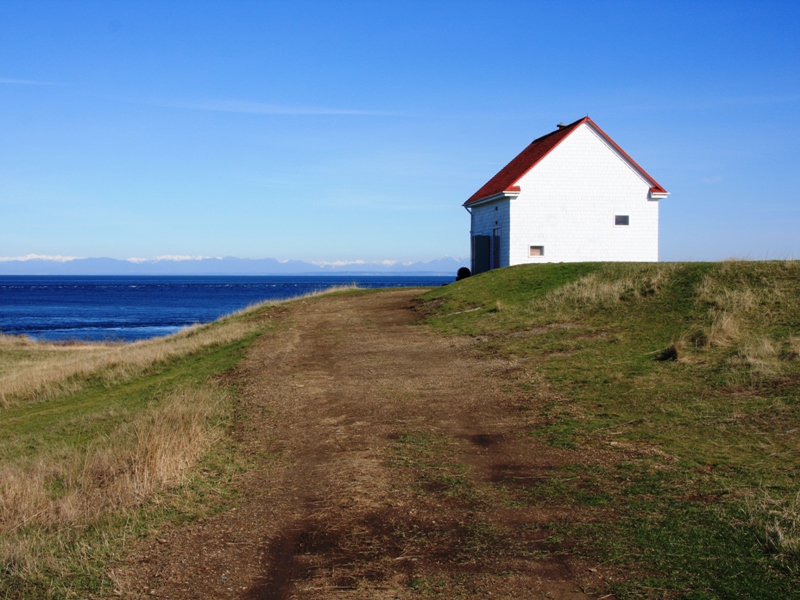
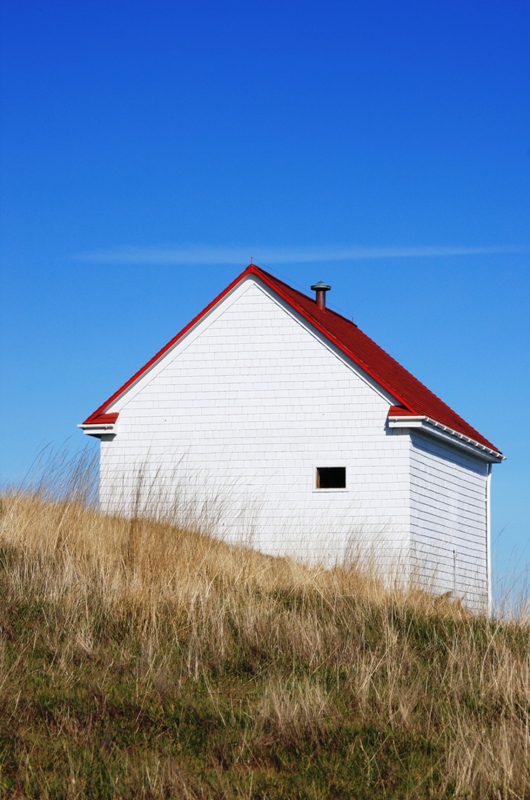
Often, the underlying effect of wabi-sabi is melancholy beauty in its worn simplicity. Yet nature, as our life, is often a messy. Eco-systems thrive on an untidy tangle of old, new and diverse growth (particularly here in the west coast rain forest). The old saying of “not being able to see the forest for the trees” describes how easy it is to become overwhelmed and to lose our centre or still-point in the face of all that is. There are only a few vistas in my travels that have captured my imagination with their beautiful simplicity. A building on a hill at East Point on Saturna Island is one of these places. I have not yet researched to know if this grassy knoll is caused by human intervention or if it is natural. However, the minimalist coming together of nature and construction sang to me. The delight and challenge then becomes composition.

Here are my various efforts over two days to capture “a building on a hill at East Point.”

And finally “window” , my personal favourite, and a featured image today in redbubble group  The Woman Photographer. This is a great honour as there are 2,527 members in this group and 79,986 images.

View and purchase full resolution image here.

Sprout Question: What principles of composition help you to create simplicity?

© 2010 Terrill Welch, All rights reserved.

Liberal usage granted with written permission. See “About” for details.

Purchase photography at http://www.redbubble.com/people/terrillwelch

Creative Potager – where imagination rules. Be inspired.