The Crone’s Passion

The Crone’s Passion – a woman’s story (a longer than usual read)


I read an invitation I received from Hystersisters to participate in the Bloom study: “The primary purpose of this study is to determine the safety and effectiveness of LibiGel®, an investigational medication for Hypoactive Sexual Desire Disorder (HSDD).” Today, I savoured the last lines of Sidonie-Gabrielle Colette’s 1928 novel Break of Day. And today, I am compelled, driven by a compulsion, to write to you about a coming of age story. This is not the usual pimply-awkward coming of age story. Rather it is about the full-bloom-turning-at-the-climax-of-life coming of age story.

As with the finest stories, I shall begin by sharing with you the end I have in mind. The question is posed by Colette near the close of the one-hundred and forty-one page publication of Break of Day, which Judith Thurman clarifies in the introduction: it is not really entitled Break of Day but more accurately translates as Birth of Day. The question is “how many of us see the day appear?” The narrator does not stop to allow pondering of an answer – she gives it immediately, as freely as a lover’s kiss on our naked skin. Her reply: “the ageing of the sun, which each morning shortens its course, takes place in private.” I agree. Too often this is true.

Thurman’s introduction to the novel imparts “here, as throughout [Colette’s] oeuvre, the male of the species is the weaker but nobler creature, while the female monopolizes the ‘will to survive.’” I have not enough knowledge of Colette’s work to argue this analysis. However, I propose that perhaps Break of Day is not about the male species at all. Perhaps Break of Day is primarily about desire. About love! In fact, perhaps it is primarily about female desire and love. Not precisely about the womanly desire or love for another but the actual physical ability to hormonally suffer lust at the expense of common sense. Perhaps Colette’s male character, Vial, and possibly all the characters in the novel, are props to bring our attention to what all women shall experience – if they live long enough, no matter how many “investigational medications” are invented, – the  loss of sexual desire. Contemporary medicine’s concoction of “hypoactive sexual desire” as an unbecoming “disorder,” may well be a defining outbreak caused by a society which is unwilling to see the day appear. Is it possible that we have willingly sold our crone rites of passage for the mythology of an endless summer in youth?

Beyond the financial fortunes to be harvested by soliciting our fear of aging, why might this be? Wine cannot be made if the grapes are left to wither on the vine past their full plumpness. Do we want those plump grapes so badly that we are willing to forgo their picking, tramping and bottling into sustaining comfort during the second half of our lives? This is my fear – your answer will be “yes.” I am compelled – driven – before even waiting for your reply to barter with you, in fair trade, for a chance that you may be able to bottle your best! Come with me . . .

From the beginning of Break of Day, Colette winds inseparably between the light of day, and the passage of time as desiring women… “A little wing of light is beating between the two shutters, touching with irregular pulsations the wall or the long heavy table where we write or read or play, that eternal table that has come back from Brittany, as I have come back.” In the middle of her long paragraph describing such things as her favoured yellow plates, she states “a woman lays claim to as many native lands as she has had happy loves. She is born, too, under every sky where she has recovered from the pain of loving.” Colette concludes that her time that she now has under the blue sky is “doubly” hers with its light air and grapes that have ripened so quickly – except, she has spent a lot of time “not knowing of it!” I ask of what she has not known. Colette’s narrator answers: “That noble bareness that thirst sometimes confers on the soil, the refined idleness that one learns from a frugal people – for me these are late-discovered riches.”

The story’s mistral brings the beginning of transformation with “a strange tribute of withered petals, finely sifted seeds, sand and battered butterflies” being pushed under the door – as with the Bloom study, conjuring up our fear of the worst, not so much the fear of dying but more the death of our youth:

Be off with you, I’ve discouraged other tokens before now; and I’m no longer forty, to avert my eyes at sight of a fading rose. Is that militant life over and done with then? There are three good times for thinking of it: the siesta, a short hour after dinner when the rustling of the newspaper, just arrived from Paris, seems oddly to fill the room, and then the irregular insomnia of the small hours before dawn… Humble as I always am when I’m faced with anything I don’t understand, I’m afraid of being mistaken when I imagine that this is the beginning of a long rest between myself and men. Come Man, my friend, let us simply exist side by side! I have always liked your company. Just now you’re looking at me so gently. What you see emerging from a confused heap of feminine cast-offs, still weighed down like a drowned woman by seaweed (for even if my head is saved, I cannot be sure that my struggling body will be), is your sister, your comrade: a woman who is escaping from the age when she is a woman.

She goes on to describe the bodily changes that come with the middle-of-our-supposed-age, then declares “let us remain together; you no longer have any reasons now for saying goodbye to me for ever.” With fact and possibly astonishment, she imparts her final recognition: “love, one of the great commonplaces of existence is slowly leaving mine.”

Instead of succumbing to the palatable urges to grasp, strain and cling to desire, such as the Bloom Study will rely on to fill their voluntary study quota, Colette grips her truth as  “the arrogant song of a blackbird comes rolling up to me like big round pearls dropping from a broken thread.” I ask us as women and as women leaders to do the same. Why you might ask – when science, cosmetics, drugs and fashion can forestall this necessary and eventual truth? I ask us because I fear we may misplace gifts we have to receive beyond our bodily sexual desire. For there will come a time, as the mother of Colette’s narrator confirms, when we will be and may want to be alone:

it’s the final return to single life when you refuse to have any longer in your house, especially if it’s a small one, an unmade bed, a pail of slops, an individual – man or woman – walking about in a night-shirt. Ugh! No, no, no more company at night, no more strangers breathing, no more of that humiliation of waking up simultaneously! I prefer to die, it’s more seemly.

If we should spend our middle years gripping and clinging to our youthful expression of sexual desire, we shall again, as with our youth we are grieving, miss out. We shall miss out on the rich harvest available to us. If only we have the courage to press and bottle our voluptuous memories, sipping and tasting their lushness frequently, before time passes and we must make the final passage to death solo, single, alone.

In our time that finds us void of nature yearning, we may cry “if only I had known!”  In fact, I did lament and grieve with such a cry. Colette’s eloquent rendering of this struggle is reflected in my own journal writings from a few years ago:

I am obliged to face this alone-place amidst so much beauty and love. I am forced to acknowledge an old and familiar feeling of being bound, trapped and held too tight. What is it that creates this dis-ease – this desire to break free? What is it that has kept me still and waiting this time? A waiting that holds the belief that this too shall pass, and I will arrive on fresh uncultivated ground and rediscover something of great value under the virgin soil. Stay still I tell myself. Breathe into it! I am birthing another phase of my life in which I am virtually baron of sexual sensation. The well traveled paths of intimacy have been erased from the surface of my breasts, thighs, and pelvis through the removal of all that is female. I can climax it is true but without the deep tremor and contractual satisfaction that was granted my body before surgery. Loving hands are met at best with curious compliance and at worst with clawing and scratching reminiscent of running my hand backwards over the coat of a cat. I no long greet these trespasses with involuntary moans and straining-rhythmic pleasure as these gifts are so freely and lovingly given. I can no longer slide close and nuzzle these caresses to my love without involuntary gasping and franticly fighting to free myself of every blanket and point of body contact. I grieve this loss! If only I had known, I would have engaged with even greater abandon in the arms of my many lovers! I would have stored these delights with the vivid vibrancy only afforded trauma memories. I would have found a way to keep these sometimes rash and sometimes delicate human contacts from becoming only ghostly glimpses just barely retrievable in my present day thoughts. Damn it anyway!!

The age of forty-eight seems much too young to be groping around in the dark for lost sensations of pure pleasure. Whose body is this anyway?! I want mine back! I want my body that sang from the touch of boys, men, women and the sensation of a child nursing my breast! How cruel to say in such calm repose, “Let’s take your ovaries as you are so close to menopause”. Could it not have been said “I am so sorry; we recommend this life saving measure knowing that one of life’s great pleasures will go with these small body parts?” I wonder if I would be less angry, experience less sorrow if I had known? The answer is probably not… for I could not have foreseen the loss until after, when it is too late. I selfishly grieve for me and in great compassion I grieve for my love/my lover/my partner/my friend – my friend who forlornly replies “you know it is the same for men.” I know that he feels this to be true and to some degree it may be true. Impotency is common for men. “Drugs help” he says, “they are working on these drugs for women as well.” But my heart is breaking. I silently cry… how can I express my love to you without my body?!!! How will you be able to express your love to me! We are so much more than “just friends.” How will we discover new ways of intimacy? Where are the possibilities? As you stay cloistered in your den below and leave me to toss back the covers alone in the open attic of our sleep chamber – I wonder how we will discover new intimacy? As you sleep late and I wander the downstairs with care not to disturb you – I wonder how we will discover new intimacy. I can hear the cast iron bed shift under your waking. I must leave to face the day and smile, remember to smile as the sun kisses the valley floor!

I can assure you, in the months and years that followed this lament, we did find new ways of expressing our love and experiencing our intimacy – welcoming surprising, lush late-blooming beauties with nonsensical abandon, carefully bottling them for long twilight sips. I beg of us not to wile away precious years clutching the last rose of our sexual desire. Sip your wine that you have put down before the grapes withered on the vine! For as Colette surmises “‘autumn is the only vintage time’ – perhaps that is true in love too.”

Complete your rite of passage. Enjoy the crone’s passion. As you admire the last shriveling treasure of your desire smile and proclaim as Colette’s narrator proclaims, “in future I shall gather nothing except by armfuls. Great armfuls of wind, of coloured atoms, of generous emptiness that I shall dump down proudly on the threshing floor.” Seek to be awake to see the day appear – even if it means you are chilled from sitting through the night air so not to miss its arrival. In the natural rhythm of life, you will have time for sleep later.
Note: References are hyperlinked. Originally posted with image of “Last Rose in October 2009 on the now-defunct Gaia Community website.

Sprout Question: Has the passage of time influenced your creativity?

© 2010 Terrill Welch, All rights reserved.

Liberal usage granted with written permission. See “About” for details.

Purchase photography at http://www.redbubble.com/people/terrillwelch

Creative Potager – where imagination rules. Be inspired.

From Mayne Island, British Columbia, Canada

What are you waiting for?

Brave the unknown…
Quick whistle of shore birds…. longer notes of an eagle in solo flight over head… waves cresting – moment by moment…

Rush, swish, rise and fall – connecting in a dance – moment by moment

Crisp dusk moves swiftly, heading off the last of today’s sun – moment by moment.

Cedars lose themselves in shadow yet remain unyielding in their whispered fragrance – moment by moment.

Last light is often the light most cherished. May darkness wrap you in a warm blanket of possibility,

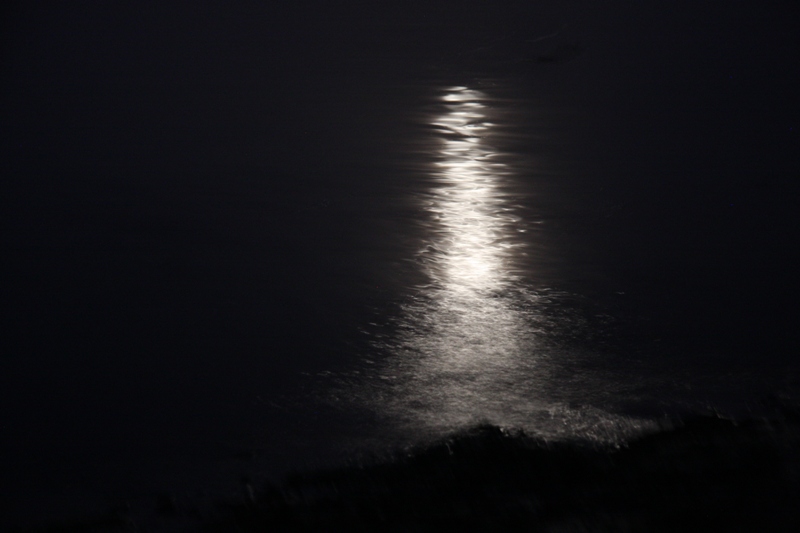
as moonlight serenades the sea…

I have come to trust and know that nothing stays the same. We are all in our physical existence for but a split second of eternal time.

Sprout Question: What are you waiting for?

© 2010 Terrill Welch, All rights reserved.

Liberal usage granted with written permission. See “About” for details.

Purchase photography at http://www.redbubble.com/people/terrillwelch

Creative Potager – where imagination rules. Be inspired.

From Mayne Island, British Columbia, Canada
Walk by the Sea

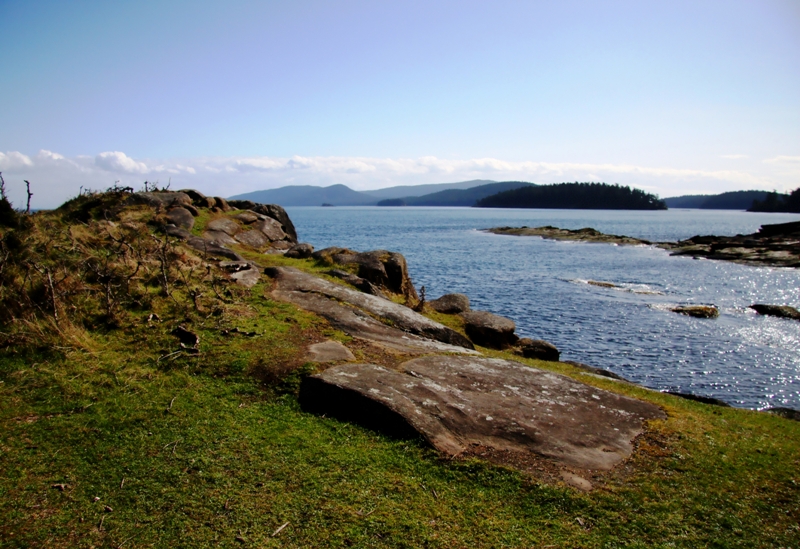
I never tire of walking trail along the sea. I hope you are not yet tired of my images from these walks. The photos today are from a walk that you won’t find on any map. The walk is only known by locals. It is on private land and permission is granted at your own risk. It is a privilege and a honour that I do not take for granted. So I am not going to tell you exactly where this is on Mayne Island. If you know, smile wisely and enjoy the photo essay along with everyone else.

Come with me….

The trail is rugged in places. I often stop to be able to look up from placing my feet carefully between tree roots and sandstone sticking up on the rough trail. In the next few years, you won’t see many photos like this one where to show the trail in the deep shadows, the sea and sky over exposed. We will all know how to do HDR... but when we look in real time we must choose what we can see at one time… so I have also chosen in this photograhy.

As I walk, a sea lion surfaces off the shore. I know it is there because when it breathes I can feel it on the back of my neck. I look. There she is. I do not try to take photos as past experience tells me, my lens won’t reach. She rolls up to the surface. Breathes. Then rolls her long sleek body over and down she goes, surfacing again many yards ahead of me. I don’t see her the next time she surfaces.

About 45 minutes later I make my way to the point.

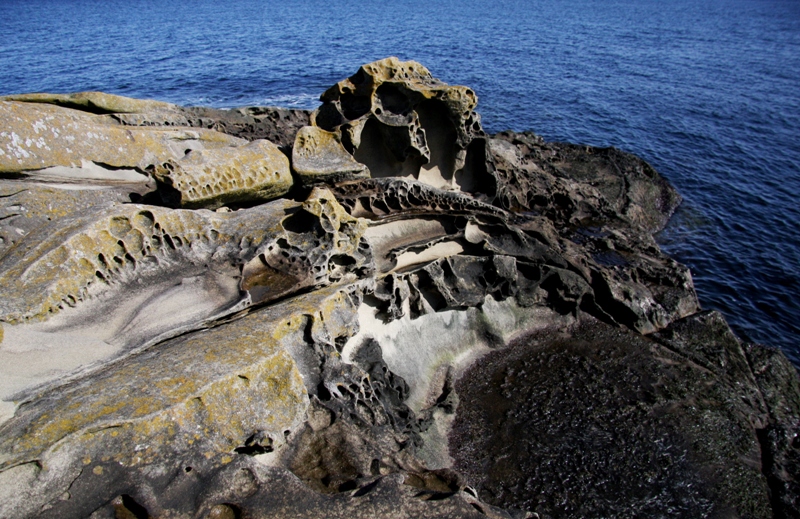
The sandstone is warm from the sun. I sit and wonder at the beauty of its shape.

Looking over on the other side I catch a wave coming in.

And then I think I know…

High tides and winter storms have carved out such a place where I now admire its beauty.

I don’t want to go. I want to stay and be part of the sandstone and then part of the sea, then part of the sandstone… until day becomes night and night day and time has no relevance.

I do go though. I am not sure what makes me leave, but I do.

Two hours later, I am putting the key back into the ignition. I go home. I make lunch. I leave these images in my mind until last night… or rather early this morning as I was still editing at 1:00 am. Now I have savoured them long enough… I can now share them with you.

Sprout Question: If you could do only one more creative of work in your life time – what would you do?

© 2010 Terrill Welch, All rights reserved.

Liberal usage granted with written permission. See “About” for details.

Purchase photography at http://www.redbubble.com/people/terrillwelch

Creative Potager – where imagination rules. Be inspired.

From Mayne Island, British Columbia, Canada

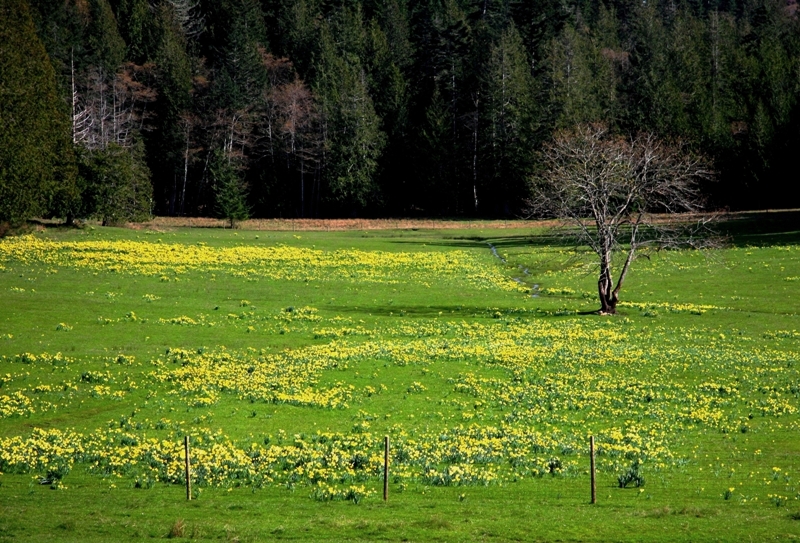
field of daffodils

Field of daffodils on Mayne Island

During the past few days on Creative Potager we have been talking about shadows and the power of darkness in our creativity. When I saw this field of daffodils, its brilliance was only enhanced by the shadows. In fact, this naturalized field of bright yellow flowers comes from a dark shadow in Mayne Island’s past. I was told that the land was once owned and farmed by a Japanese family who grew the daffodils along with tomatoes that were shipped and sold in Vancouver, British Columbia.

Update Wednesday June 1, 2022: comment clarifies history for us “The picture in this story was not owned by the Japanese farmers. Richard Hall bought this piece of property in1922. He grew daffodils and tomatoes. When he retired he sold his greenhouses to the Japanese farmers who took them to a farm on Campbell Bay Rd, and then grew tomatoes for sale. This particular piece of property is still owned by Richard Halls relatives.” Thank you Linda!

During World War II the Japanese on Mayne Island were gathered up and taken from their land to war camps in the interior of British Columbia for fear of espionage. Their land was later given to soldiers returning from the war. The daffodils stayed and bloom every spring – reminding us.

Mr. Lenard Cohen’s “Anthem” comes to mind with the line “There is a crack in everything… that’s how the light gets in…

Sprout Question: Do you have a piece of work exists because that is how the light comes in? (links to your work are welcome)

Note: This field of daffodils is private property. No trespassing allowed. These photos were taken from the public roadway. The community has built a Japanese Garden in commemoration of early Japanese settlers.

Addition: After fielding several questions, I am adding the following historical references….

“On Tuesday, April 21, 1942, the CPR steamship Princess Mary came for the fifty Japanese men, women and children who waited on the Miners Bay wharf. Most of the Mayne Island residents were in attendance to shake hands and wish them well. It was a sad time for all… A week after evacuation, the first tomatoes of the season, so optimistically planted by the Japanese, were picked by their Mayne Island friends and sent off to market…. [between 1942 and 1943 growing season] In all, between 150,000 and 200,000 pounds of tomatoes were harvested. The school lost seventeen Japanese school children. Classes limped along until June and then the school closed until September 1944 for lack of pupils.” p.69-70 in Mayne Island & The Outer Gulf Islands A History by Marie Elliott (1984)

A Japanese Canadian Timeline by John Endo Greenaway

© 2010 Terrill Welch, All rights reserved.

Liberal usage granted with written permission. See “About” for details.

Purchase photography at http://www.redbubble.com/people/terrillwelch

Creative Potager – where imagination rules. Be inspired.

From Mayne Island, British Columbia, Canada
Why Women’s Day – Oscar or no Oscar?

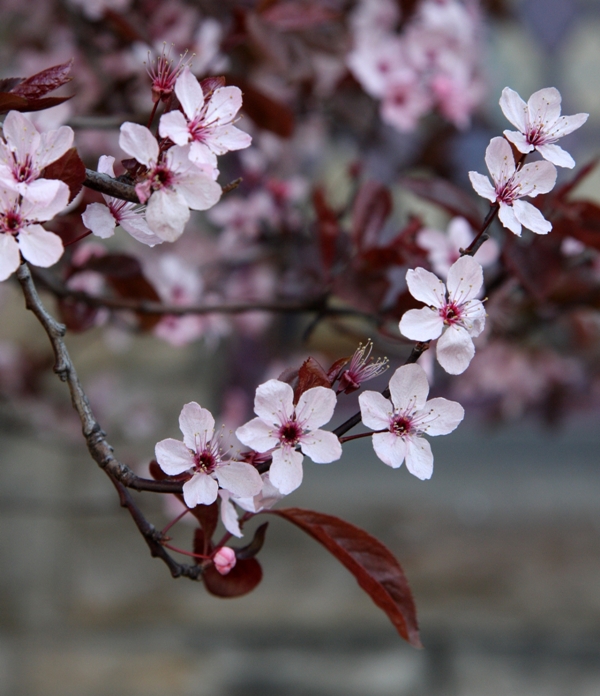
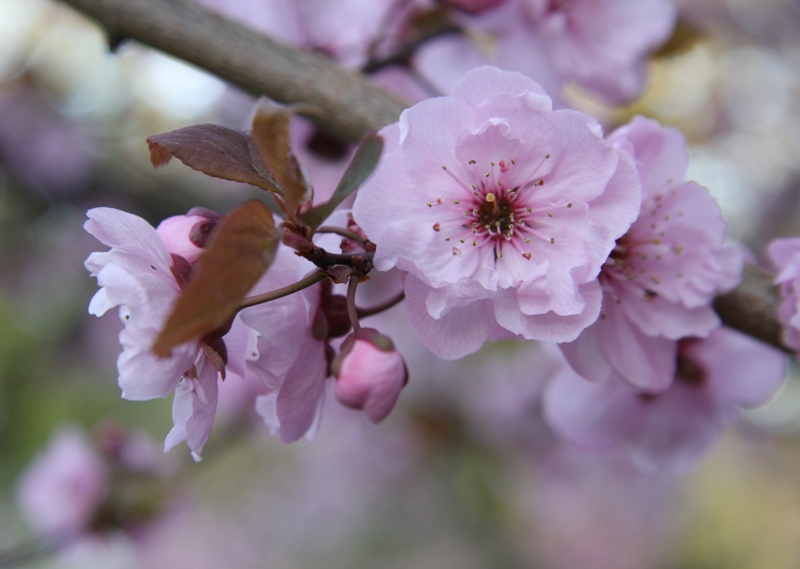
Blossoms for courage and abundance on International Women’s Day.

View and purchase full resolution image here.

Today, March 8, 2010 is International Women’s Day. This year a lovely man told me that he appreciated women everyday not just on March 8th. I’m relieved this is the case. But International Women’s Day is about much more than appreciation. All the blossoms, appreciation and love in the world for women will not, by itself, effect the change necessary for women’s equality. The disparity between women and men is the motivation behind my by-donation services design for Terrill Welch – A woman behind Women. The disparity between women and men is part of my motivation for writing Mona’s Work.

Last night, for the first time, an Oscar was given to a woman film director, Kathryn Bigelow, in the 82 year history of the academy – for a war movie, which surprises people that it was directed by a woman. Need I say more? Yes?

In an interview on March 2, 2010 with Willa Paskin of Slate, Kathryn Bigelow says the following about creativity and being a woman….

“…I come from the art world, or that’s where I was creatively, aesthetically, and intellectually formed and informed.

Certainly at the time I was there, there was never a discussion of gender per se. Like, this is a woman’s sculpture or a man’s sculpture. There was never this kind of bifurcation of particular talent. It was just looked at as the piece of work. The work had to speak for itself. And that’s still how I look at any particular work.

I think of a person as a filmmaker, not a male or female filmmaker. Or I think of them as a painter, not a male or female painter. I don’t view the world like that. Yes, we’re informed by who we are, and perhaps we’re even defined by that, but yet, the work has to speak for itself.” Read the full interview here.

Do I disagree with Bigelow? No, I agree. This is the ideal we are striving for. The question is – are we there yet? Can women compete in creative fields beyond the styles and topics held in esteem by male colleagues? If they do, is their creativity then labeled as women’s art, or women’s crafts? These are thorny questions which have no easy quick answers – at least, no easy answers I have found in the twenty years I’ve been part of these discussions. Yet, today, International Women’s Day, I beg the questions for your consideration.

Sprout Question: Do you feel your gender influences your creativity?

HAPPY INTERNATIONAL WOMEN’S DAY to all women, and women artists! Congratulations to the men who appreciate their creativity.

© 2010 Terrill Welch, All rights reserved.

Liberal usage granted with written permission. See “About” for details.

Purchase photography at http://www.redbubble.com/people/terrillwelch

Creative Potager – where imagination rules. Be inspired.

From Mayne Island, British Columbia, Canada

Talking Bread Loaves PART 3

View and purchase full resolution image here.

Blossoms are everywhere. It is spring in Victoria and it is Friday. What can possibly be better than this?

PART 3 and the conclusion of “Talking Bread Loaves” If you missed part one you can read part it  here and part two here.

After about an hour I help mom punch the bread dough down and she makes the loaves and sets them to rise for a second time. This is when the magic really begins. Mom starts adding “just the right sticks” of wood to the stove and every so often she places her arm in the oven. Each time she checks, I ask “Does it feel right yet?” I’m amazed that she can tell when the temperature is “right” to put the loaves in to bake. Soon she is carefully placing four loaves into the oven. I find something to do at the kitchen table so I don’t miss what I count on happening next.

I have enough time to draw two horse pictures, one barn picture and part of a chicken coop before mom opens the oven door. She lifts a loaf carefully up to her ear. I stand breathlessly beside her.

Looking intently at the frown on her face I ask “what did it say mom? What did it say?”

In a deep gravelly voice she answers “put me back in.” and just a little louder over my giggles, she continues “I’m not ready yet.”

Each loaf is lifted up in turn. In sing-song notes the next loaf responds “well, I think I’m cooked” followed by its close companion who complains “don’t be in such a hurry. I’m raw in the middle.” Then the fourth one replies with a shiver “burrrrr, close the oven door, it’s getting cold in here.”

As the first loaves finish cooking, more wood is added to the stove and the next four loaves are again carefully placed in the oven. All eight loaves have something to say when mom lifted them to her ear. There wasn’t a silent loaf in the bunch.

Sprout Question: What makes you giggle that child-belly-laugh when you imagine it?

The very best of  Friday to you and I hope you have a wonderful weekend… and take some time out for a good giggle. It does wonders for releasing creative energy.

© 2010 Terrill Welch, All rights reserved.

Liberal usage granted with written permission. See “About” for details.

Purchase photography at http://www.redbubble.com/people/terrillwelch

Creative Potager – where imagination rules. Be inspired.

From Mayne Island, British Columbia, Canada

Talking Bread Loaves PART 2

“Talking Bread Loaves” PART 2 and artist Stacy Ericson

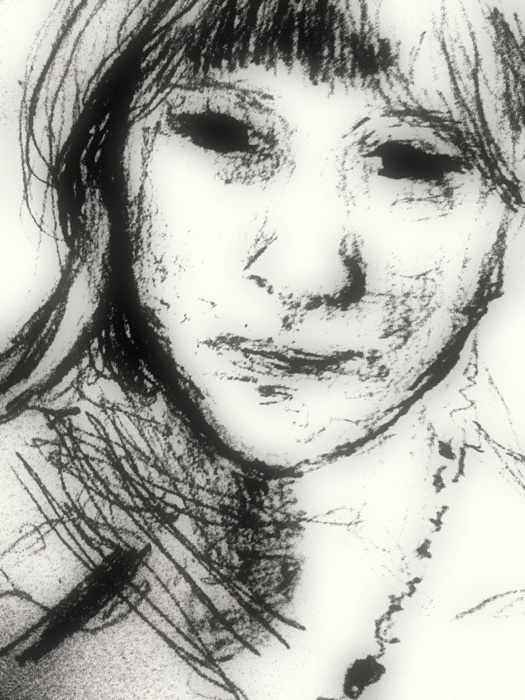
Sketch of Terrill Welch by Stacy Ericson

One of my first interactions with Stacy Ericson was when she asked “tweet friends” to volunteer for her to sketch. Of course, I put my “tweet” up right away. Above is the delightful result.  Below part two of “Talking Bread Loaves” you will find more about Stacy and her creative talents as an artist, poet, and photographer.

Now Continuing with part two of “Talking Bread Loaves” If you missed the first part you can read it here.

Next, a little flour goes into the yeast mixture. My mother’s arms flexed with the strain of stirring the long wooden spoon around and around the bowl. Her other arm holds the bowl at an angle to make the stirring easier. She stops occasionally to add more flour and as she does, she looks at me with one eye, making sure I don’t have my hands in the open flour container. Or worse, I’ve made finger roads through the crater of flour that she has ready on the table.

When she feels that the dough is thick enough to pour she lifts the large bowl up with one arm and tips it into the floor crater. Using the other arm, she maneuvers the wooden spoon, scrapping the leftover dough out as quickly as she can. Timing is critical. She needs to put down the bowl and be able to fold the flour into the warm dough before it runs over the edge of the flour barrier.

This was my chance. I sink my hands into the soft flour and as I do this I shout “Oh look mom! It is coming over the edge!” and then I place my little palms along the area where the dough is about to overflow. Mom’s strong hands slide in between mine and the flour and the dough. With a graceful swoop she begins kneading the flour in. When just “the right amount of flour” has been added, she “lets it rest” while washing out the bowl. I am given the gigantic bowl “to grease” while she kneads the dough. Then she placed the smooth, elastic ball of dough back into the greased bowl and sets it aside in a warm place “away from drafts” to rise until it has doubled in size.

Read the Conclusion PART 3 here

Sprout Question: When do you experience a feeling of awe?

Bonus: Stacy Ericson is unpretentious and engaging. She quietly, in cumulative small engagements, warms your heart. There is a vivacious vibrancy to Stacy that rings through into her art, photography and her writing. Her perception is somewhat like that of an arrow’s quiver. We are caught in the blur yet we know she has captured the intended target – beautifully. Following are a few of Stacy’s images and reflections.

Stair Shadow by Stacy Ericson

“The dead and the discarded, dry wisps, and fallow fields, industrial textures, and rural detritus are transformed by a distillation into line and light.”

Elise chicken looking by Stacy Ericson

“Images make me happy. Getting what I want out of a photo, or getting close to it, to me is simply joyful.”

Confusion of the Watchmaker by Stacy Ericson

“I want to experiment with many forms, but I do have a passion for blur — often even photographs that seem to be in focus capture light differently when the camera itself is in movement.”

Sun by Stacy Ericson

“I have a feeling that the static object holds a life-force within that is revealed with the introduction of a random element of moving time. I prefer a slight point of focus to a completely abstract blend of colors in my blurs photos.”

Who is Stacy Ericson?

Stacy Ericson’s arrived late to the visual arts. After growing up in a household devoted to the theater, her educational background includes the study of ancient languages, Etruscan culture, and World Religion. The onset of a genetic disease began a slide into the visual arts, which began to gel while experimenting with the photographic technique of intentional blur, captured through camera movement. Recently Stacy began a small portrait business, and is currently working with both digital SLR and the iPhone camera.

After the Haitian crisis Stacy began The Images without Borders project with Laura Bergerol. This innovative non-profit makes art prints from world class photographers available at a low cost to the public with all the proceeds benefiting Doctor’s without Borders.

© 2010 Terrill Welch, All rights reserved.

Liberal usage granted with written permission. See “About” for details.

Purchase photography at http://www.redbubble.com/people/terrillwelch

Creative Potager – where imagination rules. Be inspired.

From Mayne Island, British Columbia, Canada

Baby Lambs

On this early Friday morning of west coast rain, I first want to thank the many faithful readers and sprout question responders of Creative Potager. This new blog began on December 27, 2009 with “A Gown Remembered: A beginning.” Today’s submission makes 45 posts with 442 comments and 3,342 views. Thank you. Your engagement, encouragement, humour and insights are an integral part of what makes for an excellent creative potager.

I must be off to a writing group this morning. The underpainting is still drying on my oil canvas and it is Friday on the last Friday in February. I thought I would share a series of photos from my visit to Meadowmist Farm to see the sheep with their new lambs yesterday. The babies always make me laugh with their curious leaping and bouncing around.

Mama keeps an eye out as we wander around the yard looking at the babies.

Here is Fat and Sassy running across the top of the knoll beside us.

Now what are these three up to? They have mischief written all over them as the scuttle across the lawn.

Ah yes – a game of  “let’s chase the cat.” Bridget Joyce’s lovely farm dog watches on to make sure nothing gets out of hand.

And finally, I take a first family portrait.

Thank you Joyce Kallweit for a delightful meander with this seasons new baby lambs. The best of the weekend everyone.

Sprout Question: How do you play or have fun when taking a break from creating?

© 2010 Terrill Welch, All rights reserved.

Liberal usage granted with written permission. See “About” for details.

Purchase photography at http://www.redbubble.com/people/terrillwelch

Creative Potager – where imagination rules. Be inspired.

From Mayne Island, British Columbia, Canada
East

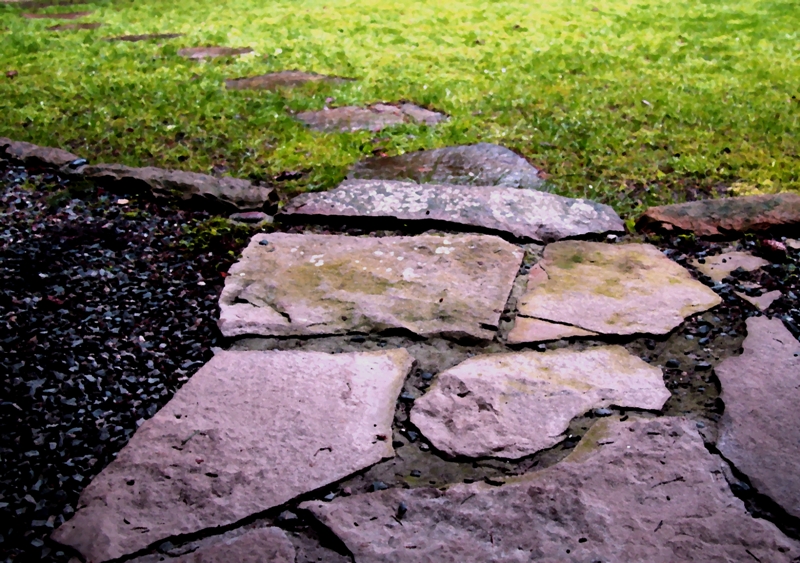
Quietly I close the door behind me and step out onto the sandstone walk. Dawn requests softness as my body, stiff from sleep, stretches into the morning.

East is the direction of the door I’ve just closed. East is the direction my head faces when I sleep. East is the first direction I seek when I rise. Where am I? I look east. East is the direction my studio window faces. When I work, I mostly keep east in front of me or to my left shoulder. I write, take photographs and paint mostly during the first few hours of a day. I edit in the afternoon and late evening. Sunsets, the gloaming and dinner are for enjoying and chats – not working.

I admire the sparse early garden as I head out for a walk.

View and purchase full resolution image (photograph rendered in oils) here.

If we are able to follow the natural rhythms of our body, they are often different from each other. Not everyone has the same orientation to the various times of day.

Sprout Question: Following your natural body rhythms, what part of the day is yours?

© 2010 Terrill Welch, All rights reserved.

Liberal usage granted with written permission. See “About” for details.

Purchase photography at http://www.redbubble.com/people/terrillwelch

Creative Potager – where imagination rules. Be inspired.

From Mayne Island, British Columbia, Canada

Sandstone

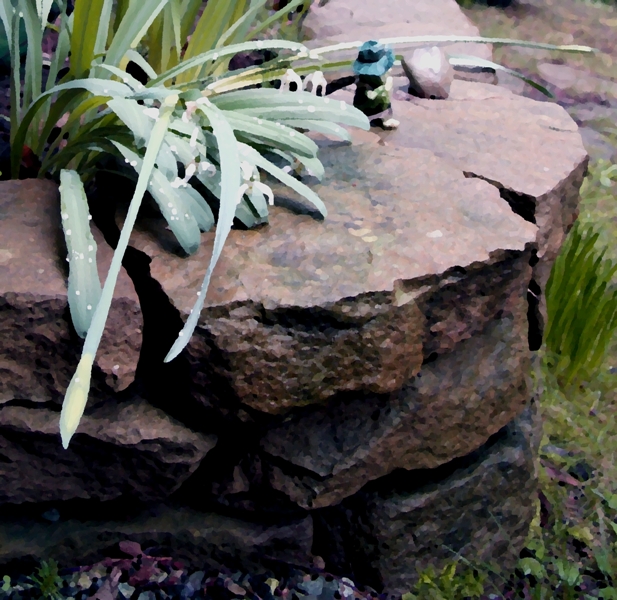
There is nothing more intriguing to my imagination than southern gulf island sandstone. The wearing and washing of the sea along island shorelines creates a beauty that is hard to replicate. With its abundance and ease to work with, sandstone is used for everything from walkways, front step, garden beds, to cob wall foundations. Our home, along with many others on the west coast, make practical use of this local natural material.

Yet, it is the sea that has the most talent in sculpturing this soft stone as shown in these photographs from East Point on Saturna Island.

View and purchase full resolution images here.

View and purchase full resolution images here.

View and purchase full resolution images here.

View and purchase full resolution images here.

Sprout Question: What natural substance has draped you with creative possibilities?

© 2010 Terrill Welch, All rights reserved.

Liberal usage granted with written permission. See “About” for details.

Purchase photography at http://www.redbubble.com/people/terrillwelch

Creative Potager – where imagination rules. Be inspired.

From Mayne Island, British Columbia, Canada