East

Quietly I close the door behind me and step out onto the sandstone walk. Dawn requests softness as my body, stiff from sleep, stretches into the morning.

East is the direction of the door I’ve just closed. East is the direction my head faces when I sleep. East is the first direction I seek when I rise. Where am I? I look east. East is the direction my studio window faces. When I work, I mostly keep east in front of me or to my left shoulder. I write, take photographs and paint mostly during the first few hours of a day. I edit in the afternoon and late evening. Sunsets, the gloaming and dinner are for enjoying and chats – not working.

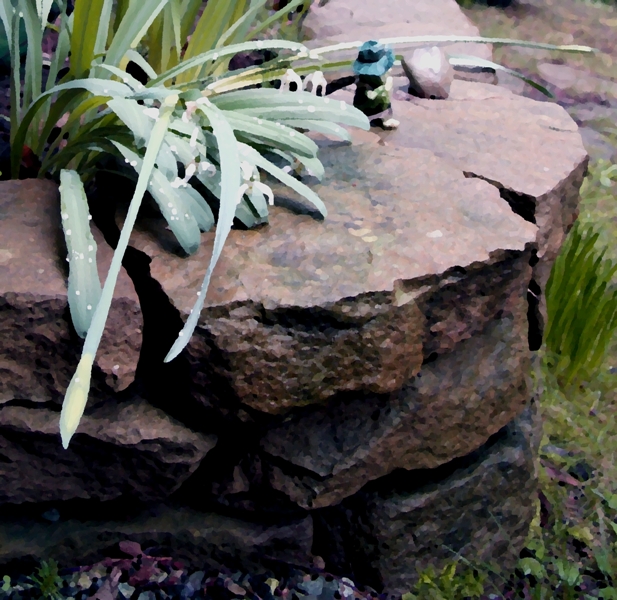
I admire the sparse early garden as I head out for a walk.

View and purchase full resolution image (photograph rendered in oils) here.

If we are able to follow the natural rhythms of our body, they are often different from each other. Not everyone has the same orientation to the various times of day.

Sprout Question: Following your natural body rhythms, what part of the day is yours?

© 2010 Terrill Welch, All rights reserved.

Liberal usage granted with written permission. See “About” for details.

Purchase photography at http://www.redbubble.com/people/terrillwelch

Creative Potager – where imagination rules. Be inspired.

From Mayne Island, British Columbia, Canada

DWELLING

With David L. Colussi’s permission, I share his poem “DWELLING” with you today as part of my creative focus in February on the theme of “home.” I will be placing this poem in a new page I’m developing for the Creative Potager blog about la casa de inspiracion – our home.

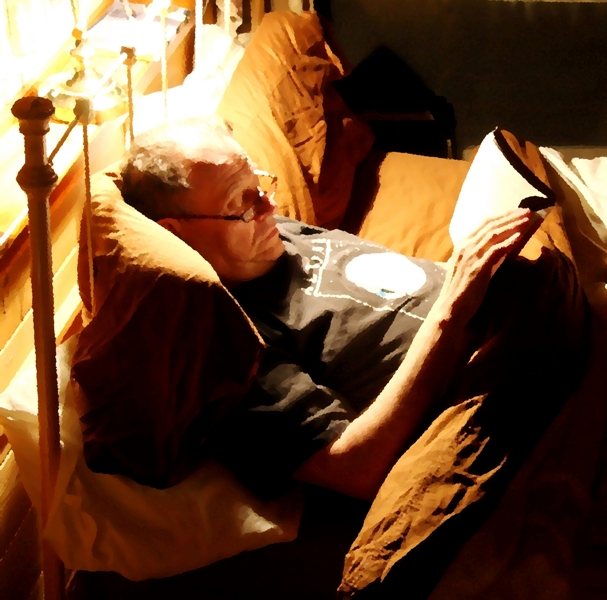
This first image of David is a personal favourite of mine rendered as an oil painting. David is reading with his drug-store glasses which he likes better than his prescription lens. They are usually slightly askew as he softly turns the pages.
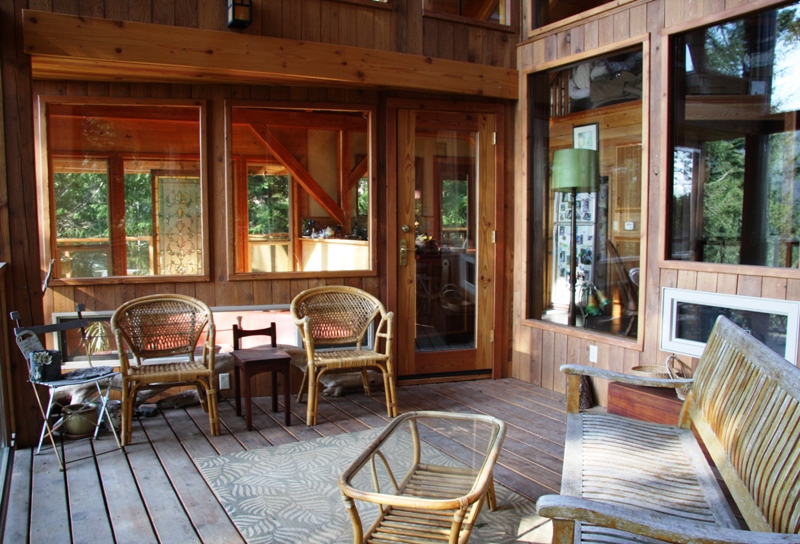
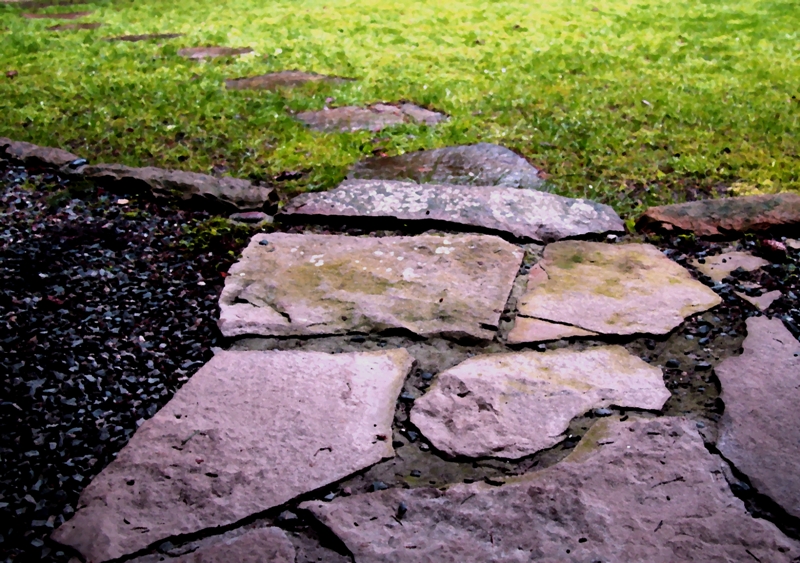
This next image best introduces the poem which reflects on the reflections of la casa de inspiracion and the meaning of “to dwell.”

DWELLING

[1 DWELLING = ERROR]

Watching sunlight and darkness from this house of glass

suspended on the ridges of a valley,

the human history of dwelling plays across the scene in drama or in documentary.

Darkness dwells the way that we once did in wandering across the land.

Its home is east of the sun, where it moves ahead in gypsy fashion,

and west of the sun, where it follows as a hunter.

The hunter waits for the sunlight to hit the tops of western valley cliffs at progressively acute angles,

and when the sunlight overshoots the cliffs completely

the darkness rushes over the valley walls like water over Niagara Falls

and submerges all the valley into one big reservoir of night.

Presently it rises up and silvers all the windows and the stained glass tears.

This house of glass becomes a house of mirrors.

[2 DWELLING = INTROVERSION OBSESSION]

Now every light inside the house is captured in the window glass.

Everything that we illuminate is gathered and sent back for us to dwell on and elucidate.

The corner window down the hall shows part of my face in profile.

I look up through the skylight and against the tree tops seen in silhouettes

my hands are on the keyboard moving in some stopped-action like some marionettes.

The corners of the windows in the room downstairs contain some pieces of me I forgot were even there beneath the table.

I am all picassoed over on the window walls in fragments and distorted in stained-glass tears

because this house of glass has turned into a house of mirrors.

[3 DWELLING = HOME]

I work away at putting all my pieces back together.

Memories of things that happened decades long ago appear in casement window frames –

I turn my head

And see myself in childhood and remember questions that I thought I’d answered years ago.

They’re all still there waiting to present their supplementaries.

I wonder how I managed to survive with all these pieces some are missing some still there.

They fit together best when you are here.

………………………

According to David’s notes, which record his history of development and changes to the poem, David started researching “to dwell” and writing this poem on July 24, 2009. I knew he was researching “to dwell” as we had discussed it at length on more than one occasion. He had also told me he was writing a poem for my birthday and that he was just about finished. I begged for clues as to what it was about but as usual he just laughed and held to his secret surprise. My birthday is on August 28th. It wasn’t until I was back home on Mayne Island for a mere 24 hours on Saturday, September 5, 2009 that I happened to open his blue notebook, which he had innocently placed on his desk, and discovered David’s latest work that he had last revised the night he had his stroke August 9, 2009.

Sprout Question: Who champions your creativity?

p.s. Who is David L. Colussi?

David L. Colussi retired in 2002 after an expansive career in education and management in both the provincial/federal government(s)… His background includes:

– Master of Arts degree in English

– Diploma in Alternative Dispute Resolution from the Canadian Institute for Applied Negotiation in Ottawa

– Teaching English and critical thinking for 3 years at Niagara College, Ontario

– Internal management consultant with federal government in Ottawa for two years

– BC provincial government manager for almost 30 years, with the ministries of Attorney-General, Health, Advanced Education, and central agencies including as Executive Director of Human Resources in the Ministry of Health

– With his late wife, founded a private non-profit Montessori pre-school and elementary school in Victoria 1979-1998, served as its first board chair, and remains an honorary member of its Foundation board

– Member of the patron group of Pearson World College of the Pacific

– Chair of BC StudentAid Appeal Committee for the past 5 years.

With children and step-children grown, some with partner’s and children of their own, David now lives a quiet life on Mayne Island in B.C. Canada with his wife Terrill Welch, executive leadership coach, writer, photographer and artist.

© 2010 Terrill Welch, All rights reserved.

Liberal usage granted with written permission. See “About” for details.

Purchase photography at http://www.redbubble.com/people/terrillwelch

Creative Potager – where imagination rules. Be inspired.

From Mayne Island, British Columbia, Canada
Pulse

So close to Valentine’s Day, with hearts appearing everywhere, I offer you a view of one of my watercolour paintings from 2001. Today, I’m reading and collecting creative inspiration. I’m reading through blogs on my blog roll. I’m browsing through blogs in my Gaia community. I am picking up pebbles in my tweet stream on Twitter. Today is about me experiencing the pulse of your creativity…

At the heart of things we are all simply human.

View and purchase full resolution image here.


Sprout Question: If your creativity had a pulse, what would be the rhythm of its beat?

© 2010 Terrill Welch, All rights reserved.

Liberal usage granted with written permission. See “About” for details.

Purchase photography at http://www.redbubble.com/people/terrillwelch

Creative Potager – where imagination rules. Be inspired.

Possible

Creative possibility comes from getting it wrong.

Studio mess – my home – time to de-clutter. 8’X11″ charcoal quick sketch.

“Oh, I could never draw or paint like that.”

“I’m not a writer like you.

“My photographs don’t compare to yours.”

If I had a dime for each time I heard these comments or others like them, all of my creative work could be used for charity fundraising because I would be independently wealthy. The sad thing is these statements are not true. They are lies we come to believe because we compare our attempts with finished products rather than the process that lead to their creation.

Here is a best kept secret: creative excellence comes from getting things wrong. Yes, wrong. As I commented on Coffee Messiah’s blog this morning, one of my drawing teachers, Glenn Howarth, was fond of saying things like: “It is the shoulder or wrist you struggle to draw that teaches you the anatomy of an arm.”

This is why I have committed to showing you my first morning “awakener” sketch. These first sketches are to engage me in the creative process. My sleepy eyes begin to frame, compose and dig at the relationship between elements I am about to sketch. My stiff arm and hand begin to respond to these relationships. In these first sketches, few mental barriers about “getting it right” have been erected. My judgment is left aside – these are not “keepers” they are “awakeners.”

In a three-hour drawing class, I often do 30 quick sketches that progressively increase in length until it is time to settle into the last hour-long sketch. When I am doing a photo shoot, I may take 150 images with maybe three becoming “keepers.”

Hours and days of exploring “that which is not yet quite right” leads to the creative possibility for success. This is where we discover our unique creative expression. This is where we learn our craft. We learn what is possible by getting it wrong.

My first quick sketch of the day is to inspire you to say to yourself – “hey, I can do that!” And you can.

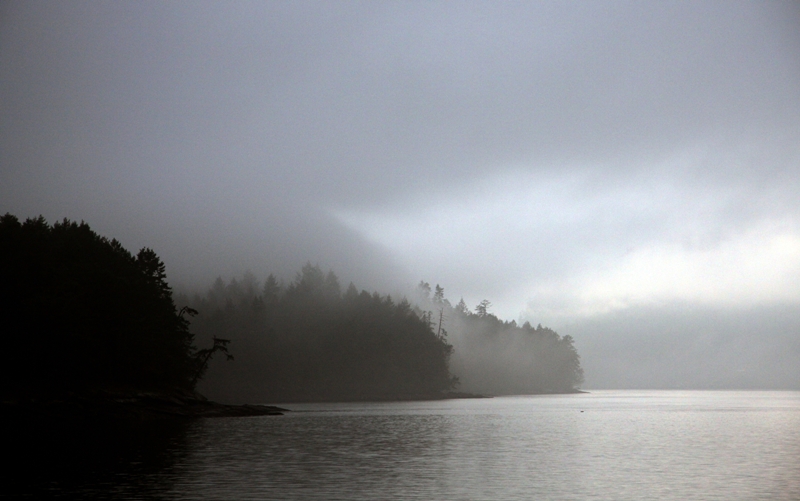
Here is the last of my chosen three out of 150 shots of mist…

View and purchase full resolution image here.

Sprout Question: What do you do to strengthen your creative possibility?

p.s. Glenn Howarth was the most outstanding art instructor I have had the pleasure of working under. I am forever grateful for the few short years I was in his figure drawing classes. Glenn Howarth died last year at the age of 62. Very little of his thinking and work is on-line but here is an article he wrote that was published in  Canadian Art and Art Resource Directory: “Pictophile – Plein Air Painting”


© 2010 Terrill Welch, All rights reserved.

Liberal usage granted with written permission. See “About” for details.

Purchase photography at http://www.redbubble.com/people/terrillwelch

Creative Potager – where imagination rules. Be inspired.

Unstuck

Unstuck is so much better than being stuck. Thank you Tobin, Laurie Sue, Robert, Ryan and Sam for answering yesterday’s Sprout Question: Has there ever been a time when you were stuck and finding it difficult to finished a creative piece? What did you do?

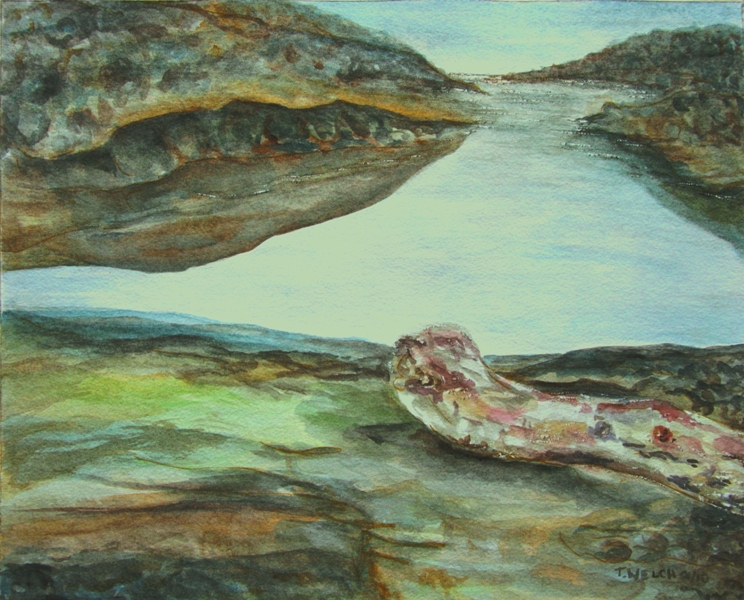
Here are the results of yesterday’s work where I tried a number of the suggestions offered in the comments on the previous post “Stuck.”

But here is how it will be cropped when framed.

View image in full resolution here.

Yes, I think this is my  last edit to take out all that isn’t adding value to the final image. It is the photographer in my that likes to trim.

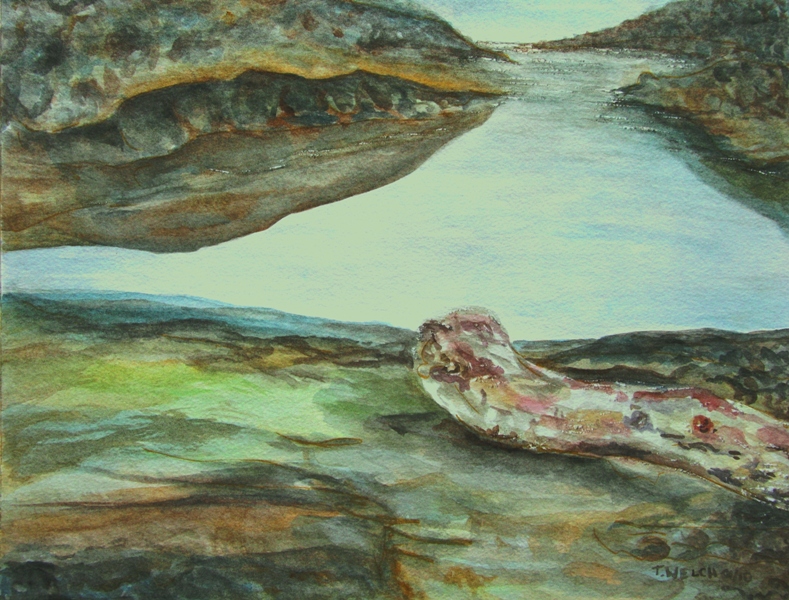
Arbutus driftwood and Sandstone may never be in the category of “one of my very best paintings” but I have a huge sense of satisfaction in having it “done!” Besides, I have long ago stopped deciding what is best or worst in my work because I have seen people overlook my favourites and purchase something that I was reluctant to keep (my mother has saved a few pieces from my compost pile that I am now glad she did).

Best of all, I can now move on to other work – like using my new water miscible oil paints. I haven’t painted with oils for 30 years. I am so excited to get started – after laundry and other chores of course… or maybe painting first then chores. How does that sound?  Like celebrating right? Shall we?

Sprout Question: How do you celebrate when you have a creative break through?

© 2010 Terrill Welch, All rights reserved.

Liberal usage granted with written permission. See “About” for details.

Purchase photography at http://www.redbubble.com/people/terrillwelch

Creative Potager – where imagination rules. Be inspired.

Stuck

I’m stuck. The painting above is about half to three-quarters finished and somehow I have become attached – invested. The arbutus driftwood, sandstone and tide pool have drawn me into a deadly web of “don’t touch it!” When I’m painting with watercolours, more than with any other of my creative processes, I must work from a place of detached emotional clarity. Watercolors are transparent like steps in the sand. Every move shows until you start a new sheet (or the tide comes in).

Sometimes, if I wait for a few days the next step will become clear and release me from the fear of “ruining everything.” I’ve waited two weeks. Nothing. Sometimes, if I move the painting to a new location and see it in different light I can decided what is next. Still nothing. In fact, I’m even more attached than before I took the darn thing out of the studio. Yet, I know the painting is not finished. This means only one thing. I must push through allowing my intuition to guide me into new learning.

I must firmly say to my self: “It is water, colour pigment, and paper. That is all.”

If a muddy puddle of coloured water with mushy paper is all that is left by tomorrow, I shall compost it in the flower bed. If I end up with a finished painting, I will consider it the first in an exhibit I’m building about the arbutus tree. Either way, I shall take a photo of the results and share them with you.

Sprout Question: Has there ever been a time when you were stuck and finding it difficult to finished a creative piece? What did you do?

p.s. If you hear little from me until late tomorrow, I’m painting…or possibly composting.

© 2010 Terrill Welch, All rights reserved.

Liberal usage granted with written permission. See “About” for details.

Purchase photography at http://www.redbubble.com/people/terrillwelch

Creative Potager – where imagination rules. Be inspired.

Good Luck Creativity

View image and purchase of “Arbutus in the Fog”  here.

My partner of many years (and the lovely man who has recently become my husband – December 10, 2009) and I have a banter that goes something like this…

I ask with raised eyebrows and a tone of dismay “how did you ever end up with a wild and crazy woman like me?”

With his eyes snapping, he responds “just lucky I guess.”

The truth is my wildness is not of the usual kind – having mostly to do with my vivid imagination and free spirit. And his “good luck” has mostly to do with acting on his preparedness when the opportunity presented itself. But we shall not be entertaining you with our love story today.

What I want to talk about is good luck and creativity. Some time ago, I read Deepak Chopra’s definition of “good luck” in The Seven Spiritual laws of Success (1994). Every since reading his description, it has embodied much of my perceptual understanding about what constitutes good luck. His exact passage reads:

You can look at every problem you have in your life as an opportunity for some greater benefit. You can stay alert to opportunities by being grounded in the wisdom of uncertainty. When your preparedness meets opportunity, the solution will spontaneously appear. What comes out of that is often called “good luck.” Good luck is nothing but preparedness and opportunity coming together.

So there you have it. Now what does this mean when it comes to our creativity? If we are writing, drawing, painting, taking photographs and enhancing our skills daily we are more likely to be prepared when the opportunity arises. When we have “good luck” by this definition we are overjoyed by the unexpected success that befalls us. This is certainly the case with these two images (one above and one below) that I share with you today. In each of these photos the exact coming together of the elements in the images are not likely to repeat themselves readily. In both cases I was prepared. I had my camera with me on my daily walk. I was watching, searching the beauty and the mundane around me. Then as if by magic the image was there – waiting for me, inviting me to capture it.

View and purchase “Holding the Moon” here.

Sprout Question: What part does “good luck” play in your creativity?

© 2010 Terrill Welch, All rights reserved.

Liberal usage granted with written permission. See “About” for details.

Purchase photography at http://www.redbubble.com/people/terrillwelch

Creative Potager – where imagination rules. Be inspired.

Path of No Return

View image in full resolution here.

Yesterday I wrote about redefining the concept of “underpainting” and “overpainting” to include moving from a digital photo through digital processes leading to depicting other art forms such as oil painting and ink drawing.

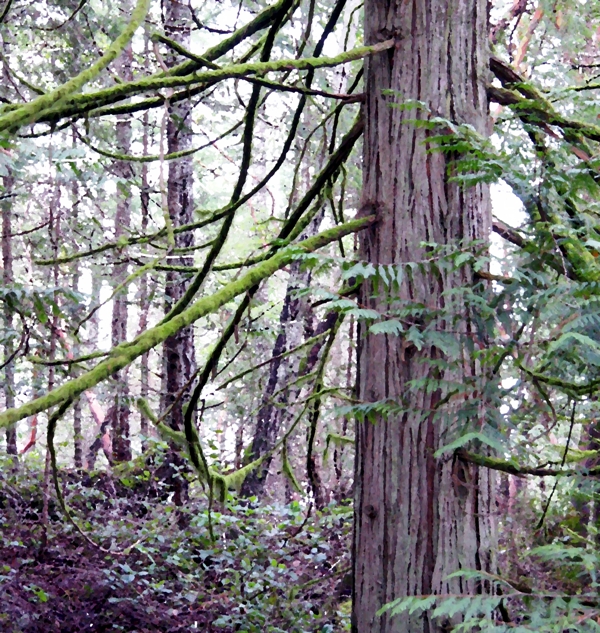
Today, the image I share with you has little resemblance to the original digital image. Yet it feels more like what I experienced in that moment than the original photograph. With rising tension, I digitally worked to create this image, changing one thing, then another and yet another. Like the children in the fairy tale, I was so delighted and excited about what I was doing that I place no marks on the path for my return. Yes, I have the original photograph. But the here-to-there is lost in the same mental processing as happens when I physically paint.

In the image above, Cedar in oil, I now have only the one image left that is the voice of what I want to express.

Dr Bob Deutsch states “The creative communicator is an alchemist of thought, attending to the reasoning of emotion” in “Marketers Need to Better Understand Creativity” This statement seems right – validating. (Note: this reference is to incredible well-written article about creativity published today January 13, 2010)

Sprout Question: Accepting that you are a creative alchemist, what do you want to express in your art that isn’t available before you start?

© 2010 Terrill Welch, All rights reserved.

Liberal usage granted with written permission. See “About” for details.

Purchase photography at http://www.redbubble.com/people/terrillwelch

Creative Potager – where imagination rules. Be inspired.

Redefining Underpainting

View image in full resolution here.


View image in full resolution here.

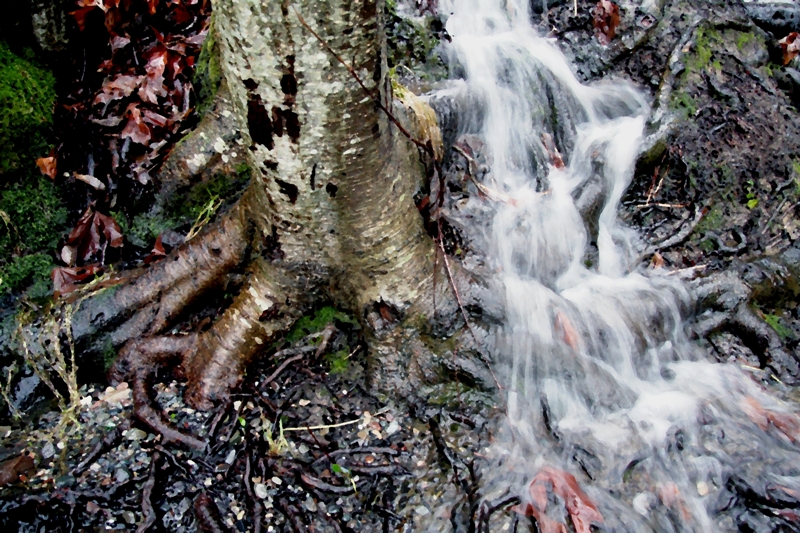
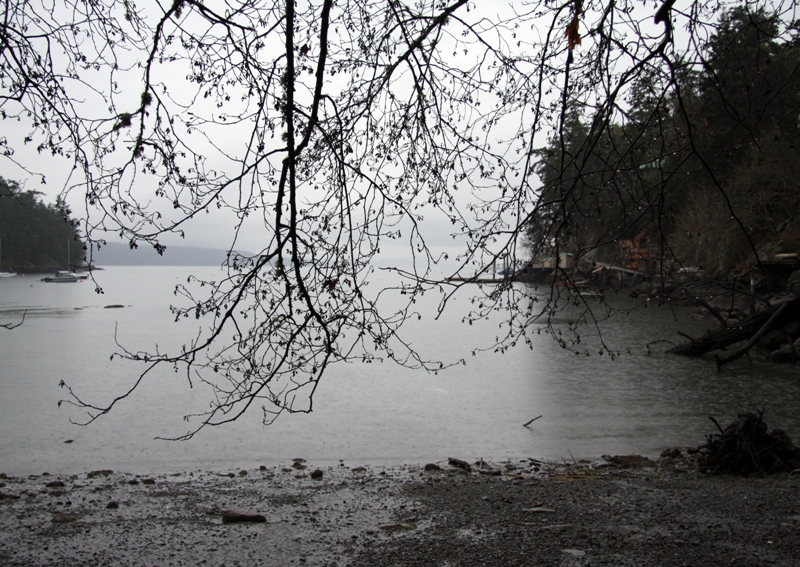
In focusing on creativity as a main adventure in my day, I am facing an internal struggle with what is “true creativity” in my creative process. Technology allows me to create in new ways I couldn’t have imagined ten years ago. In this process, I want to redefine “underpainting” to include the first selected and chosen photographic image.

This takes me to my passion for the concept of “underpainting” which I tend to use even when painting with watercolours. What has got me musing, and experimenting, is the technological advances that allow me to start with an image I’ve captured in a digital photograph and then begin “overpainting” until it is rendered as an oil painting or ink sketch in further digital applications.

( I’m not a photoshop artist nor have I yet ventured in the direction of actual layering images to gain a photograph that gives me a desired finished product. I may at some point – but it has not come to that yet.)

This is my question to self: “Is the finished work (which I am pleased with) having begun with a photographic “underpainting” and resulting in an oil or ink “overpainting” while never picking up a brush or hand-mixing a colour a legitimate creative process?”

Here is another example where I am equally satisfied with the “overpainting” and the original photographic “underpainting.”

View image in full resolution here.


View image in full resolution here.

Sprout Question: How do you define legitimate creativity in your own creative processes?

© 2010 Terrill Welch, All rights reserved.

Liberal usage granted with written permission. See “About” for details.

Purchase photography at http://www.redbubble.com/people/terrillwelch

Creative Potager – where imagination rules. Be inspired.

Last Rose

(image may be purchased here. )

I just have to share my news with you.

I’ve known for some weeks now that one of my paintings was going to be printed in a quarterly literary journal – because the editor asked for permission.

Well, at 3:29 pm PST Friday, January 8, 2010, I received the following email:

Dear Terrill,
Thank you again for the use of your watercolor.  It’s lovely and has already received compliments.  Below is a link to the journal.  Just click on the River Poets Quarterly Autumn 2009 pdf file.  The painting and poem is on Page 11.   http://www.riverpoetsjournal.com/RiverPoetsJournal-Links.html
Warm Regards, Judith Lawrence

The best part – this came right out of the blue. I had no previous connection to the River Poets Quarterly Journal, or to the editor, Judith Lawrence, nor did I make a submission. I had posted the image with my article Last Rose of Desire which is now posted on Creative Potager as “The Crone’s Passion”  (I must ask how she discovered the painting.)

So please, choose your beverage of choice and celebrate with me. Raising glasses high, smiling and giggling… “To creativity!”

Sprout Question: If you were to receive a surprise request for permission to publish your work, who do you want it to be from?

© 2010 Terrill Welch, All rights reserved.

Liberal usage granted with written permission. See “About” for details.

Purchase photography at http://www.redbubble.com/people/terrillwelch

Creative Potager – where imagination rules. Be inspired.