Wednesday, 21 October 2026
This post contains several excerpts from Terrill Welch MA Fine Art Journal because it is one steady flow of related notes in my painting practice for this time period.
Tuesday, 31 December 2025
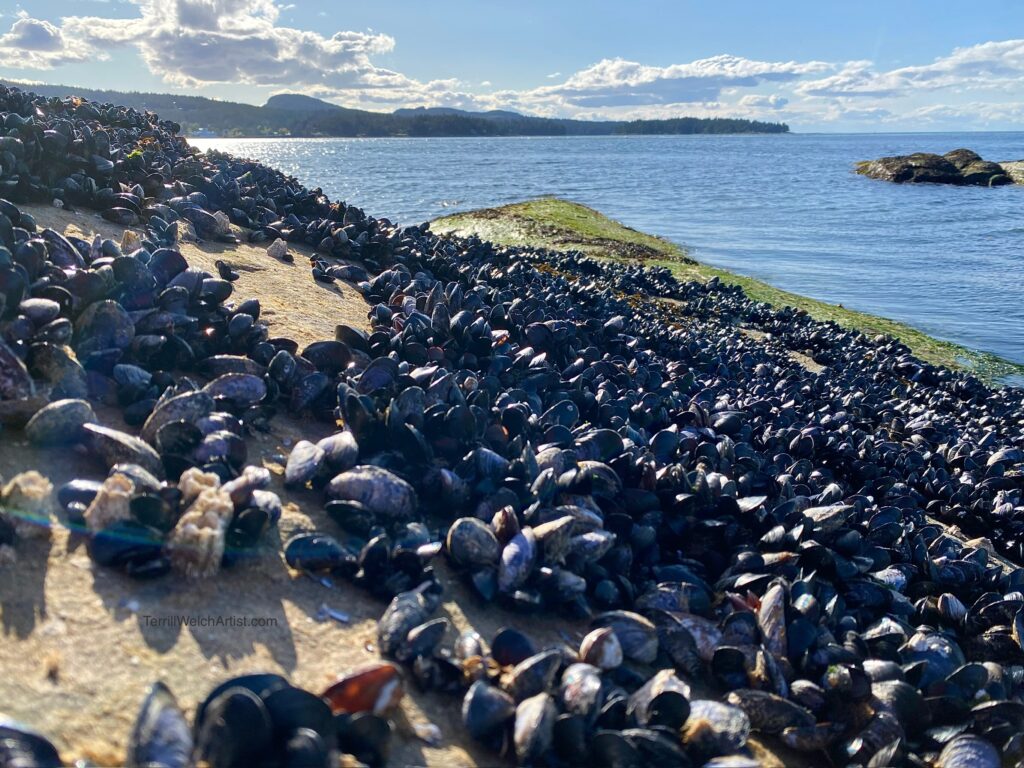
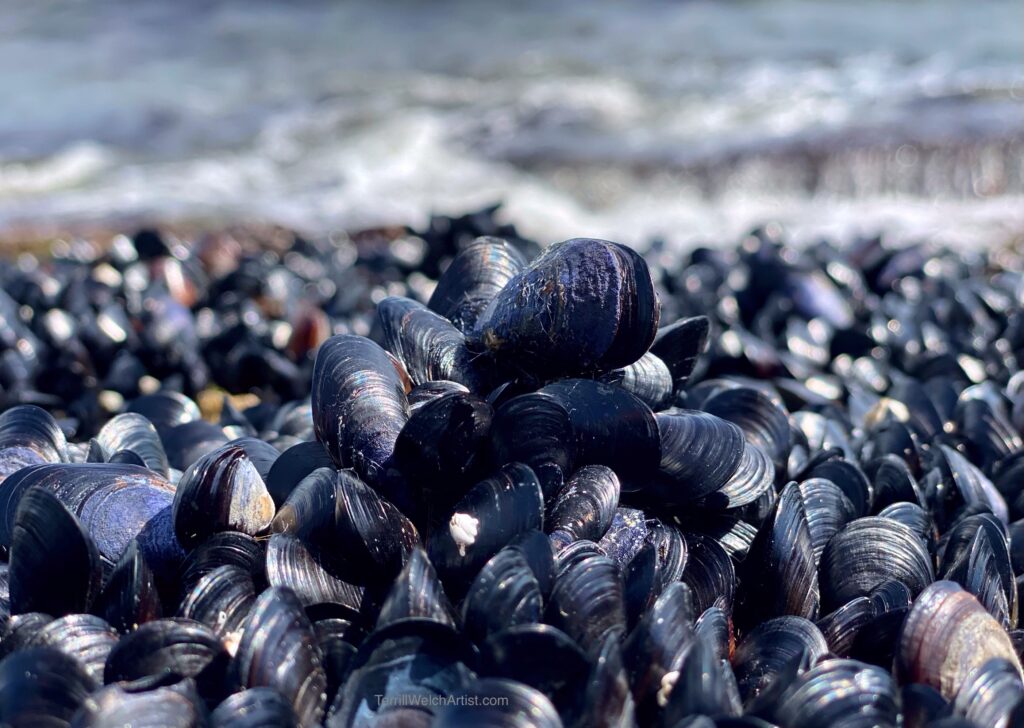
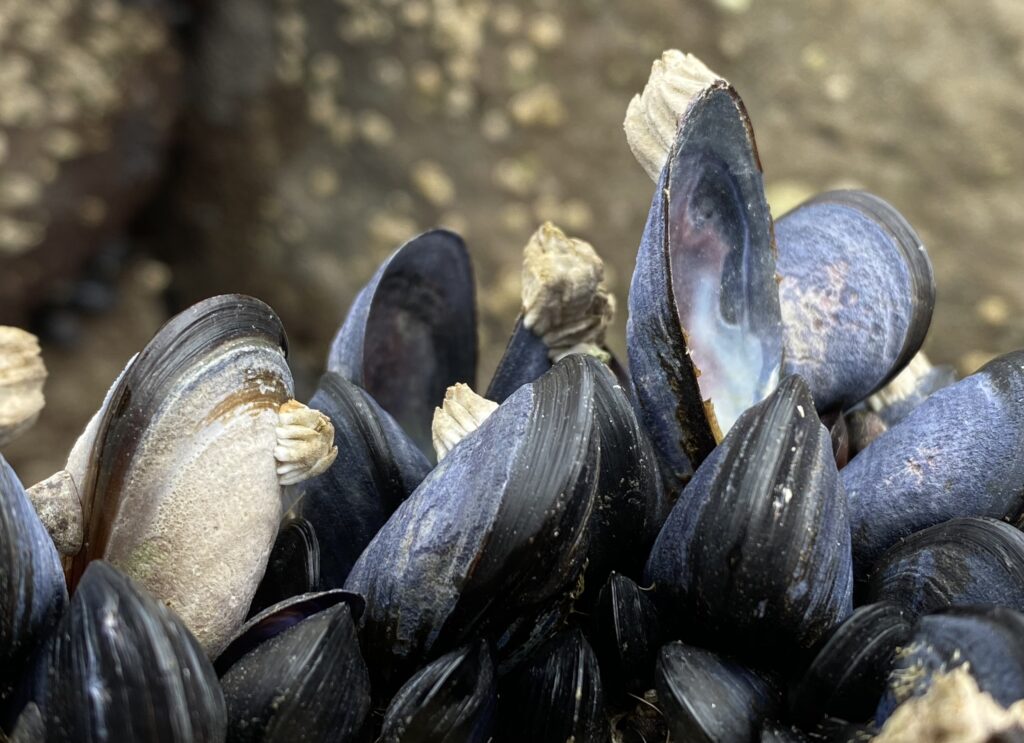
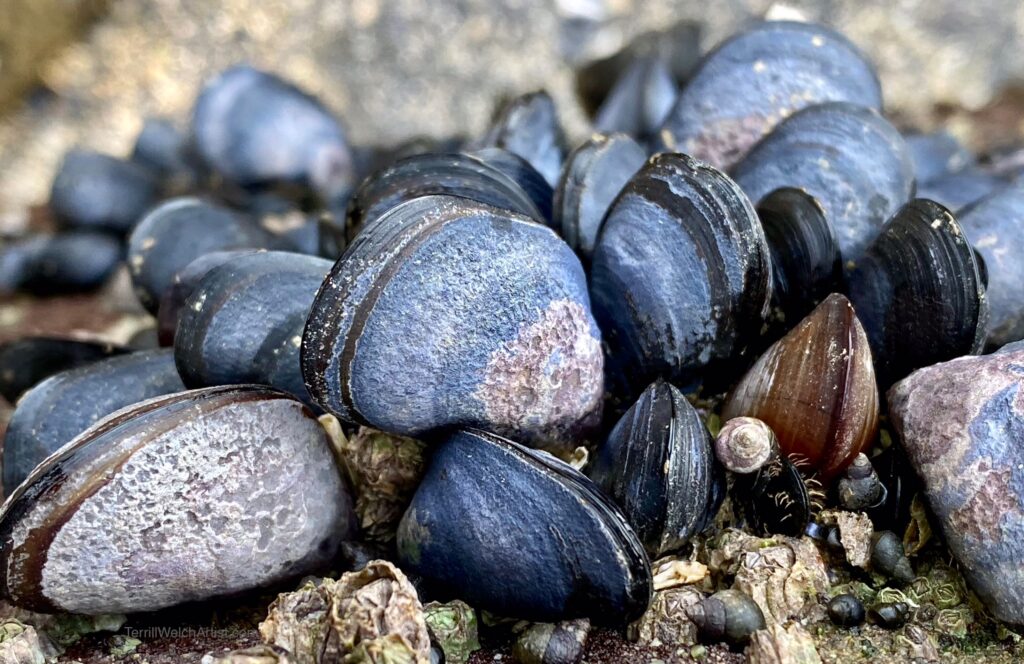
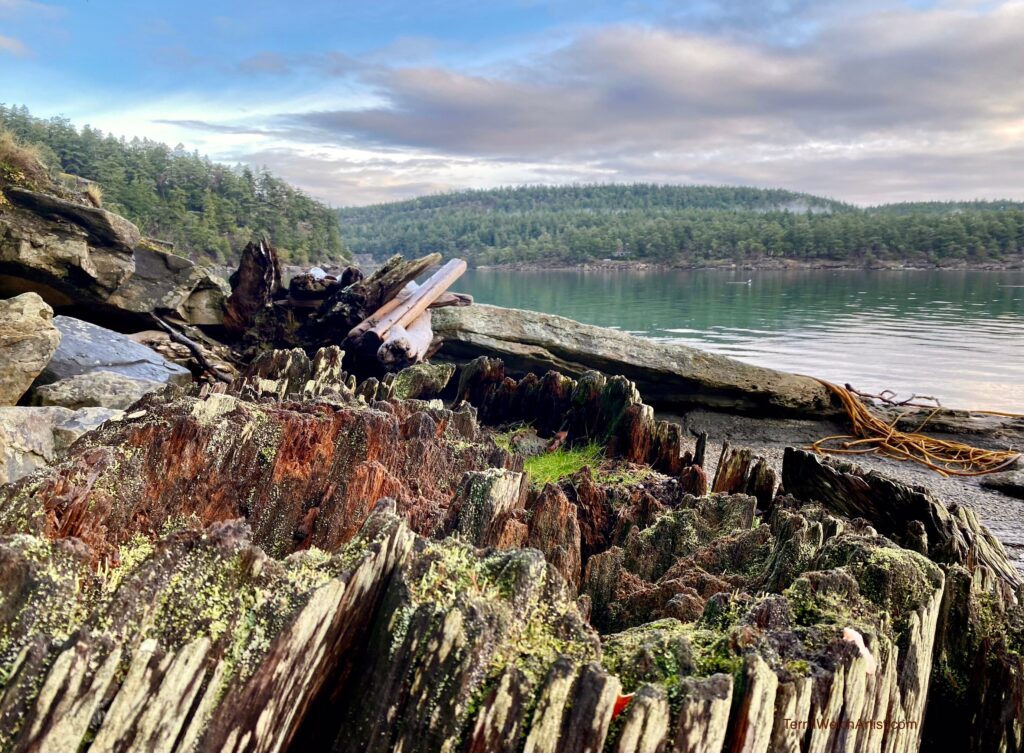
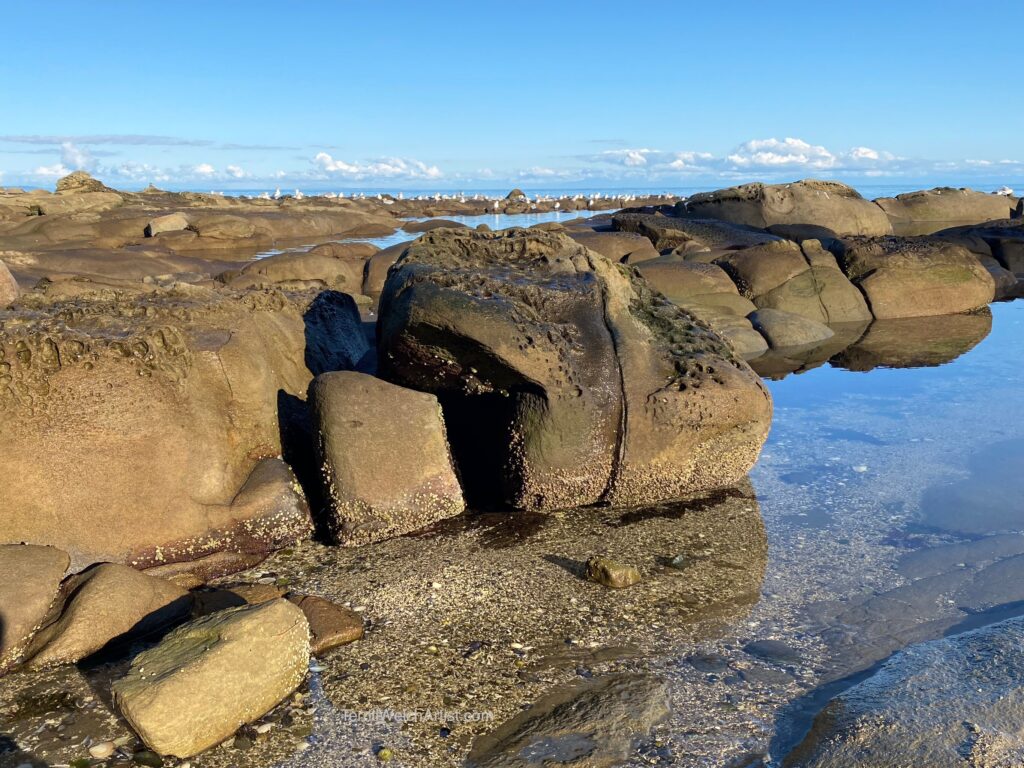
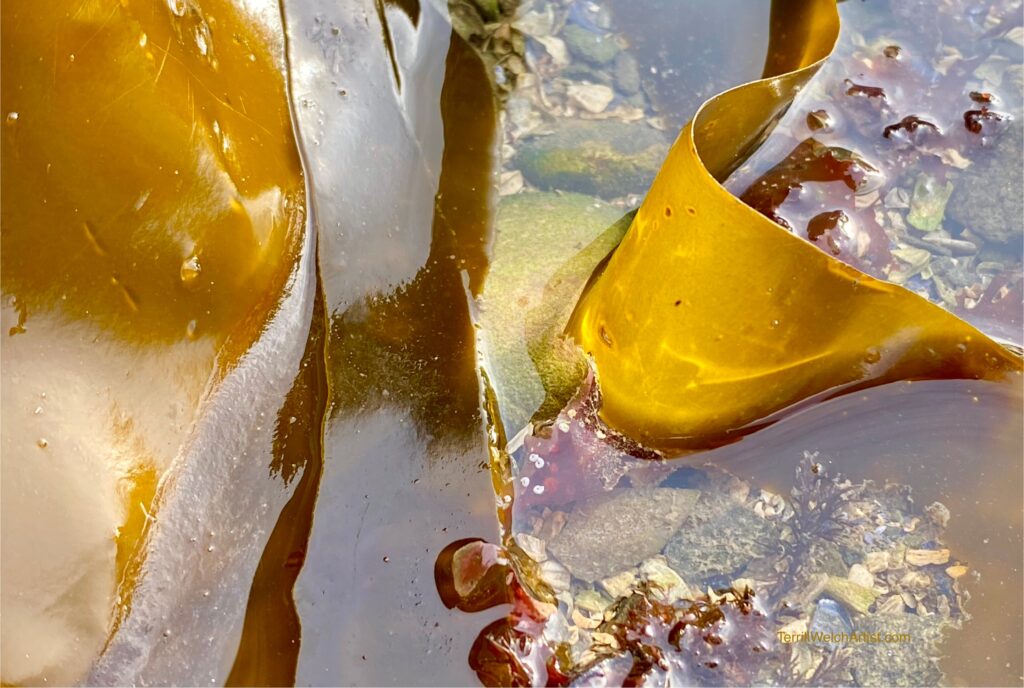
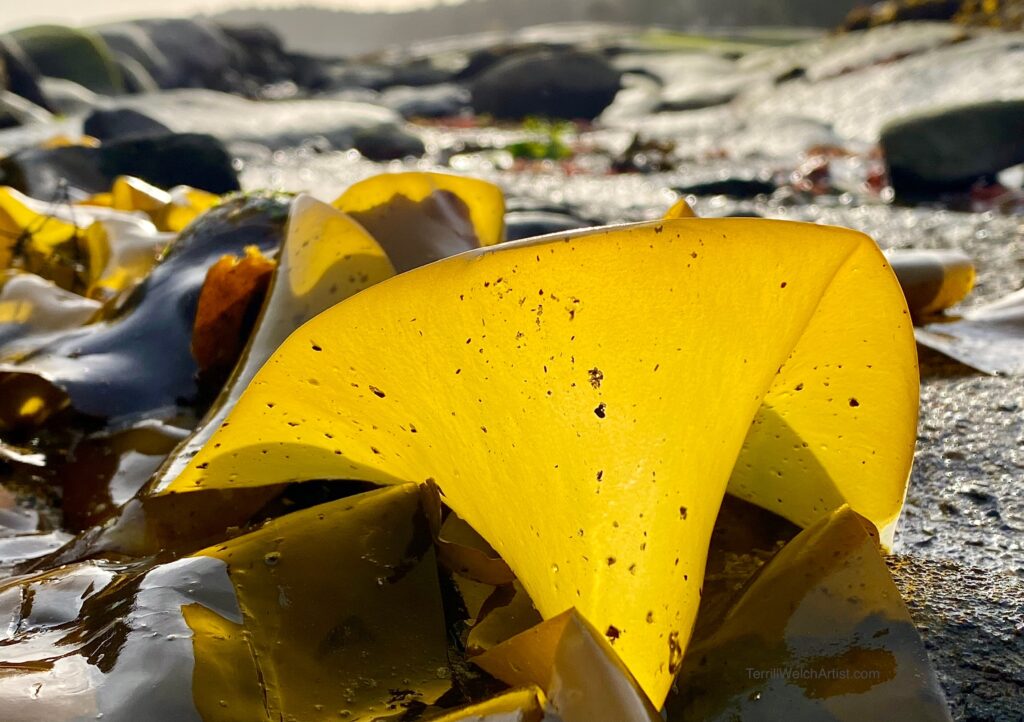
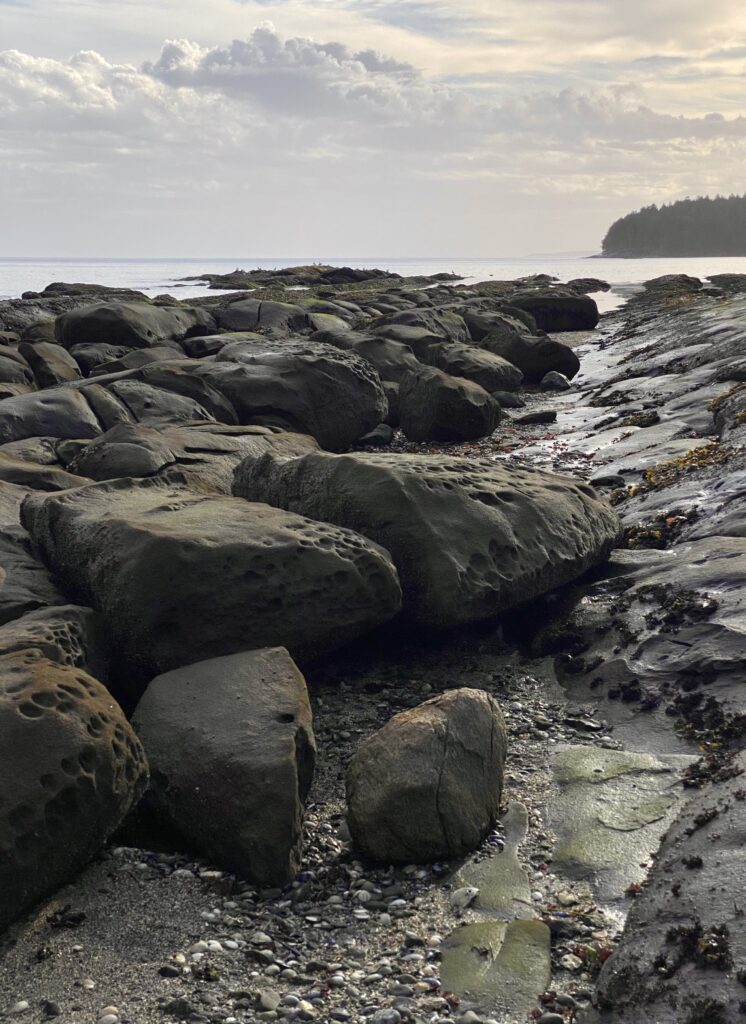
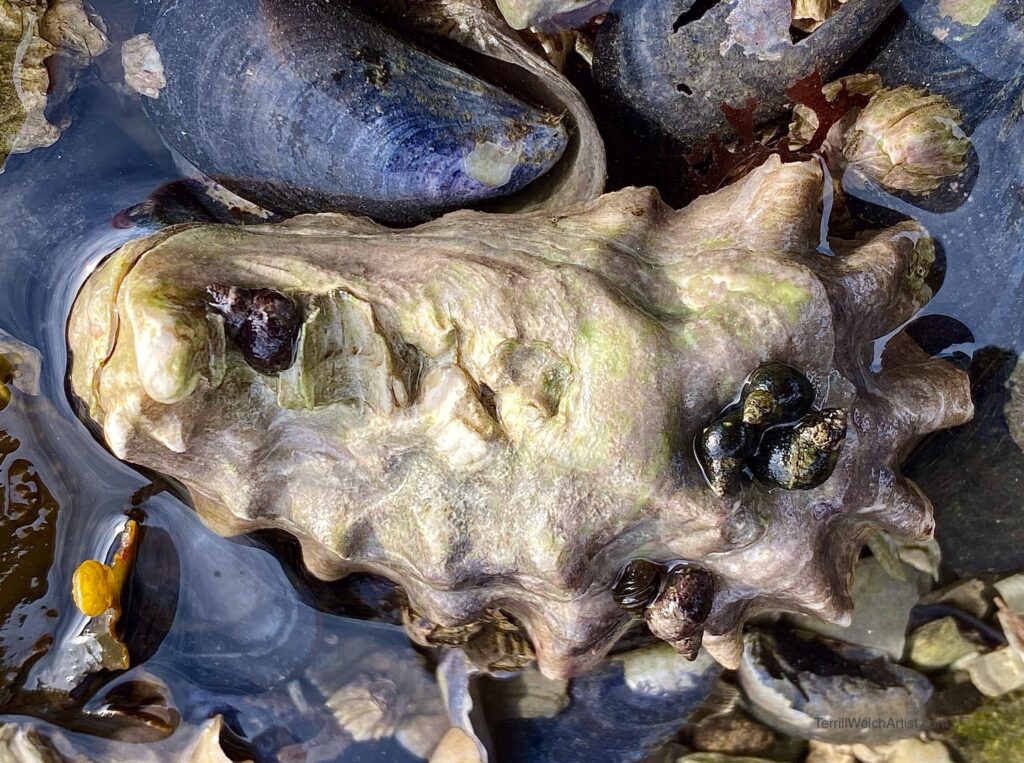
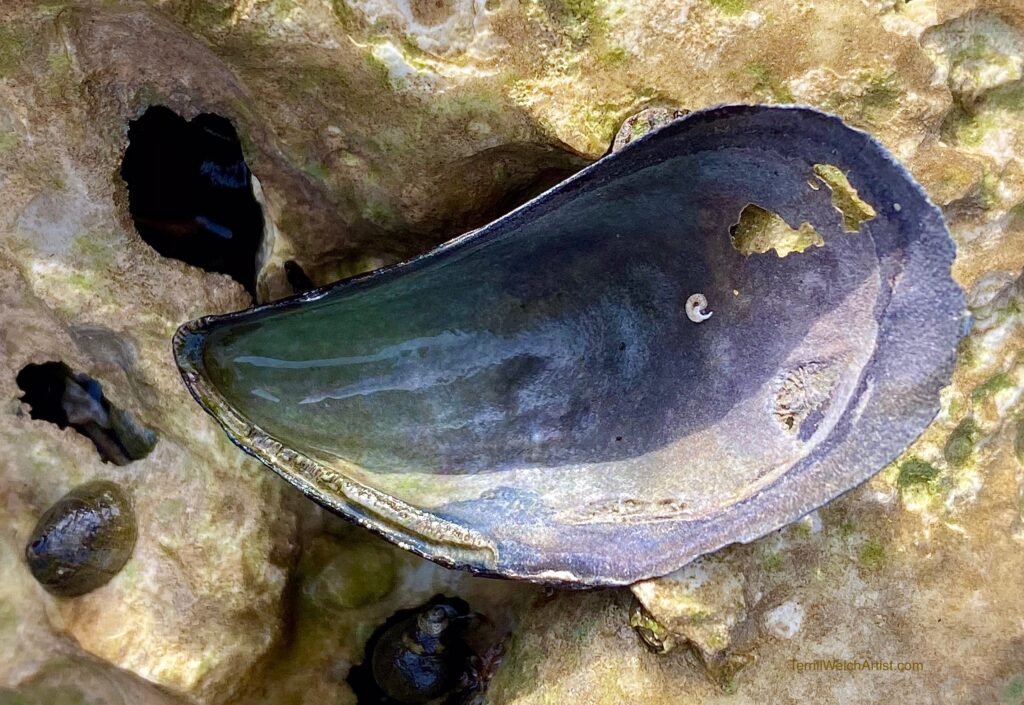
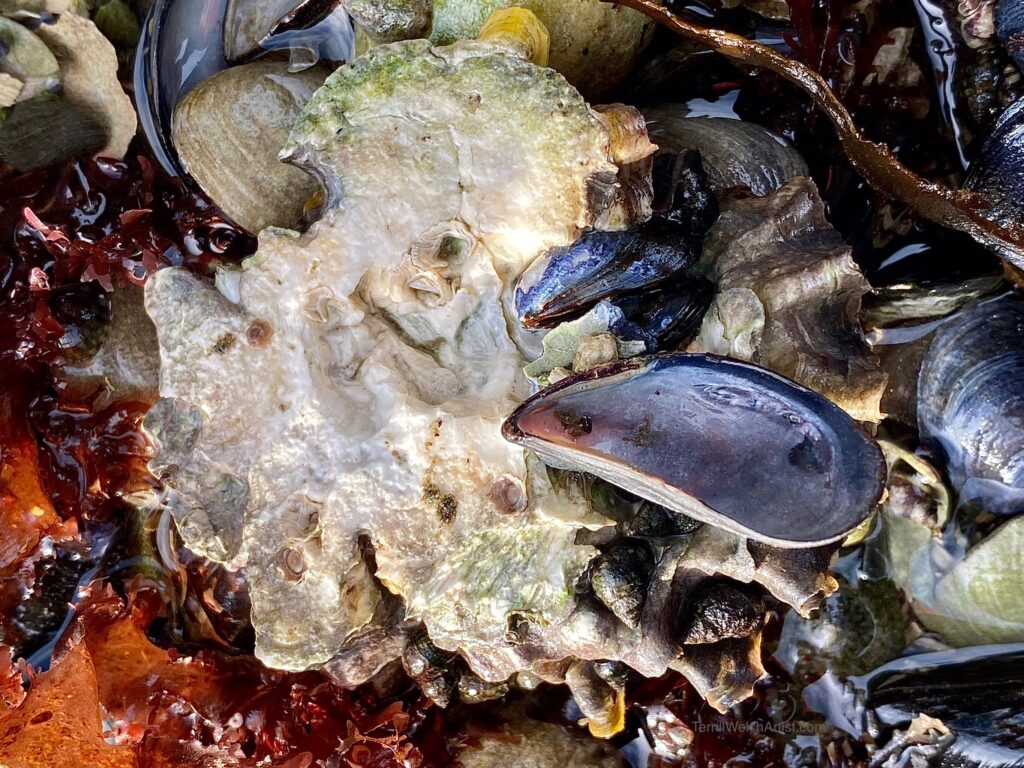
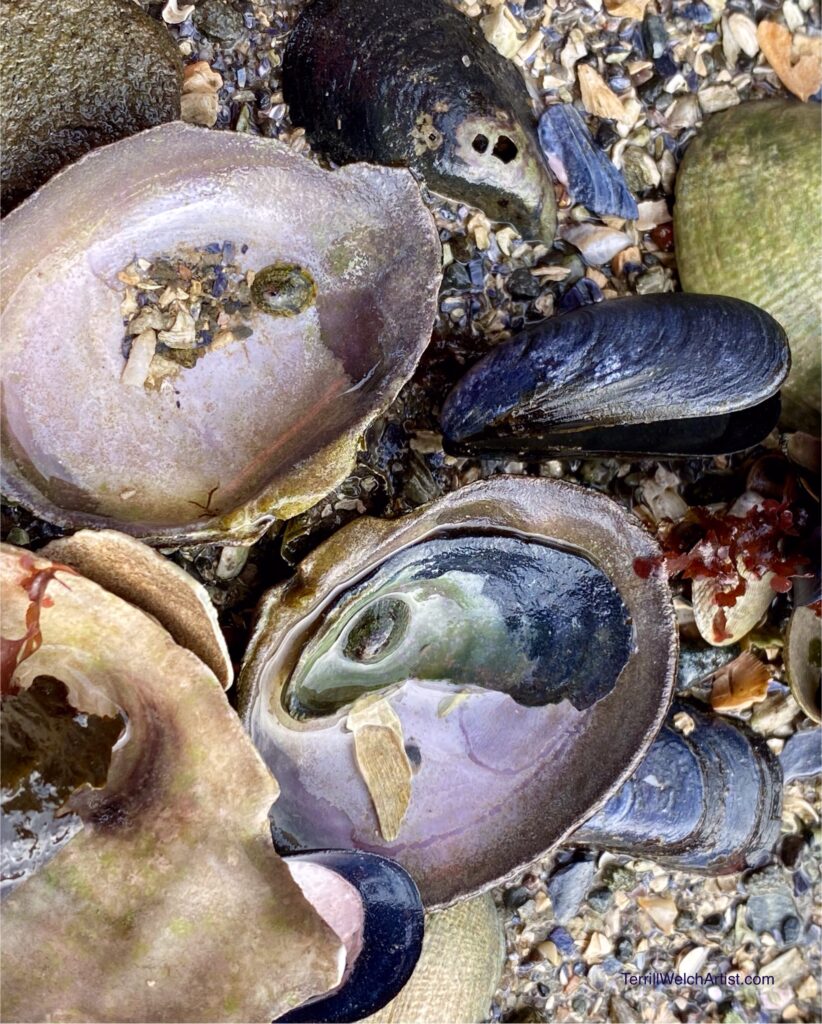
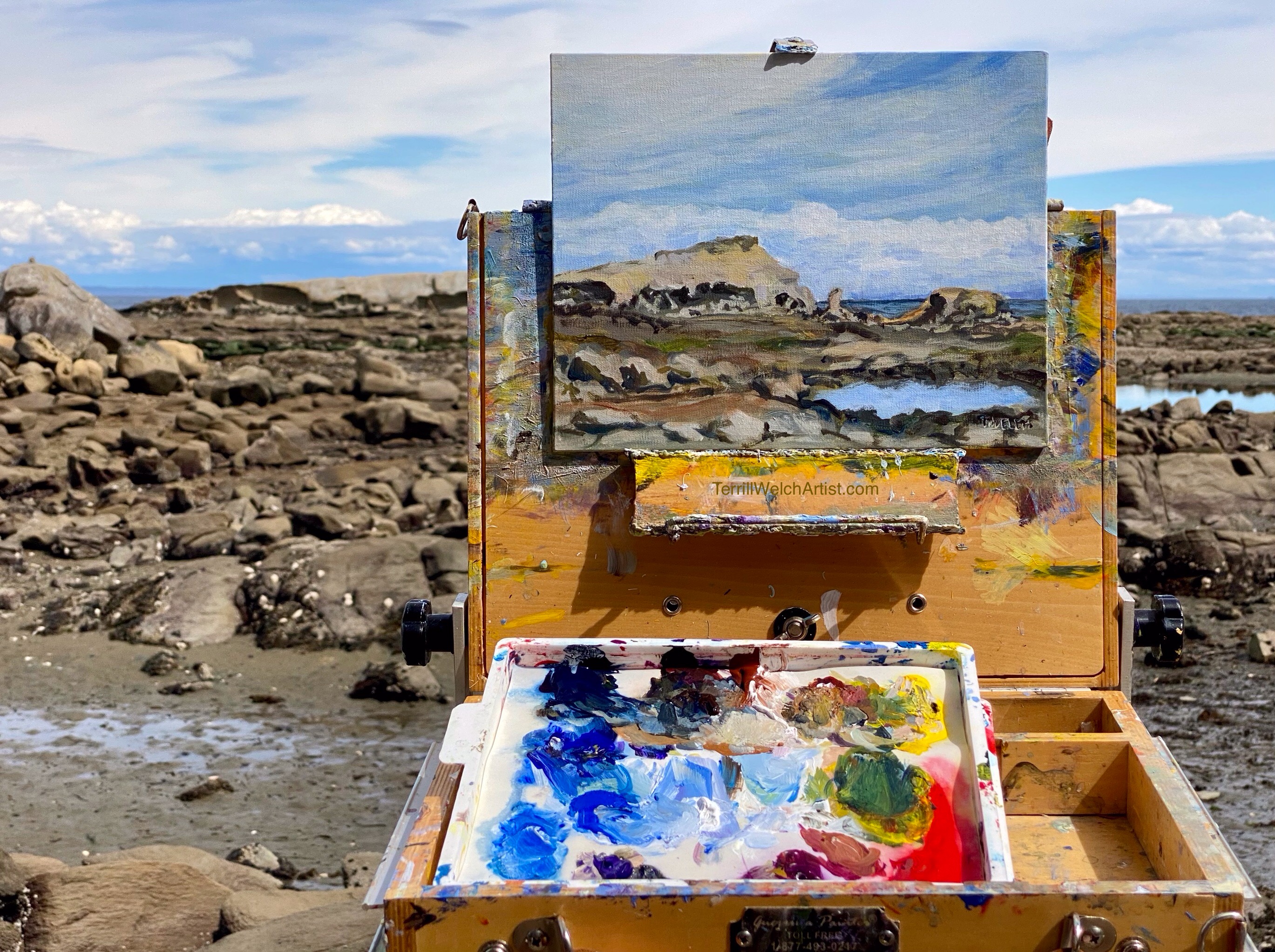
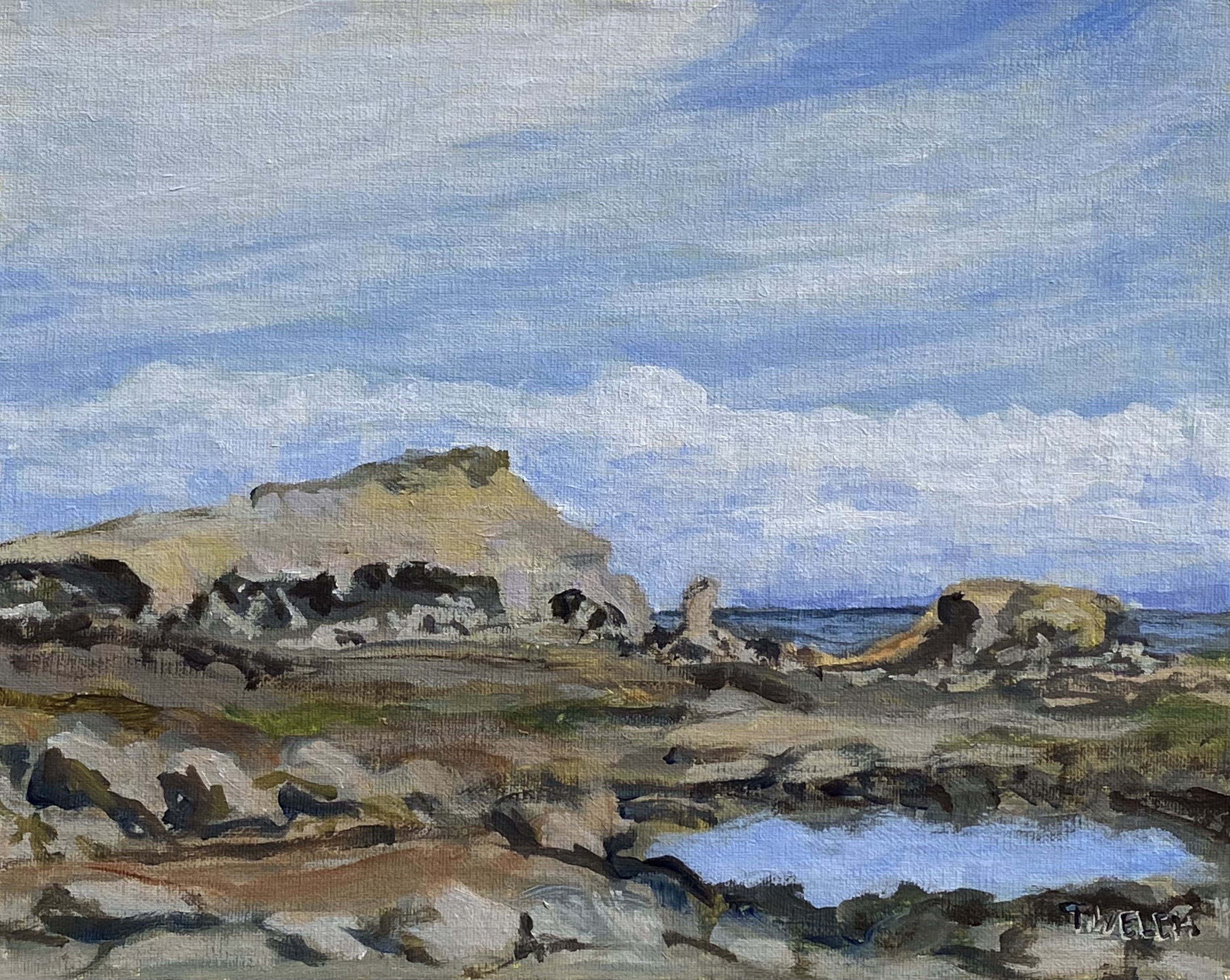
I have only a short while to visit Reef Bay. A friend is staying with my husband so I can get groceries and come to gather references. Noon is not my favourite time of day but for the winter months it will work fine. The light is low. The sea is rough and the shells are plenty at the water’s edge. I took a short video and then settled into observing and waiting for moments to present themselves and, as always, they did…
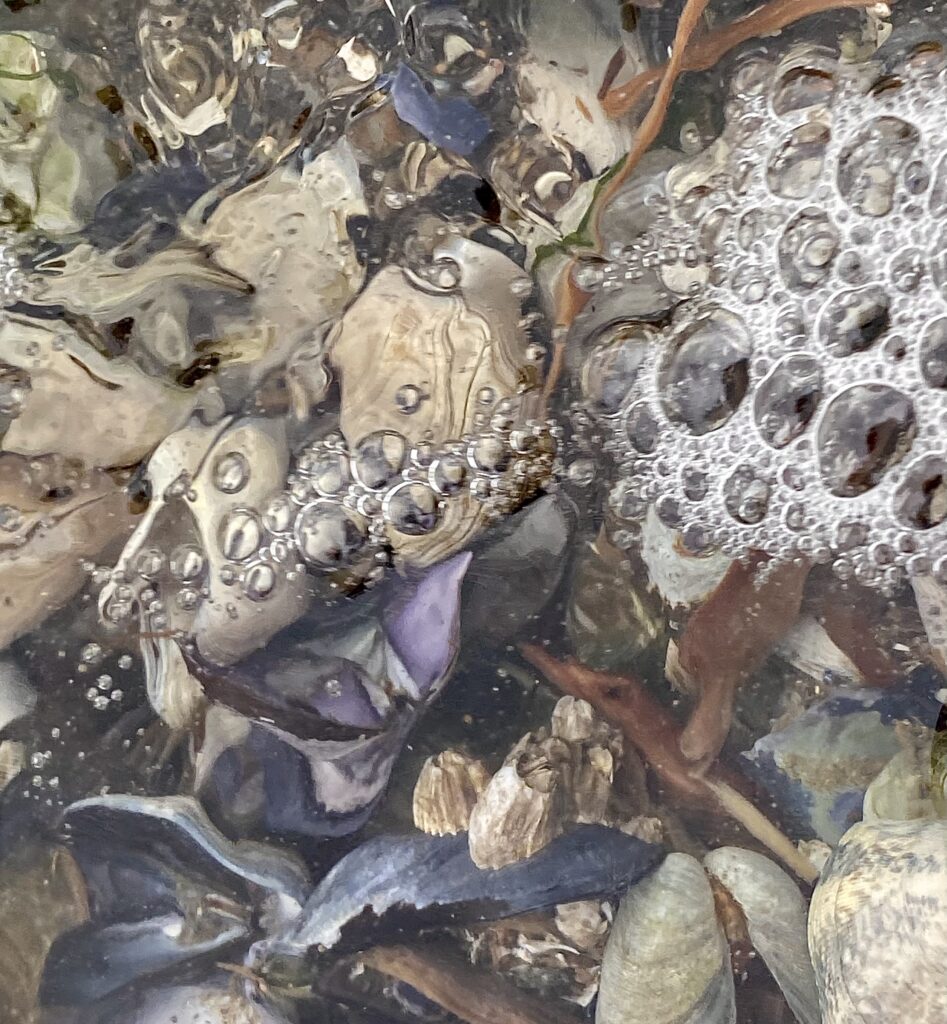
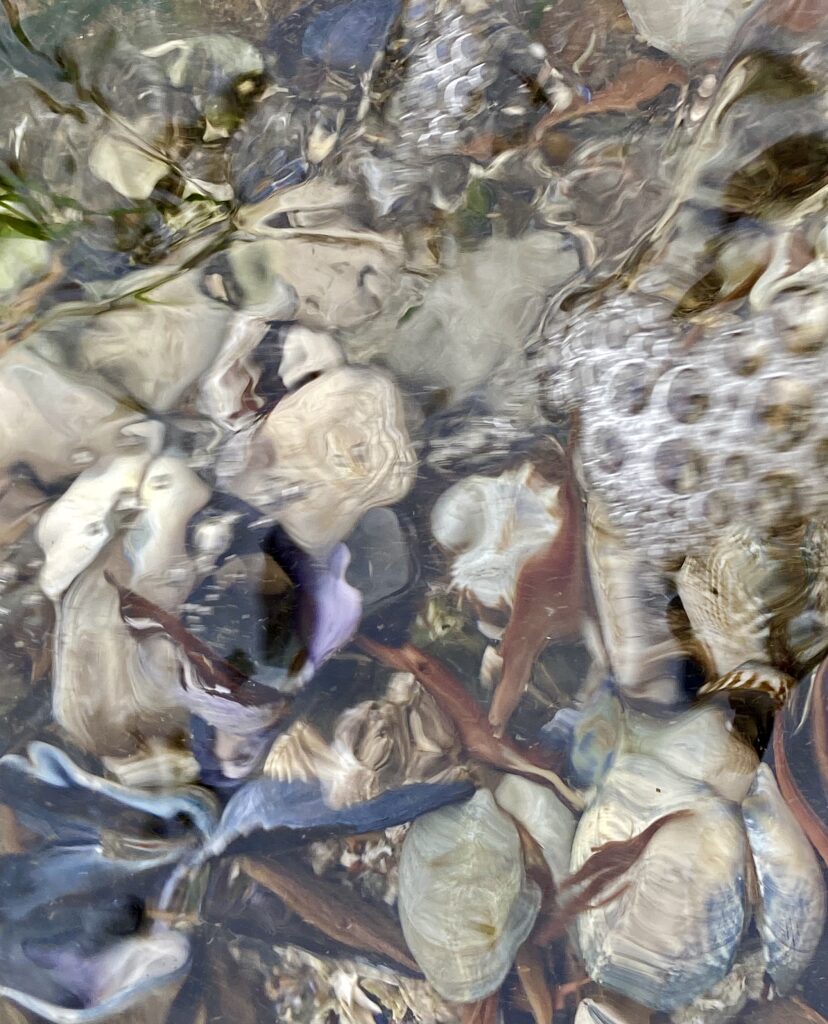
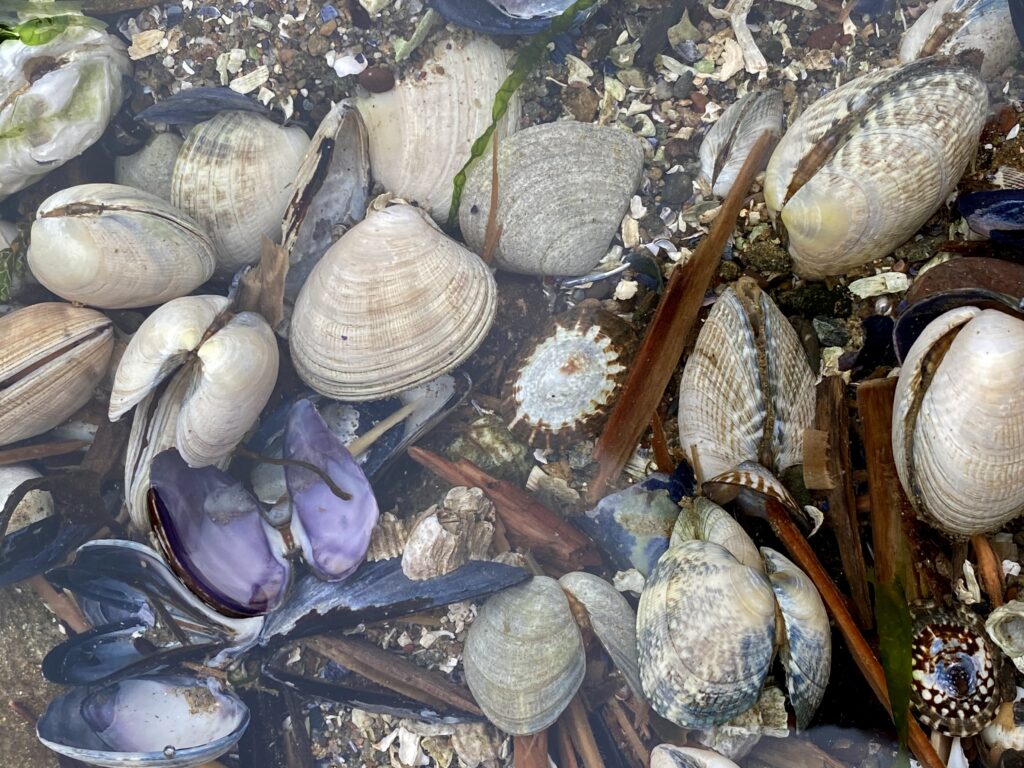
I have my large Canon EOS 70D camera with a Canon zoom lens 70-200mm 1:2.8 IS II USM which in future will be called ”the big camera with the big lens”. My phone camera is an iPhone 11plus pro and is the tool I use most often when gathering references. Both cameras have their strengths and limitations. However, I find them excellent memory aids and an expressive art form all on their own.

I take a few images with both cameras for locational context and briskly walk back to the car.

On the 15 minute, slow 50 km drive home along windy forest-edged rolling roads, I think about how I only consider the physical context of my work for this project as being what is at the seashore. I do not include the drive or having left our strawbale timber frame constructed home with its in floor hot water heat and environmental friendly construction and living. The milk paint on the walls and seven skylights with large windows in three directions creating a seamless connection to the forests and fields around us remain invisible to the history of my work with the exception of my art studio that takes up the sunken room below the open kitchen. I wonder if these aspects of my creative environment matter. I know they matter to our life overall but do they have an impact on how I approach and do my making process? I write this to make this additional physical context visible.
Wednesday, 1 January 2025
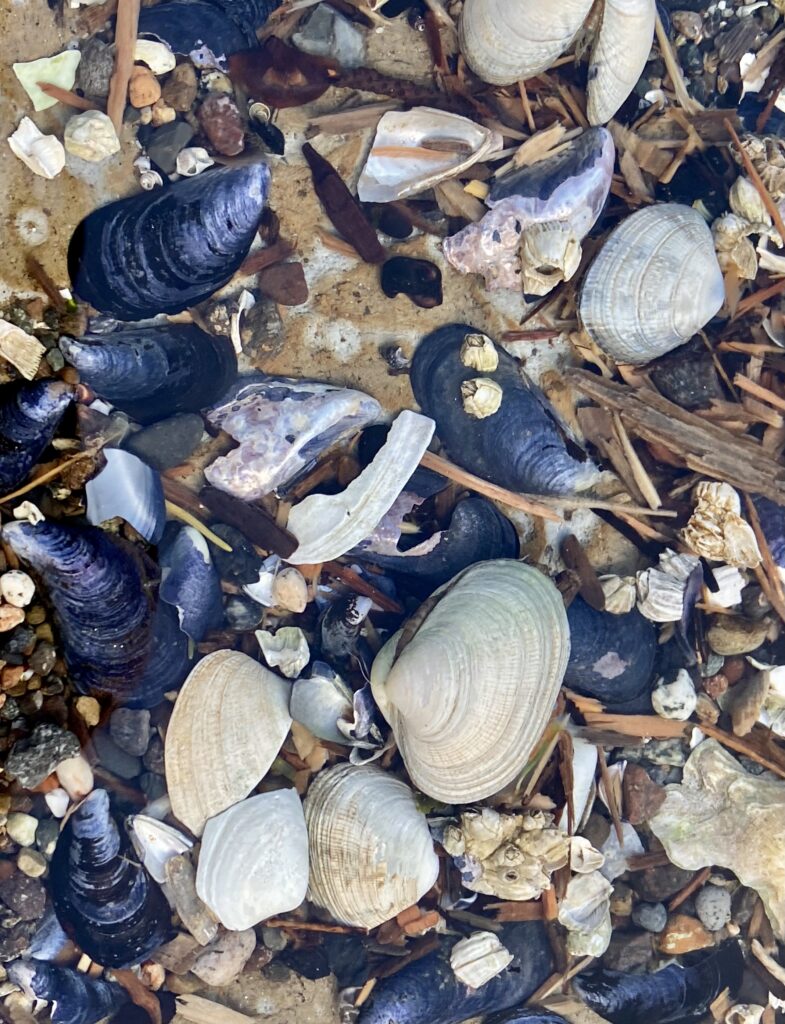
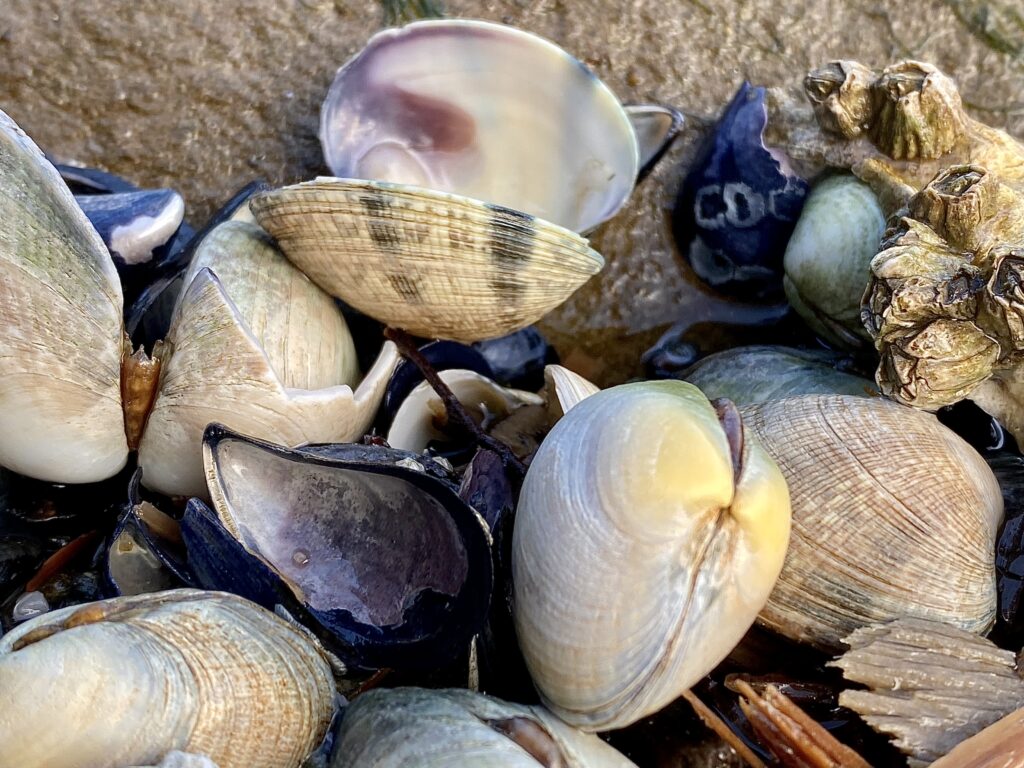
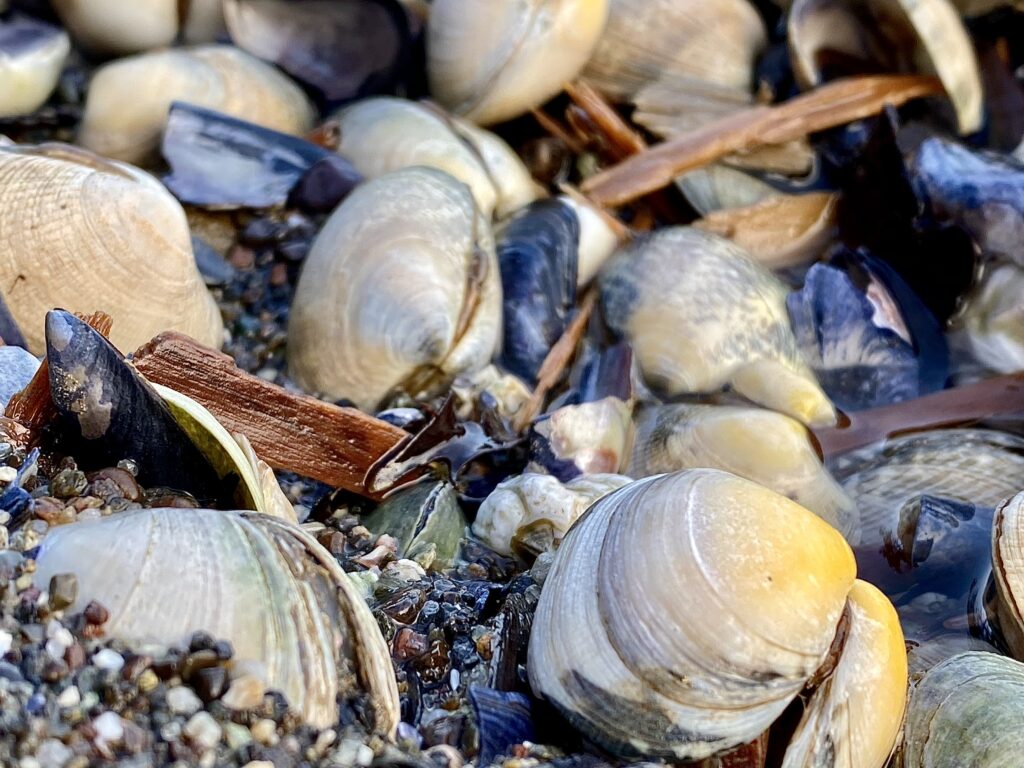
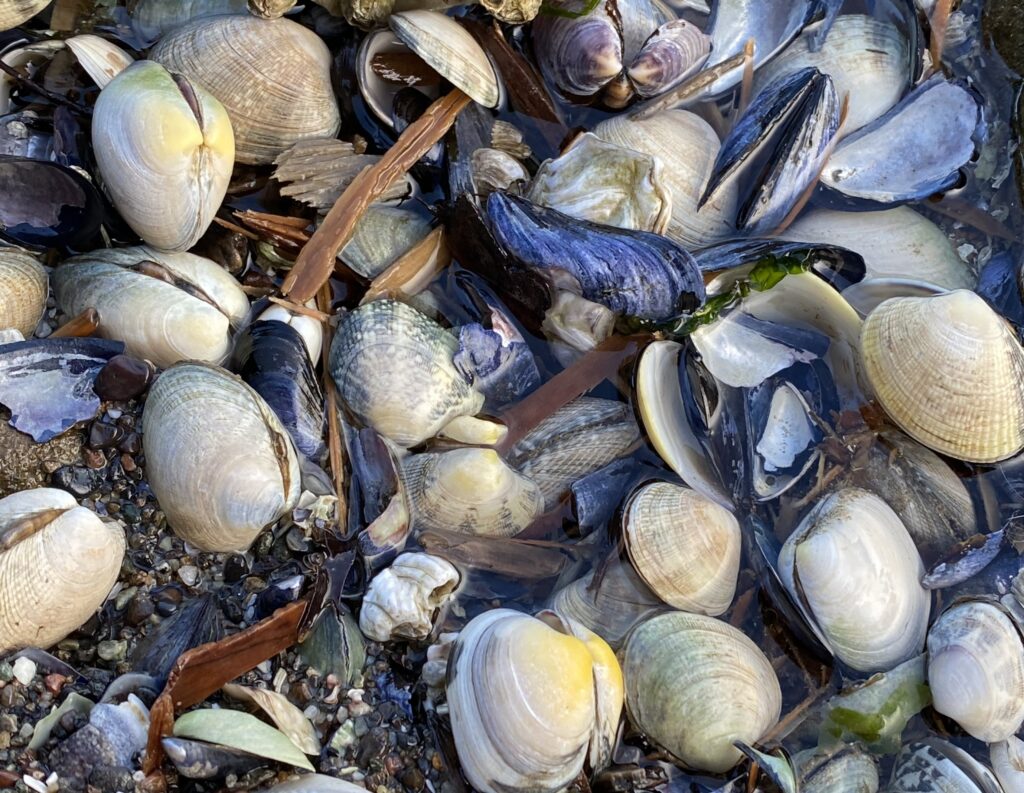
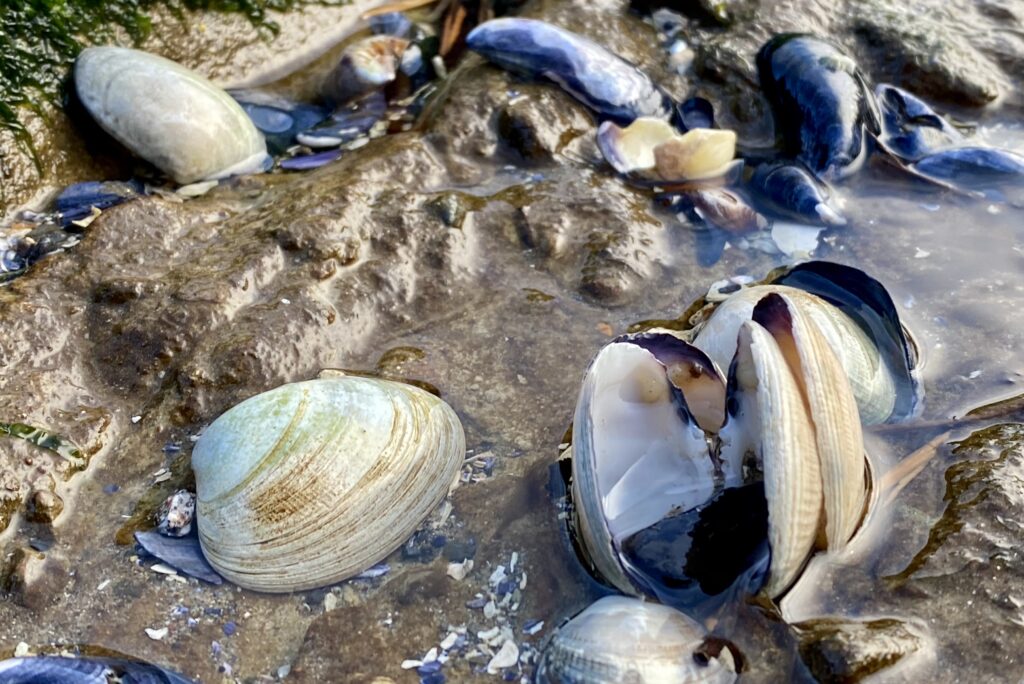
Usually on the first day of the year, go out to the edge of the sea on the east side of the island to watch the sunrise. This year it wasn’t possible so I went to Reef Bay later in the day. The cold air caught in the wind and sliced into my forehead and bare hands. I knew I wasn’t going to last long but it was great to be there. It is a little later in the afternoon. On this day my husband has managed his walker around the soft ground of the house and out to the car that is parked beside the gallery pod at the gate. We have come to the beach with a mocha for him and a peppermint tea for me and along with muffins from the bakery. We are pleased to be back doing some of our favourite things such as car picnics that allow him to sit and view the water and me as I walk along the shore gathering references. I am getting more time to focus on work as he heals from a fractured hip and regains his mental clarity to his previous level following the trauma of the break, surgery, opioids for pain and the confusion of the hospital. His brain injury from a previous large stroke left us unsure if he could regain his baseline. We are relieved that it has come to pass. I am still required to provide additional support and do extra work overall. But it is much better now than the first few weeks and my wellbeing has returned where I can think and hold new information unrelated to David’s health needs. I can feel a new normal settling back into my art practice and studies.
I meander to the tidal edge and linger a little in the cold. It is good just to be alive and know that the people and places that I love are doing well. I settle low to the ground and gather just a few images with my phone.
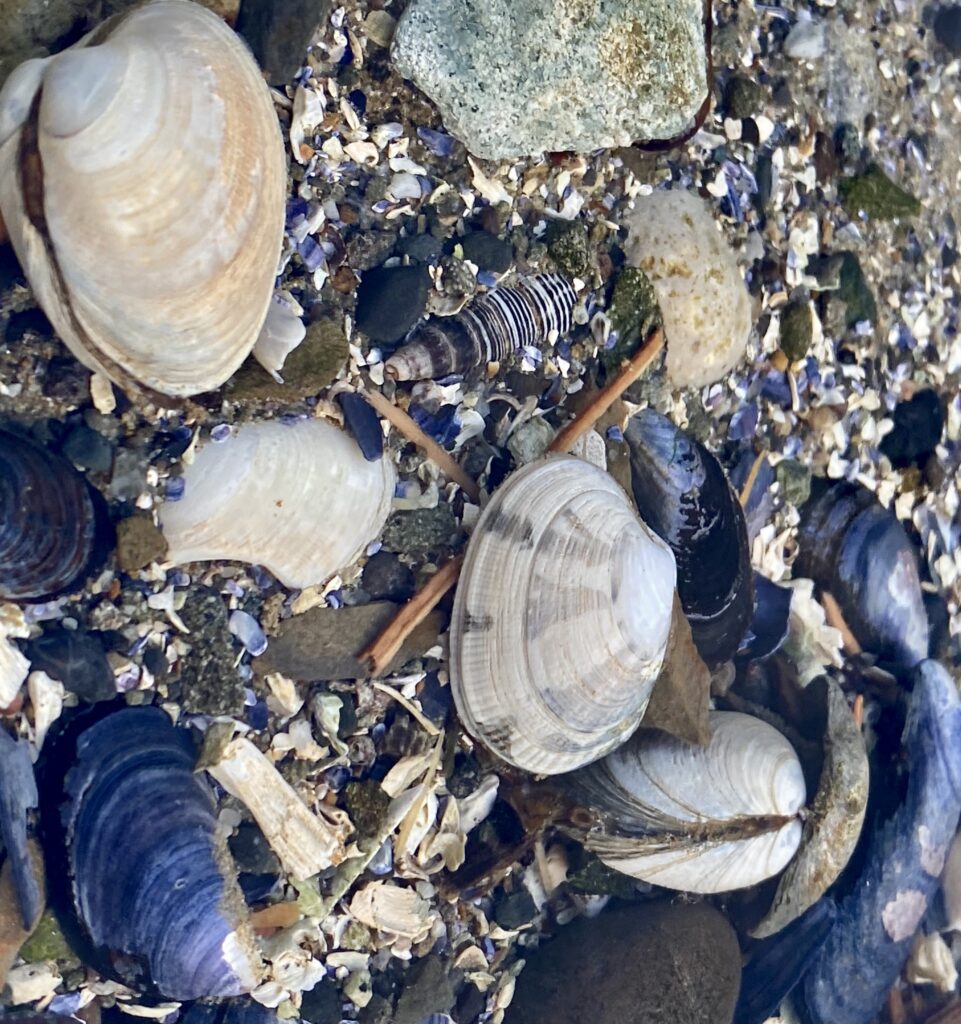
Friday, 3 January 2025
I have been reading and thinking and thinking and reading for the past few days. Some of that thinking is in my previous post about the theories of Dōgen and Plato. I have gone from secondary sources to translations of primary texts in my literature review.
I go for a long hike down the central trail of Edith Point, a public conservation point that has the sea on each side with glimpses only on the north of the Strait of Georgia until the trail reaches the actual point. This is familiar land and shoreline to me.

I have been hiking the 4.5km return trails for just about 18 years.

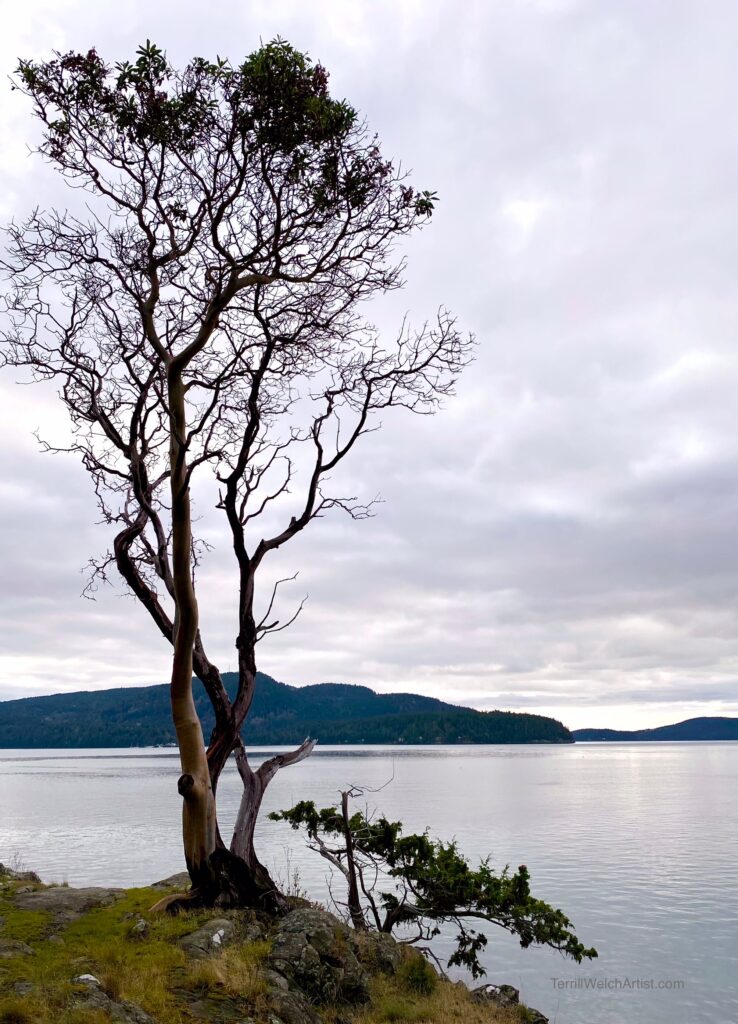
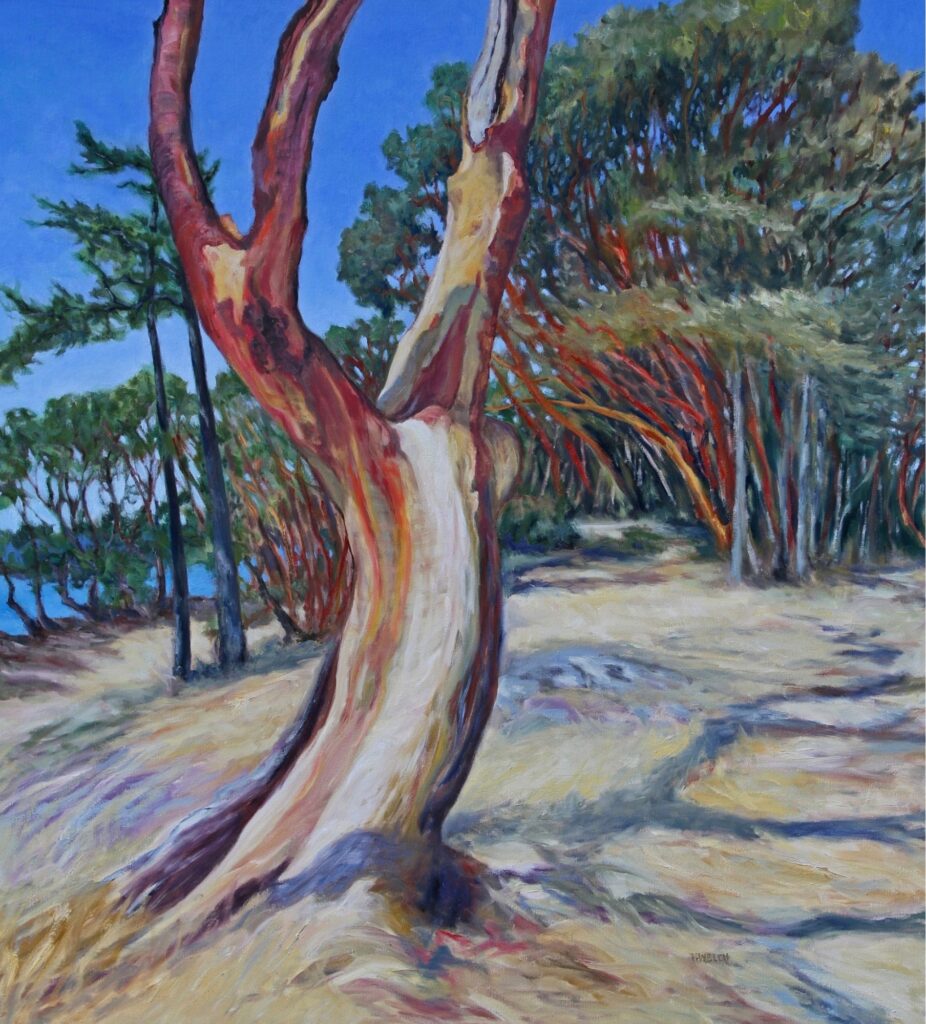
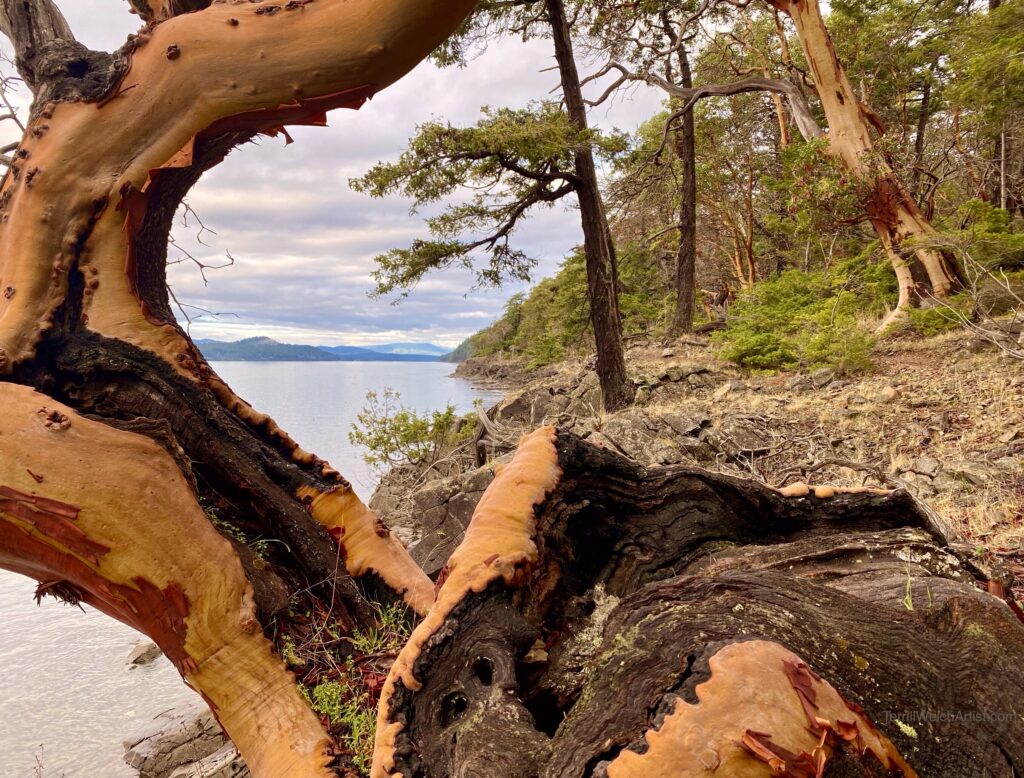
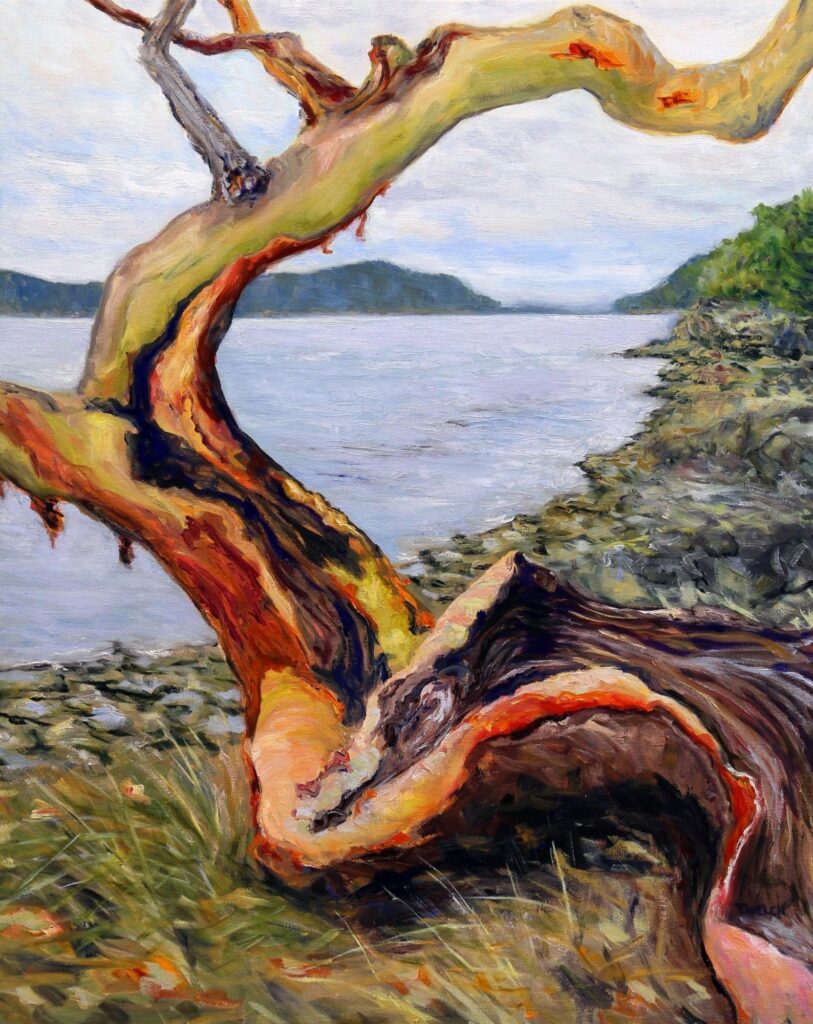
Still, I pause to visit with special arbutus trees while mentally making inventories of previous paintings that have yet to include this beauty.

As I walk, I ponder. There is too much material to integrate immediately into my art practice and cover in a 3,000 word contextual study. I will have to choose and summarize the most important aspects for this point on my journey.
Saturday, 4 January 2025
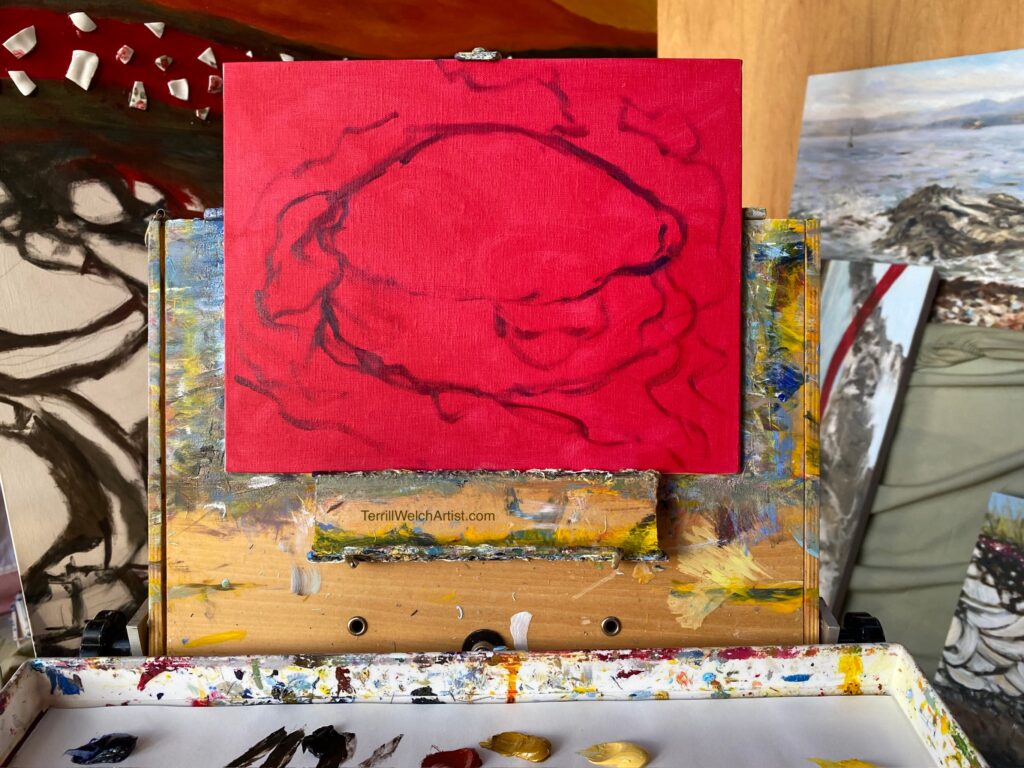
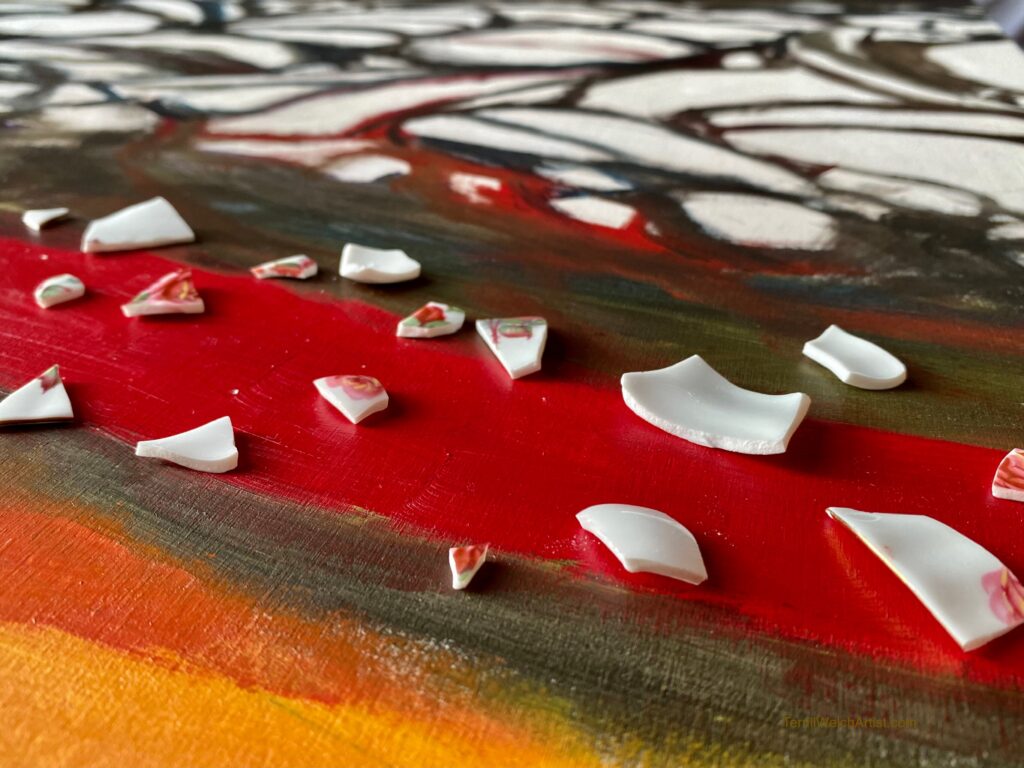
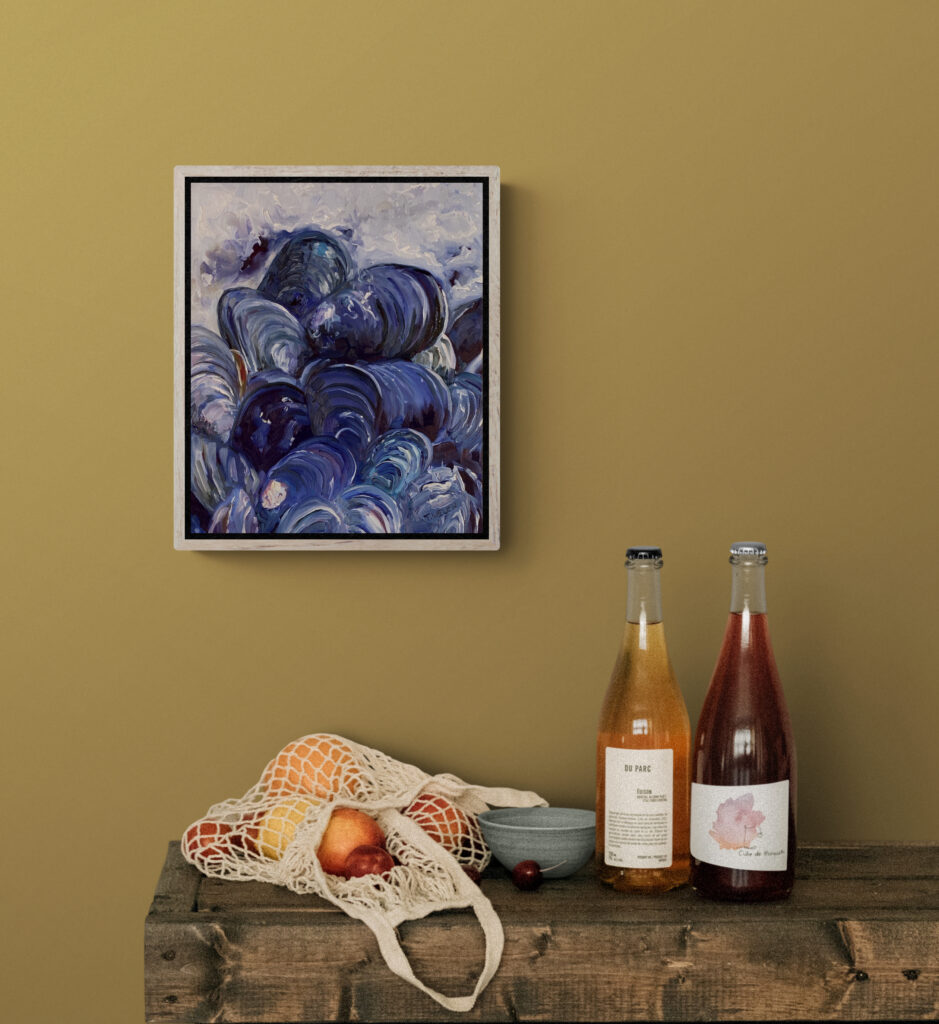
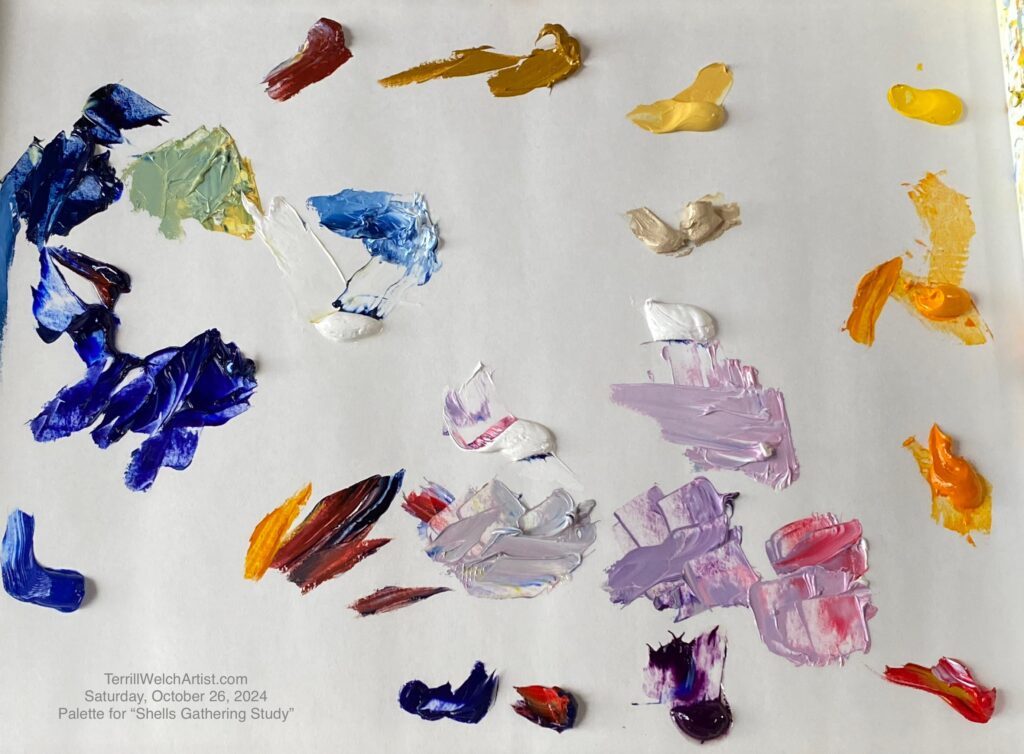
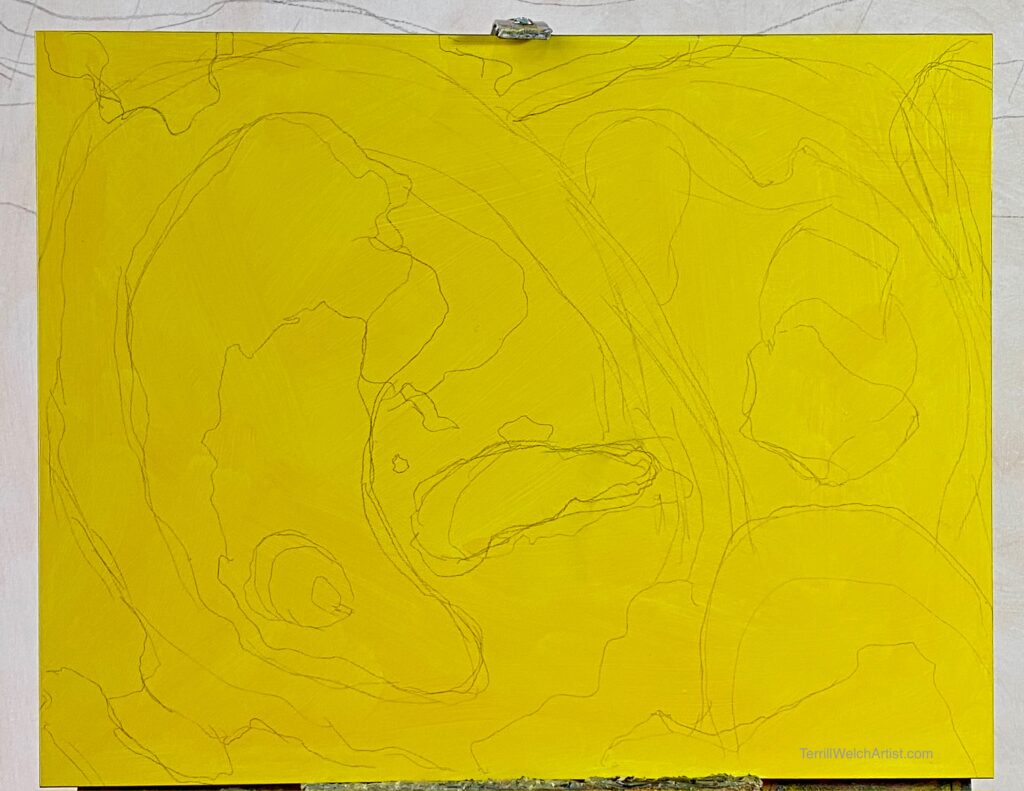
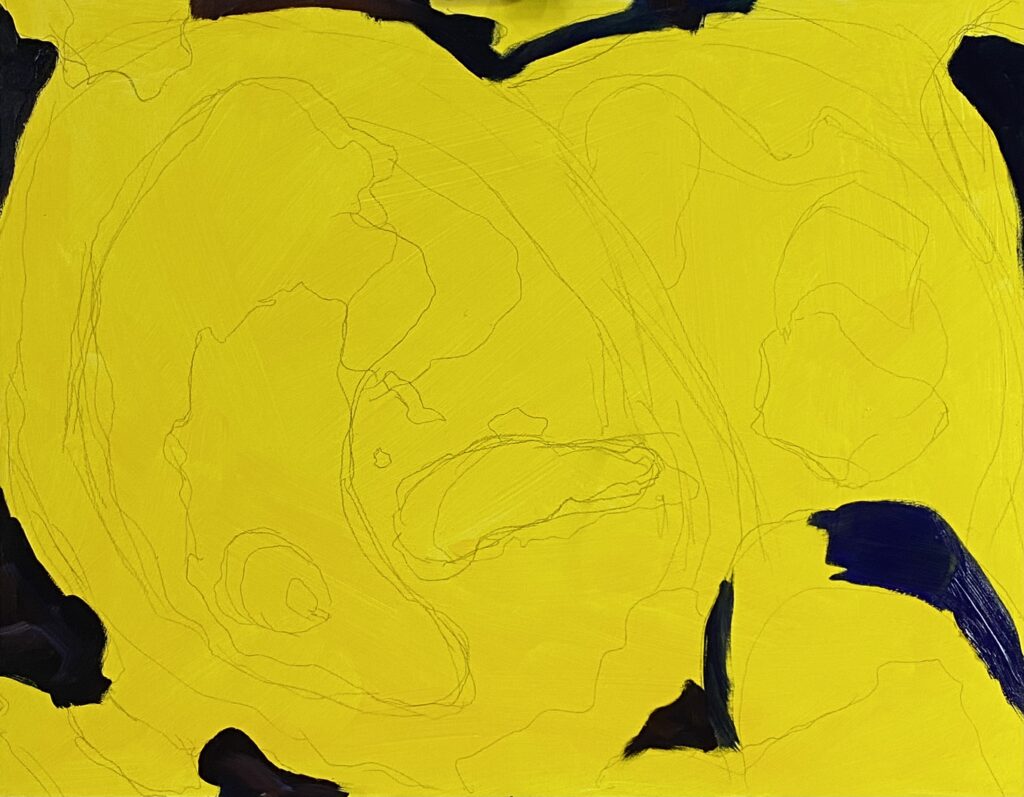
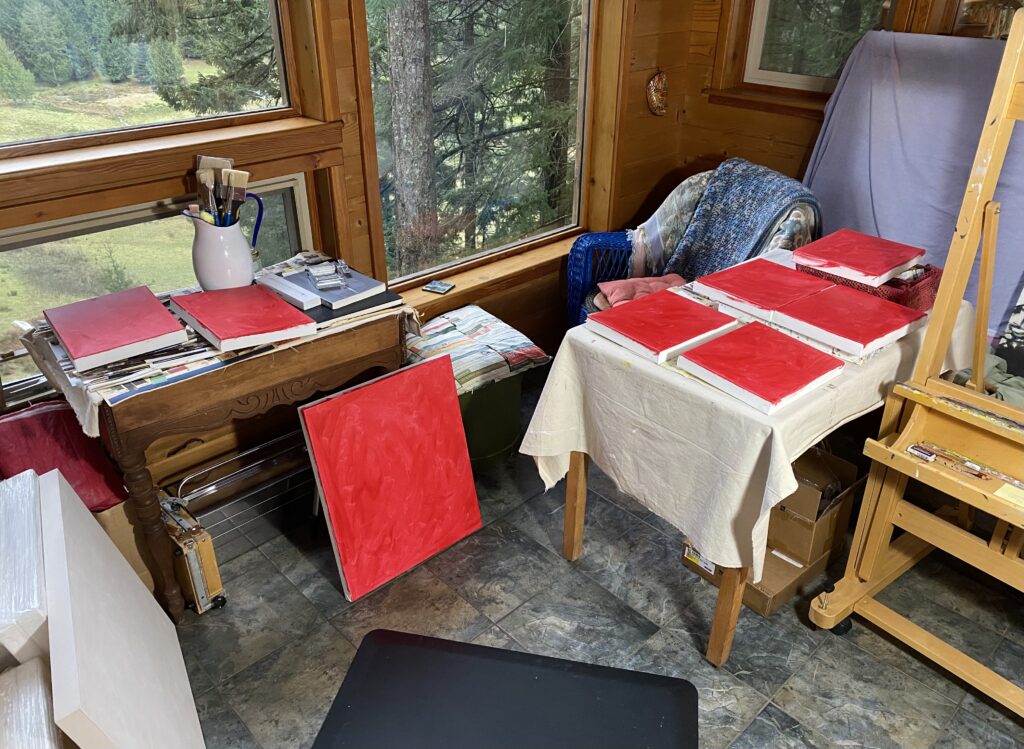
In the morning I paint red acrylic grounds on seven small 12 x 10 inch canvases for painting sketches and one larger 20 x 24 inch canvas. I have the beginnings of an idea to paint the seven smaller canvases as a series where one is a progression from the other. I am not exactly sure how this will work yet but I want the canvases ready regardless. I have again chosen the red ground for how it will provide depth under the overpainting of blues, violets and whites.
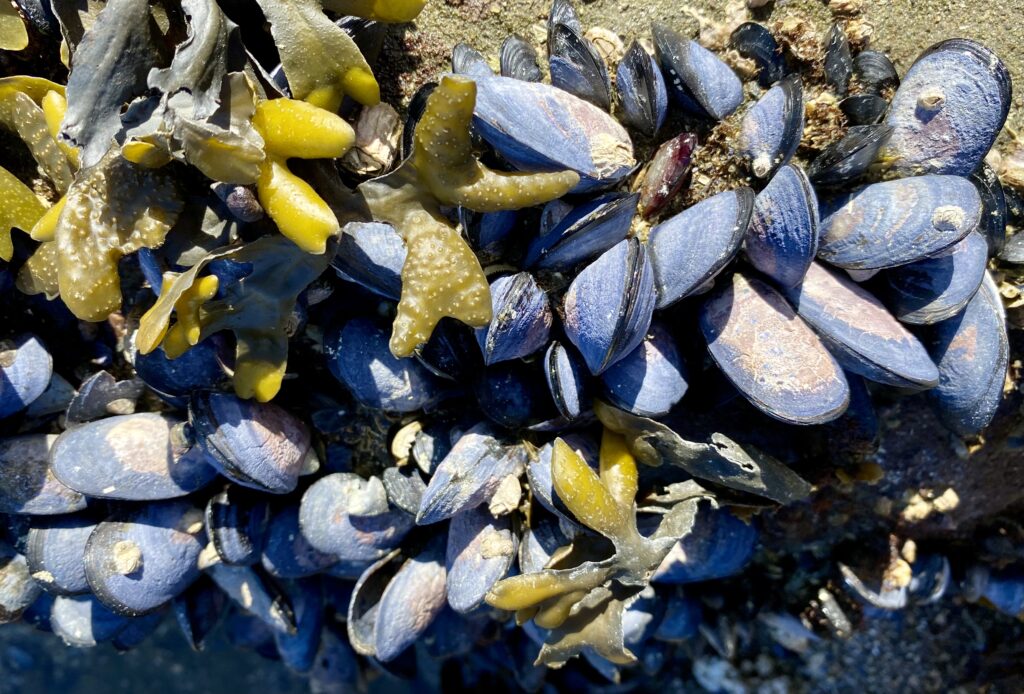
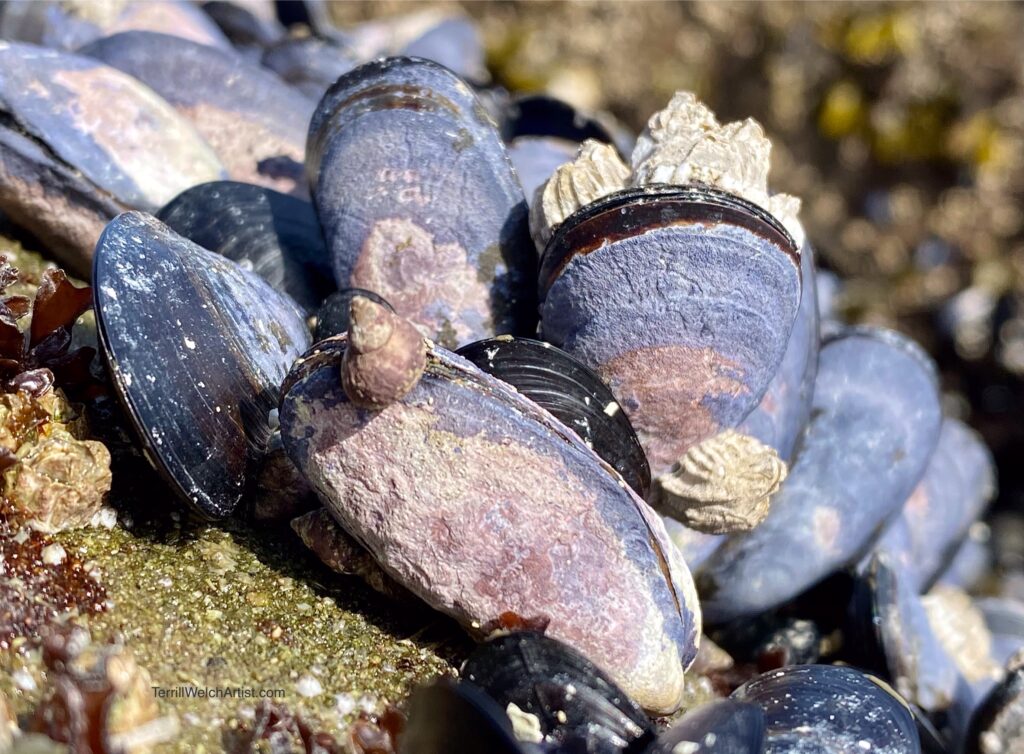
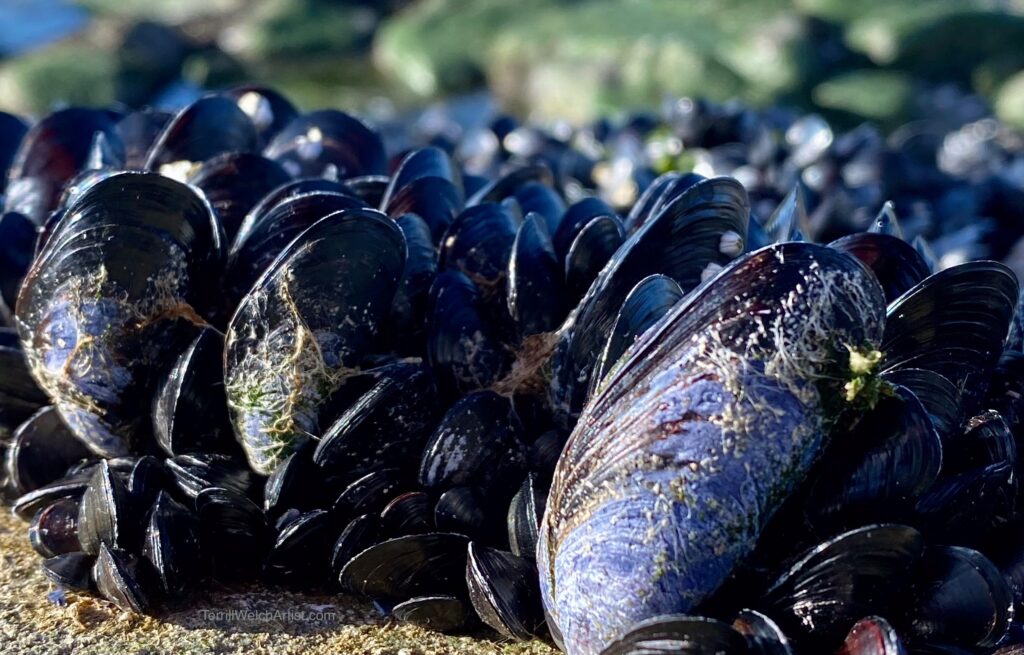
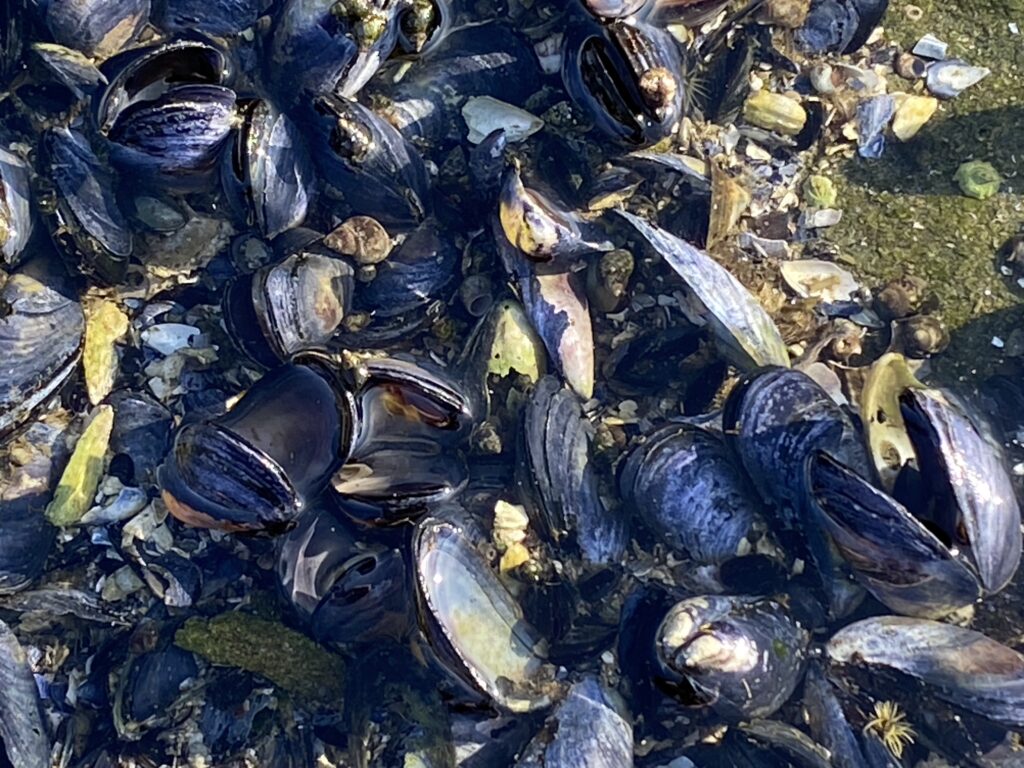
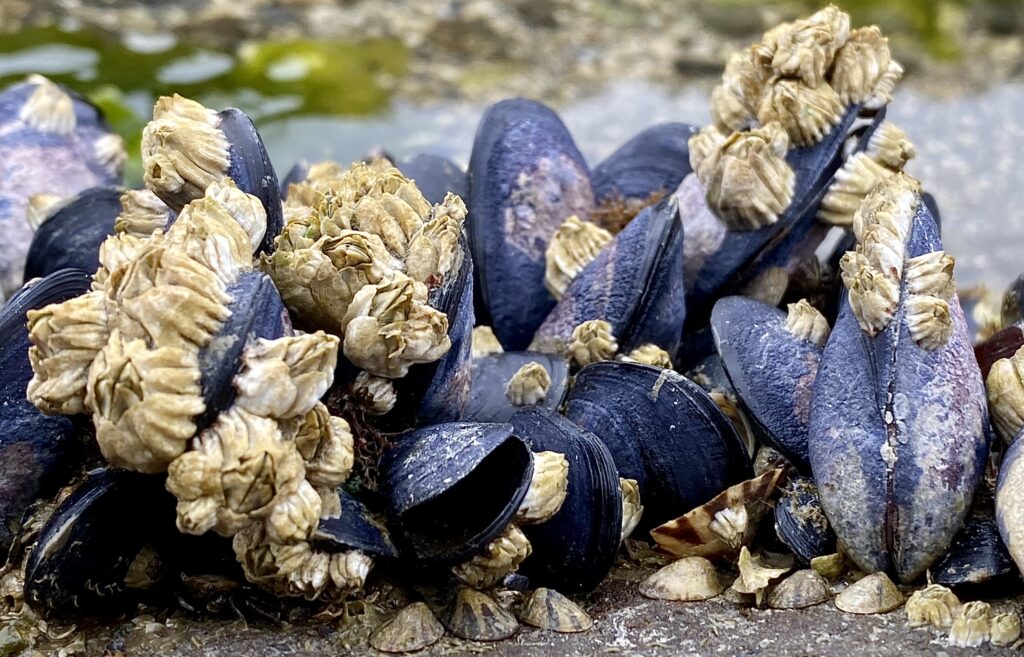
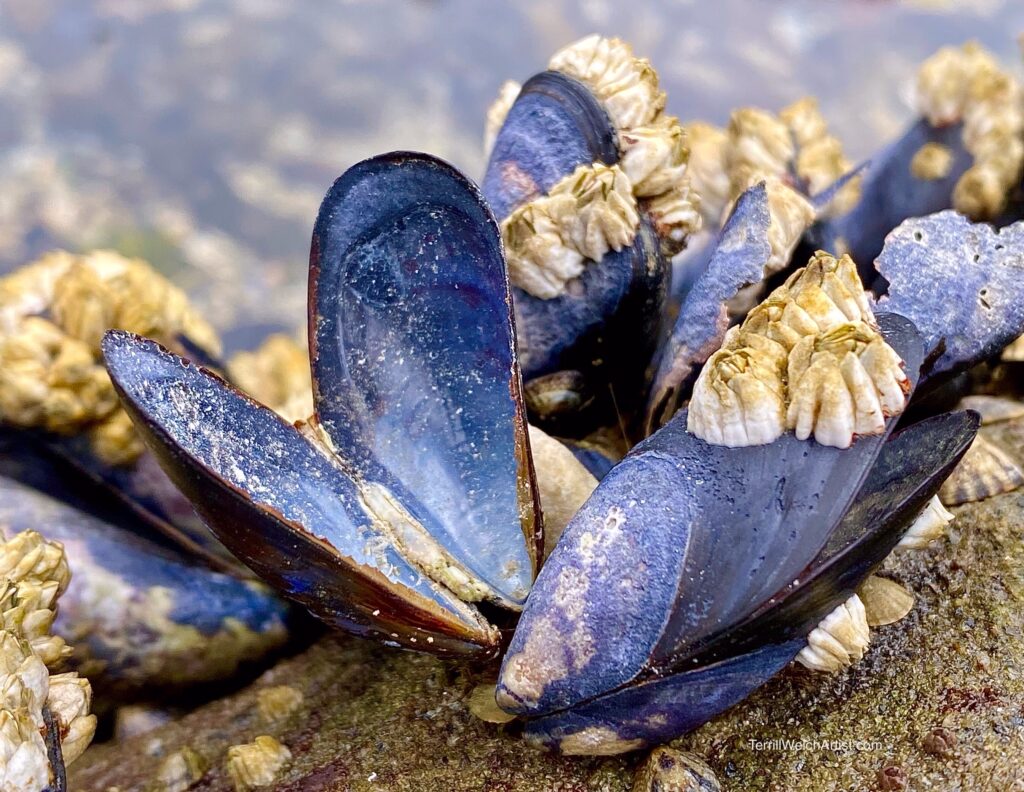
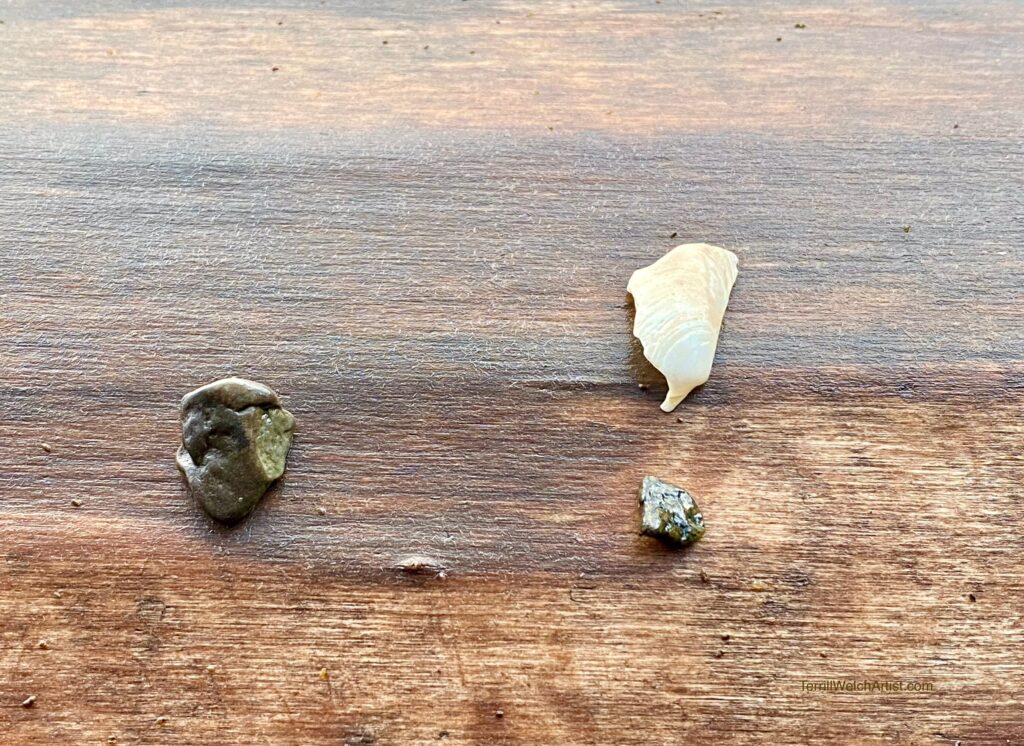
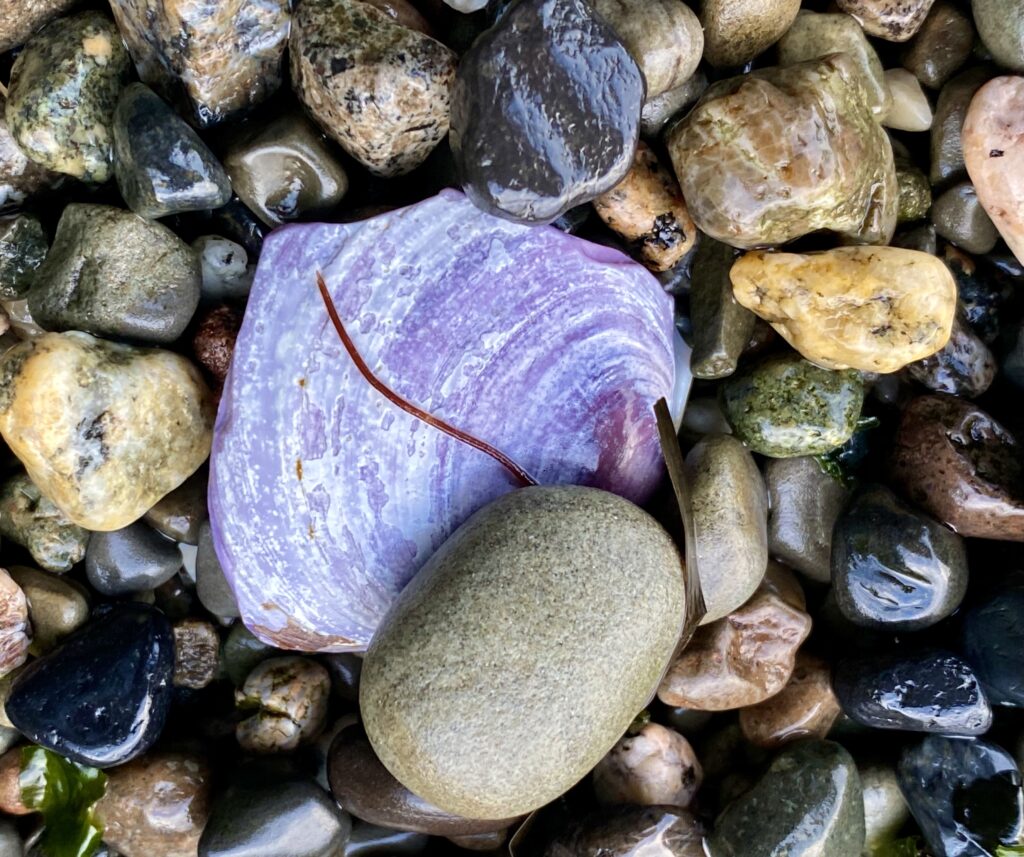
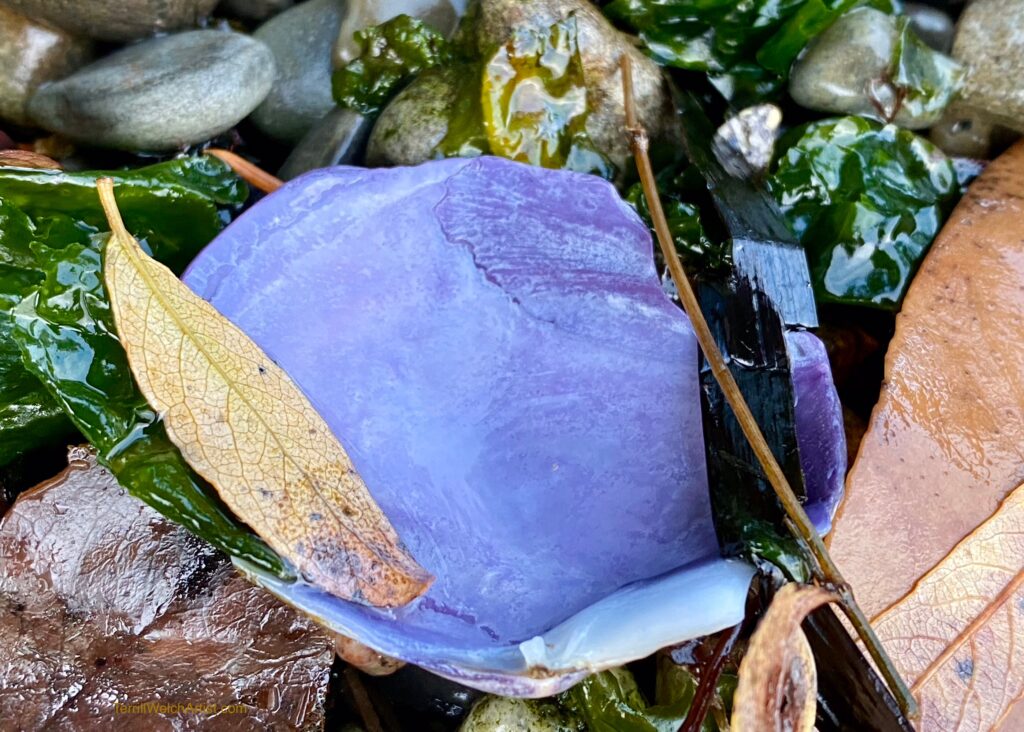
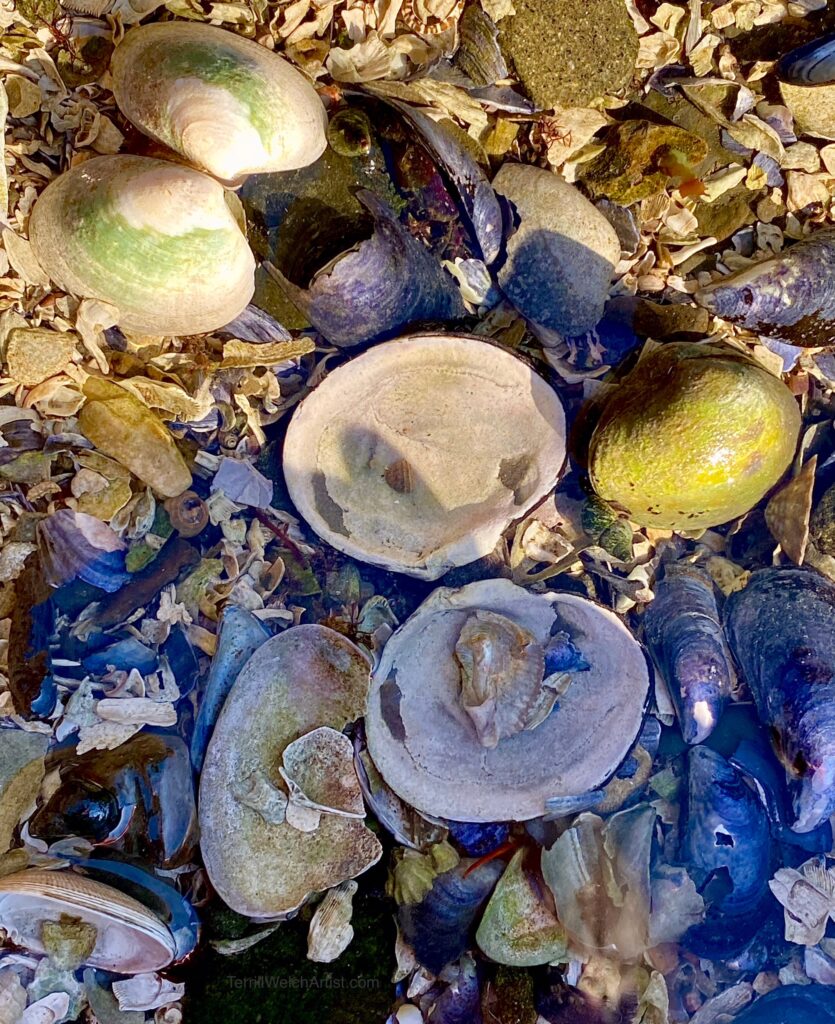
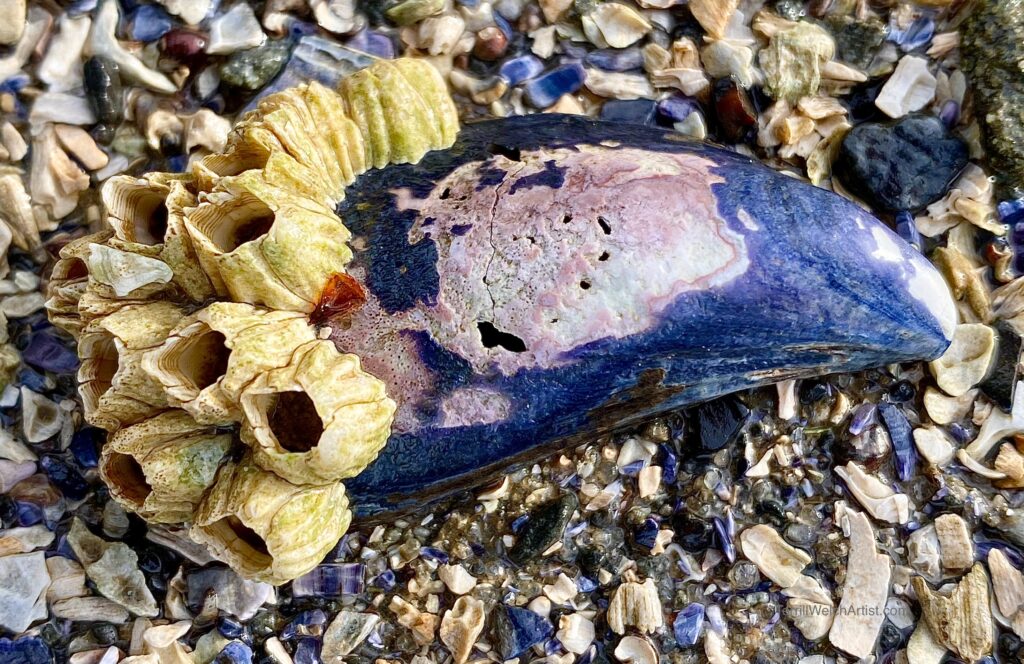
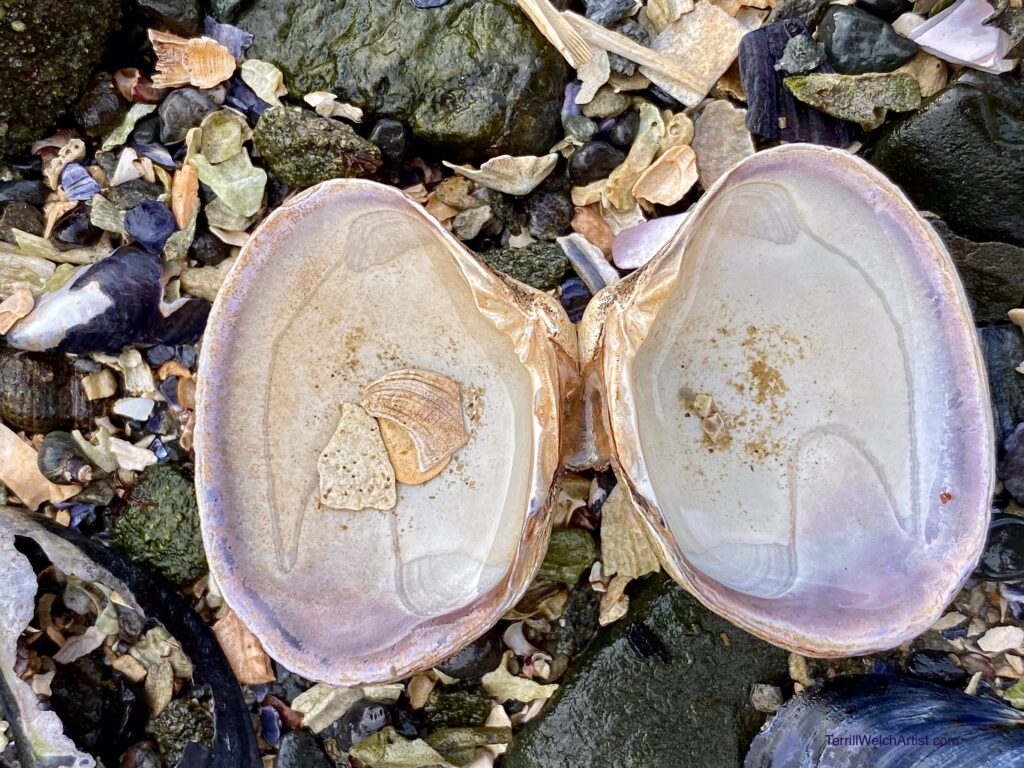
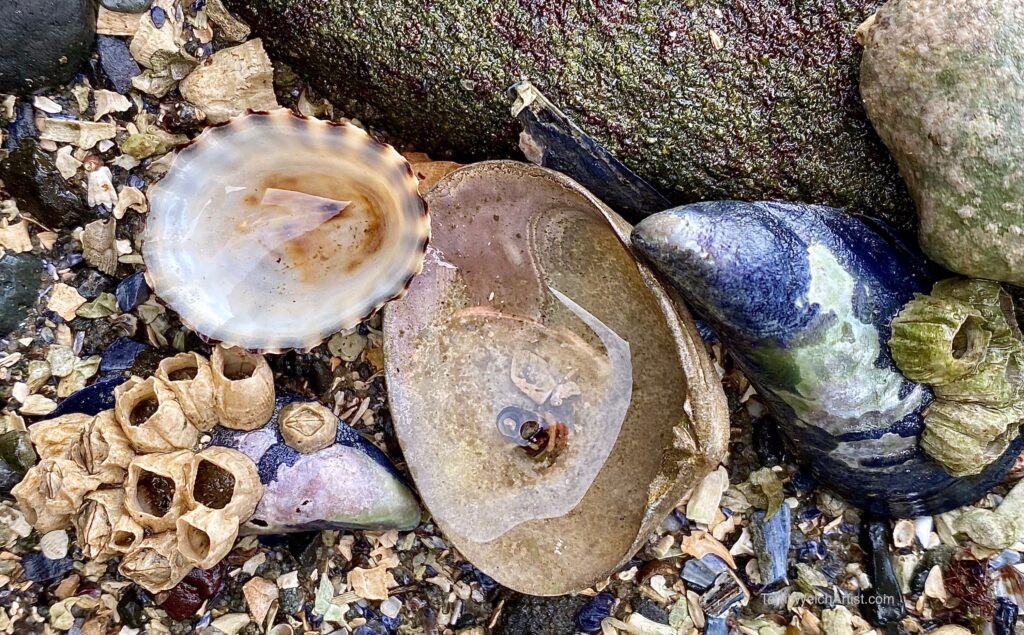
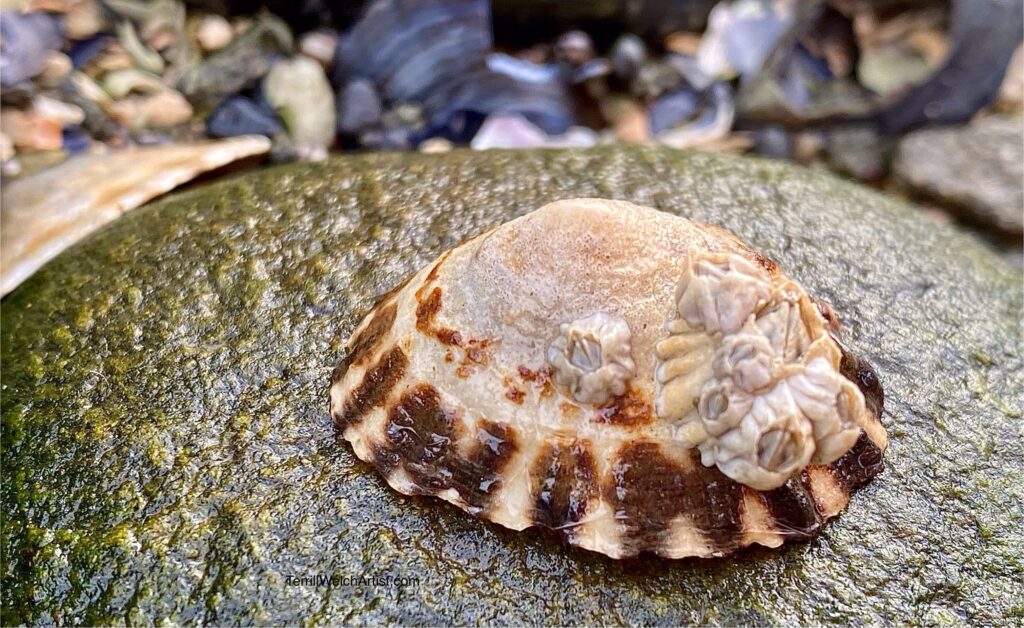
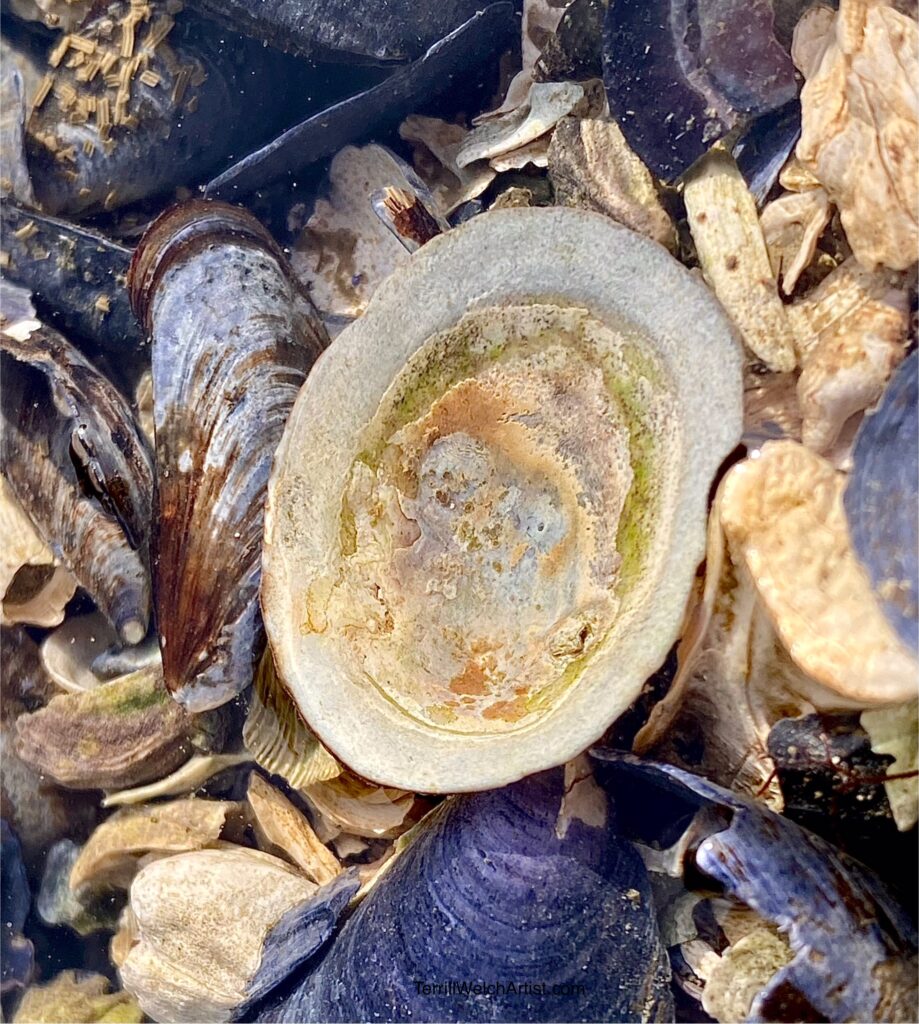
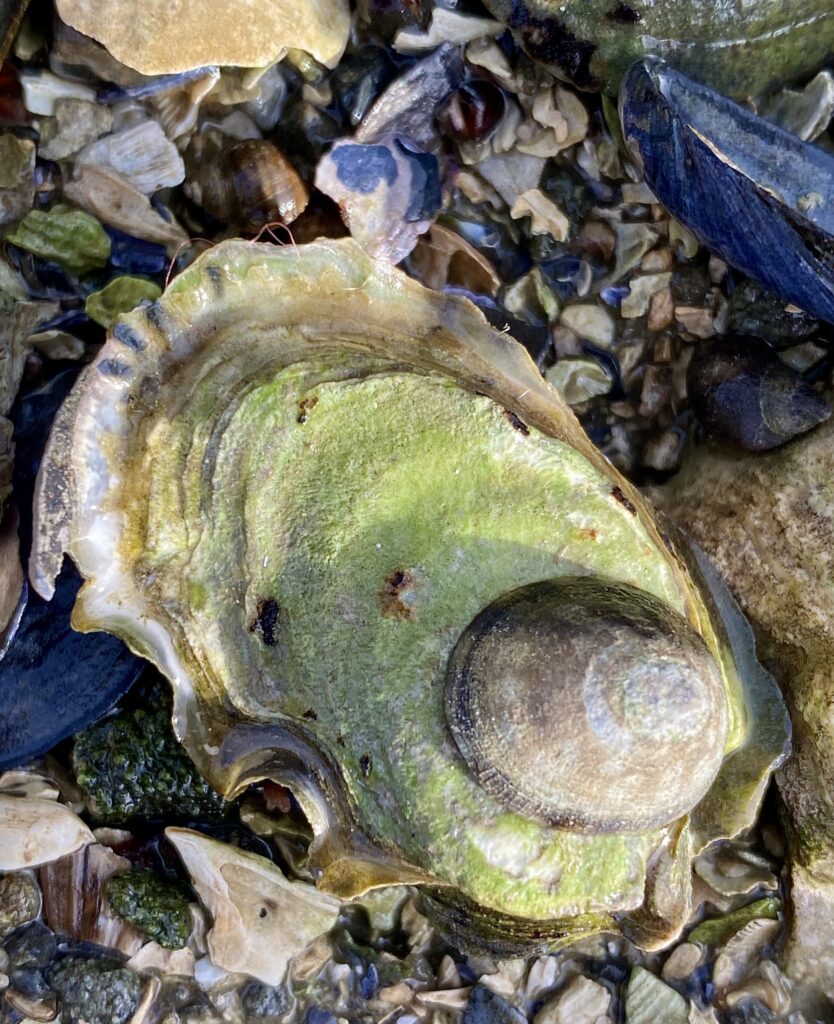
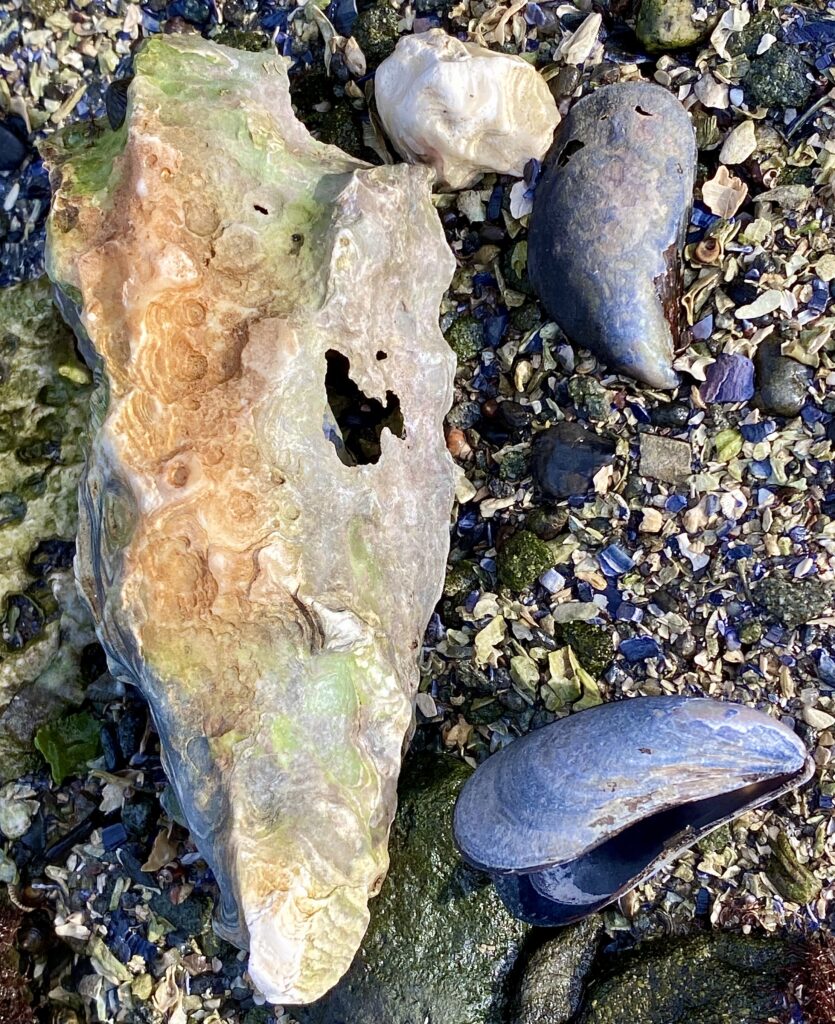
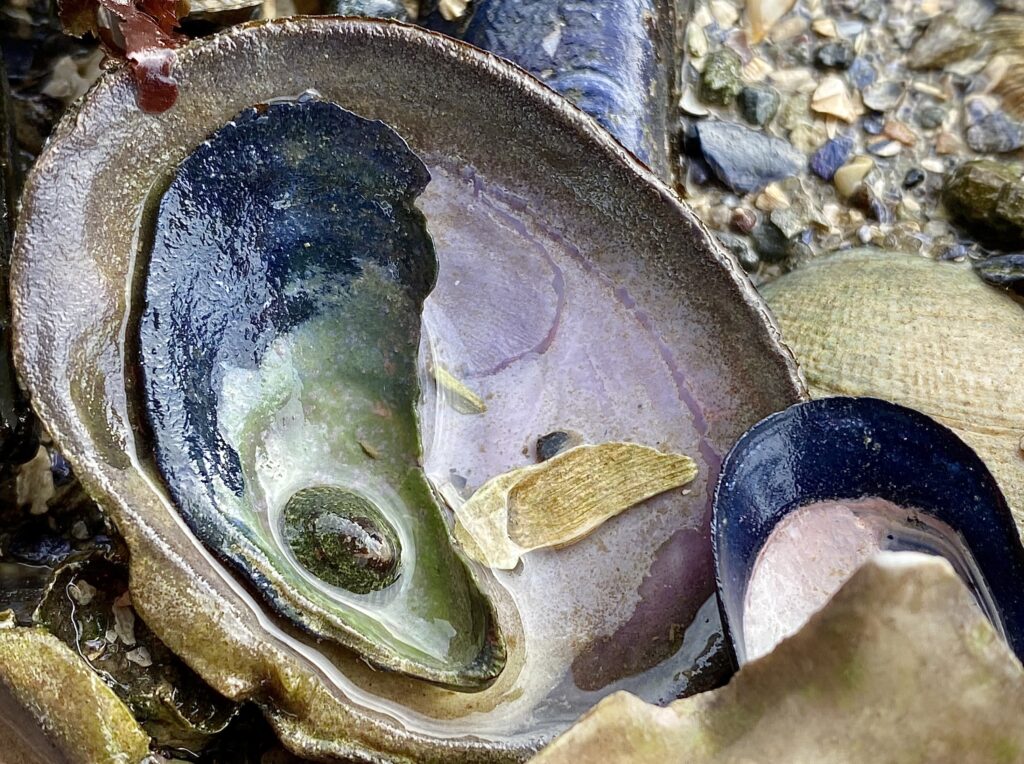
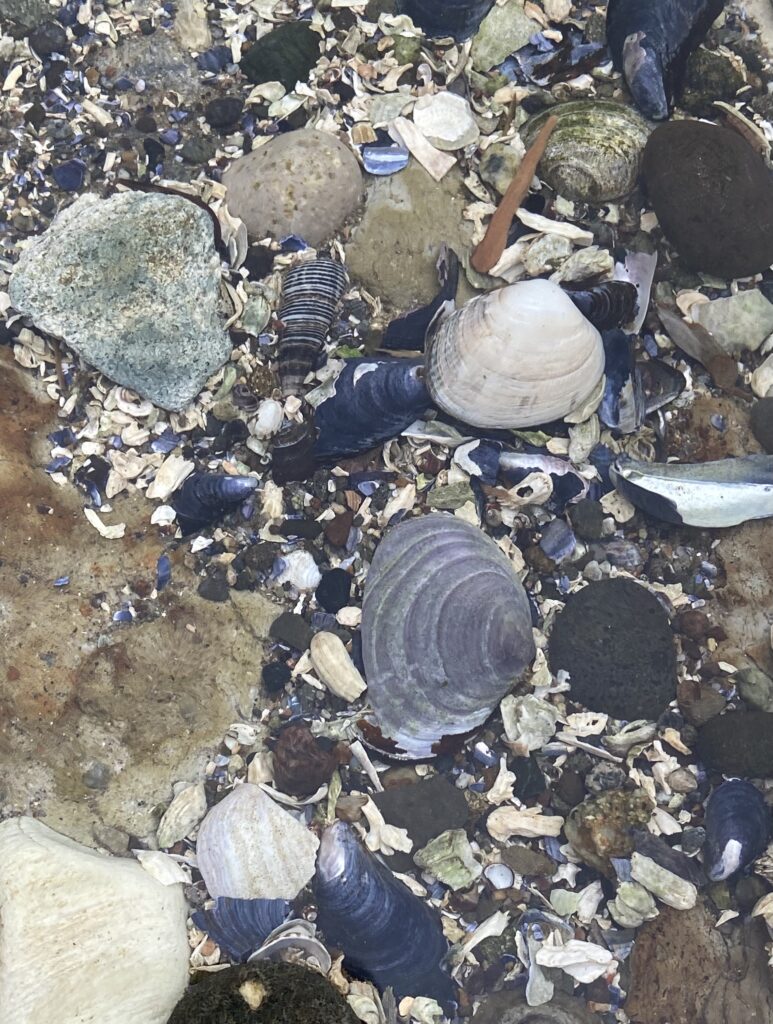
In the afternoon, we again go out and take the recycling to the nonprofit processing centre for the island’s extensive recycling efforts. After this, it is to the bakery for car picnic supplies and then to Reef Bay. I again step to the land and sea edge and squat low to the ground with my phone camera. This time I am invited to notice individual shells scattered along the edge of the tide line.
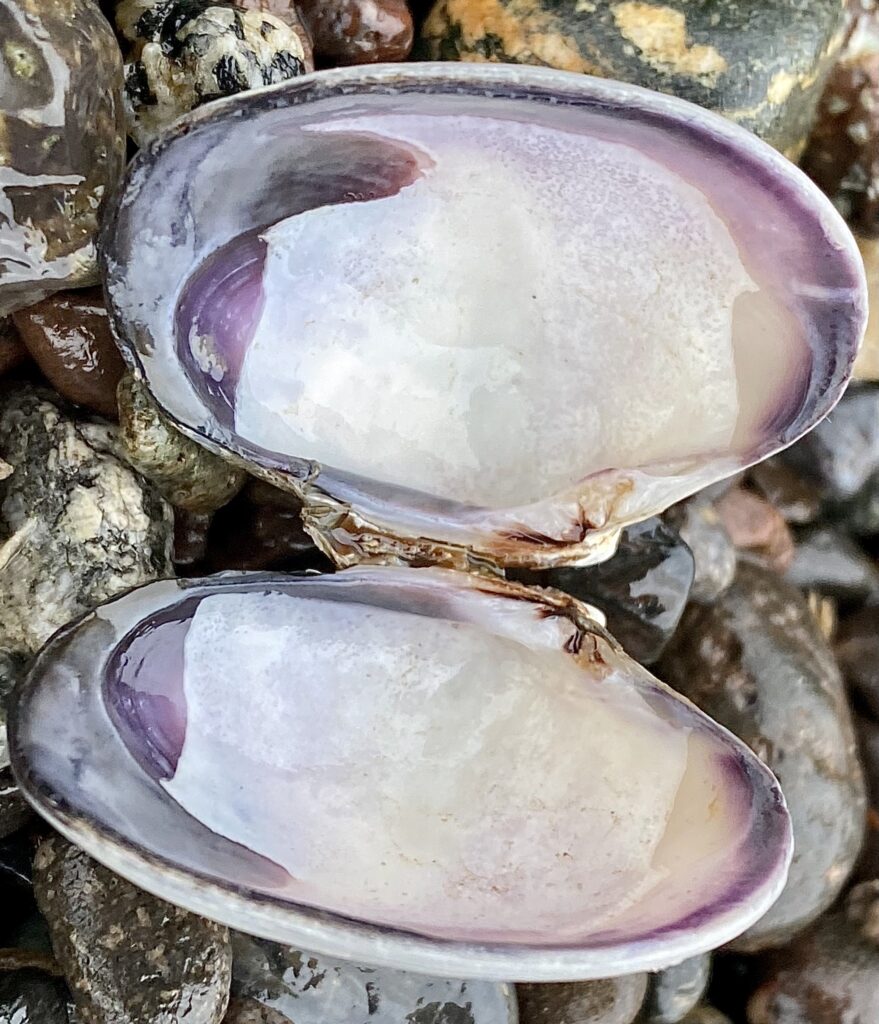
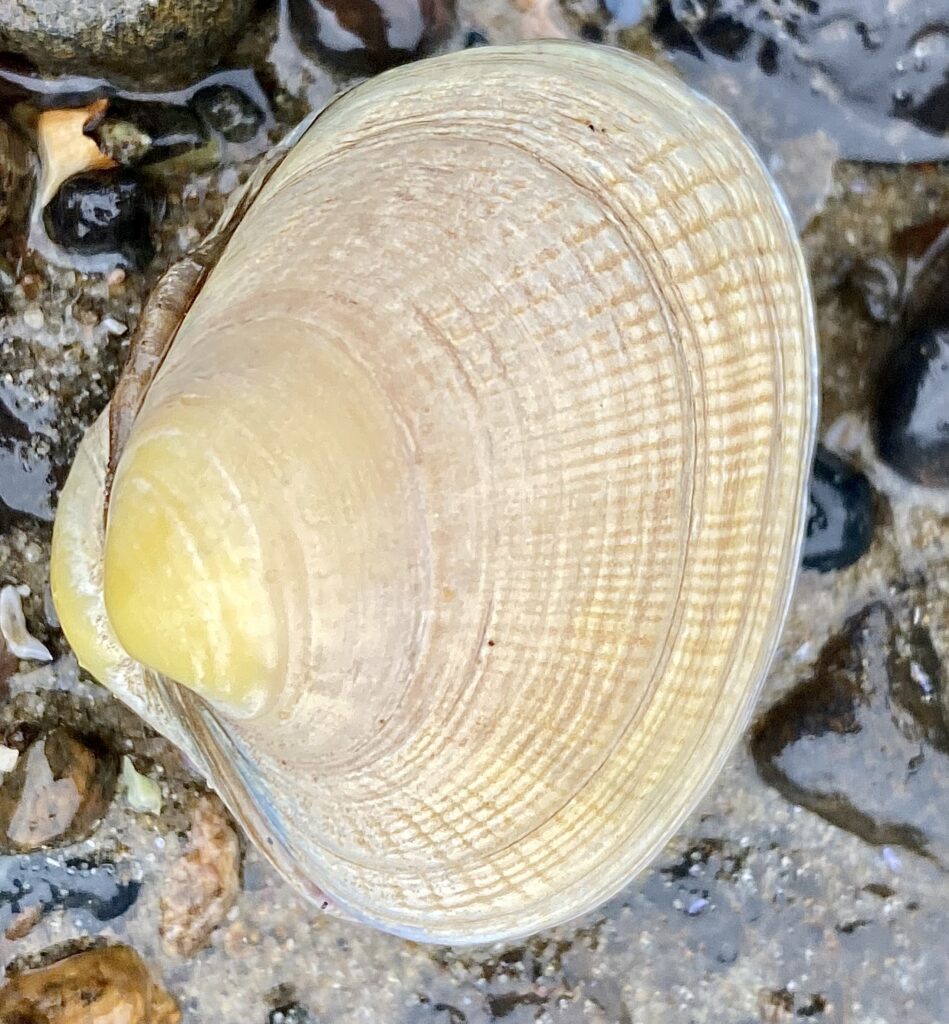
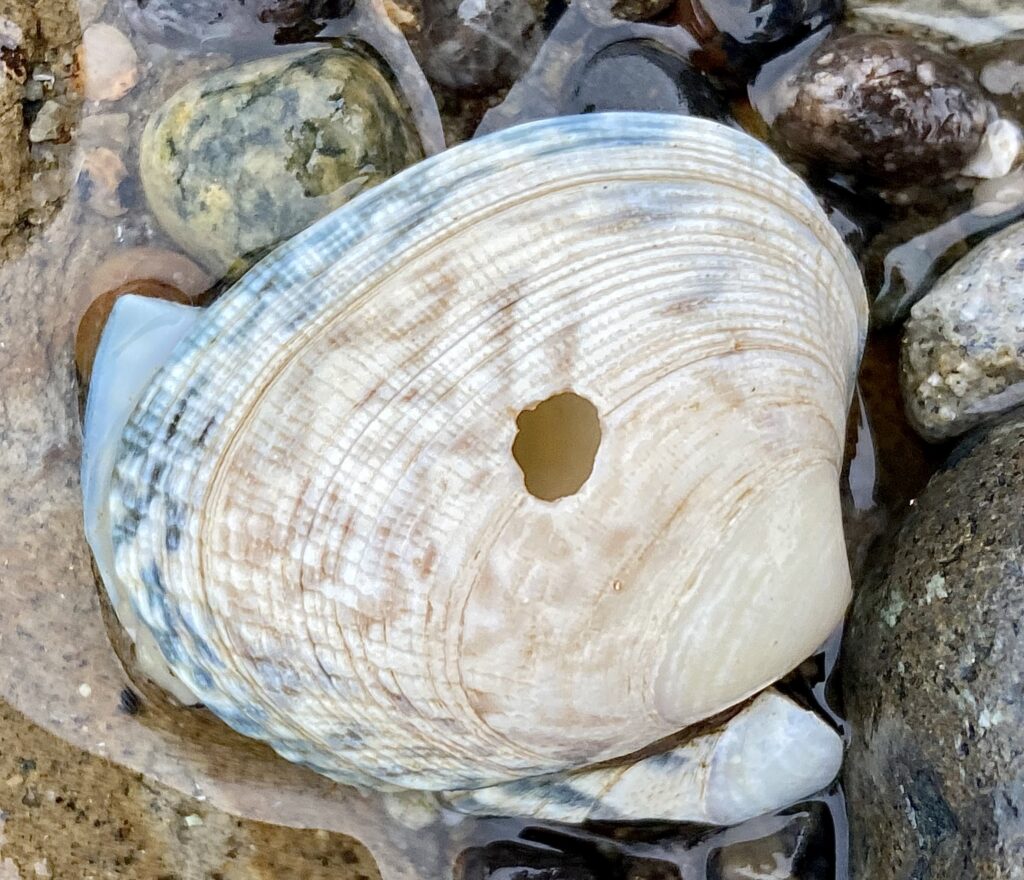
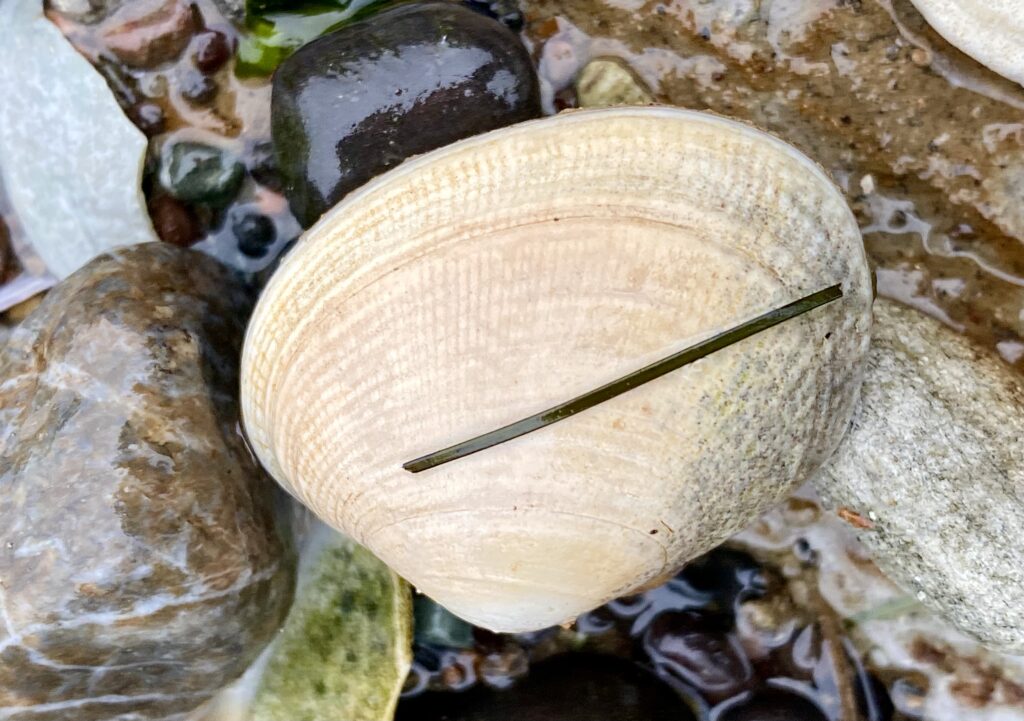
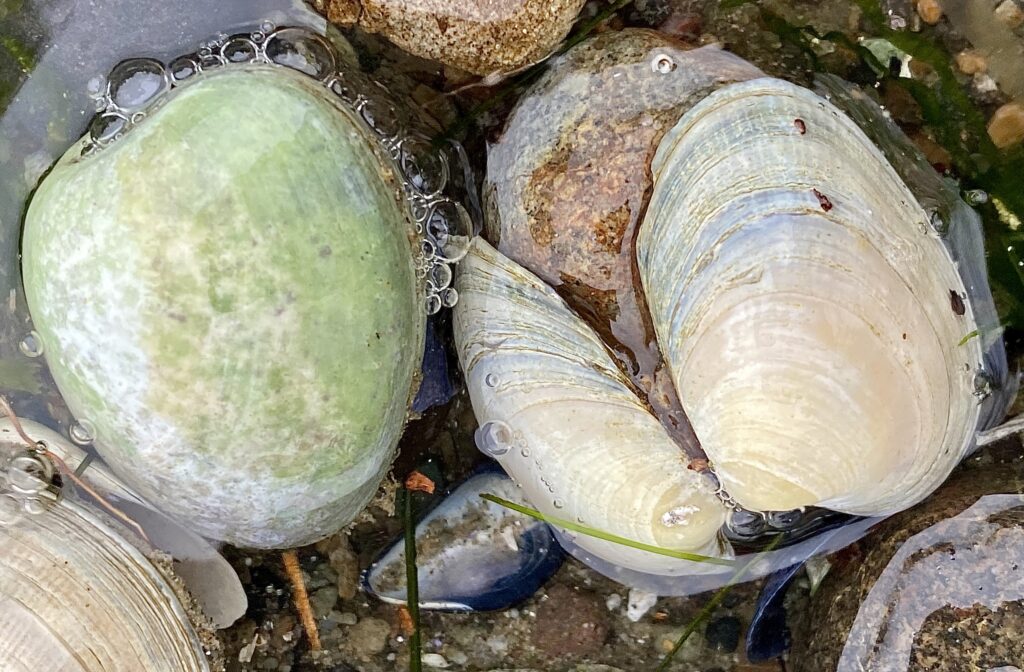
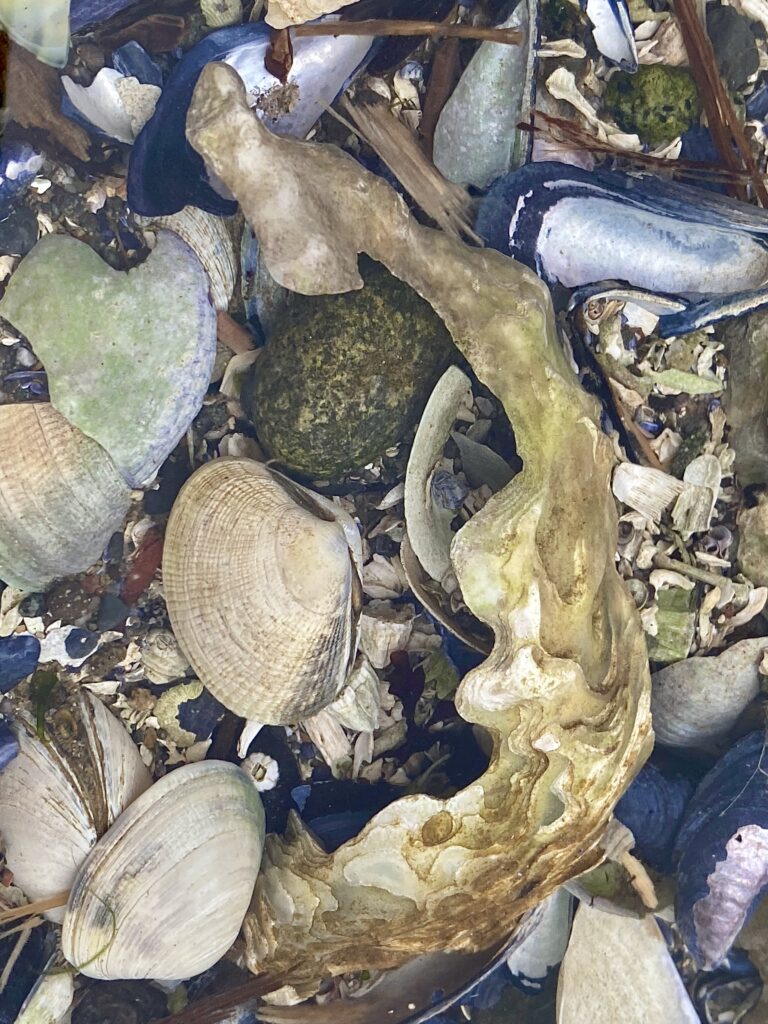
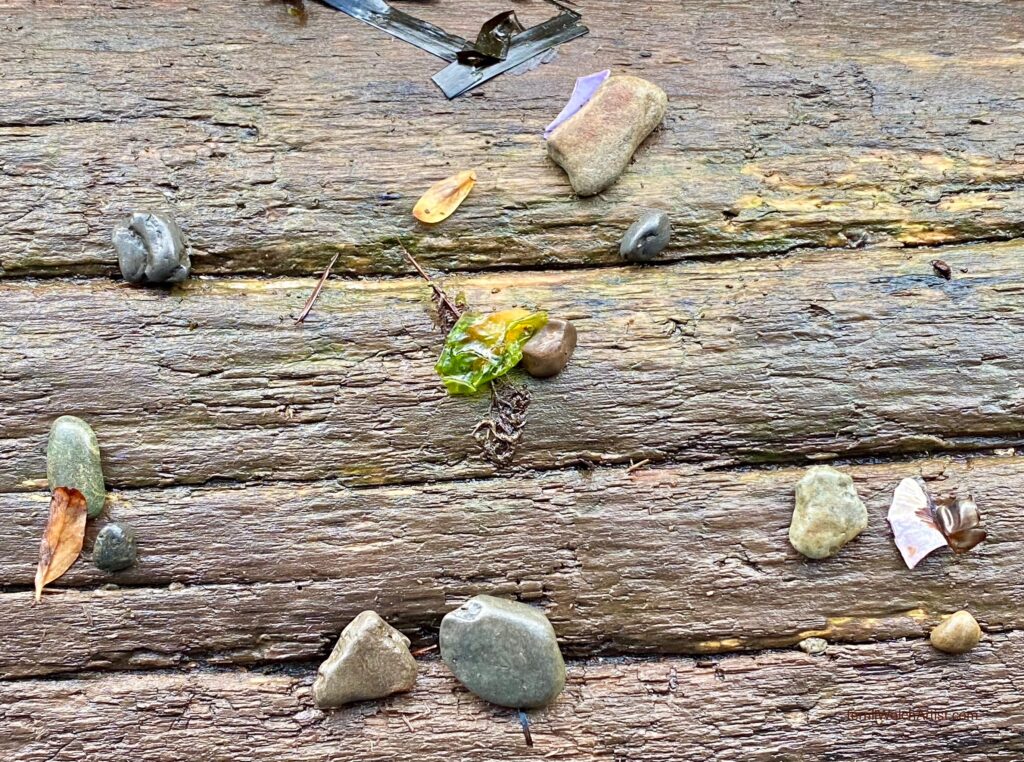
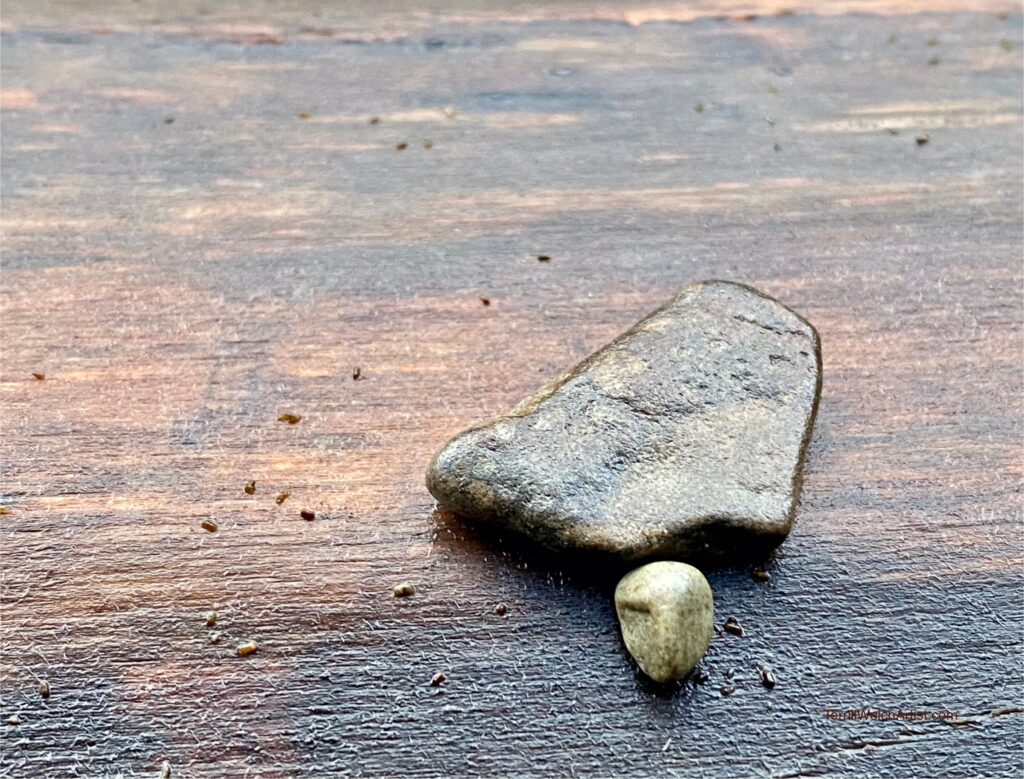
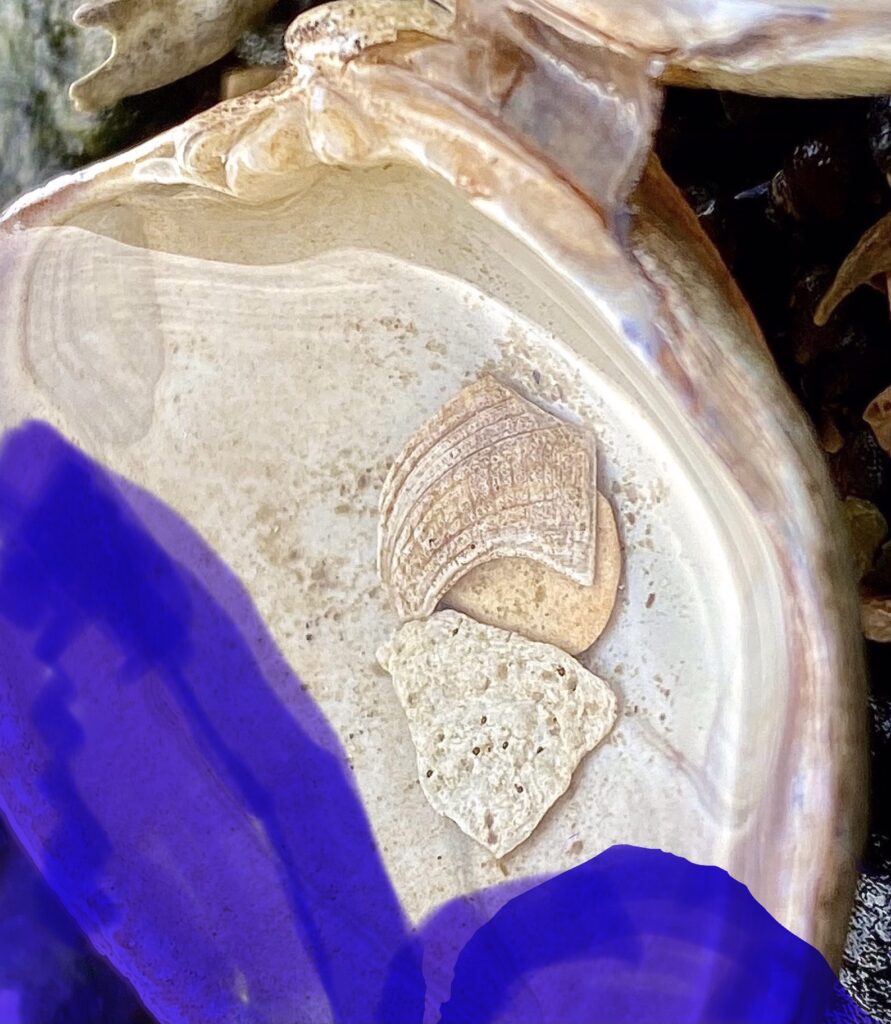
These references, gathered over these past few days, are what I call photographic sketches. They are collected as sensory and memory aids and for exploring possibilities as they present themselves in the immediate present. I have no illusions about their purity and acknowledge that they are deeply entangled within the limits of the devices and within my life experiences, context and past gatherings and my musings about what use they will be in the future. Still, I want to collect them and desire them for their own record keeping capacities.
Sunday, 6 January 2025
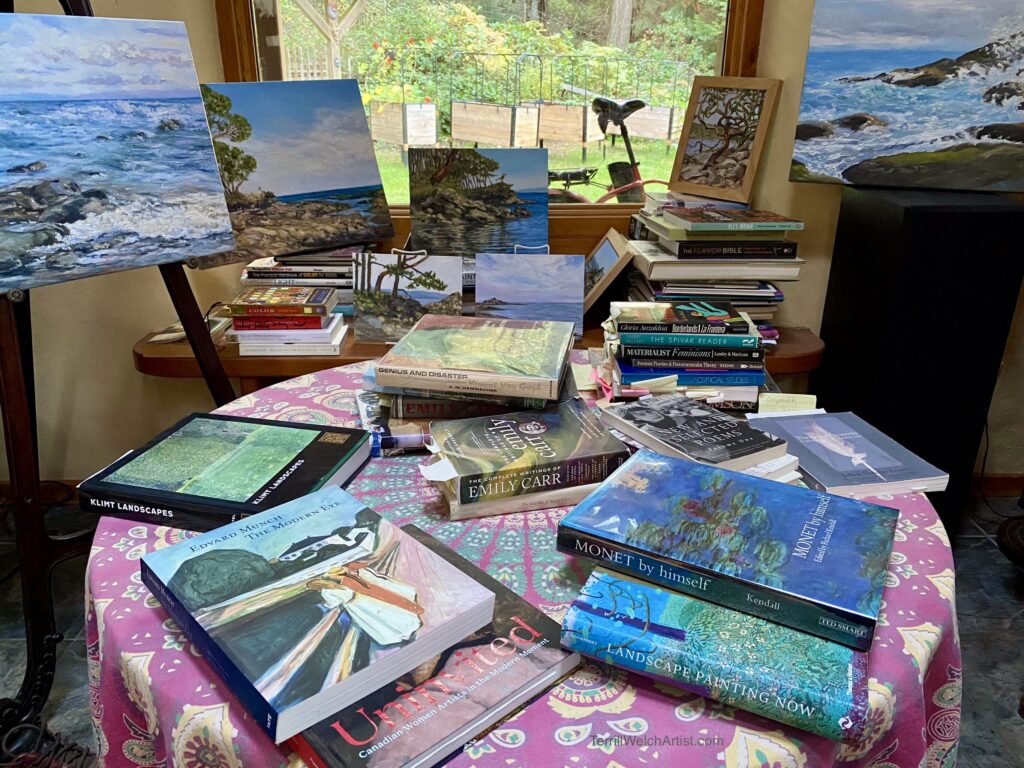
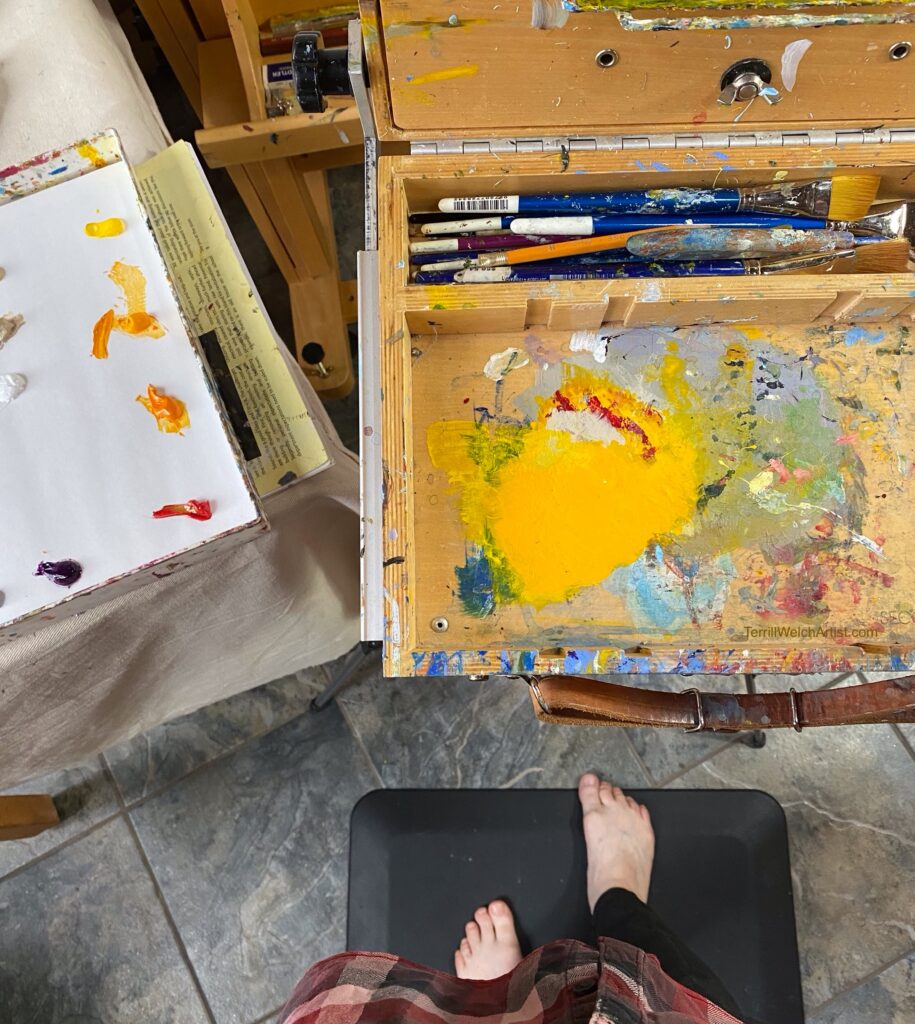
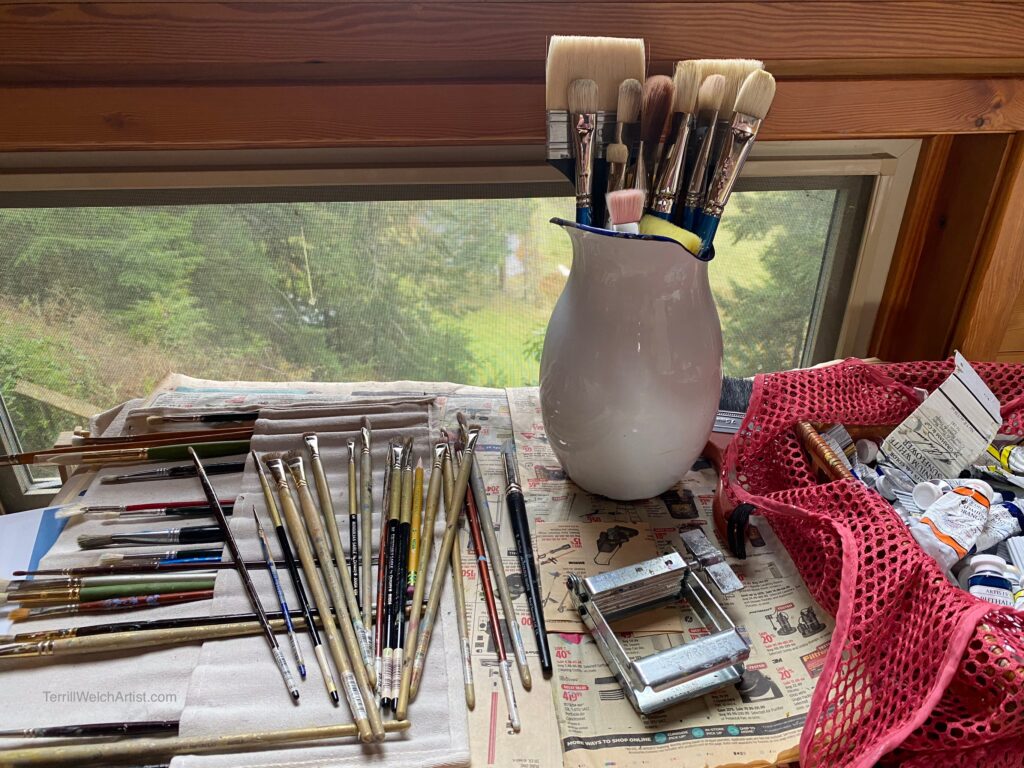
Today is a studio day. I decided to work flat on the table rather than the easel to do the painting sketches. This is an usual way for me to paint but it is also the most practical because these two surfaces are too small to easily secure side-by-side on my large easel and too large for my small easel. I move the easel around to the end of the table and paint in a direction in the studio I have never done before. It was perfect with the misty filtered light coming in the windows.

I am still able to stand to paint and use my whole body in the painting process. Taking one of my images as a starting point I begin.

While I am painting, I cannot help but think that Plato’s cautions about paintings being a copy of a copy that is further removed from his notion of ultimate reality by using my memory and photographic reference prompts. However, he would have the same criticism even if I was standing in front of my subject and painting. I keep thinking that his criticism about imitation and shadows of reality in relation to my inquiry into inner peace, wellbeing and resilience might have some merit. Still, I paint on while holding this intention. I curve the brush around the things we have named shells and feel the sea washing over them under my brush. I work the whole of both canvases.

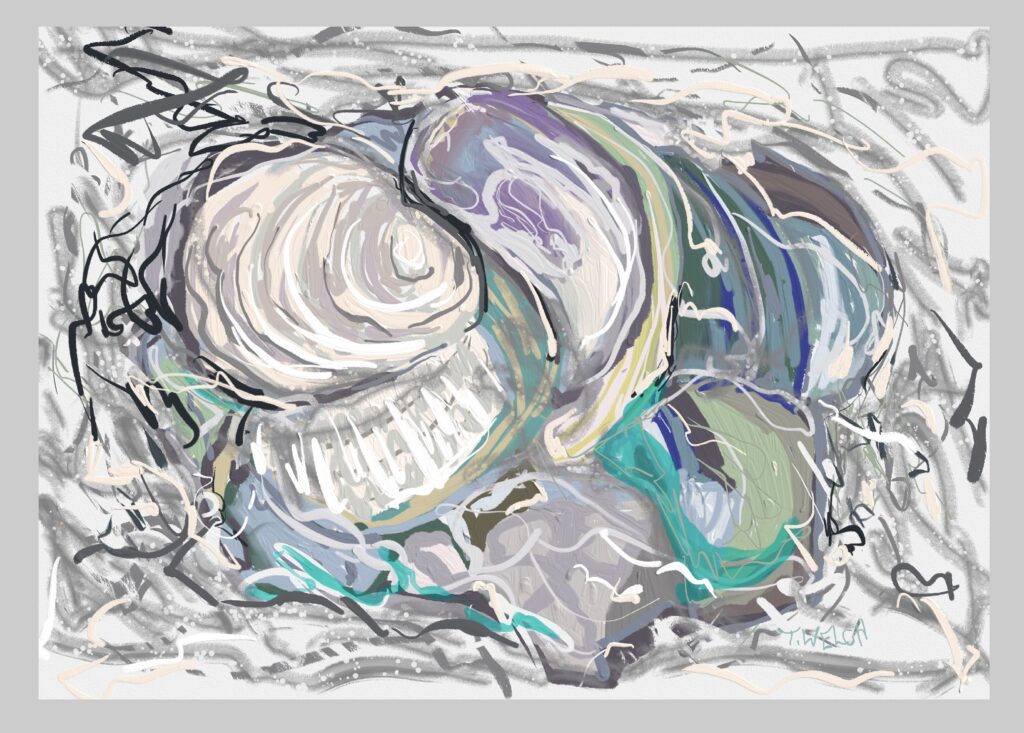
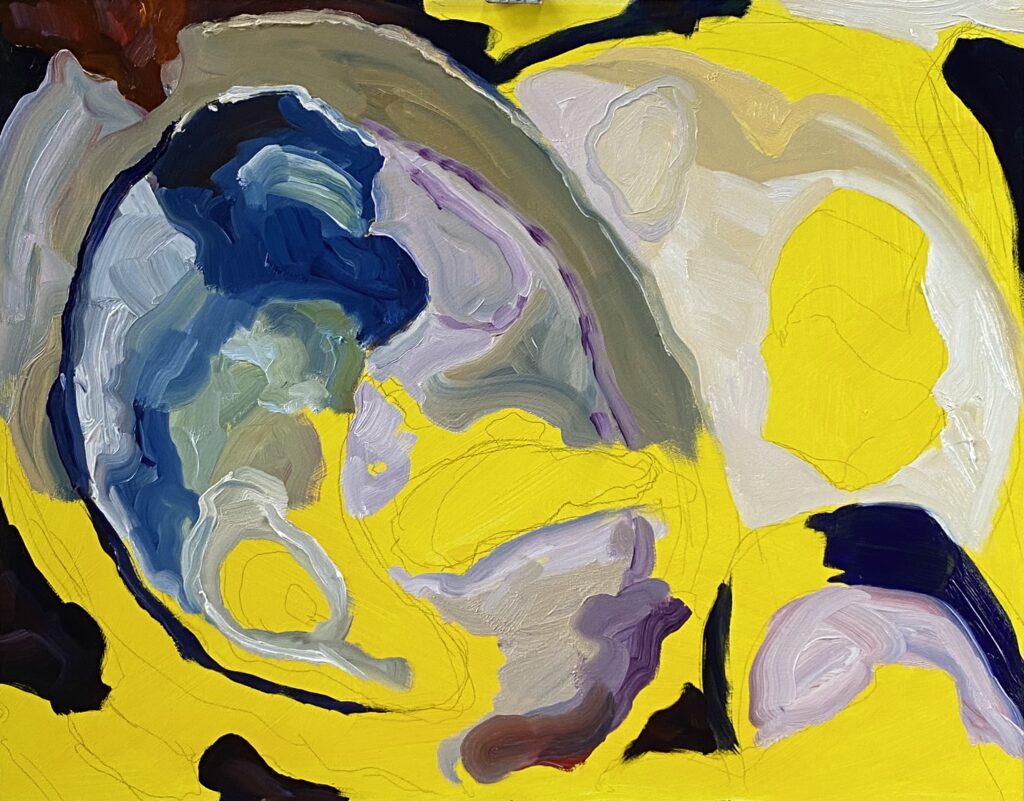
Without conscious decision, I build up the paint and shapes on the left canvas.

Then I stopped. I have no reason for stopping. I just stopped. Something deep inside me has intervened. I walk away from the studio neither frustrated nor upset or even concerned. I wash my brushes, make a cup of peppermint tea and I start to ponder. What if I do not continue painting in the same manner? What if I try to expose the process of experiencing the sea floor from more than one perspective as if moving my eye and body alongside the rhythm of where the land and sea meet? What might this be like if I did this in a continuous manner with the seven small canvases?
Monday, 6 January 2025
Could the world views of Dōgen and Plato meet together with the land and sea and my intention for inner peace, wellbeing and resilience somewhere in this making process? What might happen if I do this? Once I get this post up, I shall go back to the studio and see.
Before I do this, I want to acknowledge to myself that I feel totally inadequate to the task at hand. I know little about philosophy and less about these two individuals and their work. I have only a sketchy understanding of both that has become coupled with a drive to bring what is ordinary in our natural environment to our collective consciousness as something of value to be cherished. Still, I will pick up my brushes and keep painting while I study and learn. I remind myself that new ideas and processes do not often come forth completely developed. They must brew in the rich soup of tidal half thoughts, partial ideas and incomplete processes. This is not only okay, it is necessary and the most useful way forward.
Too Much For A Painter
Tuesday, January 7, 2025
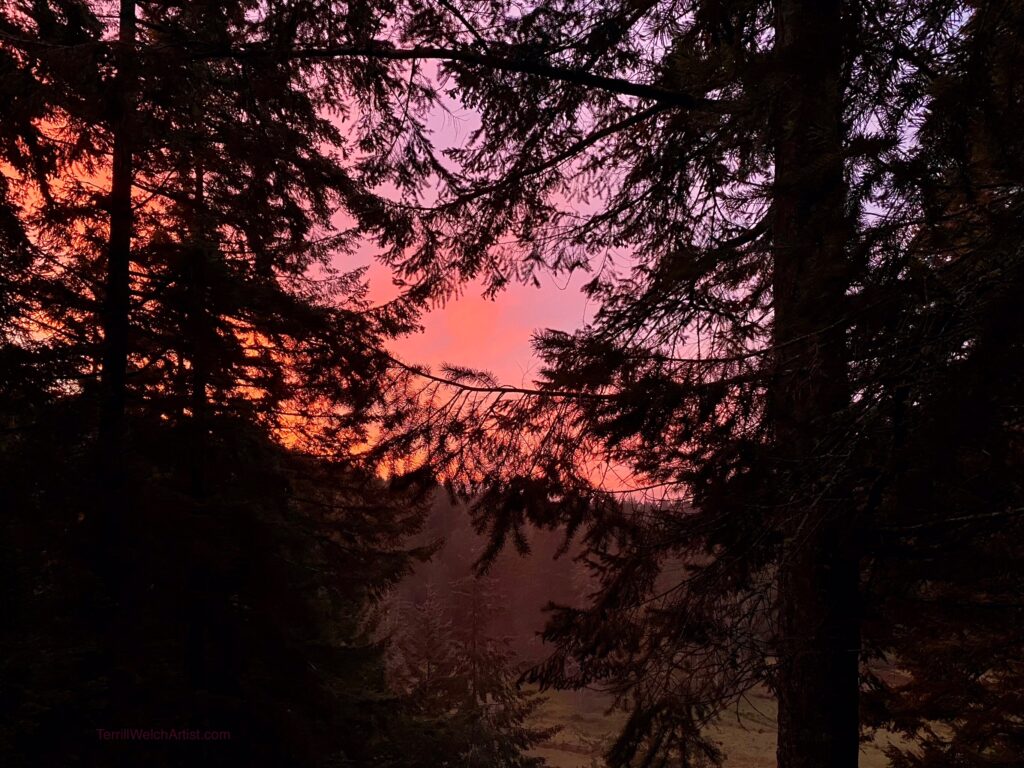
Too Much For A Painter
Morning came with a vibrant assault.
Deep cadmium and mineral violet
flung themselves carelessly across the sky-soaked trees.
Such promise!
I frittered it away…
going to the post office to ship a commissioned work to an art collector,
choosing almost ripe pears at the grocery store,
hanging a large painting in our local bakery,
visiting on zoom with a longtime artist friend in another country, and
reading passages by Plato and Dōgen.
Sadly, my brushes remain helpless on the studio table.
Regrettably,
ignored.
Maybe tomorrow
won’t begin with such brilliance.
~Terrill Welch, January 7, 2025
Research through Art Practice – reflection on lecture
Friday, 10 January 2025
In reflecting on the lecture by Dr. Michele Whiting, I find myself pausing at the youth of research and theory through art practice. My first thought was that my children, who are in their forties, are older than this discipline. There is a freshness and excitement that comes with this newness. Everything is still malleable and art research and theory can freely borrow and consider the best from other disciplines as well as developing and establishing its own nature. I remember this dynamic when I studied Sociology and Women’s Studies in the late 1980’s and then worked on a master’s degree in the 1990’s in Gender Studies. There were also smatterings of these same elements in the many positions of my various non-art careers where I repeatedly took on jobs without job descriptions and I later developed these positions through the process of doing so as to reach the desired outcomes. I find myself in a somewhat familiar place with research through art practice and I’m filled with great curiosity for what might be possible through rigorous exploration and critical thinking. I have no doubt that my painting practice will be the better for it, regardless of any other result, and this is the most important reason I am taking this MA of Fine Art.
Now to the reflective questions:
My position as a researcher and maker –
As a person with an established painting practice and who primarily works from my own references, imagination and inquiry, I am driven by a researcher’s attitude to making. What I am hoping for with this specific project is to create a formal structure for my inquiry that will result in a deeper understanding about how I get the results I endlessly seek and place them within the larger contemporary art field of research. Basically, I am seeking excellent company to propel my work forward! I sense that the approach of ‘Reflectivity and Reflection’ that is outlined in the lecture demonstrating a circular relationship between the studio and contextual and theoretical research is a particularly useful method of working for my inquiry and it is possibly the most natural fit with my personal sensibilities.
Has your understanding of research in a fine art context been changed, and if so, how?
Yes. Before starting this programme, I was only considering my actual making as my research and practice. I am now clear that my process of making needs to be considered from a much more inclusive perspective and take in my observation and reference gathering as well as the actual painting process.
How can you relate the lecture content to your own processes?
My endless iterations through reference gathering decisions in the field are where I have many chance encounters in my creative process occur. This process continues in the studio and then is taken back out to my field of inquiry and discoveries happen in my work through the wholeness of this process. Somehow, I had separated these two aspects as distinct processes and I have been considering only the later studio work as being valid a process and material for research inquiry.
What would you change or work towards and why?
I will be taking a more wholistic approach going forward.
Due to their importance, I have taken the liberty to gather together the references cited in Dr Michele Whiting’s recorded lecture ‘Research through Art Practice.’ There are a couple additions added from my research into the references and I did not include references to the quotes in the slides.
Selected and Important Works Referenced in presentation and Additions:
Dufourcq, Annabelle. “The Imaginary as Introduction to Ontology and Then as Fundamental Ontological Model.” Contributions to Phenomenology, 1 Jan. 2024, pp. 343–350, https://doi.org/10.1007/978-3-031-73826-5_21. Accessed 11 Jan. 2025. (Speaks to Maurice Merleau-Ponty “For an ontology of the Perceived World” 1954-55)
Frayling, Christopher. “Research in Art and Design.” Royal College of Art Research Papers, vol. 1, no. 1, 1993, researchonline.rca.ac.uk/384/9/frayling_research_in_art_and_design_1993_OCR.pdf. Accessed 11 Jan. 2025.
“Front Page | Journal of Artistic Research.” Www.jar-Online.net, www.jar-online.net/en. Accessed 11 Jan. 2025.
Gray, Carole, and Julian Malins. Visualizing Research. 11 Feb. 2016, https://doi.org/10.4324/9781315547923.
Loveless, Natalie. “How to Make Art at the End of the World.” Dukeupress.edu, Duke University Press , 2019, www.dukeupress.edu/how-to-make-art-at-the-end-of-the-world. Accessed 11 Jan. 2025.
Merleau-Ponty, Maurice. The World of Perception. Routledge, 31 July 2004.
Puig de La Bellacasa, Maria. “Matters of Care.” University of Minnesota Press, 18 Mar. 2024, www.upress.umn.edu/9781517900656/matters-of-care/. Accessed 11 Jan. 2025.
Rose, Gillian. “Visual Methodologies: An Introduction to Researching with Visual Materials | SAGE Companion.” Sagepub.com, 2016, study.sagepub.com/rose4e.
Schön, Donald. The Reflective Practitioner. 1983. https://studenthublive.open.ac.uk/sites/studenthublive.open.ac.uk/files/reflective%20practitioner%20-%20schon.pdf
Verbeke, Johan. “The Intrinsic Value of Artistic Research.” Architecture, Design and Conservation – Danish Portal for Artistic and Scientific Research, 2025, pp. 123–125, adk.elsevierpure.com/en/publications/the-intrinsic-value-of-artistic-resrearch. Accessed 11 Jan. 2025.
Time between studio and another sea floor painting process
Sunday, January 12, 2014
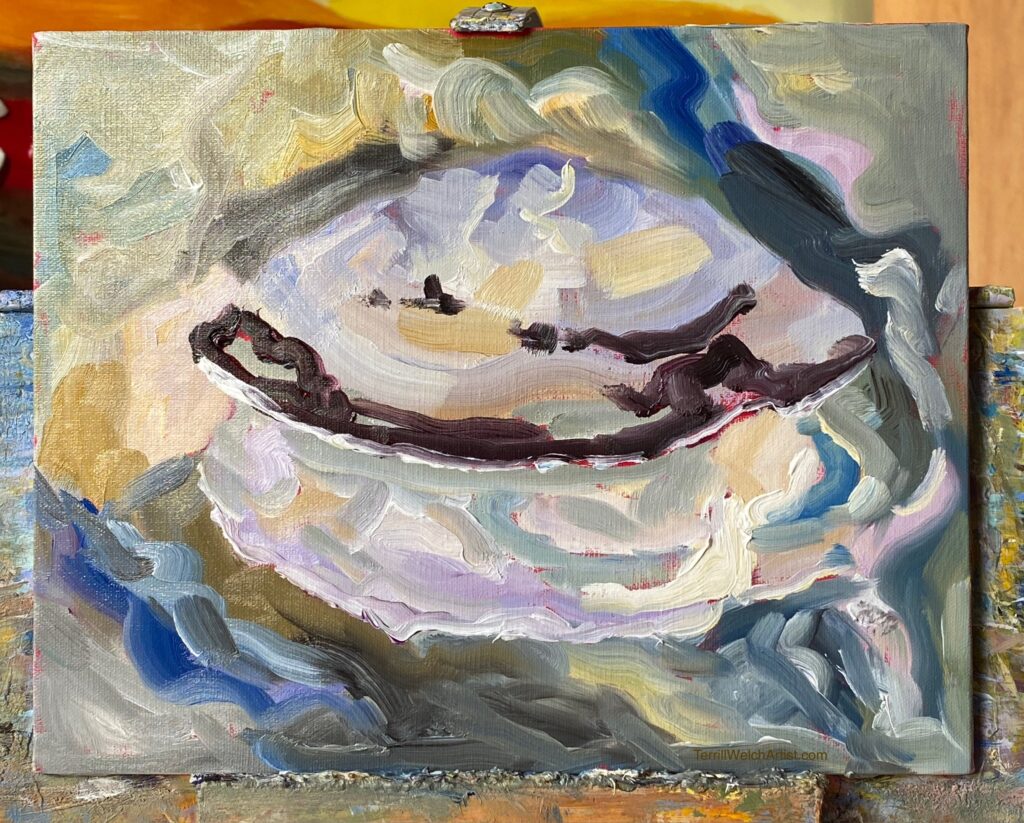
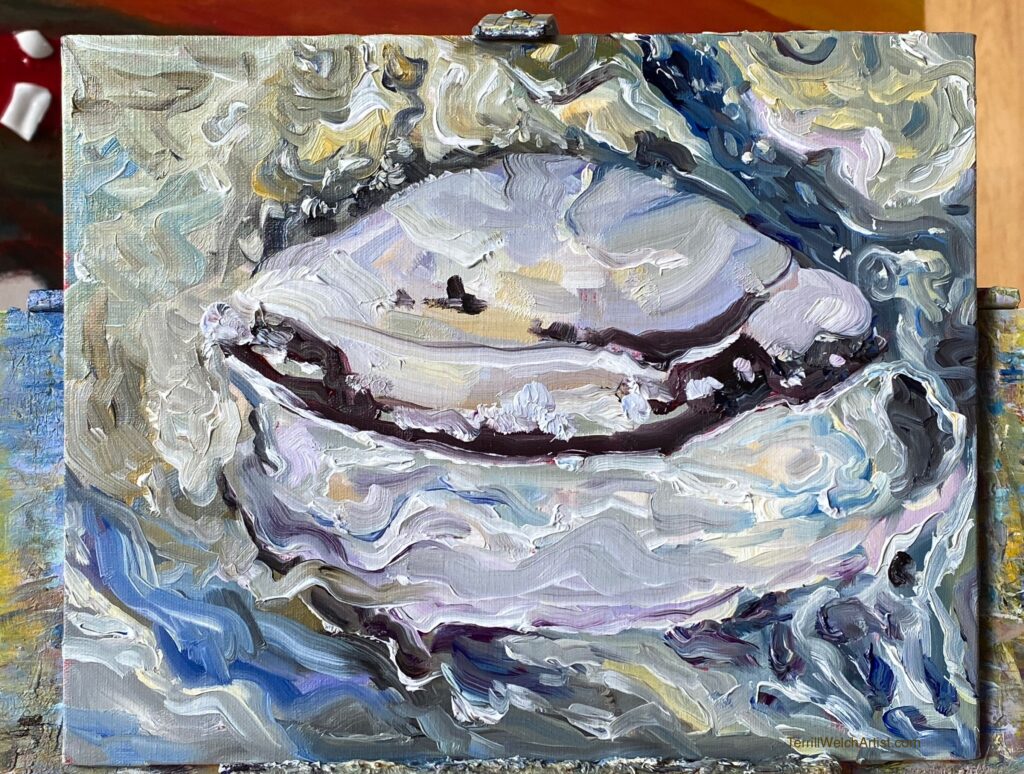
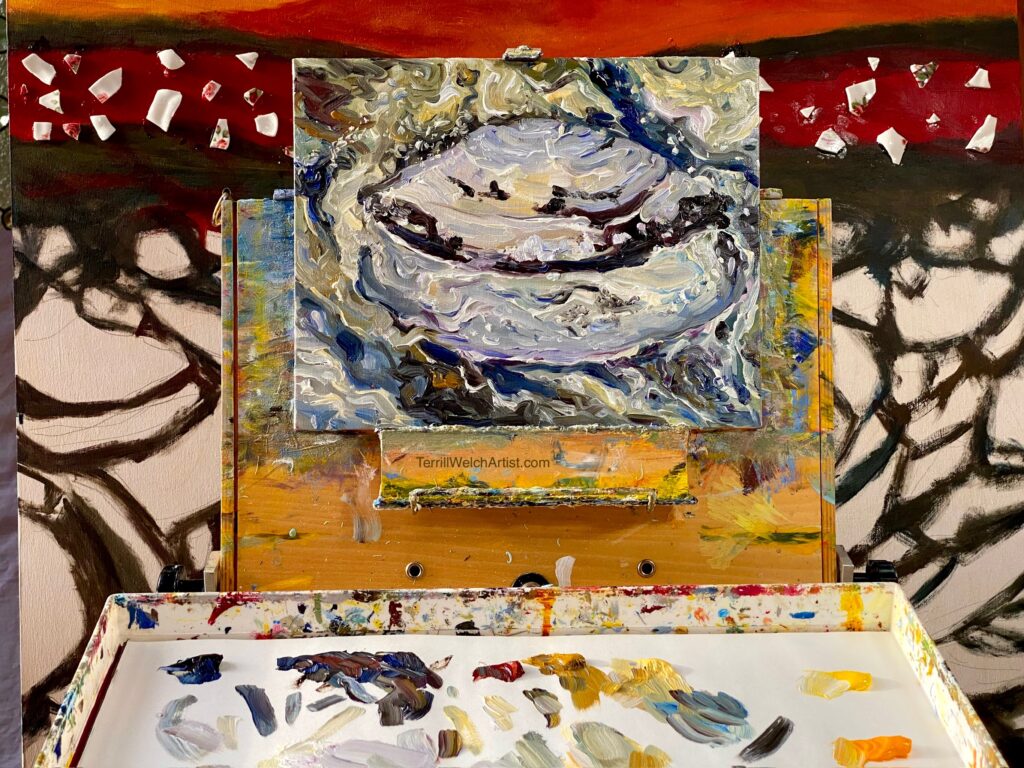
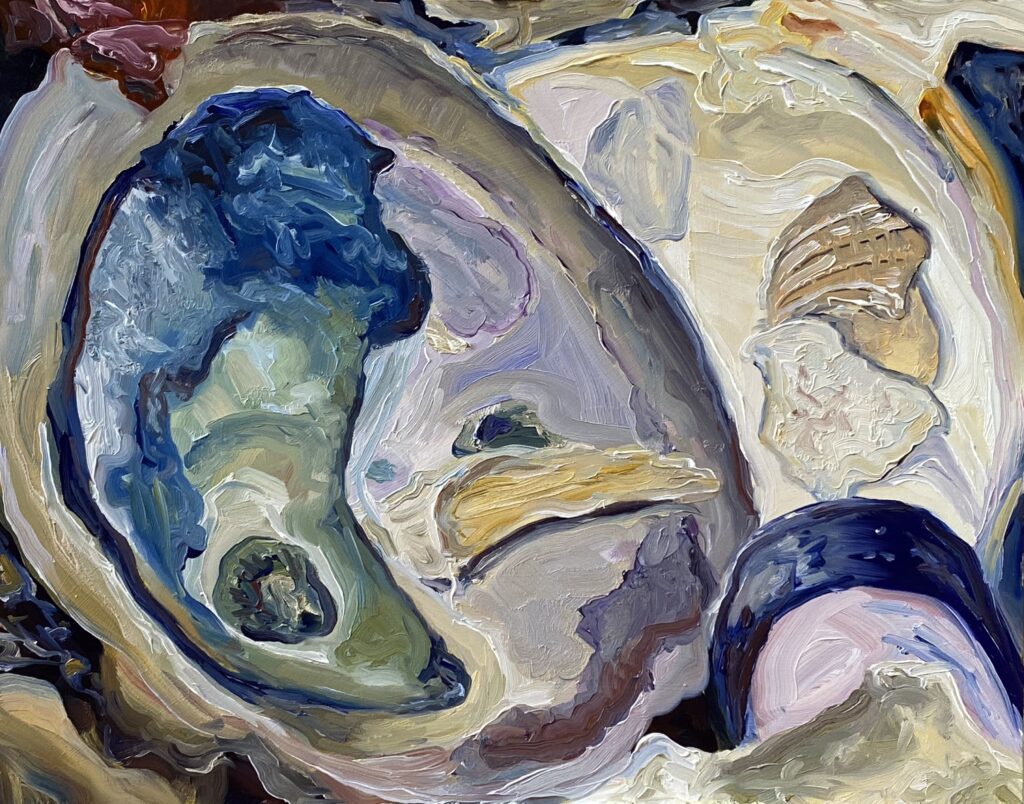
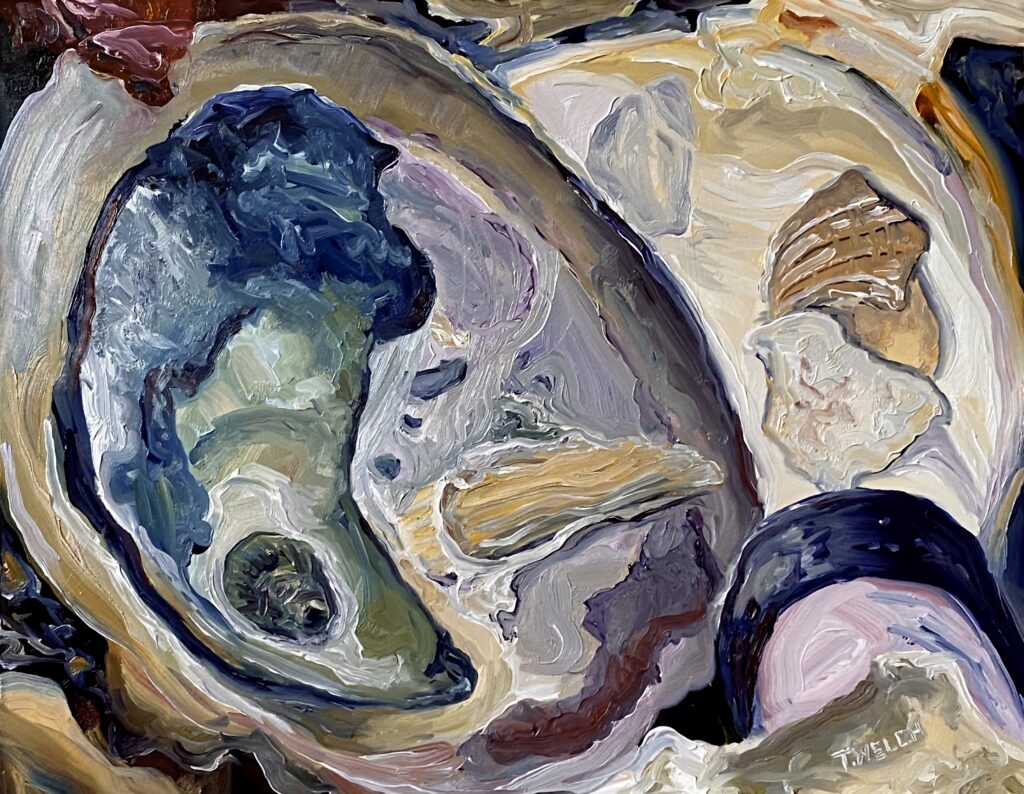
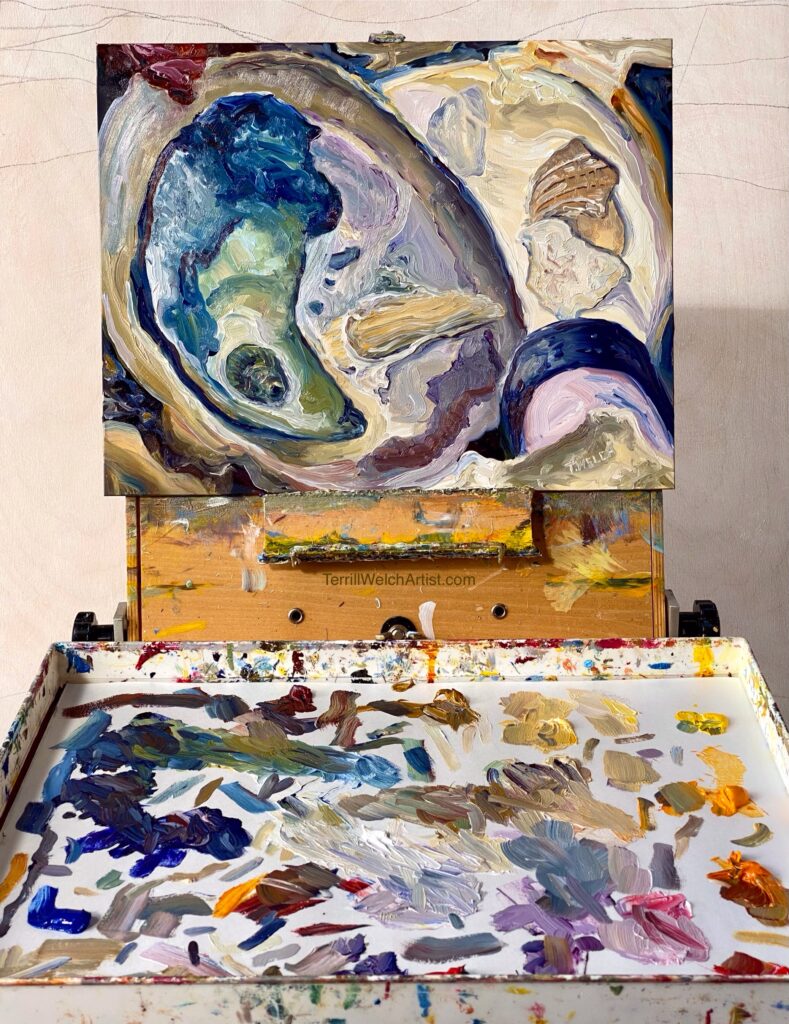
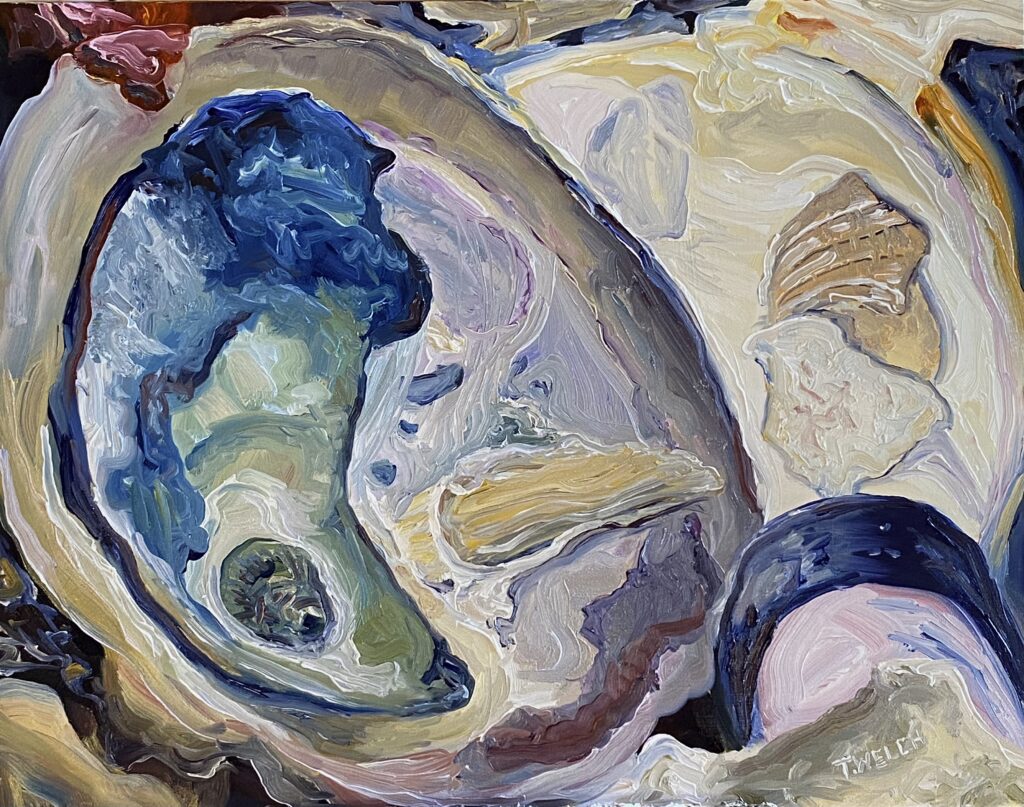
As new oil paintings rest on my easel, the passage of time and space between studio and sea seems to narrow with purpose. I have gathered some of this flow in my reference material and the resting point of the works in progress.
In an early post I shared where I had stopped with this loosely diptych pair of studies…

The week has transitioned between reading about theories of objects and things, human perception, Plato’s constant abstract true reality and Dōgen’s continuous change in the particulars of ordinary life combined with my driving need for immersive time beside the sea and in the studio where I bring my conversations with the sea with me to share on the canvases. There is no doubt about our flawed and limited sensory information. I will expand on the science and specifics of this later on. However, this process of exposing, defining and creating meaning around these observation flaws beside the sea is a mystery that continues to sustain my art practice. It is within this process that I find inner peace, wellbeing and resilience. Still, that act of thinking about sensory experience does, as you will see, have an impact on what perspective I choose and how I curate my conversations with the sea on the shores of Reef Bay onto my canvases.
The following are snippets of observations between the full stop in the studio and the completion to resting of two small studies. In my painting practice “resting” is the place where I have completed all I can in that moment and I am waiting to see if the work demands anything more. I keep the work where I can look at it from time to time out of the corner of my eye. I wait. Then I make a final decision to either change something or call it done/completed/resolved.
My next step after the full stop was to consider movement and the effects on what we observe and how my eyes try and catch glimpses of objects and shapes that can quickly be categorized and named… even if I get it wrong. My brain will make and hang onto a mistake until further information can refine my observations rather than leave a void. I develop the second canvas with this in mind.

I am disappointed. Now neither canvas works for me, either separate or together. What to do? I could still scrape them and start again. I decide against this and leave them to dry to the touch and return to the sea.

The midday winter tides are high and the long reef trenches of shells are outside of my reach.

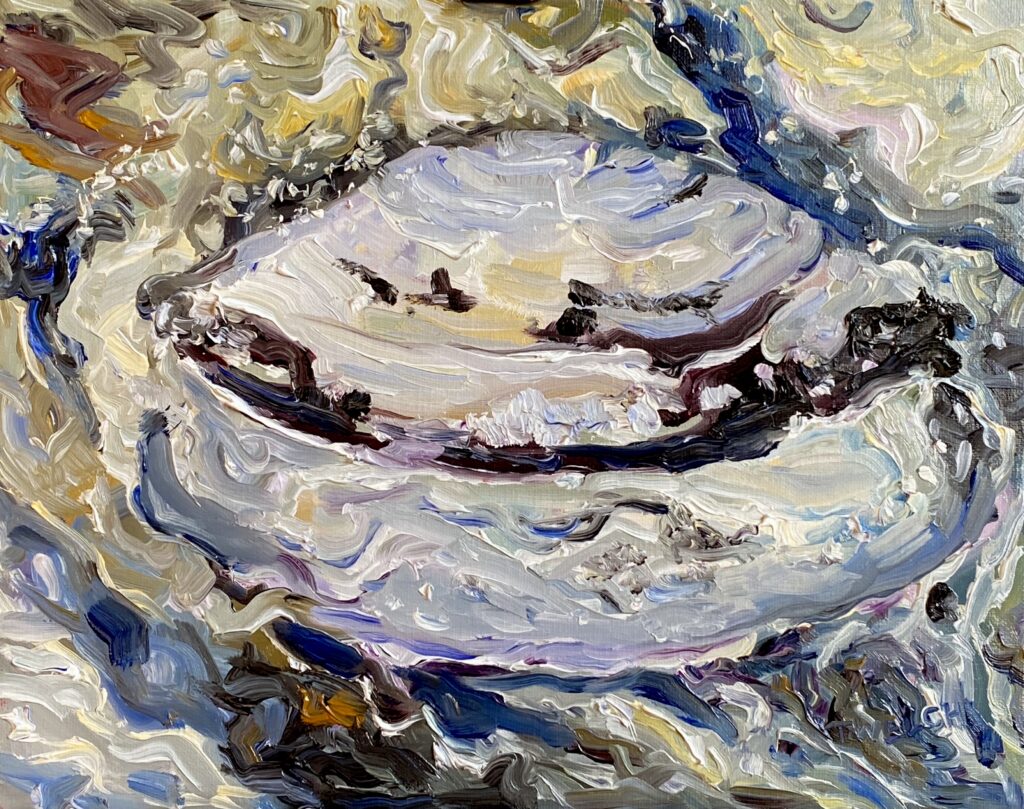
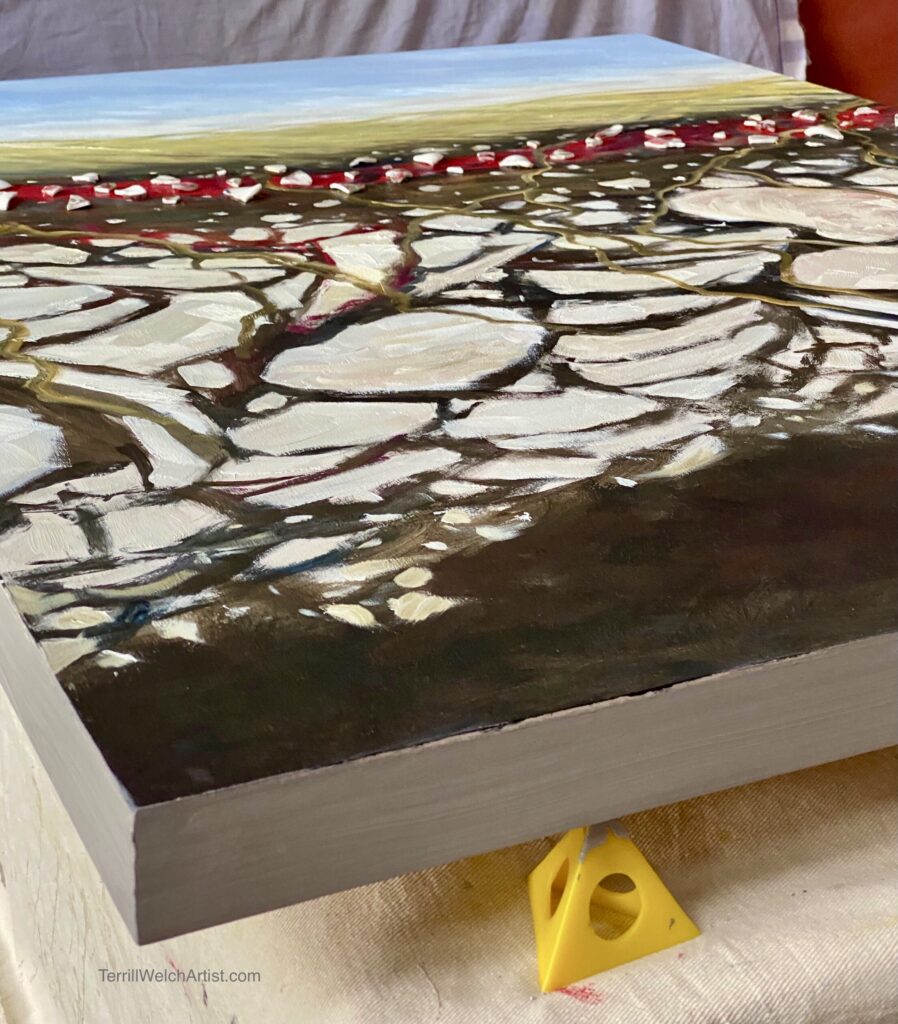
A few days later, I go to sleep in evening thinking about big movements and large landscapes of the sea depicting small areas, something close and intimate and yet grand. I have an idea for my third study and a notion about changing the sea floor perspective from above to beside just as I would with a more expansive geography composition. First, I work on the pair of studies that I had started and continue to paint them together. Now I am more satisfied with the conversation being shared in these two.

I had found a way to attach the two canvases securely together to my small easel. I found I didn’t like working flat on the table at all. My trifocal lenses made it difficult to see properly and there is a glare on the surface that interferes with being able to read the values as I am working. Finally, my lower back complained about being held in the new position for several hours at a time.
I leave the painting sketches and head for Reef Bay again in the hopes I might find something to practice my new perspective idea.

The tide is still higher than I would like but there are some interesting possibilities to explore.
At first I scan out from the shore.

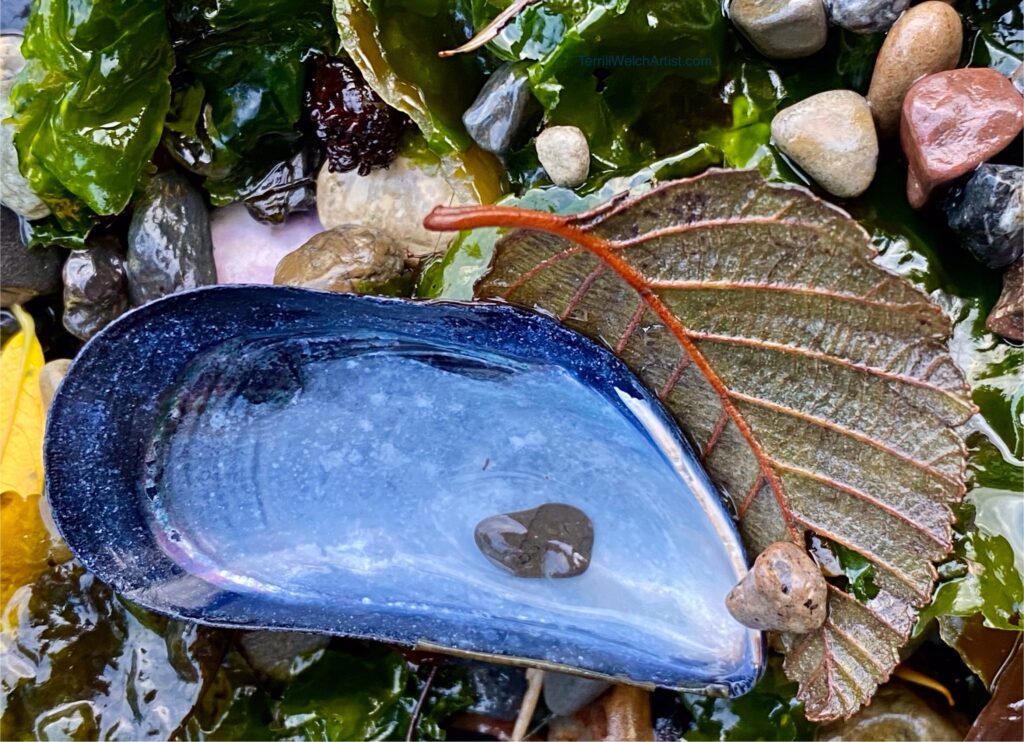
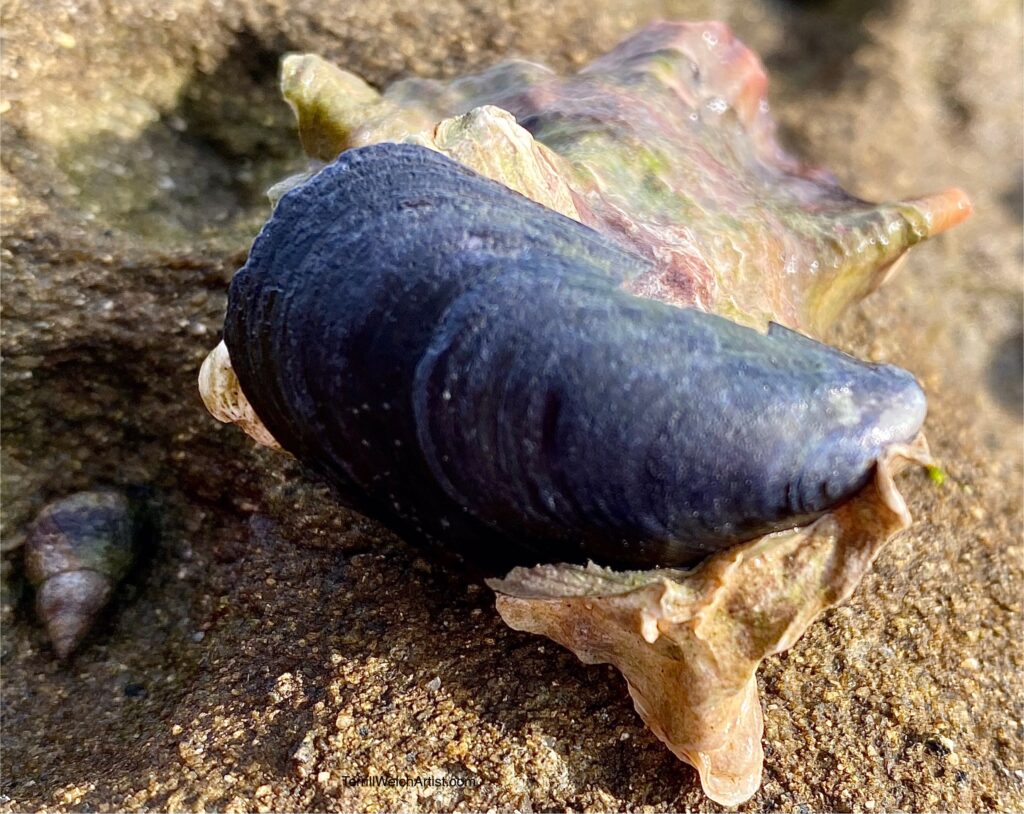
A floating mussel shell catches my attention.

I drop the phone camera down as low as I can without getting it wet and wait as the sea wash moves back and forth.

Sometimes the seashell is completely covered providing more visual interaction between the sea and sky.

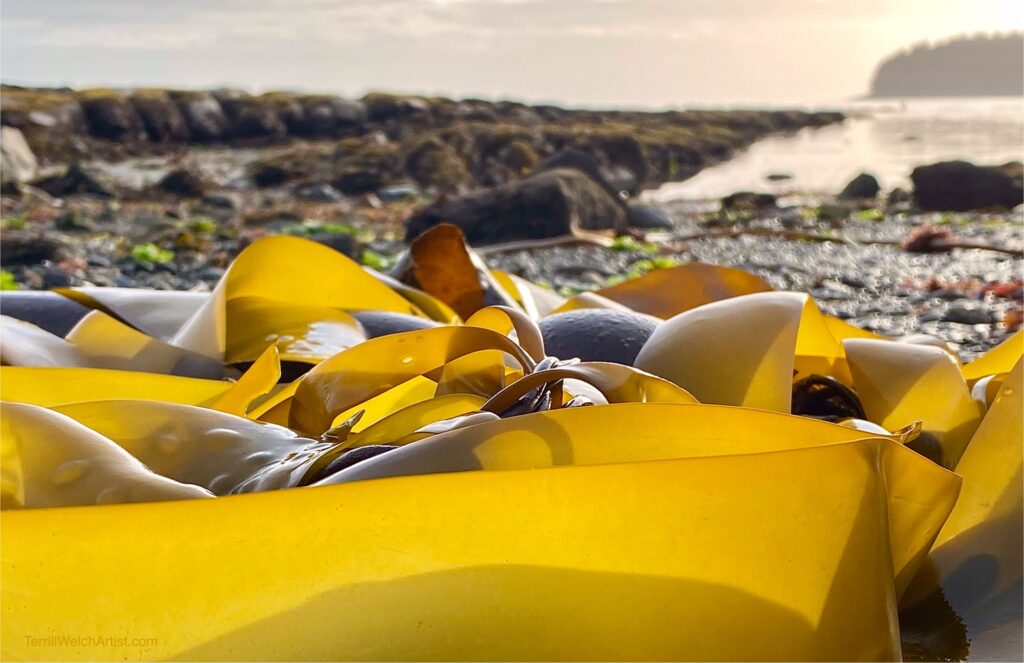
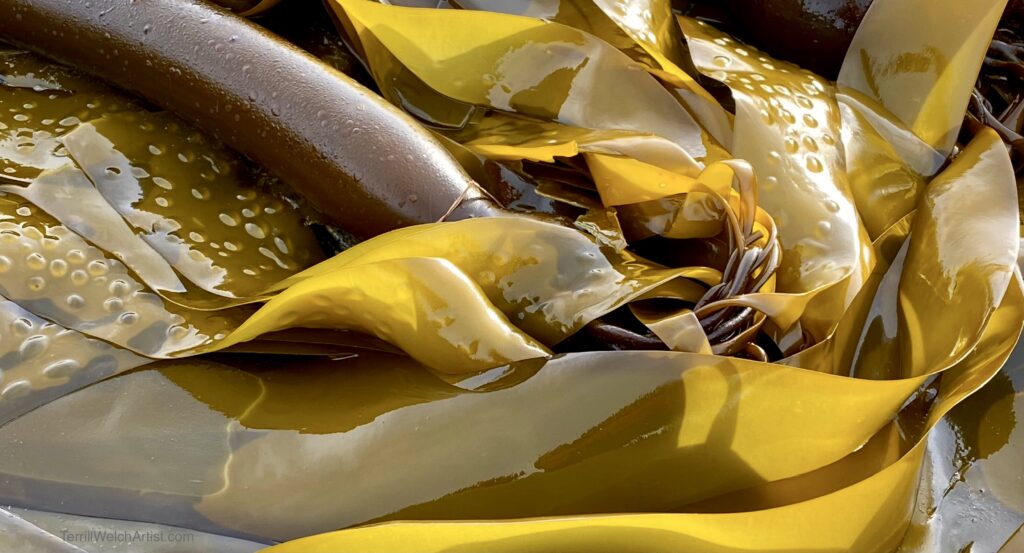
I move a little farther along to a collection of shells just close enough for me to reach. The seaweed flashes back forth with the movement of the tide.

I repeat the low angle perspective tilting the camera out towards an unseen horizon.

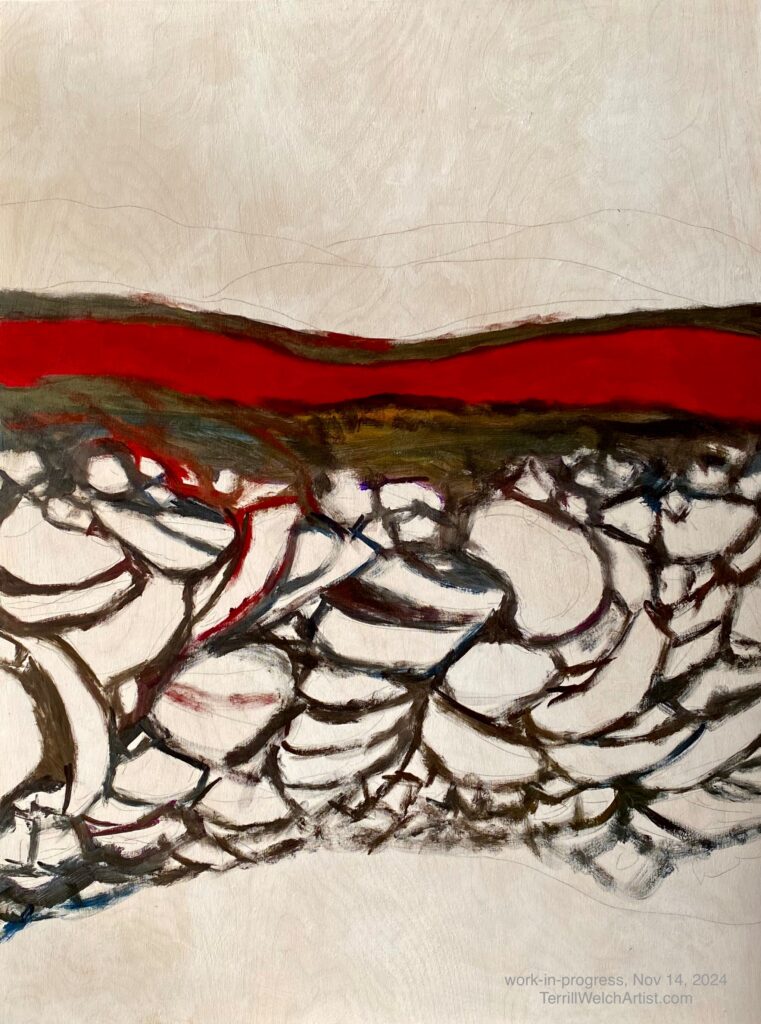
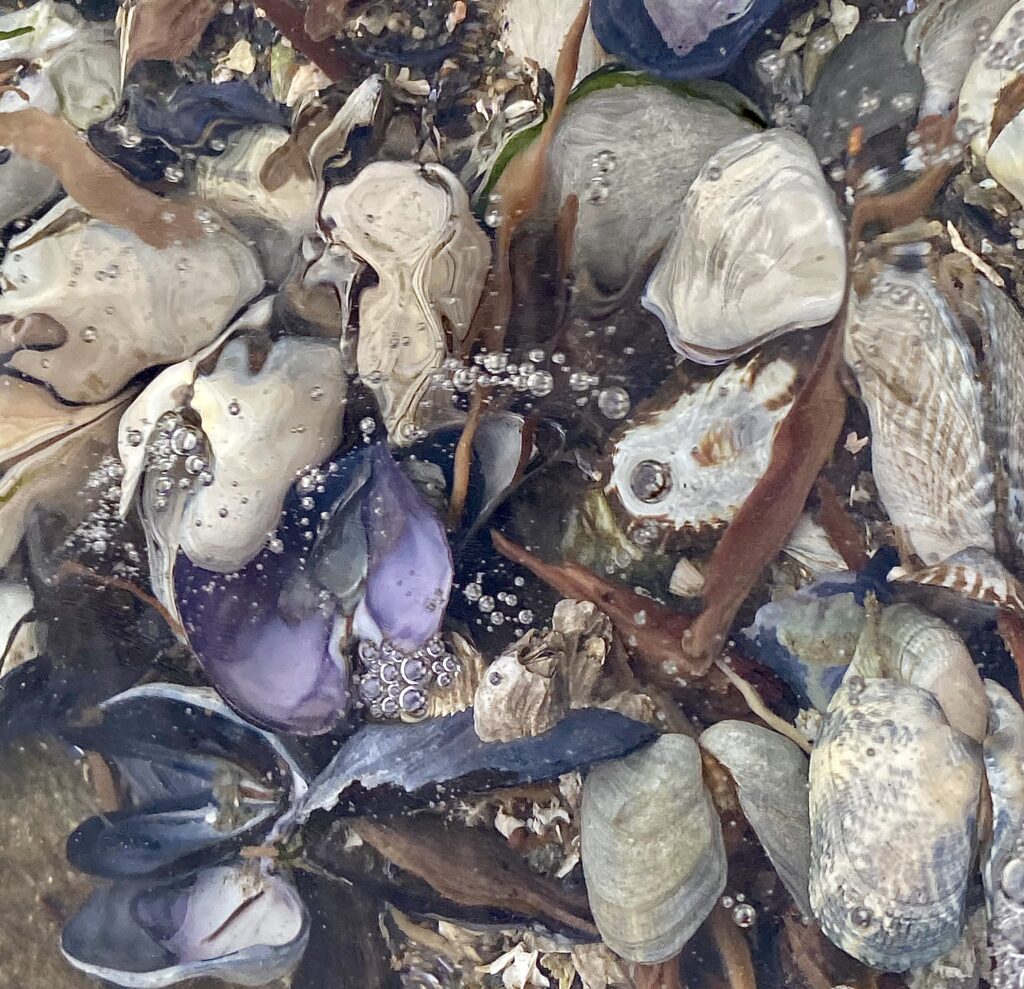
Hummm…. let’s go lower yet. There! Time and spacial relationships seem to entangle in the flawed camera rendering of a copy of the landscape depicting the small along the sea shore that is then further distorted in my own viewing as as my human eye and brain scramble to make meaning of what I observe.

This then, and a few close up captured cousins, will become my muse for my next painting study.
In the meantime, these two studies are resting together and a part.

They do seem to speak well together about my experience and conversation with the sea. Yet, they may need a little more space from each other as if they are two separate paragraphs in the same story rather than one long run on sentence.

Artist notes: I stare into the winter sea tides and wonder at the rocking of the shells that shift with each incoming and outgoing wave.

Artist notes: I stare again into the winter sea tides and wonder at the rocking of the shells that shift with each incoming and outgoing wave.
I have no idea if this new line of inquire in perspective of the landscape of the small will be fruitful in my exploration of how nature can instil inner peace, wellbeing and resilience but it is exciting to consider and so I shall.