The Essence of Things

“You should paint the essence of things” Pissarro instructs a younger artist.

“Where we are separate” quick water-colour painting sketch by Terrill Welch

Last evening I was having a love affair with the work of  Camille Pissarro (1830-1903). I have often had comments on my work about its impressionist style. However, having not formally studied art, or the history of art, my self-taught-ways left me replying “I don’t know much about the principles of impressionism. I just like to capture the light and the essence of my subject. The energy in a work should be alive and vibrant even if it means sacrificing correctness.”  Last night when I read The Life and Works of C. Pissarro by Linda Doeser (1994) I understood why people smiled knowingly at my comment and said no more.

“sitting” quick water-colour painting sketch by Terrill Welch

Exactness is not the same as expressing the exact emotion in your work.

Sprout Question: Is there a particular method you use to capture the essence of things?

Note: Due to Easter Creative Potager will post Monday to Thursday this week and Tuesday to Friday next week.

© 2010 Terrill Welch, All rights reserved.

Liberal usage granted with written permission. See “About” for details.

Purchase photography at http://www.redbubble.com/people/terrillwelch

Creative Potager – where imagination rules. Be inspired.

From Mayne Island, British Columbia, Canada

Painterly Challenge

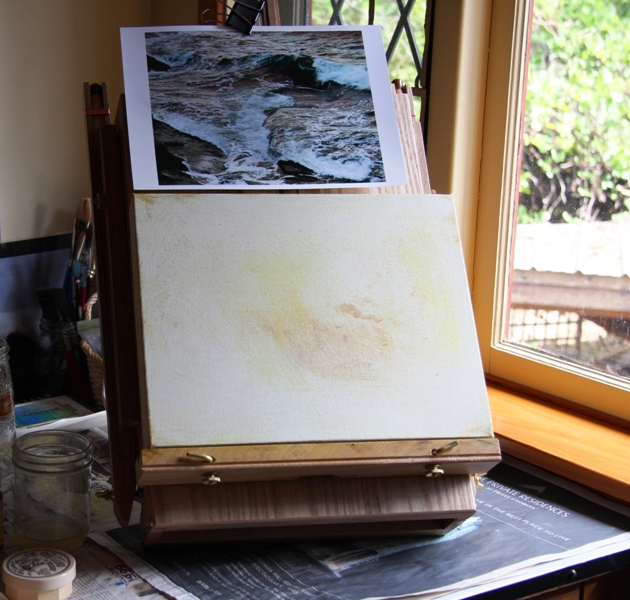
I have been doing underpainting on two canvases. I like to paint on site but that is not always possible so I gather photographic reminders. I rarely sketch or draw on my canvas except to capture rudimentary placement of forms. I do however routinely start with an underpainting which gives me the beginnings of depth and positioning for the development of the painting. Underpaintings are kind of like looking at an ultrasound of a baby in the womb when you don’t know the parents… not very interesting. So if you find this post rather boring – I won’t be offended. Come back tomorrow. It will be something different.

You may wonder how I choose what to paint (besides the obvious of a theme for solo Exhibition Sea, Land and Time at the beginning of September). Long ago I decided that rarely would I paint something that I felt I had fully captured with photography. My painting in is an intuitive relationship with my subject. I want to give to the painting something beyond what is in the seeing. In addition to a compelling subject, I also decide what to paint by choosing a painterly challenge – something I want to explore or a skill I want to strengthen.

For “Sea” my challenge is to be able to create depth in the water while capturing the waves on the surface… I want the viewer to be able to look at the painting and feel as if the water is still moving, wave after wave. Starting with an almost blank canvas, I begin.

Stopping as the underpainting becomes too saturated to allow new colours and shapes to emerge without erasing earlier ones.

With paint still palette, I decide to begin a second underpainting for “rocks and mussels” to address the challenge of giving bulk to something that is dark on the top and light on the middle and bottom… the mussels are added in to keep me amused and give me a break when the rocks become tiresome and frustrating.

I am reminded of a passage in Emily Carr’s painting journal on July 27, 1933 where she writes:

“Oh, these mountains! They won’t bulk up. They are thin and papery. They won’t brood like great sitting hens, squatting immovable, unperturbed, staring, guarding their precious secrets till something happens. At ‘em again, old girl, they’re worth the big struggle.”

My rocks are only little sitting hens – but getting them to “sit” is still my end goal. We shall see over the weeks ahead what we can do with them.

Sprout Question: What specific creative challenges are you setting for yourself right now?

Bonus: An interview with me posted today by Stacey Curnow at Midwife For Your Life Blog “Walking in the Sunshine of My Soul: Special Shoes Not Required.” http://www.staceycurnow.com/blog/2010/03/walking-in-the-sunshine-of-my-soul-special-shoes-not-required

© 2010 Terrill Welch, All rights reserved.

Liberal usage granted with written permission. See “About” for details.

Purchase photography at http://www.redbubble.com/people/terrillwelch

Creative Potager – where imagination rules. Be inspired.

From Mayne Island, British Columbia, Canada

30 times Same, Same


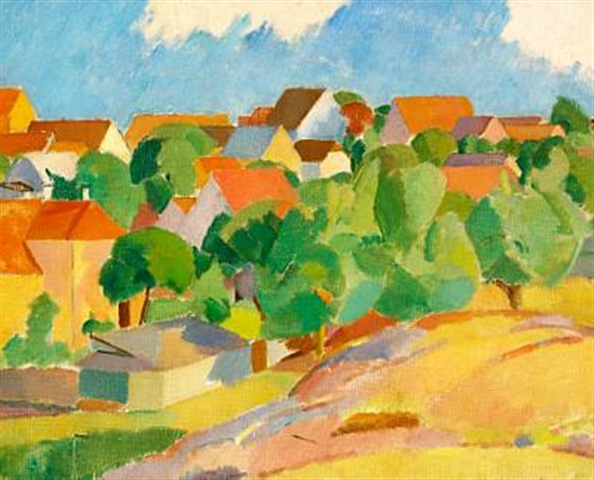
View Karl Isakson’s 1918 painting “Nature morte” as part of Wikimedia Commons.

I posted the process I used to paint my first oil painting in 30 years yesterday. “East Point Cliffs” is a rugged painting and rough around the edges, however, it is done. I need to begin again as I trust that not all learning is accomplished on one canvas. Yet, I couldn’t even consider painting the exact same image again, and then again. It is just not in my nature. It is an esteemed practice though. I have on my bookshelf from many years ago Complete Course in Oil Painting: Combined Edition – Four Volumes in One (1960) by Olle Nordmark. On page 123 he states the following:

“Beginners are inclined to think that experienced painters get their effects easily, without travail. This is not so. Great masters are great because they are willing to take infinite pains and do the work over again an indefinite number of times at any stage of the painting. Willingness to erase, or to start all over again on a clean painting surface is essential to good painting, whether you are a beginner or an artist of established reputation.”

Nordmark provides an example of Swedish painter Karl Isakson (1878-1922) known for his exact precision of tone. Isakson often discarded as many as 30 paintings of one subject before he was willing to show anyone his canvas. Thirty times. Thirty times painting the same subject again and again until the artist felt he had mastered his subject. As someone who loves colour, the results take my breath away. The pieces are timeless.

View Karl Isakson’s  1919 Udsigt över Svaneke at ArtNet.

I have provided two examples. To see some of Isakson’s other work explore this Google image search here. I even noticed more than one painting that has survive of the same subject.

So… I am publicly making a commitment to paint 30 paintings by the end of 2010 on the theme of Sea, Land and Time. I will, as much as my vulnerability will allow, let you look over my shoulder as I do so.

Sprout Question: Whose creative work before 1940 do you admire and what have you learned from them?

Note: If you, as some of you I know do, have a practice of creating from the same subject many times please feel free to provide a link to your work and tell us what you have learned in the process.

Best of the weekend to you:) Terrill

© 2010 Terrill Welch, All rights reserved.

Liberal usage granted with written permission. See “About” for details.

Purchase photography at http://www.redbubble.com/people/terrillwelch

Creative Potager – where imagination rules. Be inspired.

From Mayne Island, British Columbia, Canada
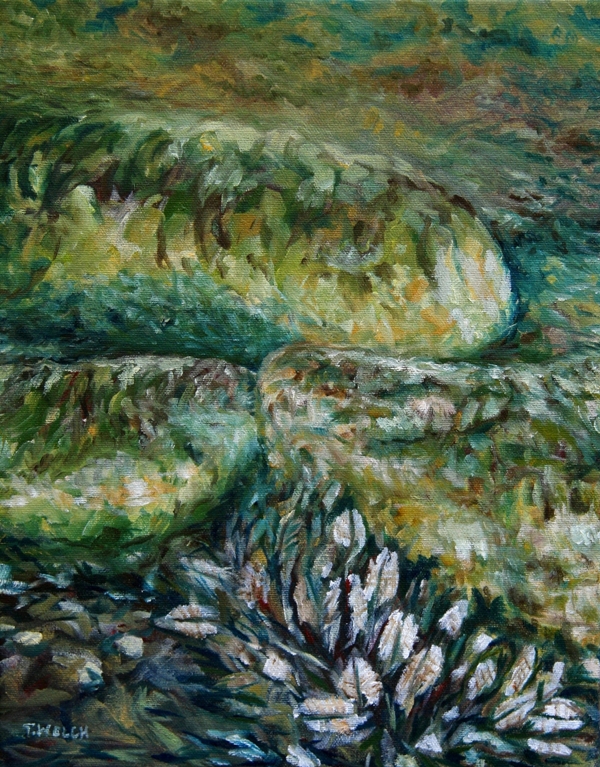
Oil Painting East Point Cliffs

On February 26, 2010, I began putting a melon orange underpainting on an 18”X24” gallery quality 100% 2” thick canvas. Oh the spring the canvas, the smell of linseed – so familiar from more than 30 years ago. Yes it has been more than 30 years since I have painted with oils. And these are Grumbacher water miscible oils something completely new. The instruction I was given when I purchased them was – “just paint!”

I have been painting with water colour paints since I was twenty so I just smiled and thought “we shall see.”

A muddy lump of colour is the end result on February 28, 2010 but it felt good – and I needed new brushes. The ones from 30 years ago are toast. So I picked up new ones when we next went to the city. Much better.

March 1, 2010 the painting is starting to take shape and I am lost in sea, land and time.

Over the next couple of weeks I sit and paint several times until the painting starts to tighten up and become the most unruly “problem child.” Where was the painting I had originally given birth too?

I stayed with it – painting and feeling and painting some more. I may fuss a bit with presentation but I think this cooked.

View and purchase full resolution image here.


Sprout Question: What do you do when you have a creative “problem child?”

© 2010 Terrill Welch, All rights reserved.

Liberal usage granted with written permission. See “About” for details.

Purchase photography at http://www.redbubble.com/people/terrillwelch

Creative Potager – where imagination rules. Be inspired.

From Mayne Island, British Columbia, Canada
field of daffodils

Field of daffodils on Mayne Island

During the past few days on Creative Potager we have been talking about shadows and the power of darkness in our creativity. When I saw this field of daffodils, its brilliance was only enhanced by the shadows. In fact, this naturalized field of bright yellow flowers comes from a dark shadow in Mayne Island’s past. I was told that the land was once owned and farmed by a Japanese family who grew the daffodils along with tomatoes that were shipped and sold in Vancouver, British Columbia.

Update Wednesday June 1, 2022: comment clarifies history for us “The picture in this story was not owned by the Japanese farmers. Richard Hall bought this piece of property in1922. He grew daffodils and tomatoes. When he retired he sold his greenhouses to the Japanese farmers who took them to a farm on Campbell Bay Rd, and then grew tomatoes for sale. This particular piece of property is still owned by Richard Halls relatives.” Thank you Linda!

During World War II the Japanese on Mayne Island were gathered up and taken from their land to war camps in the interior of British Columbia for fear of espionage. Their land was later given to soldiers returning from the war. The daffodils stayed and bloom every spring – reminding us.

Mr. Lenard Cohen’s “Anthem” comes to mind with the line “There is a crack in everything… that’s how the light gets in…

Sprout Question: Do you have a piece of work exists because that is how the light comes in? (links to your work are welcome)

Note: This field of daffodils is private property. No trespassing allowed. These photos were taken from the public roadway. The community has built a Japanese Garden in commemoration of early Japanese settlers.

Addition: After fielding several questions, I am adding the following historical references….

“On Tuesday, April 21, 1942, the CPR steamship Princess Mary came for the fifty Japanese men, women and children who waited on the Miners Bay wharf. Most of the Mayne Island residents were in attendance to shake hands and wish them well. It was a sad time for all… A week after evacuation, the first tomatoes of the season, so optimistically planted by the Japanese, were picked by their Mayne Island friends and sent off to market…. [between 1942 and 1943 growing season] In all, between 150,000 and 200,000 pounds of tomatoes were harvested. The school lost seventeen Japanese school children. Classes limped along until June and then the school closed until September 1944 for lack of pupils.” p.69-70 in Mayne Island & The Outer Gulf Islands A History by Marie Elliott (1984)

A Japanese Canadian Timeline by John Endo Greenaway

© 2010 Terrill Welch, All rights reserved.

Liberal usage granted with written permission. See “About” for details.

Purchase photography at http://www.redbubble.com/people/terrillwelch

Creative Potager – where imagination rules. Be inspired.

From Mayne Island, British Columbia, Canada
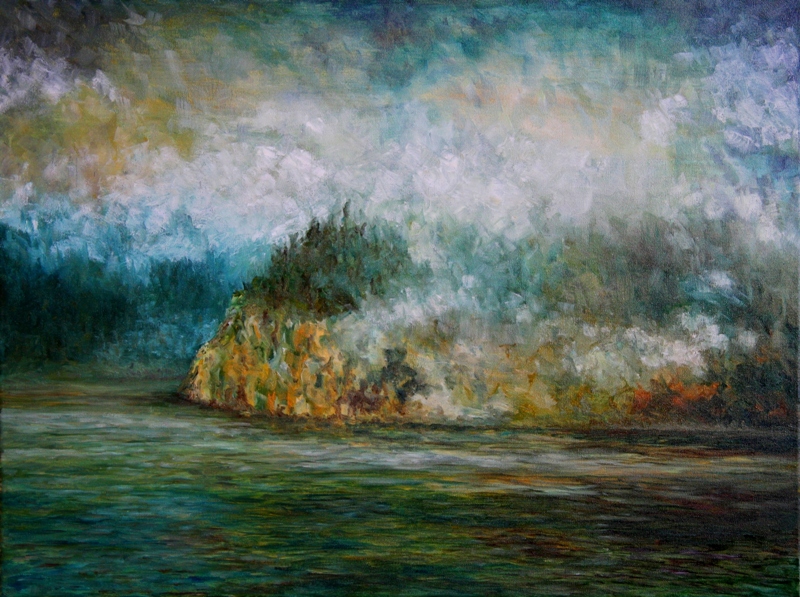
Talking Bread Loaves

“Talking Bread Loaves” PART 1 and artist Jerry Shawback

Self Portrait (18″X24″) by Jerry Shawback

For many of you that regularly read Creative Potager and its “sprouts,” artist Jerry Shawback’s contributions are a familiar sight. There is no direct connection between “Talking Bread Loaves” and Jerry Shawback. I am simply impressed with his work, his community building and his support of artists. Later in today’s post, Jerry is featured along with a few more images of his work.

“Talking Bread Loaves” will be told in three parts over the next three days. I am considering it for inclusion in my new book Mona’s Work.

Mona’s influence is multi-generational. My mother, Mona’s daughter, learned the art of amusing children, while she was cooking, from her mother. This is how I end up knowing about talking loaves of bread. At the age of five my family and I lived eighty miles from the nearest store. We went to town for supplies once a month. Good homemade bread was a staple. It was also my favourite food, particularly still warm from the oven, cut thick and slathered in butter with wild raspberry jam dripping off the edges and running down between my fingers.

Each week my mother would use her “magic “to make eight fresh loaves of bread. The reason mom needed magic was mostly to keep me amused, not because it was necessarily part of making bread…

Wrestling my way out from under a mountain of covers, I make my way to the kitchen. I know bread is going to be made by the bowls and pans already on the counter. Mom has the yeast set aside to soften in a very large, heavy bowl. The melted lard and yeast are floating on the warm sugar water. Standing on a stool, I stick my nose right over the bowl. I can smell the beginnings of bread. Mom makes a crater shape out of the flour on the table.

I put my fingers in the flour but mom scolds “Ahk! You will make the dough run out and spoil the magic.”

I knew that to spoil the magic meant the loaves of bread wouldn’t be able to tell her when they were done. So I take heed, carefully twisting my fingers together to keep them out of the flour crater.

Continued in PART 2 …

Sprout Question: How do you use your creativity to arouse the imagination of others?

Bonus: I connected with Jerry Shawback through his twitter account and was blown away by his generous “retweeting” of links tweeted by artists he is following (his support of Creative Potager tweets has been incredible). Sometimes I spend an hour or more just viewing the links he has sent along. However, one of my challenges has been getting to see Jerry’s work because his tweets about his own work are minimal. This is one of the reasons I asked Jerry if I could feature him on today’s post. I want us to pause and take note of Jerry Shawback’s art as we recognize his support of other artists.

sketch by Jerry Shawback

sketch by Jerry Shawback

More of these exquisite daily line drawings can be viewed in Jerry’s flickr portfolio. I suggest watching them as a slideshow.

Self Portrait (11″X18″) by Jerry Shawback

On March 13, 2010 Jerry’s portraits will be shown as part of the Gallery 9 “FACES” exhibit. Gallery 9 is affiliated with thewhole9.com, an international community for creative people where Jerry is a recognize community builder and active participant on the site.

p.s. Who is Jerry Shawback?

“Self portraits have the inherent ability to expose the depth and breath of human nature.” – Jerry Shawback

The artist’s self portrait series explores identity through multiple approaches to the same subject matter. Stylistically varied, they reveal the strange and vulnerability essence of the human condition.

His affinity for people, observation of life and strong draughtmanship is apparent in his depiction of the human form and informs Jerry’s painting. Other influences include: Rico Lebrun, Egon Schiele, Francis Bacon, Lucien Freud and his mentor Cornelius Cole III.

After studying communication design in Los Angels at the Otis Art Institute of Parsons School of design, a division of the New School for Social Research, Jerry worked as a freelance designer, commercial artist, and animator for the entertainment industry.

In 2007, after a ten year hiatus from the art world, Jerry returned to painting as a primary focus. He is currently working on a series of self portraits encompassing various artistic motifs, while maintaining an underlining vision, cohesion and emotional honesty. Jerry also produces works on paper documenting the lives and experiences around him, and his continuing study of the human form. His work has been featured in shows throughout Southern California as well as in private collections.

© 2010 Terrill Welch, All rights reserved.

Liberal usage granted with written permission. See “About” for details.

Purchase photography at http://www.redbubble.com/people/terrillwelch

Creative Potager – where imagination rules. Be inspired.

From Mayne Island, British Columbia, Canada
Cheating

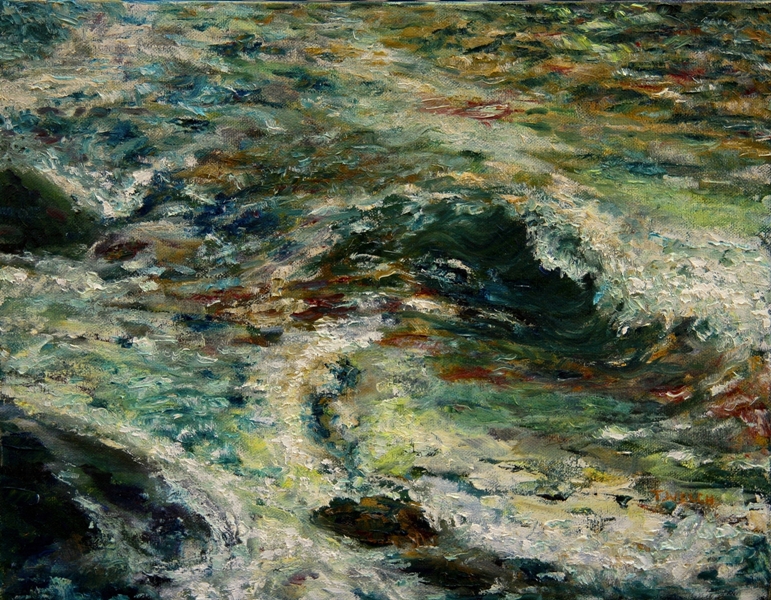
Bravely going off in another direction

Does it ever happen to you where you set an intention to do something only to find that you have done something else? That is what happened to me yesterday. I was all set to start writing up some story cards from the source material for Mona’s Work. As I turned around to pick up the material, I locked attention on my oil painting in progress.

(18″ X24″ 1.5″ canvas)

That was it. Next thing I know my creative energy was thrumming at a low hum and hours had disappeared as follows…

I paint the sandstone cliffs with their heavy underbelly colours. The sea rushes towards my brush – pushing and pulling. I witness the internal tension.

Exactness is not the same as expressing the exact emotion in your work.

I knew I needed the cadmium underpainting to hold the seascape together – I did not know it would also hold me together as I painted.

I remind my self to breathe through my nose as the sea air catches me – yet the only sound is the swish, swish, swish of my brush on the canvas. Stretched tight under my enthusiasm every now and again there is throng drum before the swish. Linseed oil seeps through where there had been the smell of the salt from the sea.

I haven’t forgotten, I know the spring of the canvas, I know that sandstone needs a hint of crimson in its tan mix, I know – yes I know. Ohhhhh! I know nothing! What is this tangle paint scrapping it out on the canvas? Time to stop.

Will it make a painting? Yes, it already is a painting. Will it make a gallery painting? This is never my painterly question.

Swish, swish, swish – brush on canvas – a sound as soothing as the surf coming ashore.

Mona’s Work is pushed forward into tomorrow, March 2, 2010 (the painting will take a few days to get tacky enough to work on again anyway).

Sprout Question: Have you ever felt like you cheated on your creative intention?

Oil painting is very different from my usual medium of water colour painting. With water colours I go from light to my darkest colours at the very end. I still block in my composition with underpainting but I have to be able to “live with” what shows through. With oil painting, I start with a contrasting underpainting colour to block in the composition. Because of the strong divergence of colour that will be in this finished painting, I stayed with one range of colour in the underpainting. In both mediums, I build the painting up over a series of sittings. However, it has been over 30 years since I have painted with oils. My brain feels the stretch from working the colours from dark to light, as I had been taught by an Australian trained artist, Sheila Timmins, when I was about fourteen years old. The water miscible oils paints I’m using now are a little different but I’m not sure exactly how yet.

Bonus: Here is a photo of a finished oil painting “The Cow” by my sister Sue Wiebe whose work some of you had asked to see. Excellent control of shadow and light.

And here is a close up of Sue Wiebe’s “Water Lilies” that shows the layering of paint which allows the water to flatten on the canvas and the lily pads to float on top.

Thank you sis for sending me these images to share. Artist Sue Wiebe lives in Armstrong, British Columbia, Canada. With an undergraduate degree in English, she has also completed a year at Emily Carr University of Art and Design. Every once in a long while she finds a free moment to sprout on Creative Potager.

© 2010 Terrill Welch, All rights reserved.

Liberal usage granted with written permission. See “About” for details.

Purchase photography at http://www.redbubble.com/people/terrillwelch

Creative Potager – where imagination rules. Be inspired.

From Mayne Island, British Columbia, Canada
East

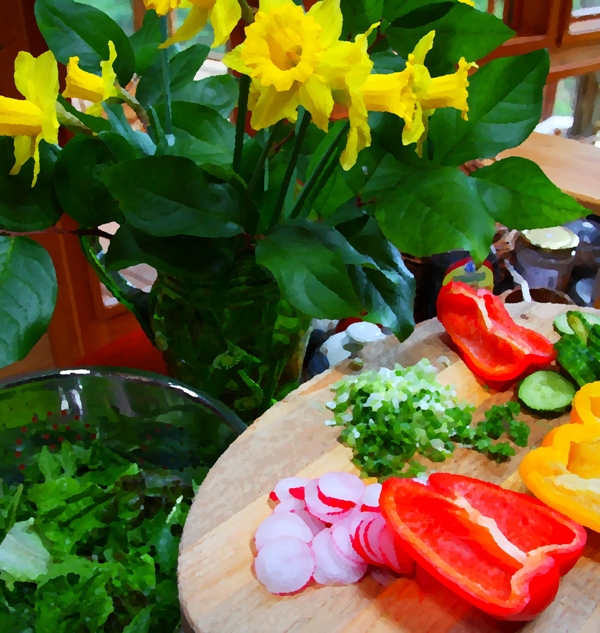
Quietly I close the door behind me and step out onto the sandstone walk. Dawn requests softness as my body, stiff from sleep, stretches into the morning.

East is the direction of the door I’ve just closed. East is the direction my head faces when I sleep. East is the first direction I seek when I rise. Where am I? I look east. East is the direction my studio window faces. When I work, I mostly keep east in front of me or to my left shoulder. I write, take photographs and paint mostly during the first few hours of a day. I edit in the afternoon and late evening. Sunsets, the gloaming and dinner are for enjoying and chats – not working.

I admire the sparse early garden as I head out for a walk.

View and purchase full resolution image (photograph rendered in oils) here.

If we are able to follow the natural rhythms of our body, they are often different from each other. Not everyone has the same orientation to the various times of day.

Sprout Question: Following your natural body rhythms, what part of the day is yours?

© 2010 Terrill Welch, All rights reserved.

Liberal usage granted with written permission. See “About” for details.

Purchase photography at http://www.redbubble.com/people/terrillwelch

Creative Potager – where imagination rules. Be inspired.

From Mayne Island, British Columbia, Canada

DWELLING

With David L. Colussi’s permission, I share his poem “DWELLING” with you today as part of my creative focus in February on the theme of “home.” I will be placing this poem in a new page I’m developing for the Creative Potager blog about la casa de inspiracion – our home.

This first image of David is a personal favourite of mine rendered as an oil painting. David is reading with his drug-store glasses which he likes better than his prescription lens. They are usually slightly askew as he softly turns the pages.

This next image best introduces the poem which reflects on the reflections of la casa de inspiracion and the meaning of “to dwell.”

DWELLING

[1 DWELLING = ERROR]

Watching sunlight and darkness from this house of glass

suspended on the ridges of a valley,

the human history of dwelling plays across the scene in drama or in documentary.

Darkness dwells the way that we once did in wandering across the land.

Its home is east of the sun, where it moves ahead in gypsy fashion,

and west of the sun, where it follows as a hunter.

The hunter waits for the sunlight to hit the tops of western valley cliffs at progressively acute angles,

and when the sunlight overshoots the cliffs completely

the darkness rushes over the valley walls like water over Niagara Falls

and submerges all the valley into one big reservoir of night.

Presently it rises up and silvers all the windows and the stained glass tears.

This house of glass becomes a house of mirrors.

[2 DWELLING = INTROVERSION OBSESSION]

Now every light inside the house is captured in the window glass.

Everything that we illuminate is gathered and sent back for us to dwell on and elucidate.

The corner window down the hall shows part of my face in profile.

I look up through the skylight and against the tree tops seen in silhouettes

my hands are on the keyboard moving in some stopped-action like some marionettes.

The corners of the windows in the room downstairs contain some pieces of me I forgot were even there beneath the table.

I am all picassoed over on the window walls in fragments and distorted in stained-glass tears

because this house of glass has turned into a house of mirrors.

[3 DWELLING = HOME]

I work away at putting all my pieces back together.

Memories of things that happened decades long ago appear in casement window frames –

I turn my head

And see myself in childhood and remember questions that I thought I’d answered years ago.

They’re all still there waiting to present their supplementaries.

I wonder how I managed to survive with all these pieces some are missing some still there.

They fit together best when you are here.

………………………

According to David’s notes, which record his history of development and changes to the poem, David started researching “to dwell” and writing this poem on July 24, 2009. I knew he was researching “to dwell” as we had discussed it at length on more than one occasion. He had also told me he was writing a poem for my birthday and that he was just about finished. I begged for clues as to what it was about but as usual he just laughed and held to his secret surprise. My birthday is on August 28th. It wasn’t until I was back home on Mayne Island for a mere 24 hours on Saturday, September 5, 2009 that I happened to open his blue notebook, which he had innocently placed on his desk, and discovered David’s latest work that he had last revised the night he had his stroke August 9, 2009.

Sprout Question: Who champions your creativity?

p.s. Who is David L. Colussi?

David L. Colussi retired in 2002 after an expansive career in education and management in both the provincial/federal government(s)… His background includes:

– Master of Arts degree in English

– Diploma in Alternative Dispute Resolution from the Canadian Institute for Applied Negotiation in Ottawa

– Teaching English and critical thinking for 3 years at Niagara College, Ontario

– Internal management consultant with federal government in Ottawa for two years

– BC provincial government manager for almost 30 years, with the ministries of Attorney-General, Health, Advanced Education, and central agencies including as Executive Director of Human Resources in the Ministry of Health

– With his late wife, founded a private non-profit Montessori pre-school and elementary school in Victoria 1979-1998, served as its first board chair, and remains an honorary member of its Foundation board

– Member of the patron group of Pearson World College of the Pacific

– Chair of BC StudentAid Appeal Committee for the past 5 years.

With children and step-children grown, some with partner’s and children of their own, David now lives a quiet life on Mayne Island in B.C. Canada with his wife Terrill Welch, executive leadership coach, writer, photographer and artist.

© 2010 Terrill Welch, All rights reserved.

Liberal usage granted with written permission. See “About” for details.

Purchase photography at http://www.redbubble.com/people/terrillwelch

Creative Potager – where imagination rules. Be inspired.

From Mayne Island, British Columbia, Canada
Pulse

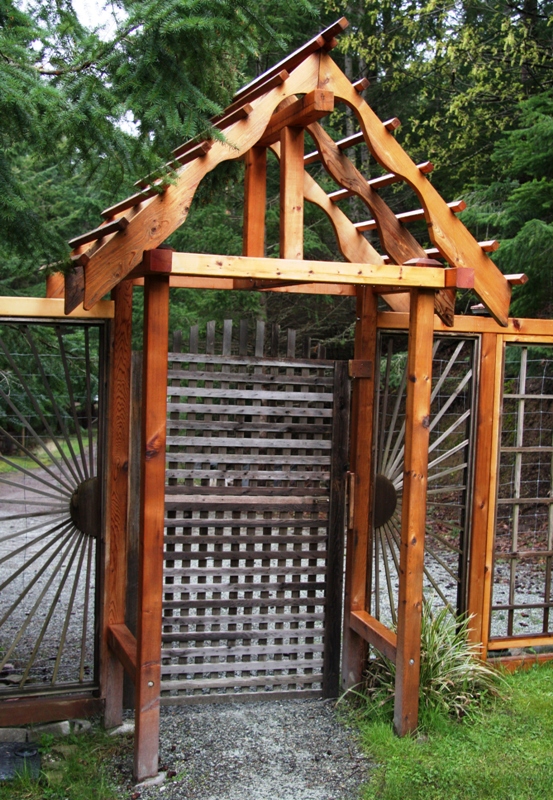
So close to Valentine’s Day, with hearts appearing everywhere, I offer you a view of one of my watercolour paintings from 2001. Today, I’m reading and collecting creative inspiration. I’m reading through blogs on my blog roll. I’m browsing through blogs in my Gaia community. I am picking up pebbles in my tweet stream on Twitter. Today is about me experiencing the pulse of your creativity…

At the heart of things we are all simply human.

View and purchase full resolution image here.


Sprout Question: If your creativity had a pulse, what would be the rhythm of its beat?

© 2010 Terrill Welch, All rights reserved.

Liberal usage granted with written permission. See “About” for details.

Purchase photography at http://www.redbubble.com/people/terrillwelch

Creative Potager – where imagination rules. Be inspired.