Cheating

Bravely going off in another direction

Does it ever happen to you where you set an intention to do something only to find that you have done something else? That is what happened to me yesterday. I was all set to start writing up some story cards from the source material for Mona’s Work. As I turned around to pick up the material, I locked attention on my oil painting in progress.
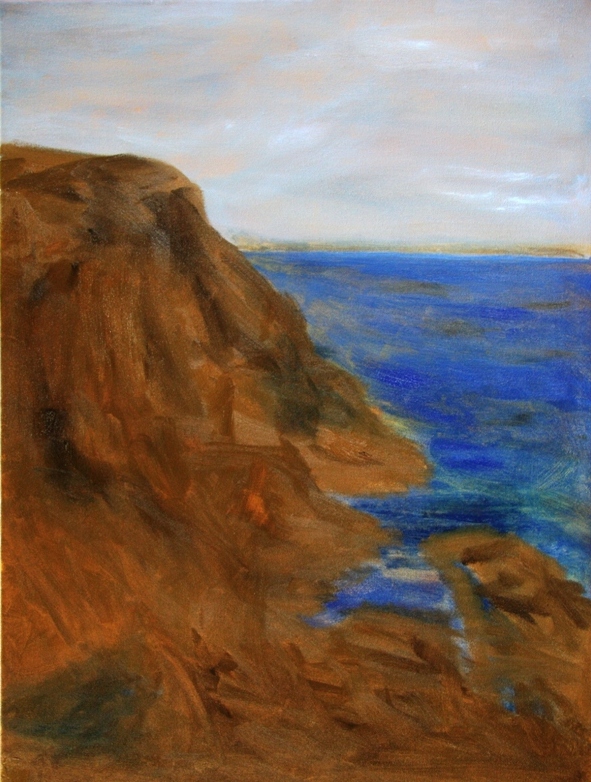
(18″ X24″ 1.5″ canvas)

That was it. Next thing I know my creative energy was thrumming at a low hum and hours had disappeared as follows…

I paint the sandstone cliffs with their heavy underbelly colours. The sea rushes towards my brush – pushing and pulling. I witness the internal tension.

Exactness is not the same as expressing the exact emotion in your work.

I knew I needed the cadmium underpainting to hold the seascape together – I did not know it would also hold me together as I painted.

I remind my self to breathe through my nose as the sea air catches me – yet the only sound is the swish, swish, swish of my brush on the canvas. Stretched tight under my enthusiasm every now and again there is throng drum before the swish. Linseed oil seeps through where there had been the smell of the salt from the sea.

I haven’t forgotten, I know the spring of the canvas, I know that sandstone needs a hint of crimson in its tan mix, I know – yes I know. Ohhhhh! I know nothing! What is this tangle paint scrapping it out on the canvas? Time to stop.

Will it make a painting? Yes, it already is a painting. Will it make a gallery painting? This is never my painterly question.

Swish, swish, swish – brush on canvas – a sound as soothing as the surf coming ashore.
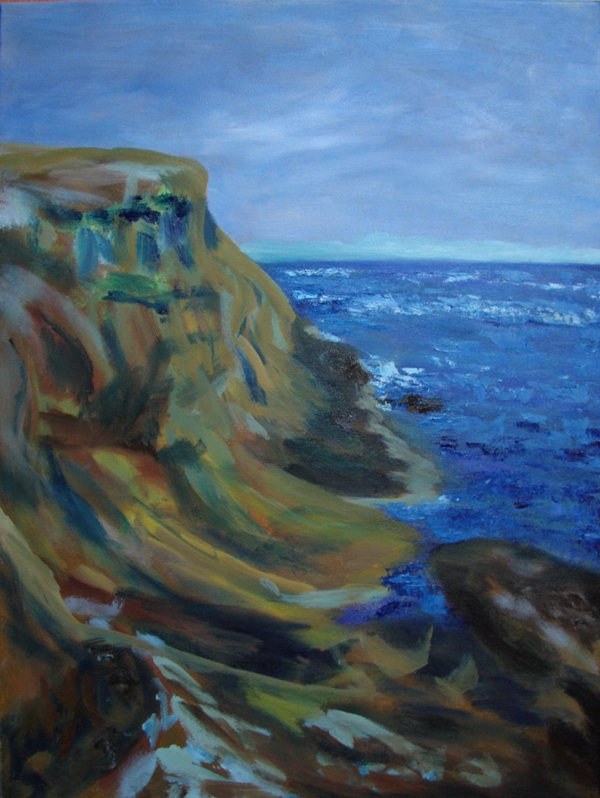
Mona’s Work is pushed forward into tomorrow, March 2, 2010 (the painting will take a few days to get tacky enough to work on again anyway).

Sprout Question: Have you ever felt like you cheated on your creative intention?

Oil painting is very different from my usual medium of water colour painting. With water colours I go from light to my darkest colours at the very end. I still block in my composition with underpainting but I have to be able to “live with” what shows through. With oil painting, I start with a contrasting underpainting colour to block in the composition. Because of the strong divergence of colour that will be in this finished painting, I stayed with one range of colour in the underpainting. In both mediums, I build the painting up over a series of sittings. However, it has been over 30 years since I have painted with oils. My brain feels the stretch from working the colours from dark to light, as I had been taught by an Australian trained artist, Sheila Timmins, when I was about fourteen years old. The water miscible oils paints I’m using now are a little different but I’m not sure exactly how yet.

Bonus: Here is a photo of a finished oil painting “The Cow” by my sister Sue Wiebe whose work some of you had asked to see. Excellent control of shadow and light.

And here is a close up of Sue Wiebe’s “Water Lilies” that shows the layering of paint which allows the water to flatten on the canvas and the lily pads to float on top.

Thank you sis for sending me these images to share. Artist Sue Wiebe lives in Armstrong, British Columbia, Canada. With an undergraduate degree in English, she has also completed a year at Emily Carr University of Art and Design. Every once in a long while she finds a free moment to sprout on Creative Potager.

© 2010 Terrill Welch, All rights reserved.

Liberal usage granted with written permission. See “About” for details.

Purchase photography at http://www.redbubble.com/people/terrillwelch

Creative Potager – where imagination rules. Be inspired.

From Mayne Island, British Columbia, Canada

Turning Pages

March is for Mona’s Work


Leah’s  Creative Every Day theme for March is stories. If there is a fit for me, I like to participate in her themes because she has an outstanding blog to support creative efforts along with an outstanding readership who comment regularly on her posts. For creative people it is like having a coffee shop with a talented host and an open mike just for them.

I’m committed to working on my book Mona’s Work which has an introduction on my Gaia blog and an entry here on Creative Potager in “Potatoes to Potato Salad.”

My challenge: how much or how little do I share with you as I go? The writing will be “hot” and like most writing, it is better when it has cooled, been reviewed, and is then served to you after editing several times. I am leaning towards providing snippets of writing and mostly blogging about the writing process and my behind-the-scene challenges and decisions as I work through the source material, my memories and the developing of the structure of this book.

I’m sure this challenge will work itself as I set down to prepare the blog post each day. However, I would be delighted to hear what aspects of Mona’s Work YOU most want to find when you click to open your Creative Potager post, Monday through Friday for the month of March.

Sprout Question: How do YOU decide when it is right to share your creative efforts?

© 2010 Terrill Welch, All rights reserved.

Liberal usage granted with written permission. See “About” for details.

Purchase photography at http://www.redbubble.com/people/terrillwelch

Creative Potager – where imagination rules. Be inspired.

From Mayne Island, British Columbia, Canada

Baby Lambs

On this early Friday morning of west coast rain, I first want to thank the many faithful readers and sprout question responders of Creative Potager. This new blog began on December 27, 2009 with “A Gown Remembered: A beginning.” Today’s submission makes 45 posts with 442 comments and 3,342 views. Thank you. Your engagement, encouragement, humour and insights are an integral part of what makes for an excellent creative potager.

I must be off to a writing group this morning. The underpainting is still drying on my oil canvas and it is Friday on the last Friday in February. I thought I would share a series of photos from my visit to Meadowmist Farm to see the sheep with their new lambs yesterday. The babies always make me laugh with their curious leaping and bouncing around.

Mama keeps an eye out as we wander around the yard looking at the babies.

Here is Fat and Sassy running across the top of the knoll beside us.

Now what are these three up to? They have mischief written all over them as the scuttle across the lawn.

Ah yes – a game of  “let’s chase the cat.” Bridget Joyce’s lovely farm dog watches on to make sure nothing gets out of hand.

And finally, I take a first family portrait.

Thank you Joyce Kallweit for a delightful meander with this seasons new baby lambs. The best of the weekend everyone.

Sprout Question: How do you play or have fun when taking a break from creating?

© 2010 Terrill Welch, All rights reserved.

Liberal usage granted with written permission. See “About” for details.

Purchase photography at http://www.redbubble.com/people/terrillwelch

Creative Potager – where imagination rules. Be inspired.

From Mayne Island, British Columbia, Canada

East

Quietly I close the door behind me and step out onto the sandstone walk. Dawn requests softness as my body, stiff from sleep, stretches into the morning.

East is the direction of the door I’ve just closed. East is the direction my head faces when I sleep. East is the first direction I seek when I rise. Where am I? I look east. East is the direction my studio window faces. When I work, I mostly keep east in front of me or to my left shoulder. I write, take photographs and paint mostly during the first few hours of a day. I edit in the afternoon and late evening. Sunsets, the gloaming and dinner are for enjoying and chats – not working.

I admire the sparse early garden as I head out for a walk.

View and purchase full resolution image (photograph rendered in oils) here.

If we are able to follow the natural rhythms of our body, they are often different from each other. Not everyone has the same orientation to the various times of day.

Sprout Question: Following your natural body rhythms, what part of the day is yours?

© 2010 Terrill Welch, All rights reserved.

Liberal usage granted with written permission. See “About” for details.

Purchase photography at http://www.redbubble.com/people/terrillwelch

Creative Potager – where imagination rules. Be inspired.

From Mayne Island, British Columbia, Canada

Sandstone

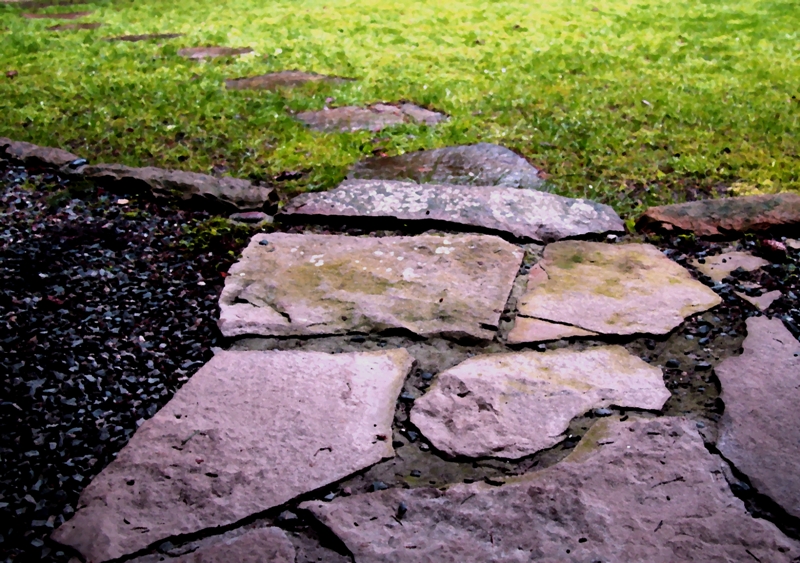
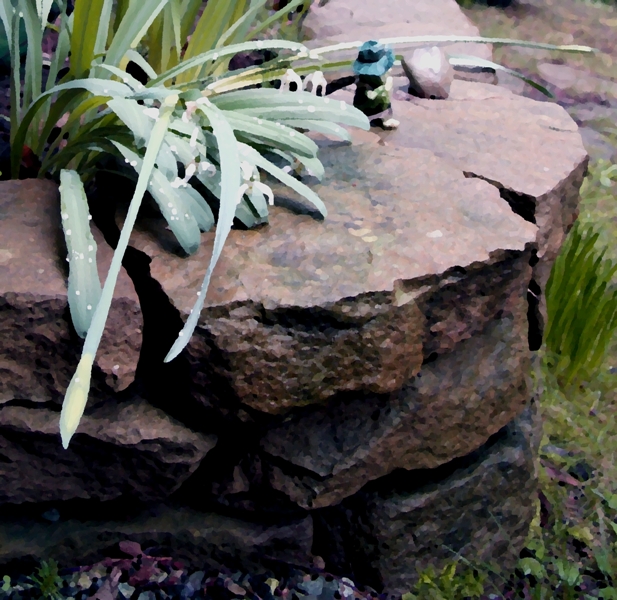
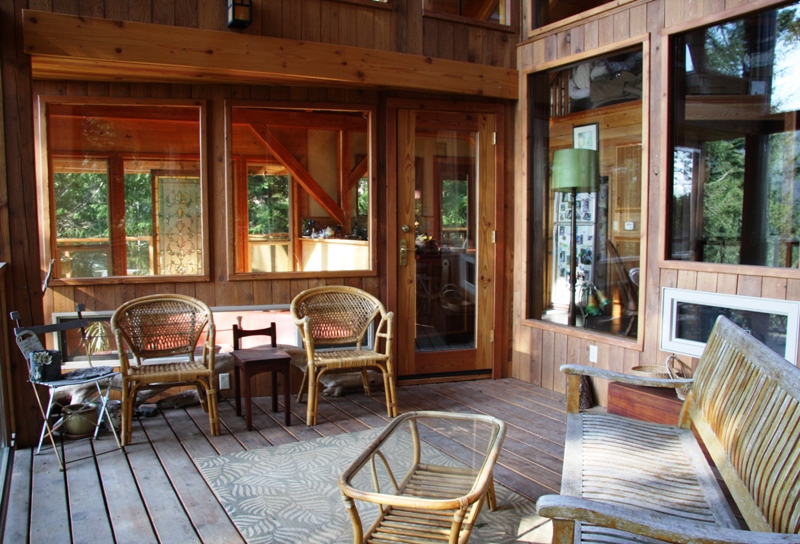
There is nothing more intriguing to my imagination than southern gulf island sandstone. The wearing and washing of the sea along island shorelines creates a beauty that is hard to replicate. With its abundance and ease to work with, sandstone is used for everything from walkways, front step, garden beds, to cob wall foundations. Our home, along with many others on the west coast, make practical use of this local natural material.

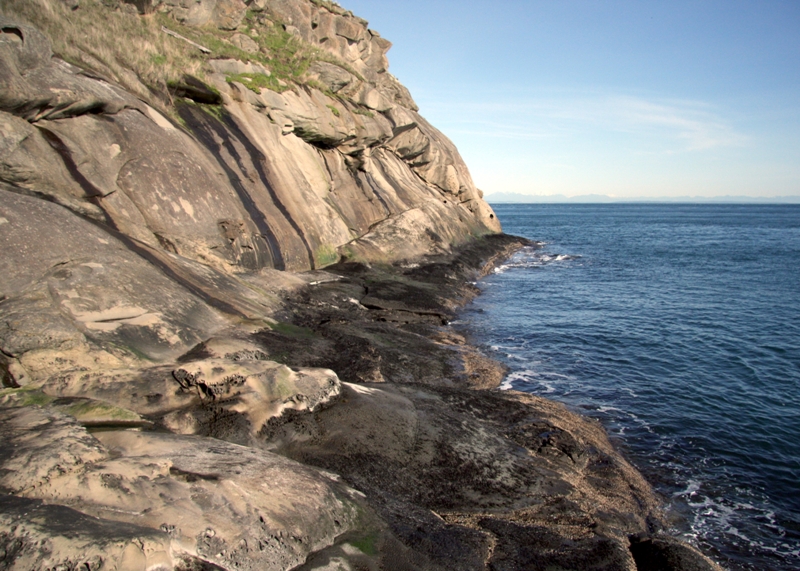
Yet, it is the sea that has the most talent in sculpturing this soft stone as shown in these photographs from East Point on Saturna Island.

View and purchase full resolution images here.

View and purchase full resolution images here.

View and purchase full resolution images here.

View and purchase full resolution images here.

Sprout Question: What natural substance has draped you with creative possibilities?

© 2010 Terrill Welch, All rights reserved.

Liberal usage granted with written permission. See “About” for details.

Purchase photography at http://www.redbubble.com/people/terrillwelch

Creative Potager – where imagination rules. Be inspired.

From Mayne Island, British Columbia, Canada

DWELLING

With David L. Colussi’s permission, I share his poem “DWELLING” with you today as part of my creative focus in February on the theme of “home.” I will be placing this poem in a new page I’m developing for the Creative Potager blog about la casa de inspiracion – our home.

This first image of David is a personal favourite of mine rendered as an oil painting. David is reading with his drug-store glasses which he likes better than his prescription lens. They are usually slightly askew as he softly turns the pages.

This next image best introduces the poem which reflects on the reflections of la casa de inspiracion and the meaning of “to dwell.”

DWELLING

[1 DWELLING = ERROR]

Watching sunlight and darkness from this house of glass

suspended on the ridges of a valley,

the human history of dwelling plays across the scene in drama or in documentary.

Darkness dwells the way that we once did in wandering across the land.

Its home is east of the sun, where it moves ahead in gypsy fashion,

and west of the sun, where it follows as a hunter.

The hunter waits for the sunlight to hit the tops of western valley cliffs at progressively acute angles,

and when the sunlight overshoots the cliffs completely

the darkness rushes over the valley walls like water over Niagara Falls

and submerges all the valley into one big reservoir of night.

Presently it rises up and silvers all the windows and the stained glass tears.

This house of glass becomes a house of mirrors.

[2 DWELLING = INTROVERSION OBSESSION]

Now every light inside the house is captured in the window glass.

Everything that we illuminate is gathered and sent back for us to dwell on and elucidate.

The corner window down the hall shows part of my face in profile.

I look up through the skylight and against the tree tops seen in silhouettes

my hands are on the keyboard moving in some stopped-action like some marionettes.

The corners of the windows in the room downstairs contain some pieces of me I forgot were even there beneath the table.

I am all picassoed over on the window walls in fragments and distorted in stained-glass tears

because this house of glass has turned into a house of mirrors.

[3 DWELLING = HOME]

I work away at putting all my pieces back together.

Memories of things that happened decades long ago appear in casement window frames –

I turn my head

And see myself in childhood and remember questions that I thought I’d answered years ago.

They’re all still there waiting to present their supplementaries.

I wonder how I managed to survive with all these pieces some are missing some still there.

They fit together best when you are here.

………………………

According to David’s notes, which record his history of development and changes to the poem, David started researching “to dwell” and writing this poem on July 24, 2009. I knew he was researching “to dwell” as we had discussed it at length on more than one occasion. He had also told me he was writing a poem for my birthday and that he was just about finished. I begged for clues as to what it was about but as usual he just laughed and held to his secret surprise. My birthday is on August 28th. It wasn’t until I was back home on Mayne Island for a mere 24 hours on Saturday, September 5, 2009 that I happened to open his blue notebook, which he had innocently placed on his desk, and discovered David’s latest work that he had last revised the night he had his stroke August 9, 2009.

Sprout Question: Who champions your creativity?

p.s. Who is David L. Colussi?

David L. Colussi retired in 2002 after an expansive career in education and management in both the provincial/federal government(s)… His background includes:

– Master of Arts degree in English

– Diploma in Alternative Dispute Resolution from the Canadian Institute for Applied Negotiation in Ottawa

– Teaching English and critical thinking for 3 years at Niagara College, Ontario

– Internal management consultant with federal government in Ottawa for two years

– BC provincial government manager for almost 30 years, with the ministries of Attorney-General, Health, Advanced Education, and central agencies including as Executive Director of Human Resources in the Ministry of Health

– With his late wife, founded a private non-profit Montessori pre-school and elementary school in Victoria 1979-1998, served as its first board chair, and remains an honorary member of its Foundation board

– Member of the patron group of Pearson World College of the Pacific

– Chair of BC StudentAid Appeal Committee for the past 5 years.

With children and step-children grown, some with partner’s and children of their own, David now lives a quiet life on Mayne Island in B.C. Canada with his wife Terrill Welch, executive leadership coach, writer, photographer and artist.

© 2010 Terrill Welch, All rights reserved.

Liberal usage granted with written permission. See “About” for details.

Purchase photography at http://www.redbubble.com/people/terrillwelch

Creative Potager – where imagination rules. Be inspired.

From Mayne Island, British Columbia, Canada

Heart

Heart and home are frequently connected for me. Home is more than a place of dwelling, more than the place where I eat and where I sleep. Home is where I walk, talk, listen and breathe each day. Home is as much the earth’s surface, its beings, its presence as is any four walls I’ve called my own.

I often, without effort, find heart shapes in nature. This “found heart” image is from my latest photo shoot on Saturna Island, BC, Canada. “Cliff Echo Bay” is dedicated and gifted for use in her work to Laurie Buchanan who guides us to “listen with our heart.”

View and purchase full resolution image here.

On my cyber passage to writing this morning’s post, I went via a feature of Zennie in my on-line community of Gaia where I watched and listened to this Rumi poetry “The Way of the Heart.” I feel it is a perfect piece to include today.

And, as the sun touches down on the white frosted grass in the valley floor, another day begins here on Mayne Island in southwestern British Columbia, Canada.

Sprout Question: What is at the heart of your creativity?

© 2010 Terrill Welch, All rights reserved.

Liberal usage granted with written permission. See “About” for details.

Purchase photography at http://www.redbubble.com/people/terrillwelch

Creative Potager – where imagination rules. Be inspired.

From Mayne Island, British Columbia, Canada

Simplicity

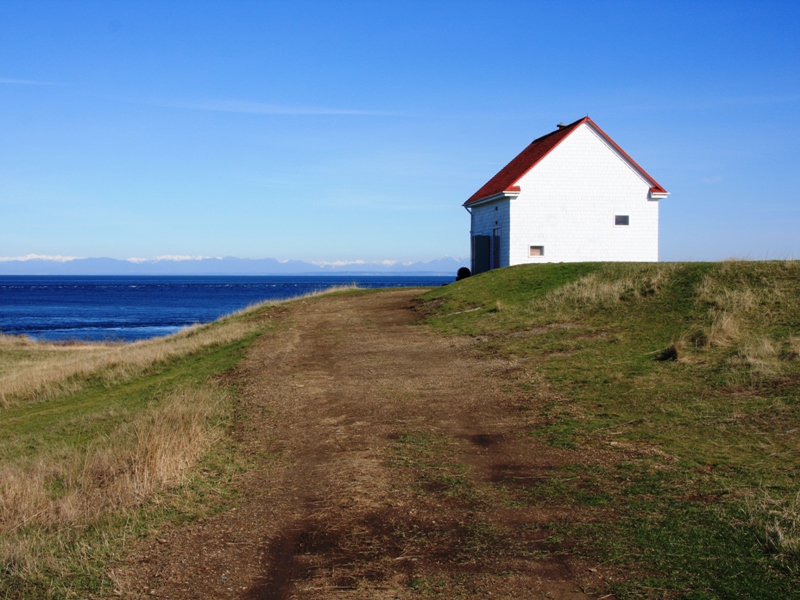
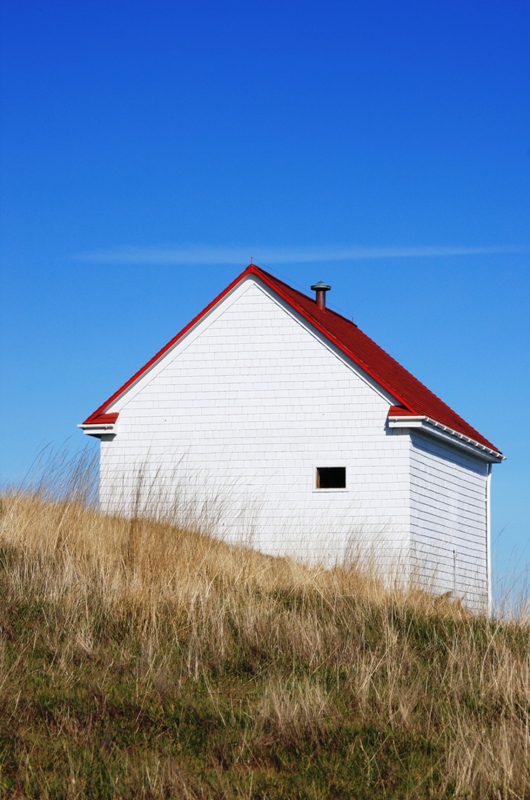
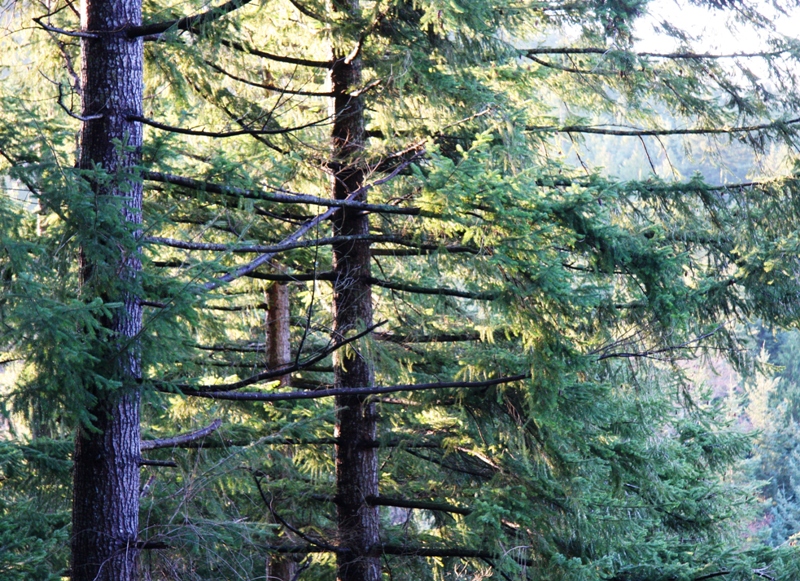
Often, the underlying effect of wabi-sabi is melancholy beauty in its worn simplicity. Yet nature, as our life, is often a messy. Eco-systems thrive on an untidy tangle of old, new and diverse growth (particularly here in the west coast rain forest). The old saying of “not being able to see the forest for the trees” describes how easy it is to become overwhelmed and to lose our centre or still-point in the face of all that is. There are only a few vistas in my travels that have captured my imagination with their beautiful simplicity. A building on a hill at East Point on Saturna Island is one of these places. I have not yet researched to know if this grassy knoll is caused by human intervention or if it is natural. However, the minimalist coming together of nature and construction sang to me. The delight and challenge then becomes composition.

Here are my various efforts over two days to capture “a building on a hill at East Point.”

And finally “window” , my personal favourite, and a featured image today in redbubble group  The Woman Photographer. This is a great honour as there are 2,527 members in this group and 79,986 images.

View and purchase full resolution image here.

Sprout Question: What principles of composition help you to create simplicity?

© 2010 Terrill Welch, All rights reserved.

Liberal usage granted with written permission. See “About” for details.

Purchase photography at http://www.redbubble.com/people/terrillwelch

Creative Potager – where imagination rules. Be inspired.

Wabi-sabi

Wabi-sabi castes a familiar womb-like shadow into the emptiness of creative possibility. We know wabi-sabi by what is left in the muted abundance of emptiness. As I sweep the deck with a straw broom, I hear its brush against the floor’s surface – first the wood then the jute rug. I hear my breath. I hear the pair of Canada geese honk as they land in the pond below, followed shortly by a jet gaining altitude overhead. I stop my sweeping. My hand slides over the back of the bamboo chair on my walk toward the railing. I sniff the night’s rain soaking into the ground, feeding the fir trees as they bask in the morning sun.

Winter is coming to an end. Wabi-sabi then, is spiritual in its practice of simplicity.

Read more about this topic on my post about wabi.

Read  about this topic more on my post about sabi.

Sprout Question: Does wabi and sabi meet in any part of your creativity?

Primary reference: The Wabi-Sabi house: the Japanese Art of Imperfect Beauty (2004) by Robyn Griggs Lawrence.

p.s. I am away today and will reply to sprout responses tomorrow.

© 2010 Terrill Welch, All rights reserved.

Liberal usage granted with written permission. See “About” for details.

Purchase photography at http://www.redbubble.com/people/terrillwelch

Creative Potager – where imagination rules. Be inspired.

Sabi

If wabi is a preference for very little in recognition of its unequaled abundance in the face of all else, then what is sabi?

According to Robyn Griggs Lawrence, in The Wabi-Sabi house: the Japanese Art of Imperfect Beauty , sabi means “the bloom of time.” Sabi implies an understanding that beauty and life are fleeting. Sabi is the grace of wear through the passage of time and use. Sabi is the appreciation of imperfections. Sabi is not about things of poor quality falling apart or leaving things in poor repair. Sabi is the carefully mended knee of a pant leg which is still in service.

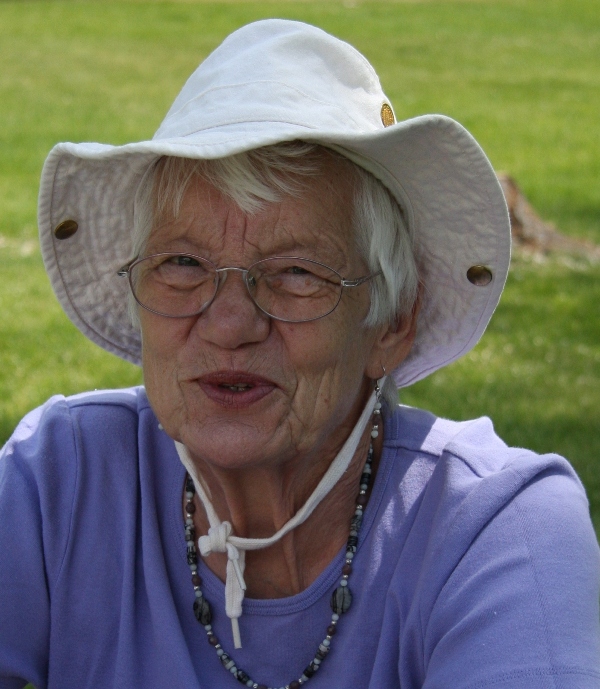
Sabi is our lines, wrinkles, and weathered beauty.

Sabi is the waxed, worn, wooden arm of a chair.

View and purchase full resolution image  here.

Sabi is rust through the oiled surface of a wood cook stove.

View and purchase full resolution image here.

Tomorrow I will put wabi and sabi together as in  wabi-sabi.

Sprout Question: Does sabi have any part in your creativity?

p.s. I am away today and tomorrow. I will reply to sprout responses when I return.

© 2010 Terrill Welch, All rights reserved.

Liberal usage granted with written permission. See “About” for details.

Purchase photography at http://www.redbubble.com/people/terrillwelch

Creative Potager – where imagination rules. Be inspired.