Monday, 17 August 2026
“Close to home” at first, brings up familiarity, safety and comfort. It is where I live my daily life most of the time. Geographically, these days “close to home” is usually limited to within a day’s drive in any direction which gives the concept physical parameters. There is an ordinariness that comes with these sustained intimately observed passages of time in one place doing “the usual” things such as getting groceries, hanging laundry on the line, grinding the morning coffee beans, paying bills online, going to the dentist, getting the car serviced, working in the yard, hugging my partner, children, grandchildren and friends between taking long hikes, painting in the studio and promoting the gallery and artworks. I ask myself, why is this focus on “Close to Home” in my painting practice important?
To answer this question is to first observe aspects of my contextualized autoethnographic references. The first and most obvious factor is that I am a full-time, primary caregiver for a partner that can quite happily no longer go further than the geographical territory mentioned above. I remain close to home because, to provide the best care for someone else, I must. The alternatives are to place my special human in respite care or to have someone come to stay with them. Neither of these options are easily workable in practice. By the time I get someone or someplace up to speed on this special being’s needs and them familiar with something they don’t want to do, the brief break becomes more of a traumatic ordeal for both of us than an actual opportunity. At least, this has been our experience so far. Eventually when regular weekly respite breaks become necessary, we will then have someone familiar providing additional support on ongoing. This might then present some opportunities for longer breaks for me to be able to at least go see my elderly parents which is a 7-10 day round trip visit away. For now, primary caregiving responsibilities take a central role, as a wife and as the human that is closest to the person in need. There are children. But the personal care needs and ongoing vascular dementia monitoring and prompting have gone well beyond their comfort levels and therefore not an option except possibly during a short term emergency until other care could be put in place. Community health home support services have been limited and expensive for what is provided. This leaves just me for now. We muddle through as best we can together which for now is pretty well. As an almost 68 year old white woman of settler ancestry, living on a rural small island on the southwest coast of Canada, I am resourceful, resilient, organized and pragmatic with a strong work ethic. I will face poverty level cash flows if/when the time comes to manage only on my own pensions. For now, there is enough to comfortably support both of us. But this reality is partly why I spent the past two years completing my MA Fine Art degree. It is a way to recognize the seriousness with which I take my painting practice that then might possibly lead to my artwork offering a small financial buffer if it is needed in the future. Global instability may make this a difficult proposition to realize but it would be even less of a possibility as an older woman artist without doing this degree.
This brings up other aspects about being “Close to Home” including a sense of loss of freedom, of heavy sadness/grief about slowly losing someone to their disease, as well as facing my own limitations and mortality. How long can I reasonably keep up with these responsibilities? How long can I manage living on this rural island as the only person who is able to drive?
Then I return again to my painting practice and its central role in making all challenging situations much more possible, pleasurable and endurable. This is especially true if I turn my painting practice directly towards what is challenging. In doing this, I seem to find my footing and my strength as well as my joy and pleasure with simply being alive.
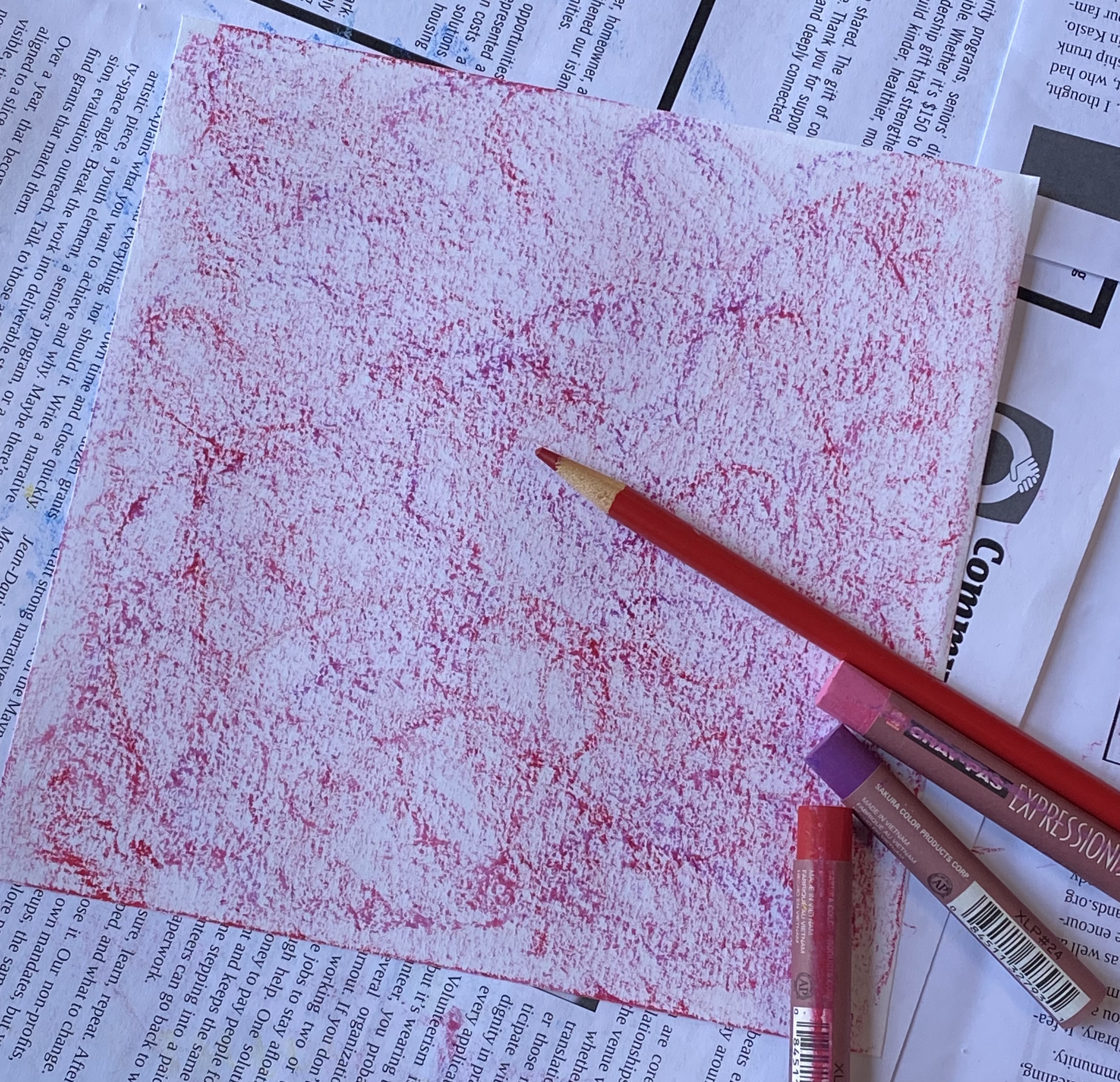
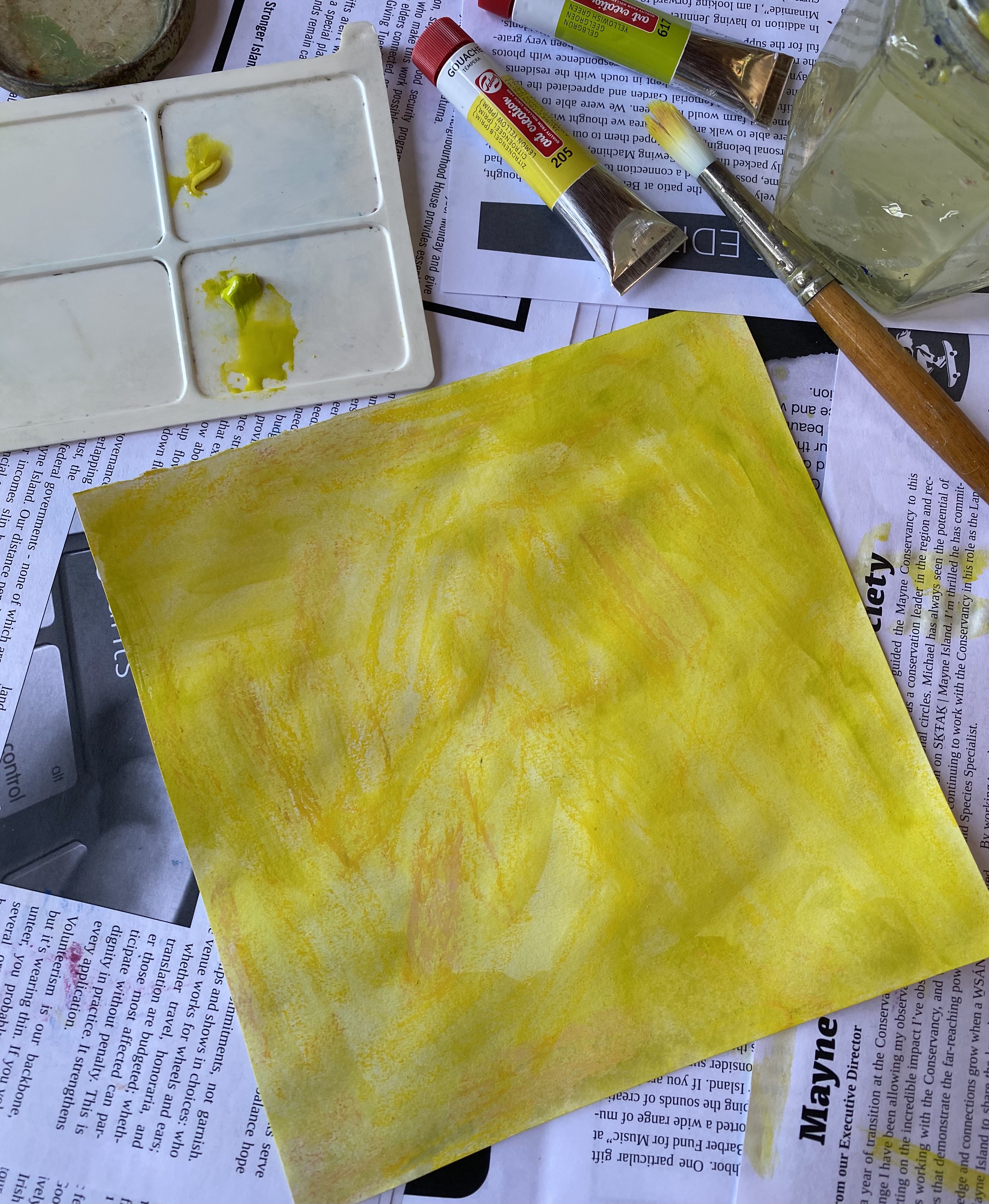
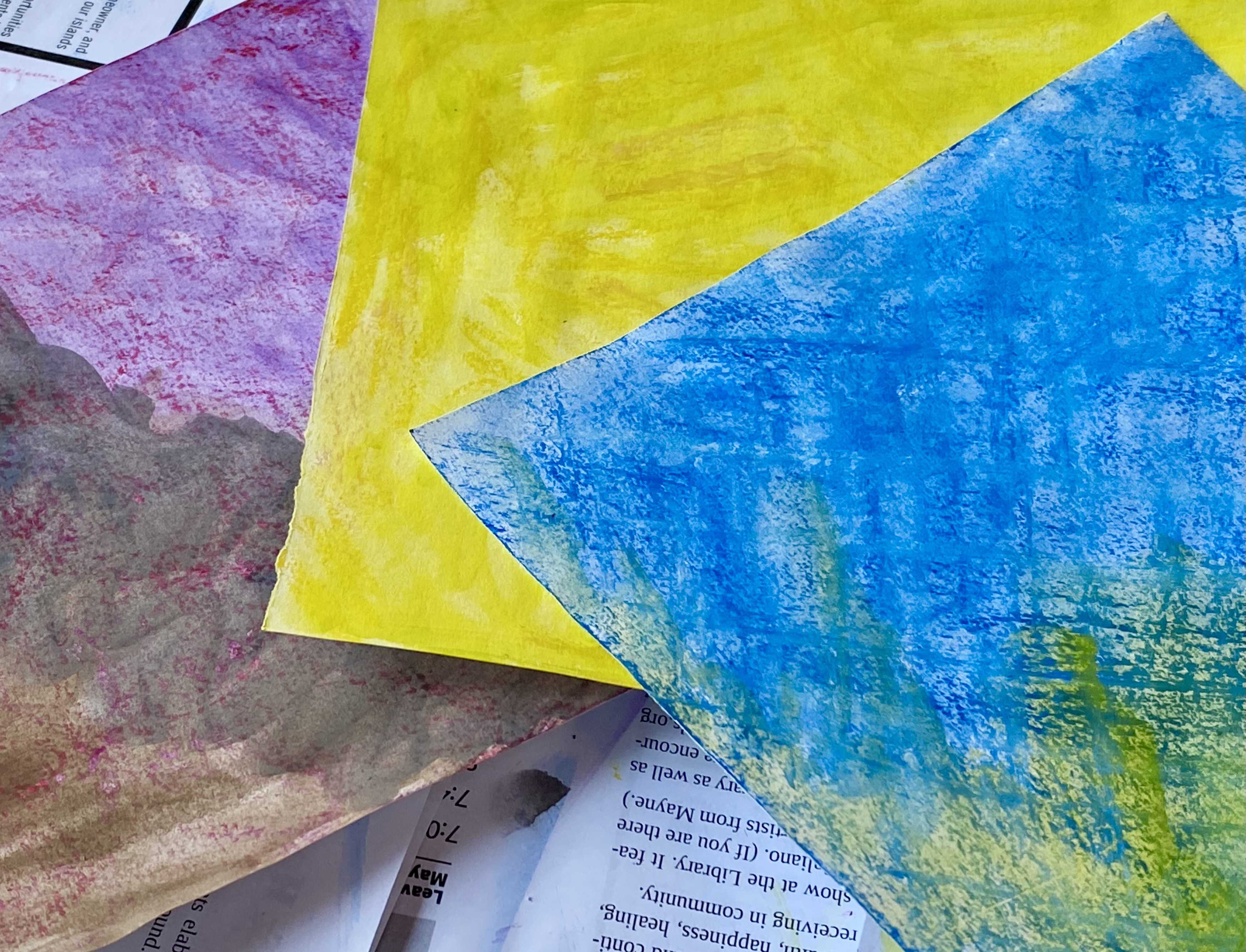
These are the thoughts that came to mind as I created the collage paper, cut it up and then decided I wanted to paint instead. So, I packed up the paper cuttings and put them in a bag for another day.
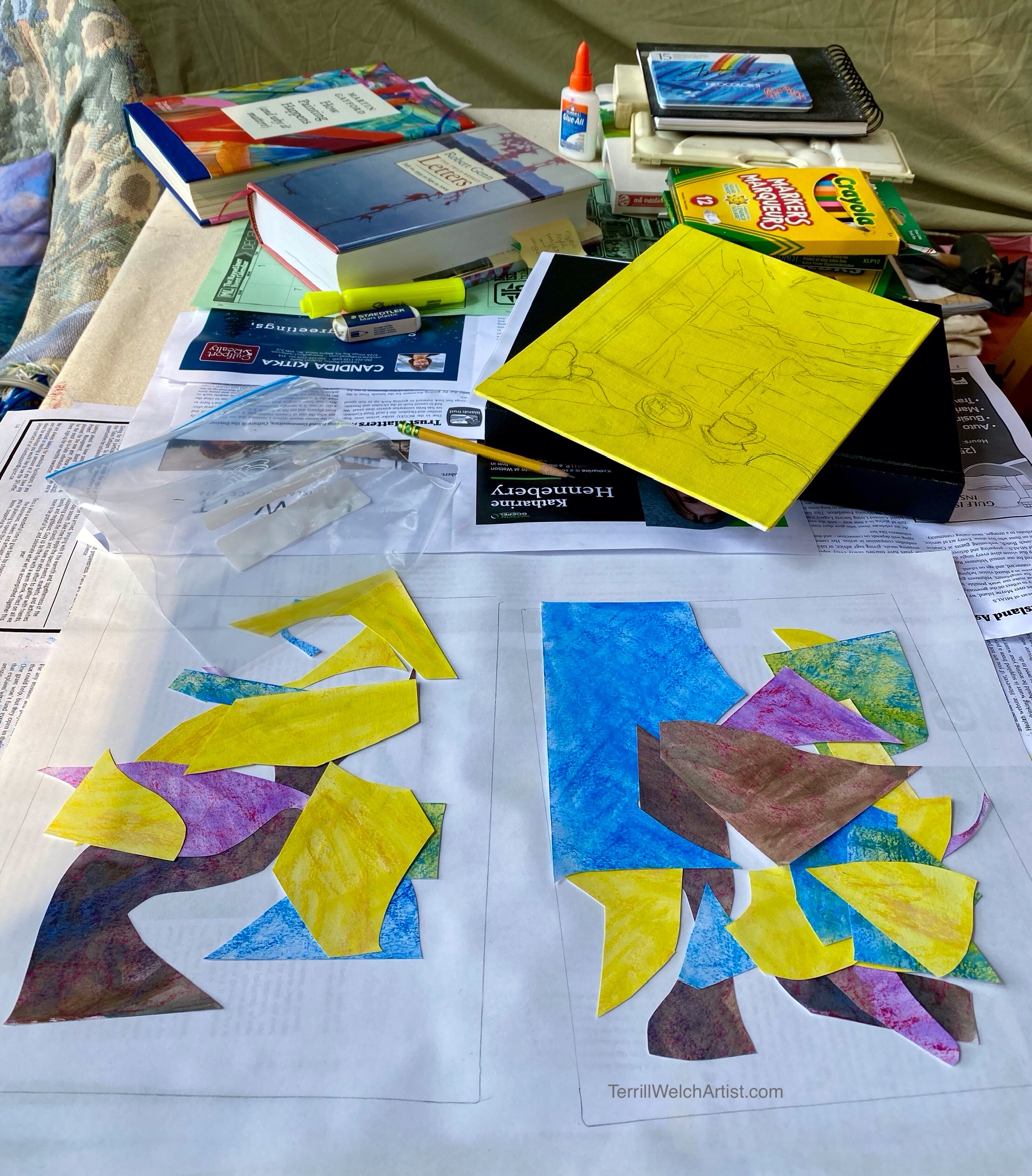
I expect to have much more to discover about my focus on “Close to Home” as I proceed but for now, it is time to work on a small painting sketch featuring morning coffee in my studio chair.

