Monday, 2 November 2026
Following is the final post I am sharing in my first unit of three units of my MA Fine Art degree. There are other post but they are more administrative in nature rather than research based. Therefore, I have no need or desire to keep them. I also might have sorted out the image collage transfers but we shall see. It is still advisable to read these posts directly in the blog rather than in an email share. The third painting study in this post is still one of my personal favourites in the series… I know. I am not suppose to have favourites but I still do and usually they are different than other viewers.
Friday, 14 March 2025
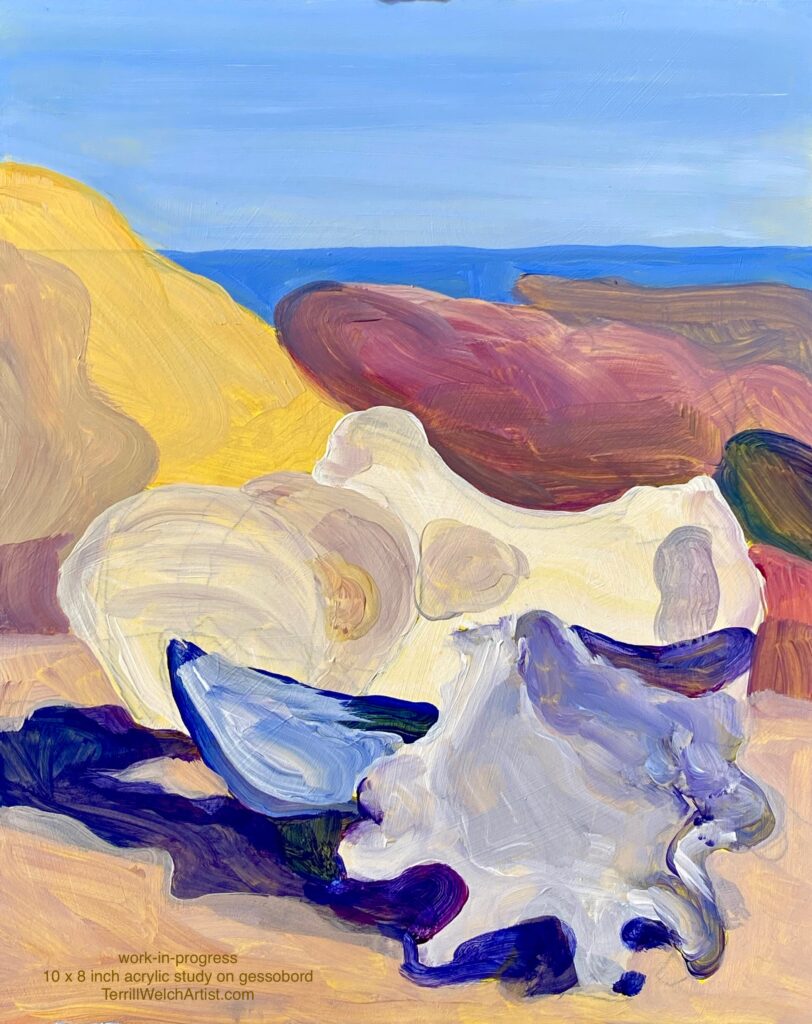
Back on Saturday, 22 February 2025, I completed the first of three explorative investigations of portrait oriented acrylic studies with shells in the foreground and land, sea and sky in the background. I had left this first study unfinished on Monday, 10 February 2025 for a few days while I thought about what I was wanting to accomplish with these acrylic studies as a method for propelling my work forward. In the previous three oil paintings, I had already decided to work in a portrait orientation with more context around my subject of the shells. Now I wanted to be able to change what I was doing easily on the surface to be able to test the usefulness of this approach without waiting for oil paint to dry or having to scrape an area it down to start again. Hence, the switch to acrylic and small 10 x 8 inch size.
Each painting process, from observation to reference gathering it painting, use both the approach of seeing with the whole body and mind presented (Loori, 2005) and considered the limitation of our sensory information present (Plato and Jewett, 2994, Rudd 2022). The differences and tension between these two theories about art and painting seem to offer maximum freedom for me to work. I can observe with all of my senses as closely as possible while knowing that I will still fall short of everything that is available from the subject. This seems to offer greater room for exploration because I understand that the information I can discern is flawed from the beginning creating less need to get it right and more room to explore my interpretation of the essence or make the essential essence of my subject present.
I had intended to take more images of this final stage of painting for ‘Shells on Sandstone Study’ but it didn’t happen. Instead I will share a collage of the work up to this point as a reminder to how it came about starting with the actual shells I had borrow from the beach (and will return) for a touch drawing exercise.
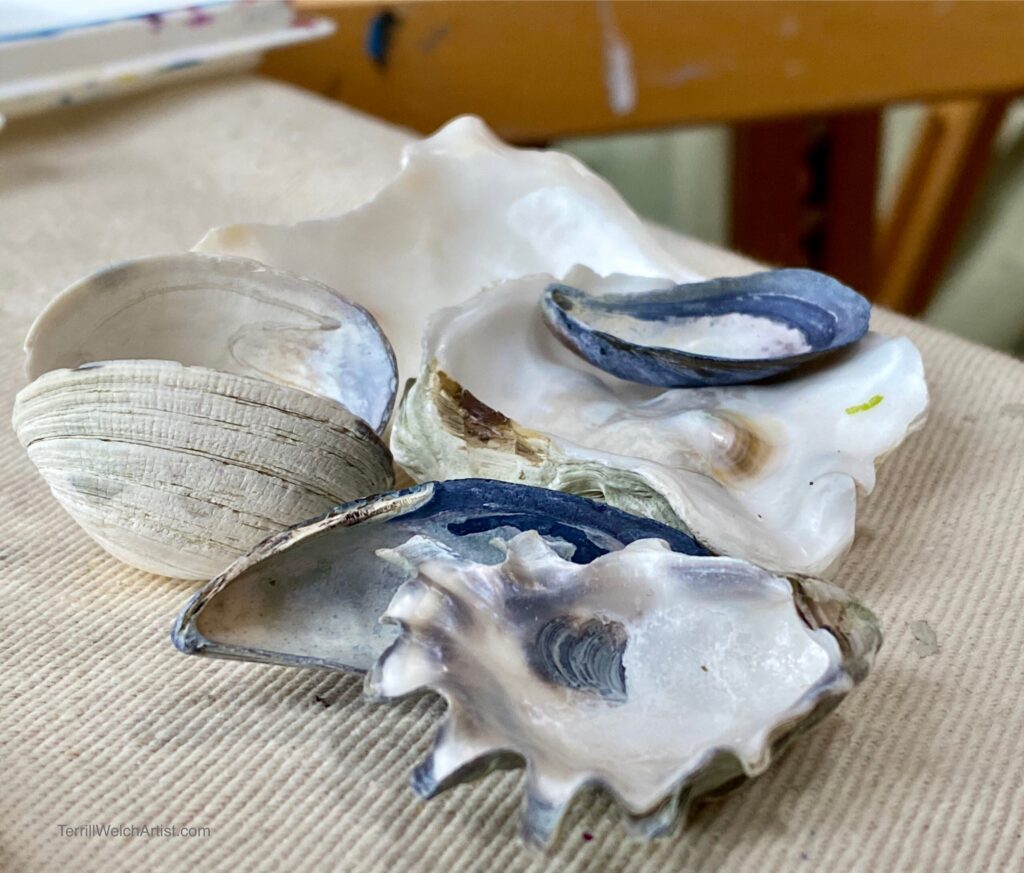
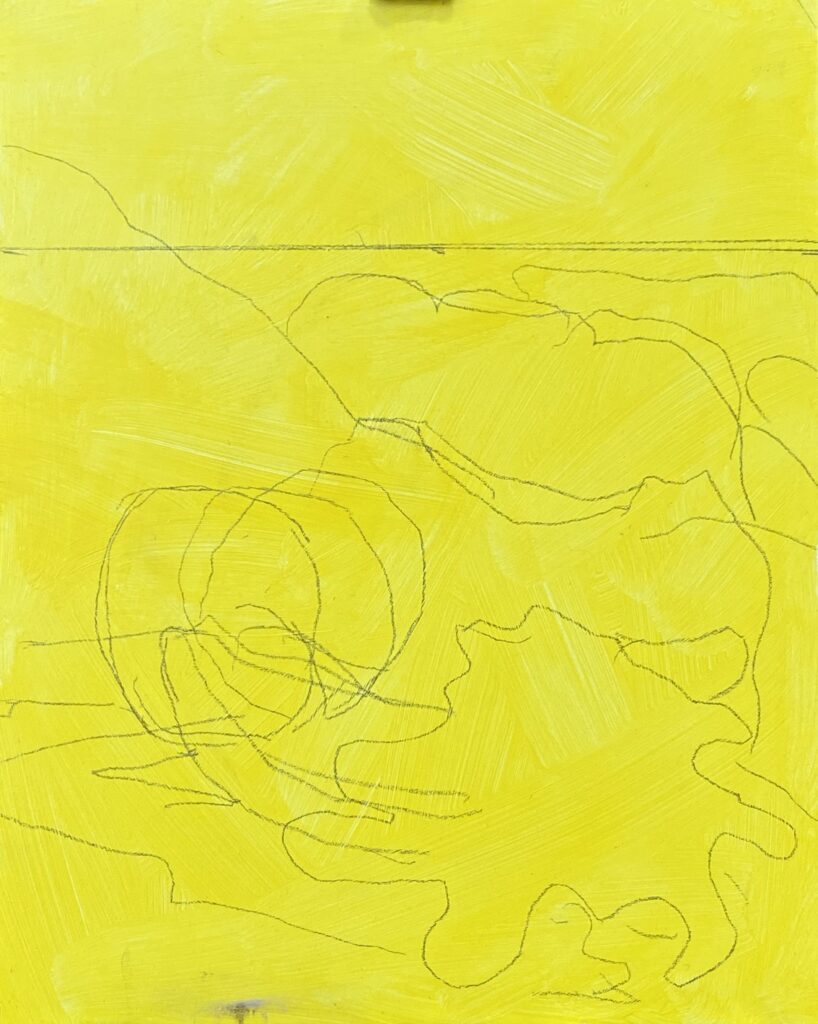
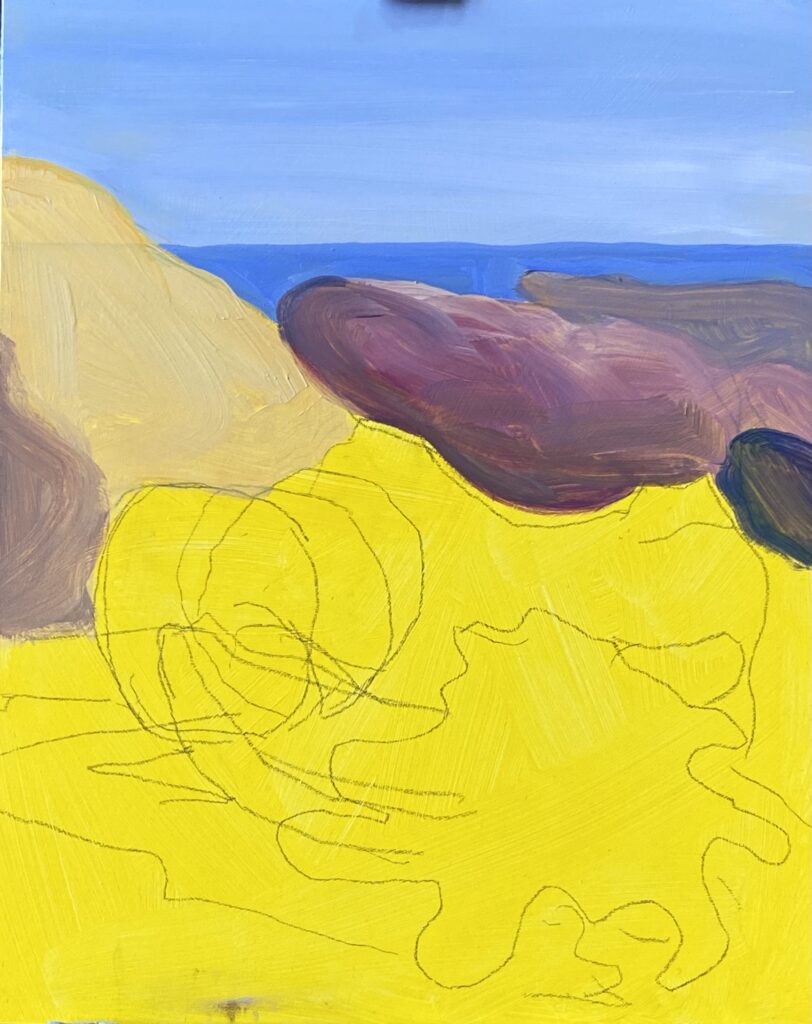
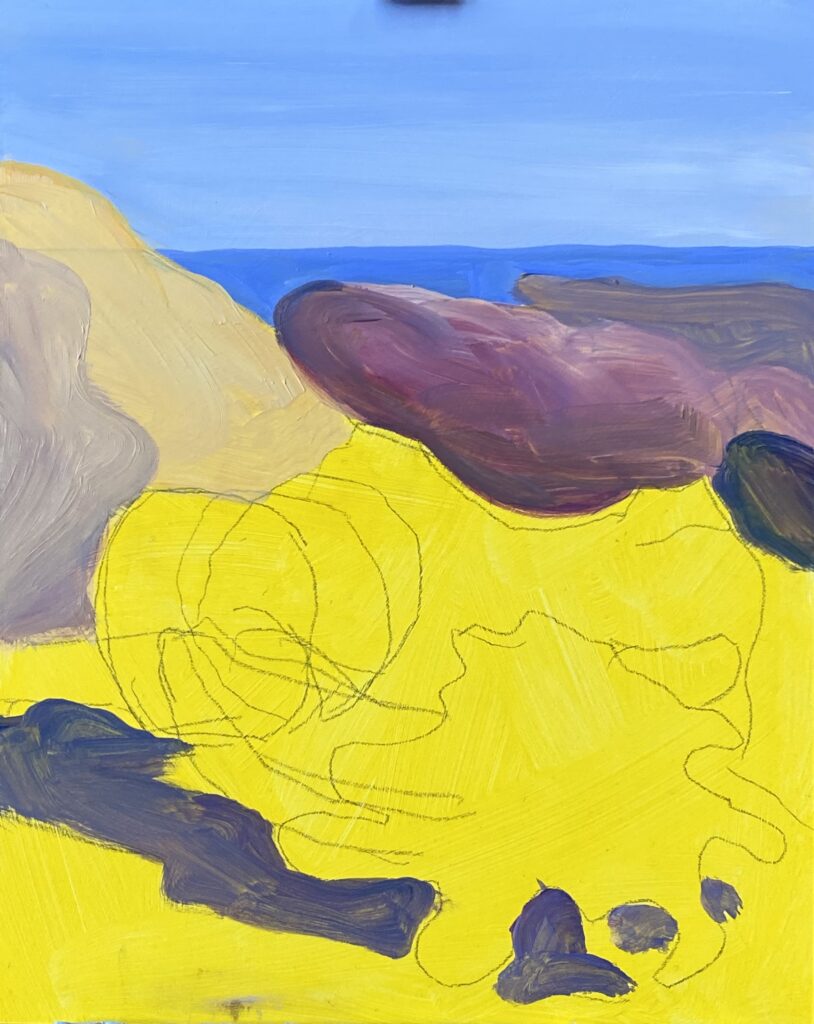
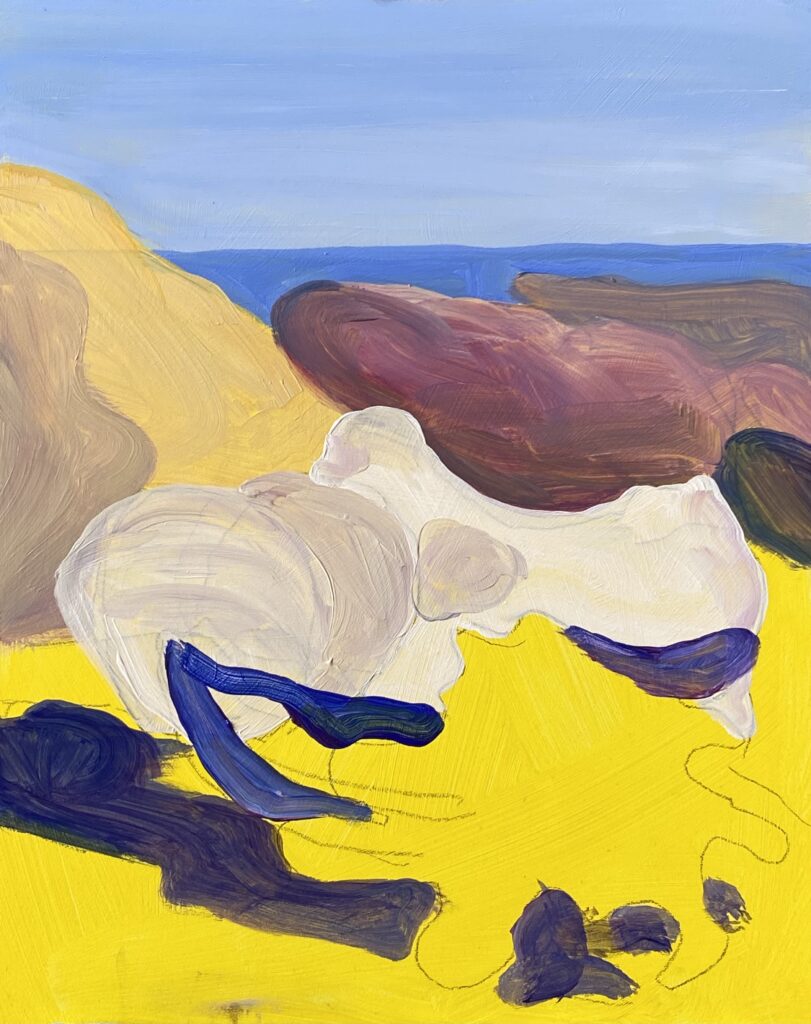
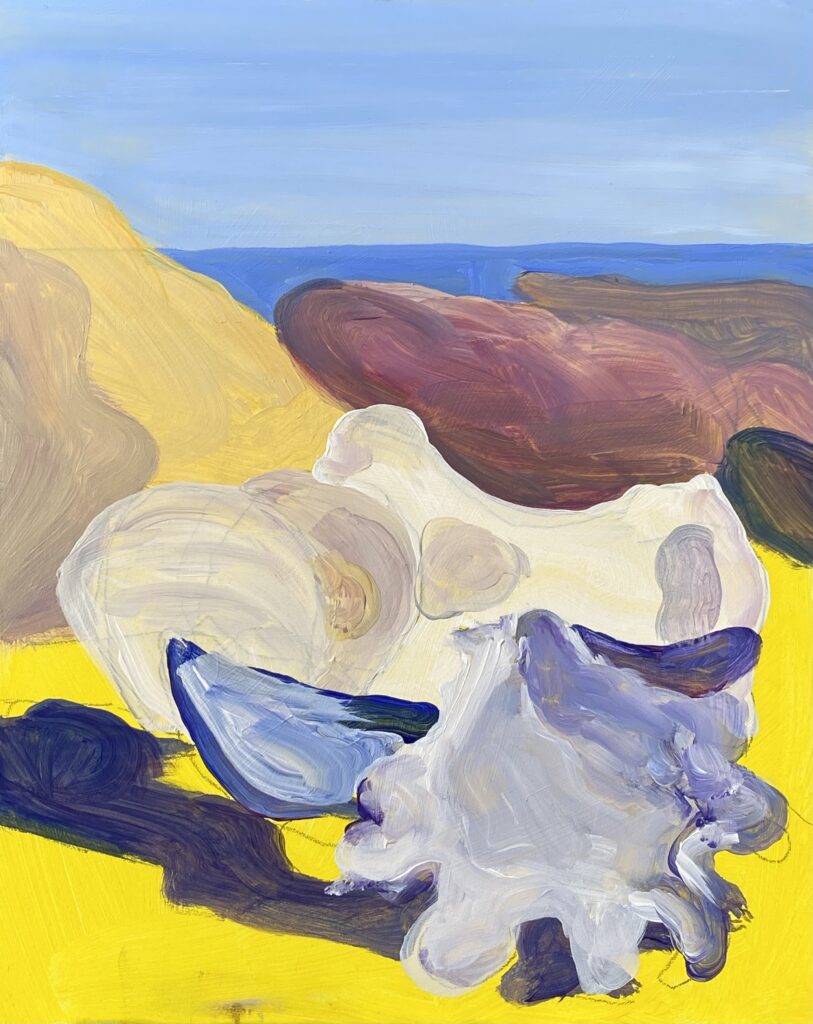
I settled in to paint and even after I reminded myself to take photos as I worked. I just kept painting! I didn’t even think of it again and then the painting was done.

The good news is that I get to try again.
Monday, 24 February 2025
I started with a handful of references I had gathered midday in the rain a few days earlier on Friday, 21 February 2025.
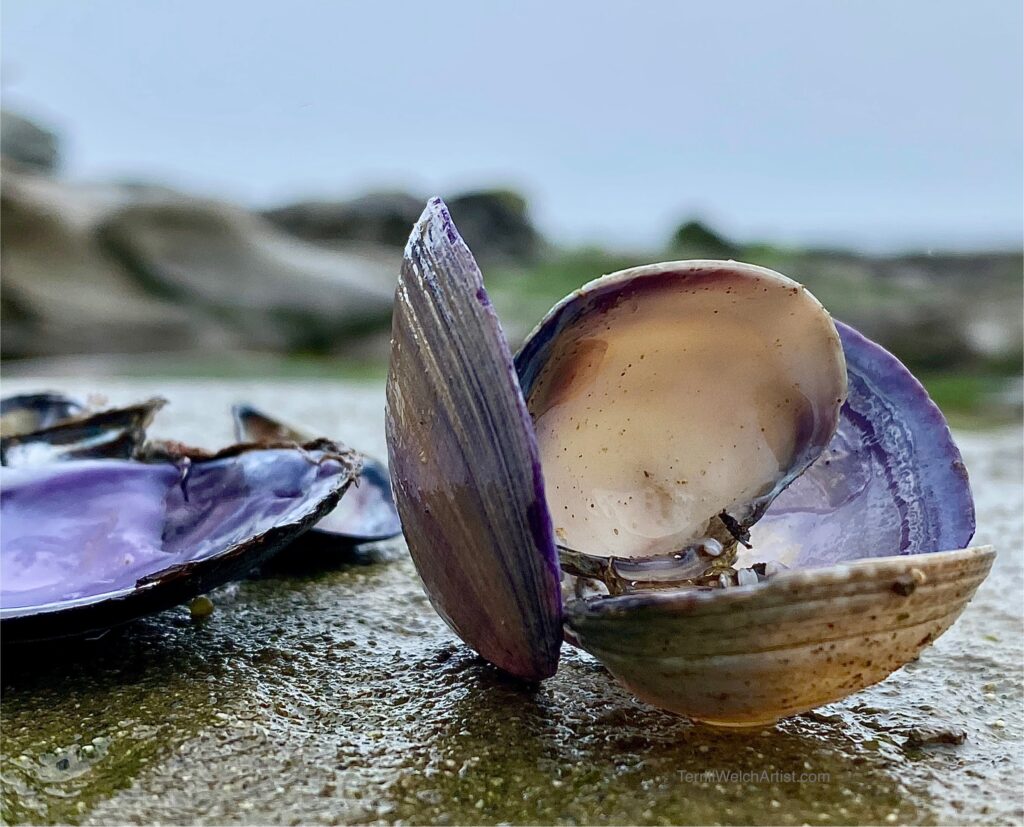
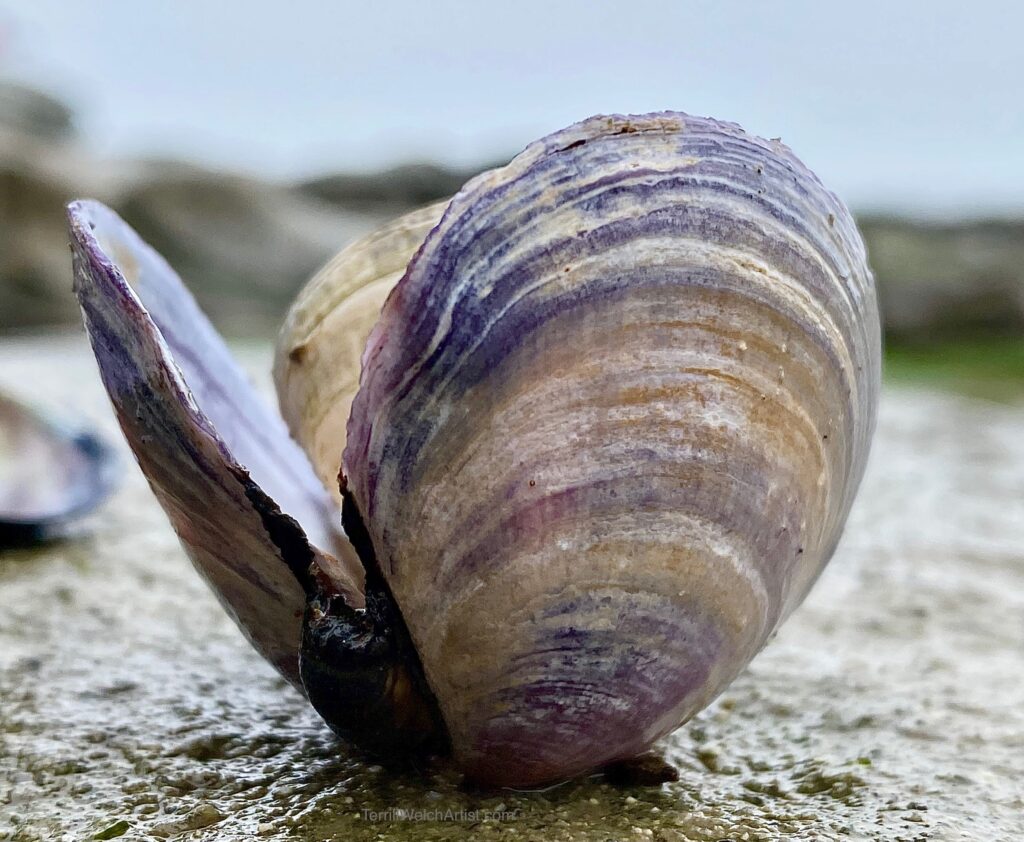
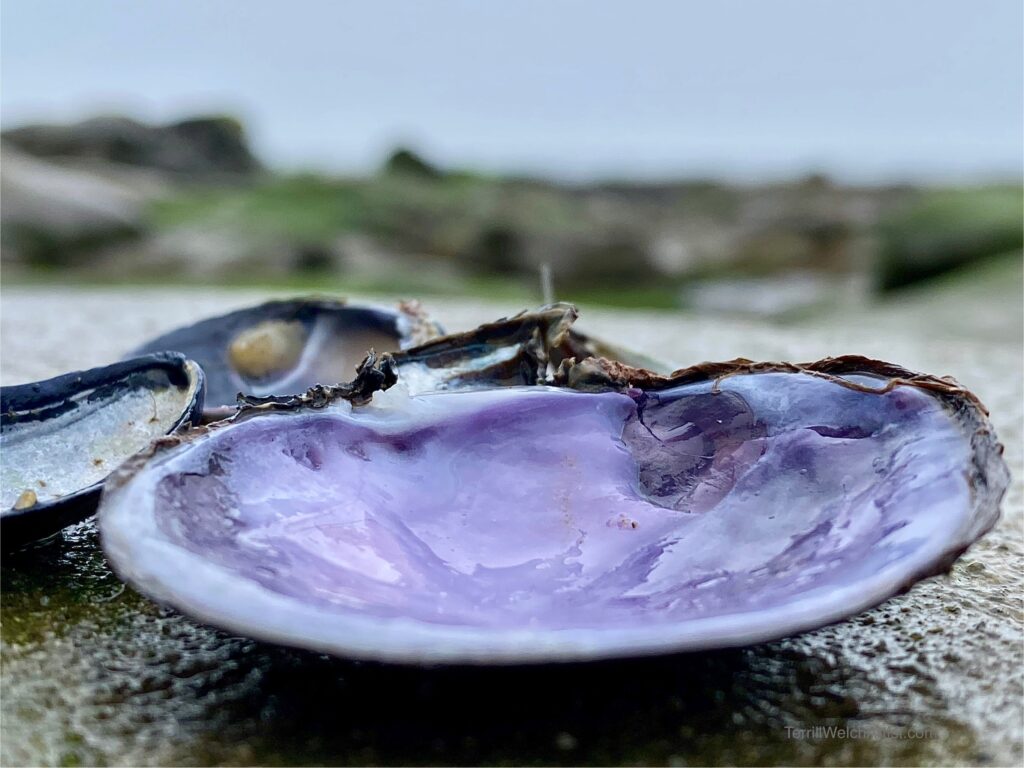
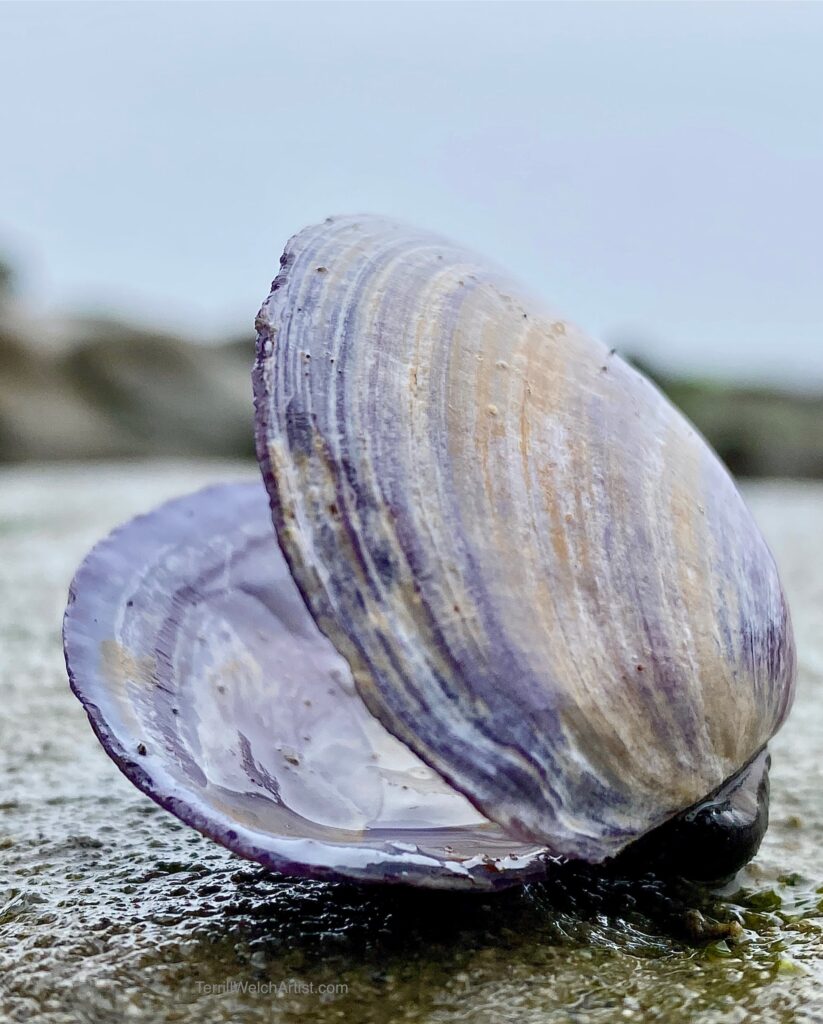
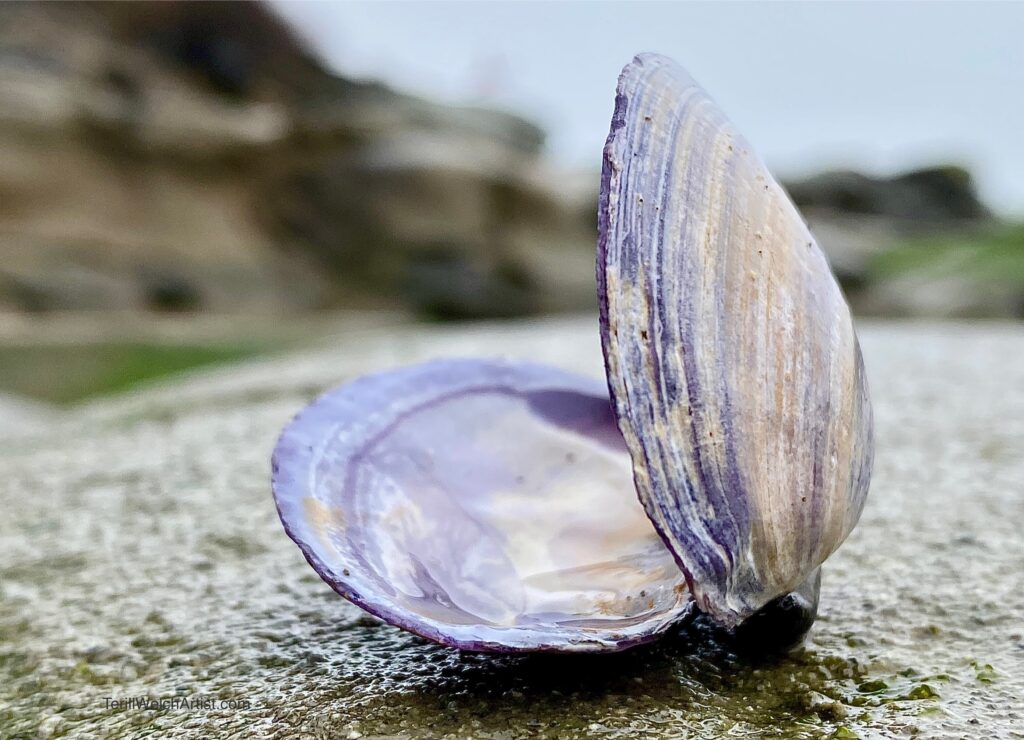
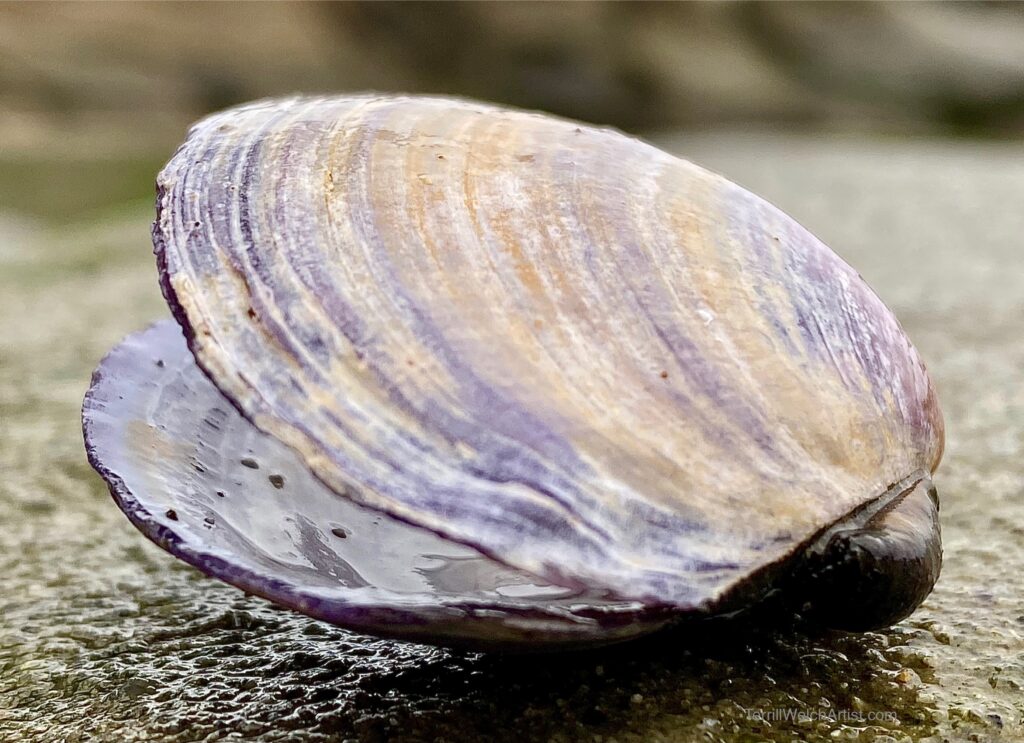
I set a 10 x 8 inch gessobord on the easel and drew in some basic lines to get started.


I could have stopped here.

Or even here.

Of course, I didn’t. The final acrylic study ended here instead…

I did manage to gather a few more points in the painting process this time. I am not sure how useful it has been but they are there for future consideration. The simplicity of the shapes and palette still seem substantial to me, worthy of my attention. Visible brushstrokes offer a soft liveliness with their directional movement. However, could something still be missing? I leave it for now and start the next painting.
Saturday, 1 March 2025
I again selected from photographic sketch references that I had taken the day before. This time there were fewer than usual.
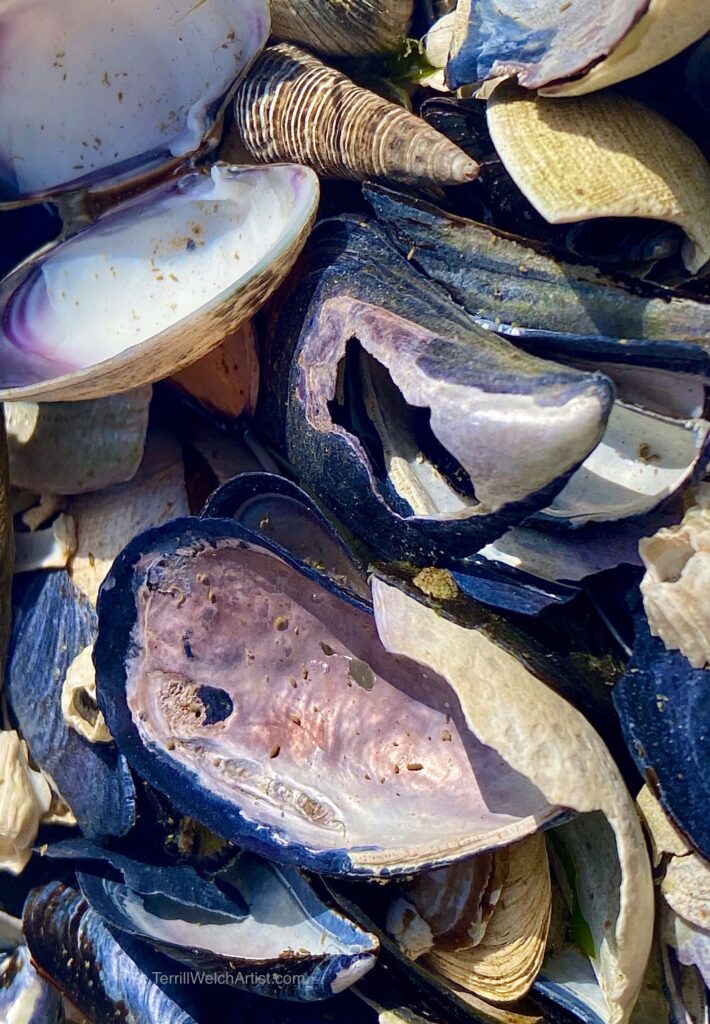
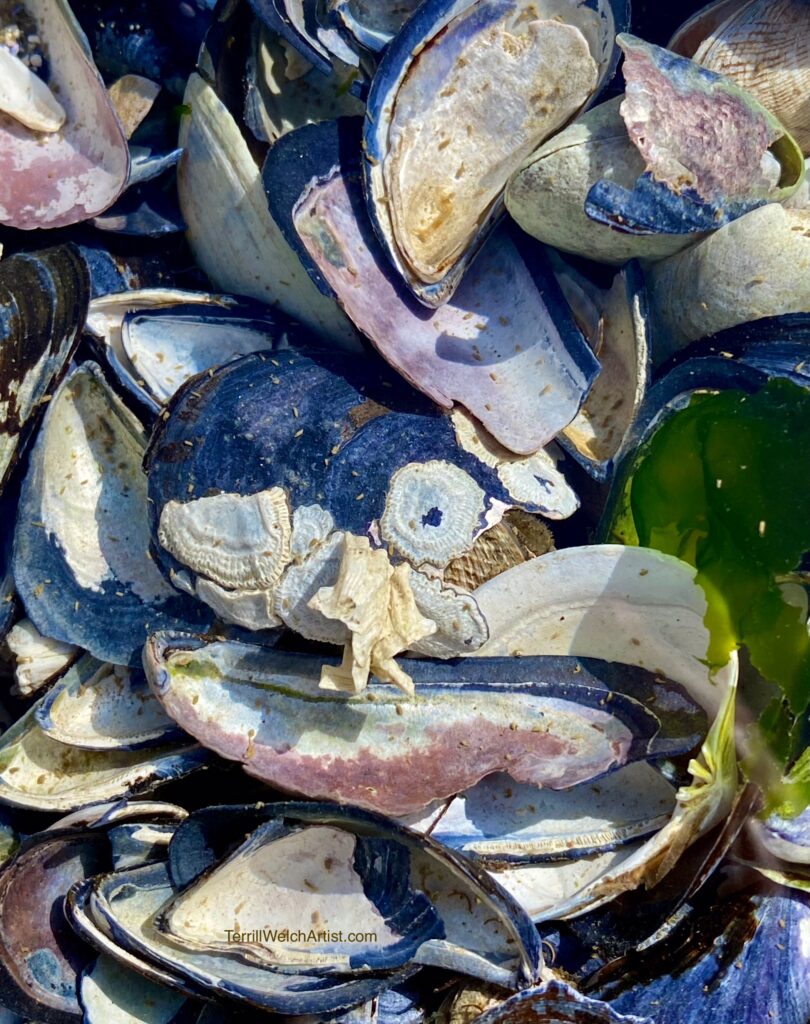
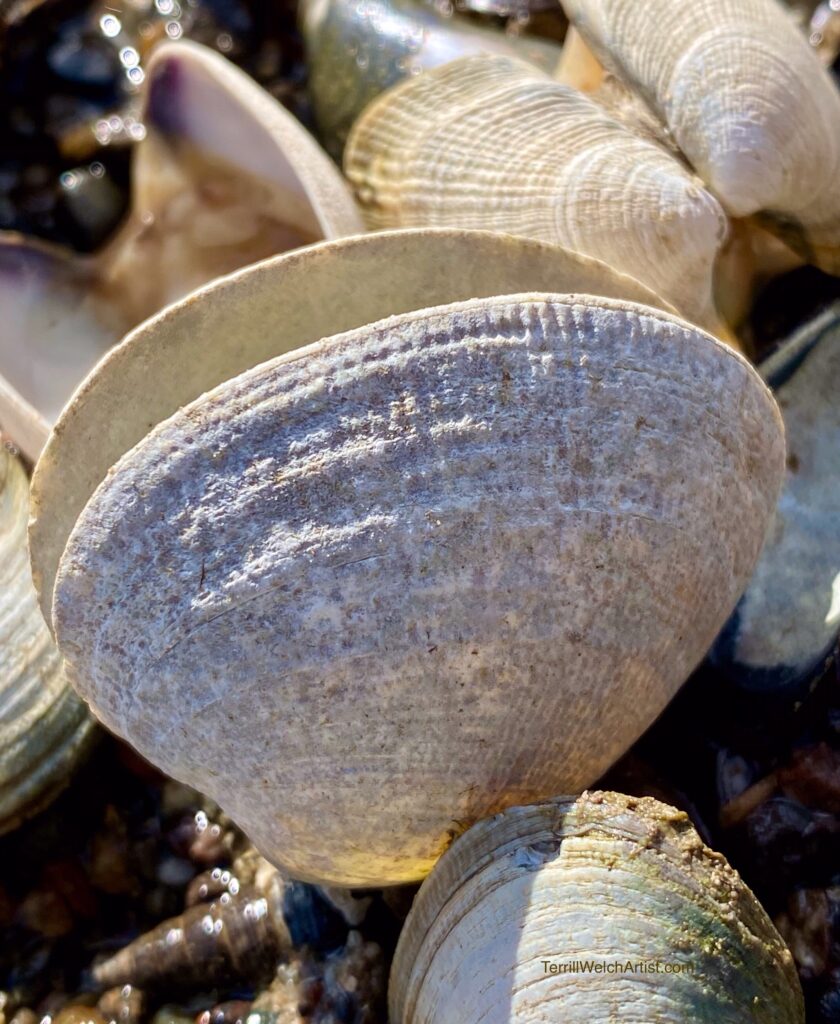
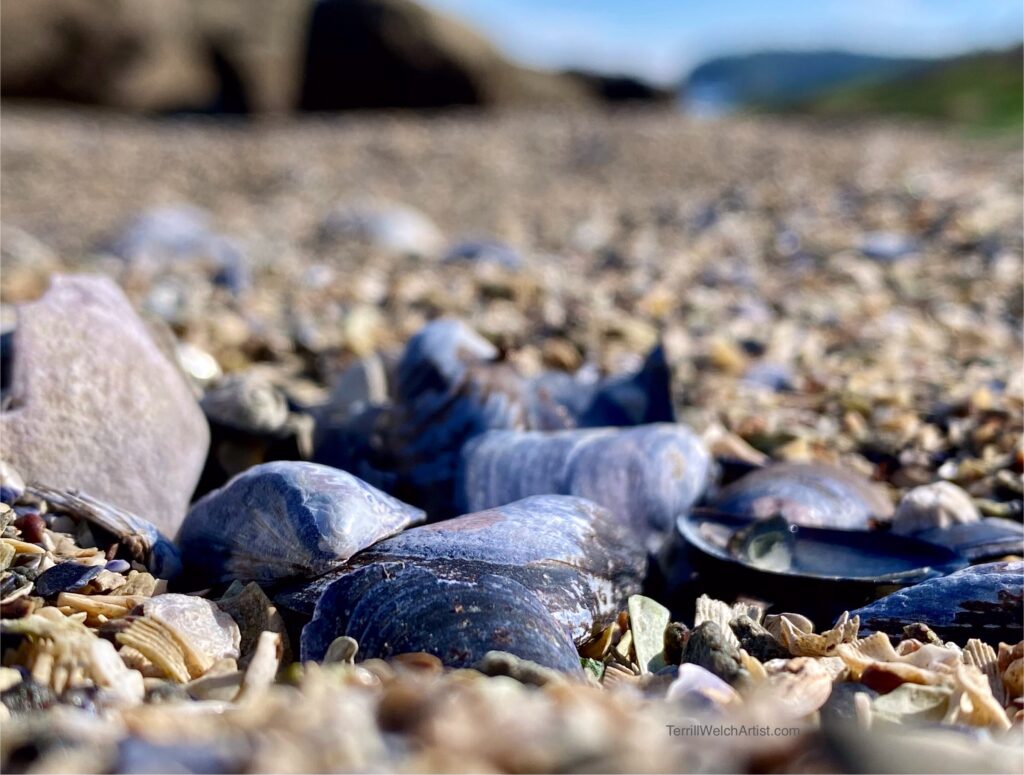
I had already determined that I was going to make up the landscape by drawing on information from all three images using a spontaneous decision making process.

Then I begin with acrylic paint, more determined than ever to capture my decision making process while I worked.

It is not easy but I keep stopping to take photographs.

A then another pause.

I am now ready to start building up the paint until I get to the point where nothing is working and everything element in the composition seems to be singing from a different song sheet.

What to do? I decide to start painting things out until it comes back together. There!

I move forward again only adding what feels absolutely necessary with each brushstroke. I got it!

This third acrylic study is what I have been searching for in my exploration of the seafloor. Not just in the composition and colour palette. Those can change. It is the energy and closeness to my conversation with the seafloor on this particular day that I feel an affinity with when viewing this work.
All three of these sketches are notably to me a new direction in studying what is still a brand new subject. These small studies have the potential to be worked up into larger paintings and still work both as objects in the physicality of paint, colour and composition and as expressive subjects depicting my conversation with nature’s seafloor. I will keep going and experimenting with the idea of landscapes of the small paintings where I am getting seriously low and close to the subject while looking out and placing it within the context of its environment.
Reference list:
Plato and Jowett, B. (1994). The Republic. [online] https://www.gutenberg.org/files/150/150.txt. Available at: https://www.gutenberg.org/cache/epub/150/pg150-images.html [Accessed 5 Jan. 2025].
Rudd, A. (2022). Painting and Presence: Why Paintings Matter. [online] Oxford University Press eBooks. Oxford University Press. doi:https://doi.org/10.1093/oso/9780192856289.001.0001.

