Memories of Mornings by the Studio Window Painting Data Collection

Painting Data Collection 

Title: Memories of Mornings by the Studio WindowDate Completed: Wednesday, 19 August 2026
Materials: Acrylic on linen board
Size: 8 x 10 inches (25.4 x 20.32 cm)


Figurative/Abstract Self Assessment Band-Scale Rating between 1-10: 5

This work is a quick impressionist study. Attention has been paid to light, relationships between elements and sensory records of the fragrance of dark coffee, fresh morning air through an open window and the softens of wool socks cozying around bare feet sticking out from under the edge of a blanket. 

Reference Gathering: 

References for this study are minimal with most mark making relying on repeated mornings of similar moments that created a bank of memories. 

But there are two images that provide a starting point. 

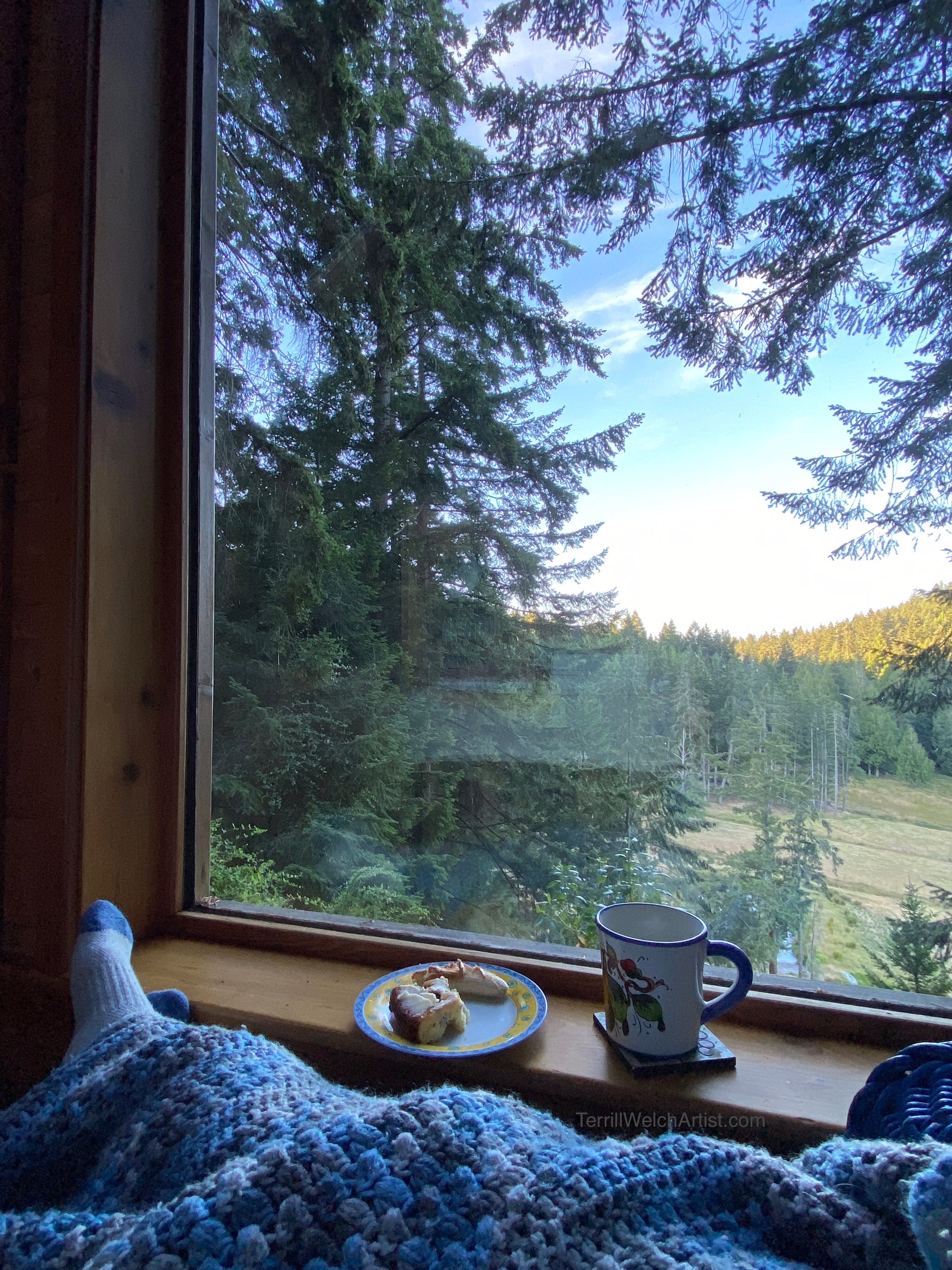
Sun catching the hill as seen from the chair beside the studio window. Photograph by Terrill Welch Sunday 28 June 2026.
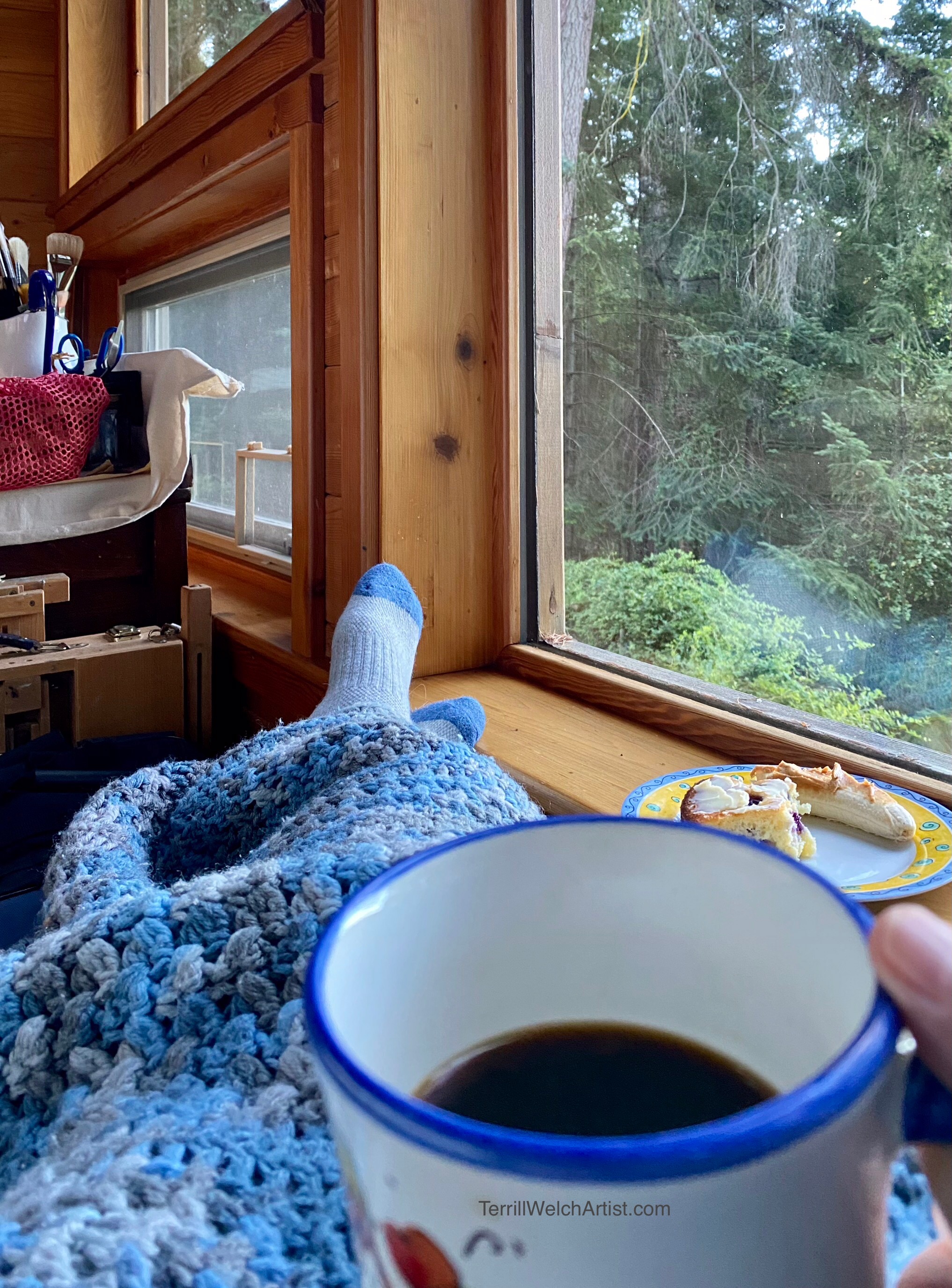
Mornings in the chair of the studio window. Photograph by Terrill Welch Sunday 28 June 2026.

Making Process:

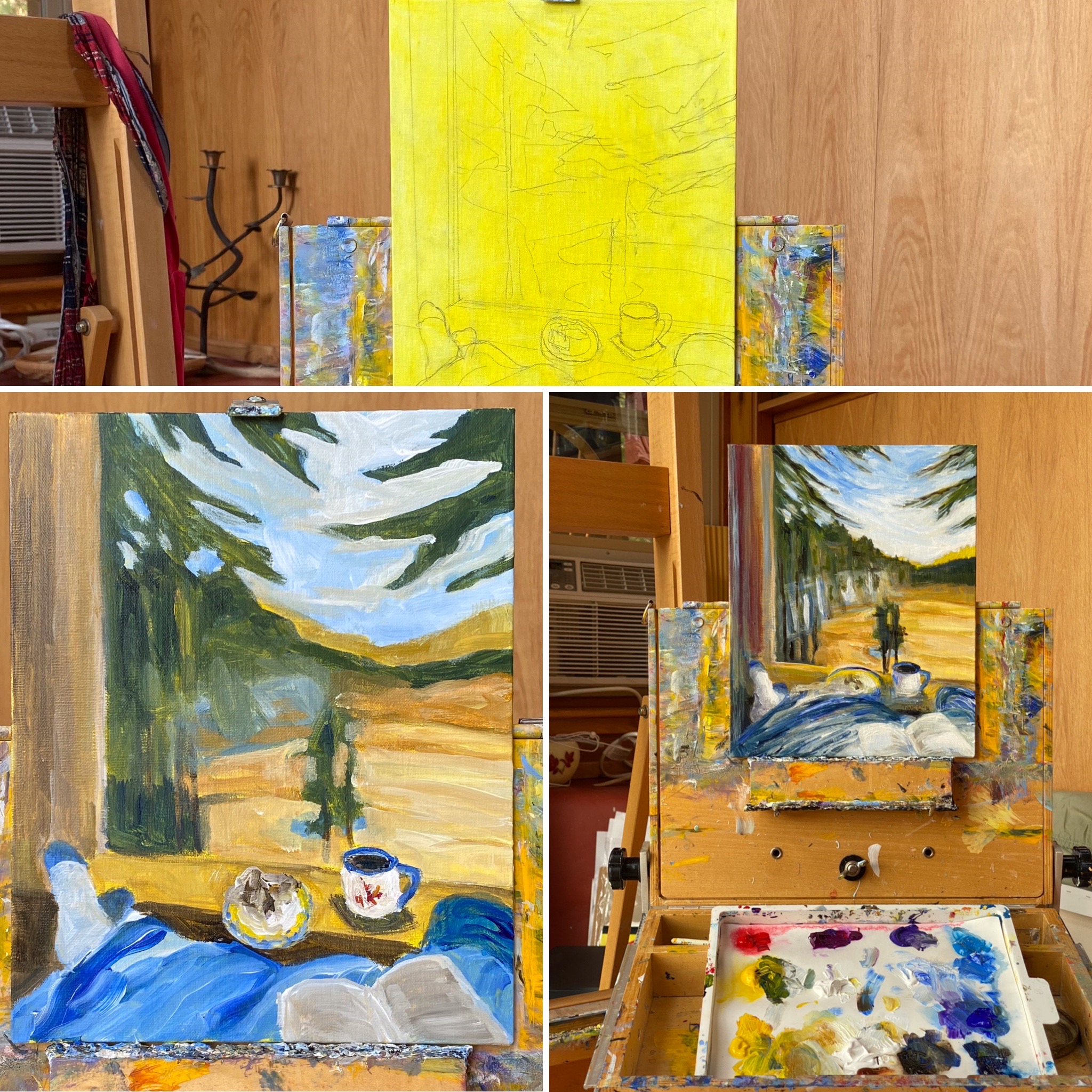
The making process is equally sparse because once I settled down to paint, I forgot to take many photographs as the work developed. But there are a few. 

Work-in-progress collage of images for Memories of Mornings by the Studio Window by Terrill Welch, 10 x 8 inch acrylic on linen board.

Finished Painting:

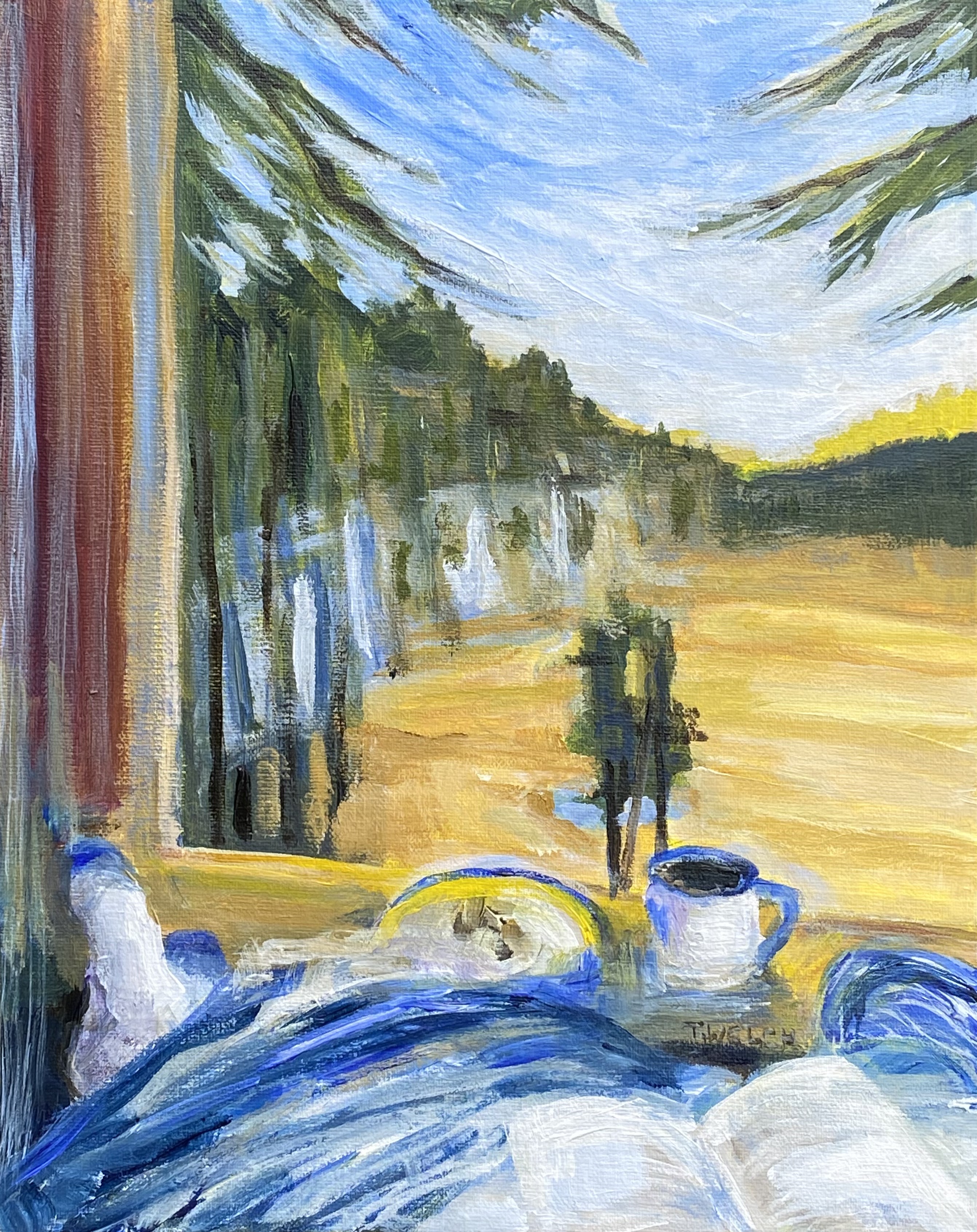
Memories of Mornings by the Studio Window by Terrill Welch, 10 x 8 inch acrylic on linen board. Completed Wednesday, 19 August 2026.

Making Notes:

So many mornings seated in the studio window with coffee and breakfast just like this morning. I worked from memory though there are references. My attention drifted from what I might be reading to the dark savoured bitterness of the coffee then over to where the rising sun is catching the far hill in the valley. The fields are cut and dry and a cool breeze is coming in the window next to the one I am sitting beside. There is a precious sense of optimism swinging on the branches of the fir trees. I sigh and blink my way into the day. This quick sketch is a brief reminder of something that as of yet has no words other than the importance of waking up.

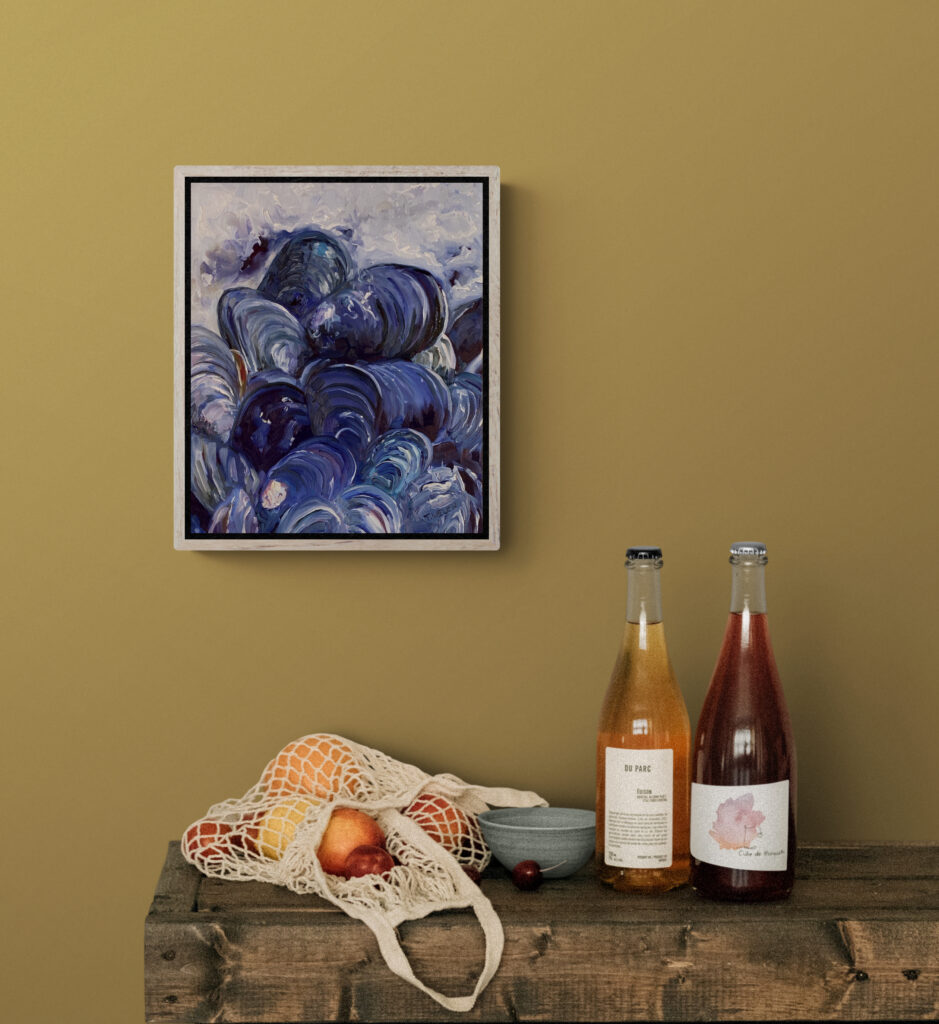
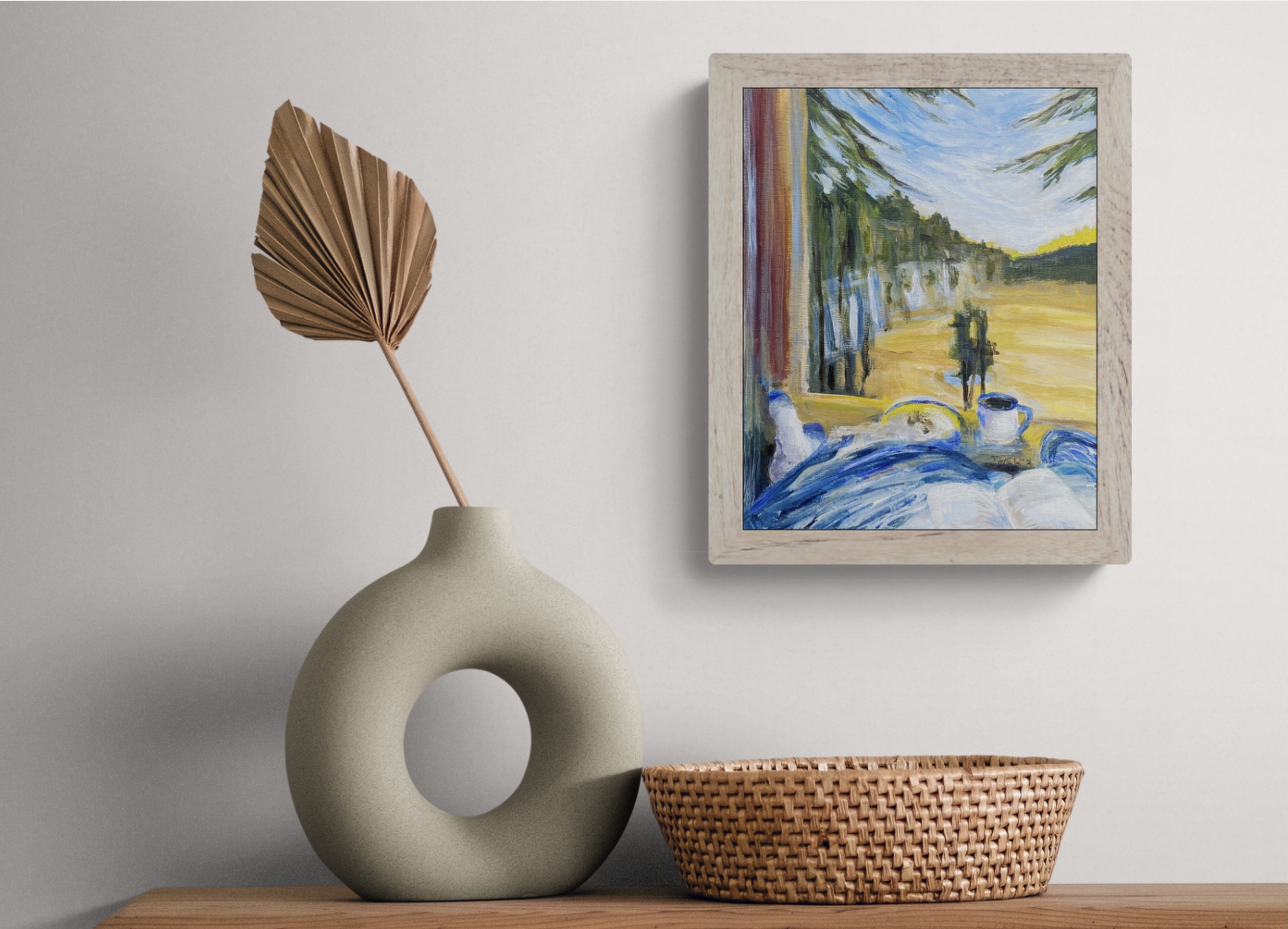
Here is a digital room view for size context. 

Digital viewing room with Memories of Mornings by the Studio Window by Terrill Welch, 10 x 8 inch acrylic on linen board.

Reflective Analysis:

Mornings have always been an important part of my day and this appreciation has deepened over the years. Though I most often rise early it is not a busy time of day. I like to wake up before others can have any demands on my time or my thoughts. Sometimes, this is only a brief ten minutes. Other times I can be gifted a couple of hours. It all feels like the intervention of chance really. I used to swear that my young children heard my eyes flutter open and then they leaped out of bed so as not to miss out on anything. Now, my partner often does the same. But there is always a chance that everyone will sleep just a little longer and I can watch the day begin, wrapped up cozy, from one window or the other. 

Reflexive Analysis: 

Strong dark roast black coffee is my morning beverage of choice and comes with a whole ritual of hand grinding (by hand, no electric whirring noises for me) locally roasted coffee beans. The beans are coarsely ground for a 30 year old stainless steel insulated French press. Once brewed, a cup is poured into a favourite Italian mug and the rest is put into a heated stainless steel thermos that takes me most of the morning to drink. This ritual is a mix of childhood references of the practices of my parents and a west coast of Canada coffee culture that started developing around about the late 1980’s, early 1990’s, while I was going to the University of Victoria with two young children as a single parent, who also worked part time while going to school full time. Now, when I sit peacefully in the art studio chair by the window, still in my pajamas, drinking my whole first cup of coffee while it is hot, without having it answer questions, sign notes for school, add a child’s birthday party coming up on the weekend to my calendar, be reminded to pick someone up after school, I feel particularly blessed. I loved parenting and yet, I am still thrilled when my mornings begin by easing into the day instead of starting at full throttle. 

Key Findings: 

When I think back, I remember one of my high school principals who picked me up while hitchhiking in our small village to the place I was living a few miles away in the rural farmlands. He was very clear that, though I had graduated grade twelve, I was going to grow up to be poor white trash. I was unmarried, pregnant with my first child and not yet 19 years old. I mean — who says this to a young kid finding her way after having made some difficult choices!? I am ever-so-glad that I simply just didn’t believe him. I have always had a strong inner self-motivating pull to problem-solve around ways to achieve whatever is of most driving interest to me. These ritualized morning coffees are the foundation for my thinking and of my organizing structures. It is when I prioritize the items written into my calendar into the order that either must be done that day or that I have the most desire to complete. It is also where I look ahead over the coming weeks and months and see what needs to be refined and it is when I measure how well I am fulfilling any intentions I might have set. This small sketch holds all of this for me. 

Anything else: 

It is usually the case that we can accomplish far more than we and others think we can. There is a cost of course and this can’t be discounted. This isn’t usually what stops us from trying. More often than not it is a fear of failure or fear of something awful happening. I have learned to ask myself during my morning coffee — what is the worst that can happen and can I live with it? What is the worst that will happen if I do and what is the worst that will happen if I don’t? If I can live with the worst in relation to the decision I most want to make, that will generally be the route I will take. Who knew a small painting study of a person sitting in a window having a morning coffee could hold so much? 

Defining “Close to Home” as a focus within my nature-centric, reparative painting practice

Monday, 17 August 2026

“Close to home” at first, brings up familiarity, safety and comfort. It is where I live my daily life most of the time. Geographically, these days “close to home” is usually limited to within a day’s drive in any direction which gives the concept physical parameters. There is an ordinariness that comes with these sustained intimately observed passages of time in one place doing “the usual” things such as getting groceries, hanging laundry on the line, grinding the morning coffee beans, paying bills online, going to the dentist, getting the car serviced, working in the yard, hugging my partner, children, grandchildren and friends between taking long hikes, painting in the studio and promoting the gallery and artworks. I ask myself, why is this focus on “Close to Home” in my painting practice important? 

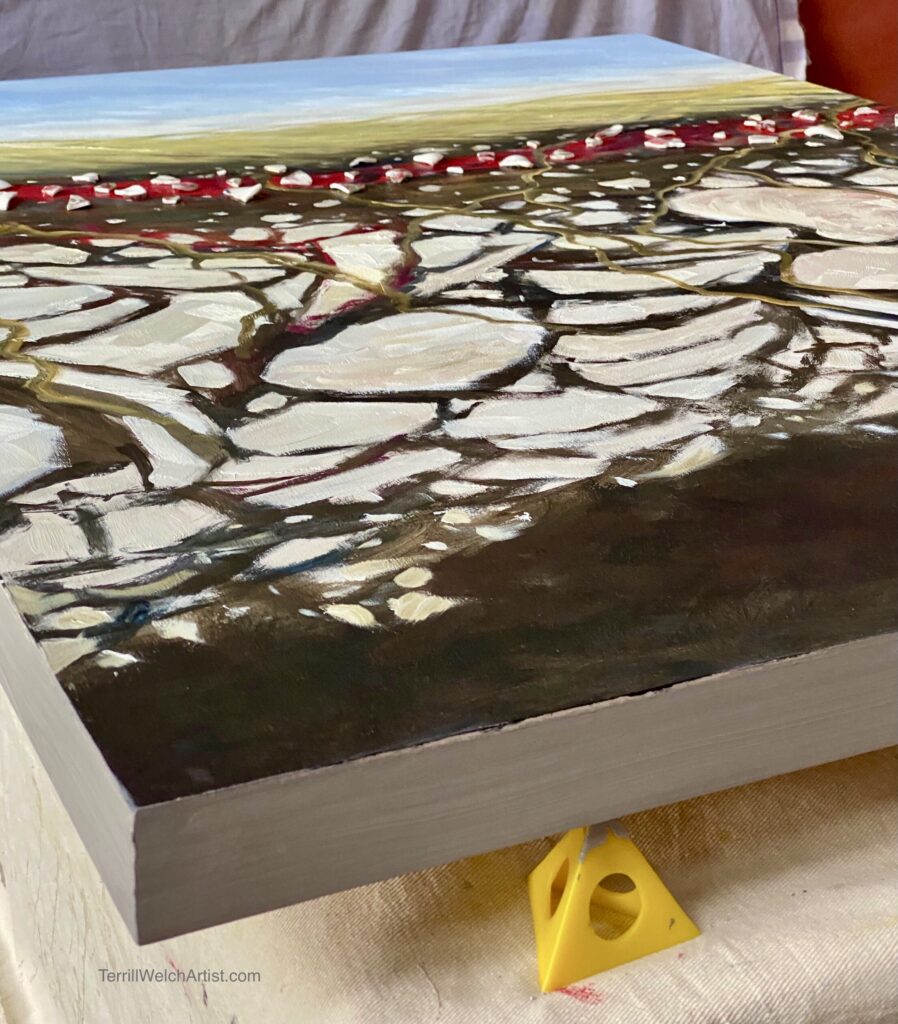
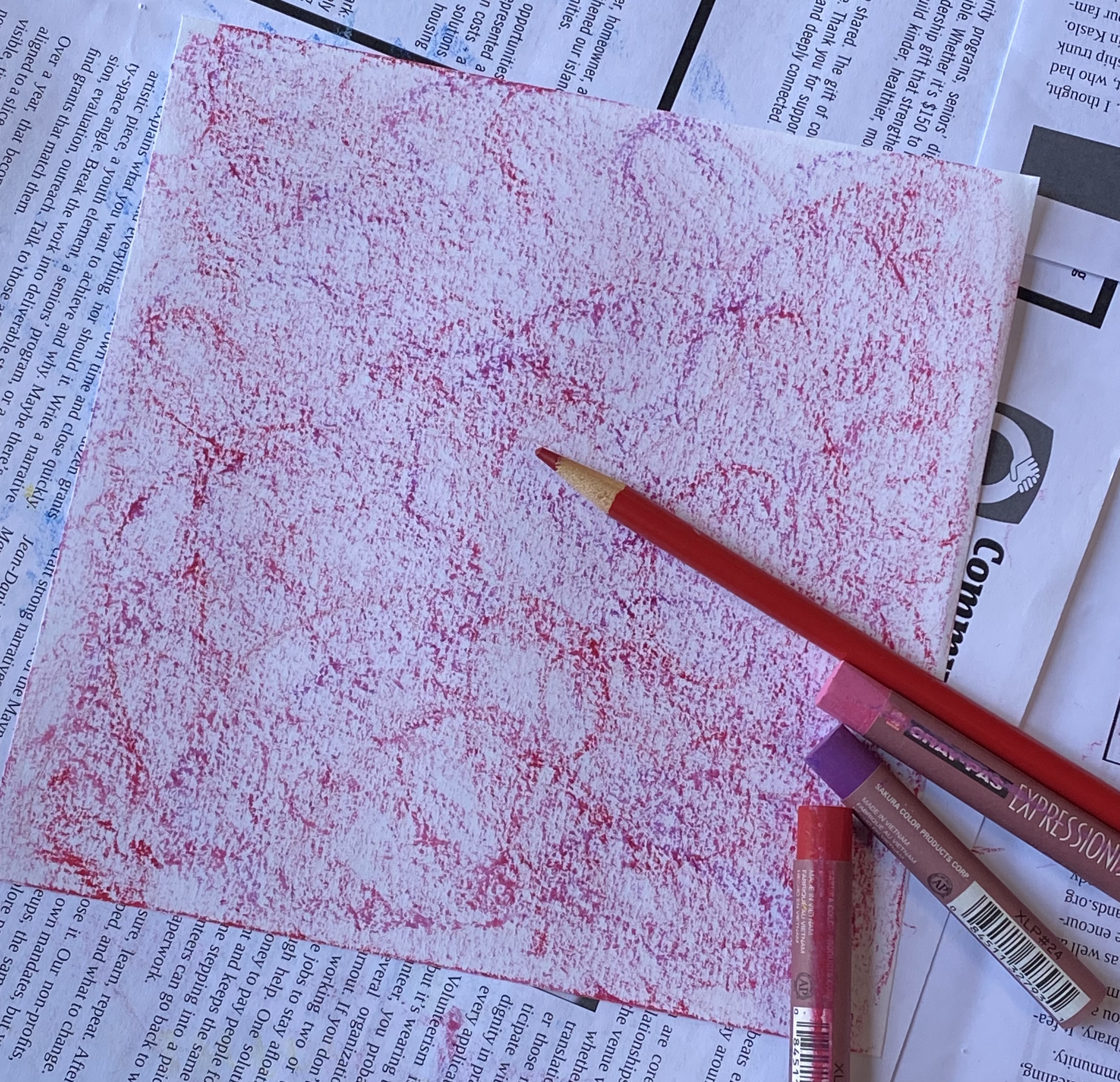
Developing red collage paper by Terrill Welch. August 8, 2026.

To answer this question is to first observe aspects of my contextualized autoethnographic references. The first and most obvious factor is that I am a full-time, primary caregiver for a partner that can quite happily no longer go further than the geographical territory mentioned above. I remain close to home because, to provide the best care for someone else, I must. The alternatives are to place my special human in respite care or to have someone come to stay with them. Neither of these options are easily workable in practice. By the time I get someone or someplace up to speed on this special being’s needs and them familiar with something they don’t want to do, the brief break becomes more of a traumatic ordeal for both of us than an actual opportunity. At least, this has been our experience so far. Eventually when regular weekly respite breaks become necessary, we will then have someone familiar providing additional support on ongoing. This might then present some opportunities for longer breaks for me to be able to at least go see my elderly parents which is a 7-10 day round trip visit away. For now, primary caregiving responsibilities take a central role, as a wife and as the human that is closest to the person in need. There are children. But the personal care needs and ongoing vascular dementia monitoring and prompting have gone well beyond their comfort levels and therefore not an option except possibly during a short term emergency until other care could be put in place. Community health home support services have been limited and expensive for what is provided. This leaves just me for now. We muddle through as best we can together which for now is pretty well. As an almost 68 year old white woman of settler ancestry, living on a rural small island on the southwest coast of Canada, I am resourceful, resilient, organized and pragmatic with a strong work ethic. I will face poverty level cash flows if/when the time comes to manage only on my own pensions. For now, there is enough to comfortably support both of us. But this reality is partly why I spent the past two years completing my MA Fine Art degree. It is a way to recognize the seriousness with which I take my painting practice that then might possibly lead to my artwork offering a small financial buffer if it is needed in the future. Global instability may make this a difficult proposition to realize but it would be even less of a possibility as an older woman artist without doing this degree. 

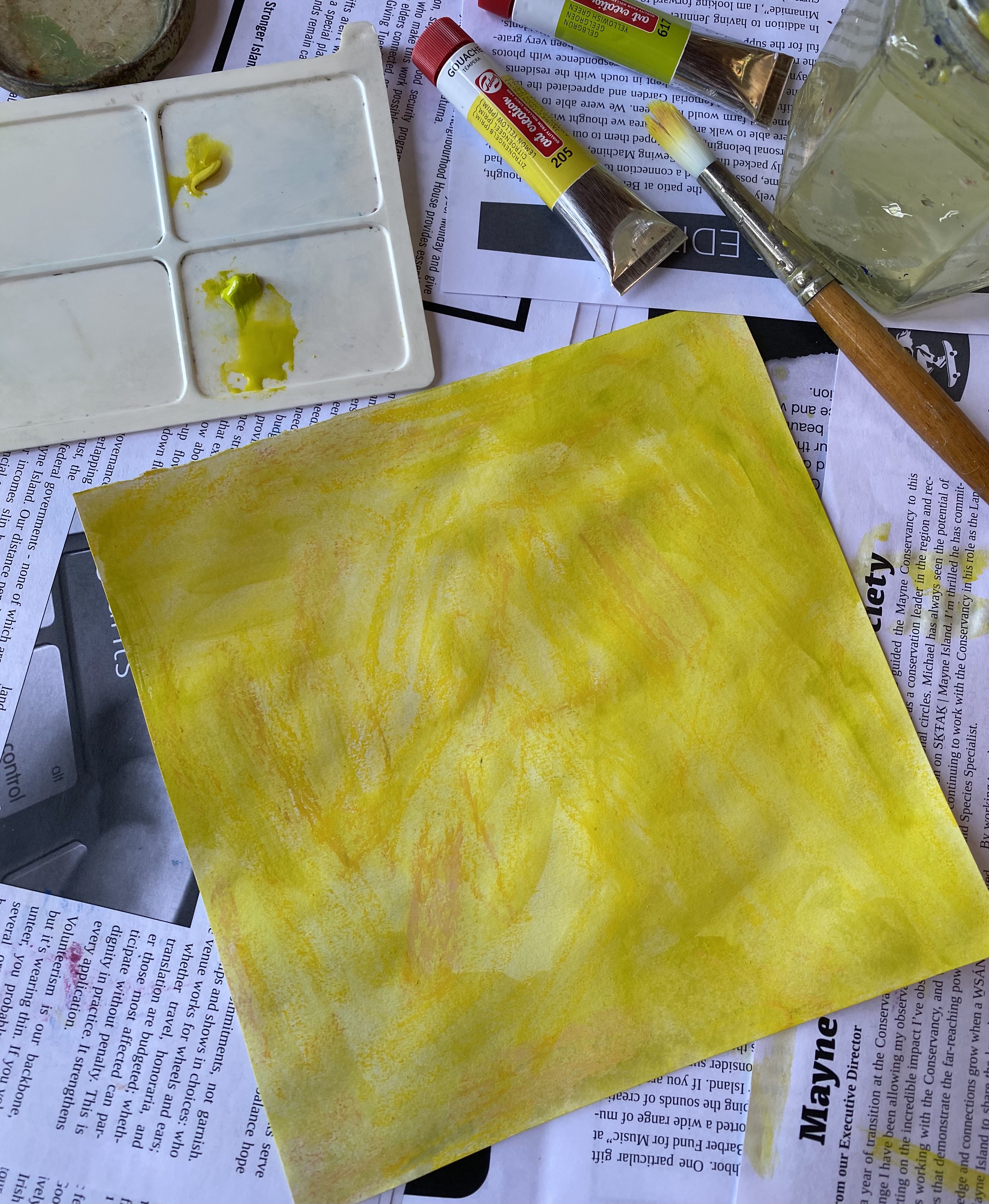
Yellow gauche covered collage paper by Terrill Welch. August 8, 2026.

This brings up other aspects about being “Close to Home” including a sense of loss of freedom, of heavy sadness/grief about slowly losing someone to their disease, as well as facing my own limitations and mortality. How long can I reasonably keep up with these responsibilities? How long can I manage living on this rural island as the only person who is able to drive?

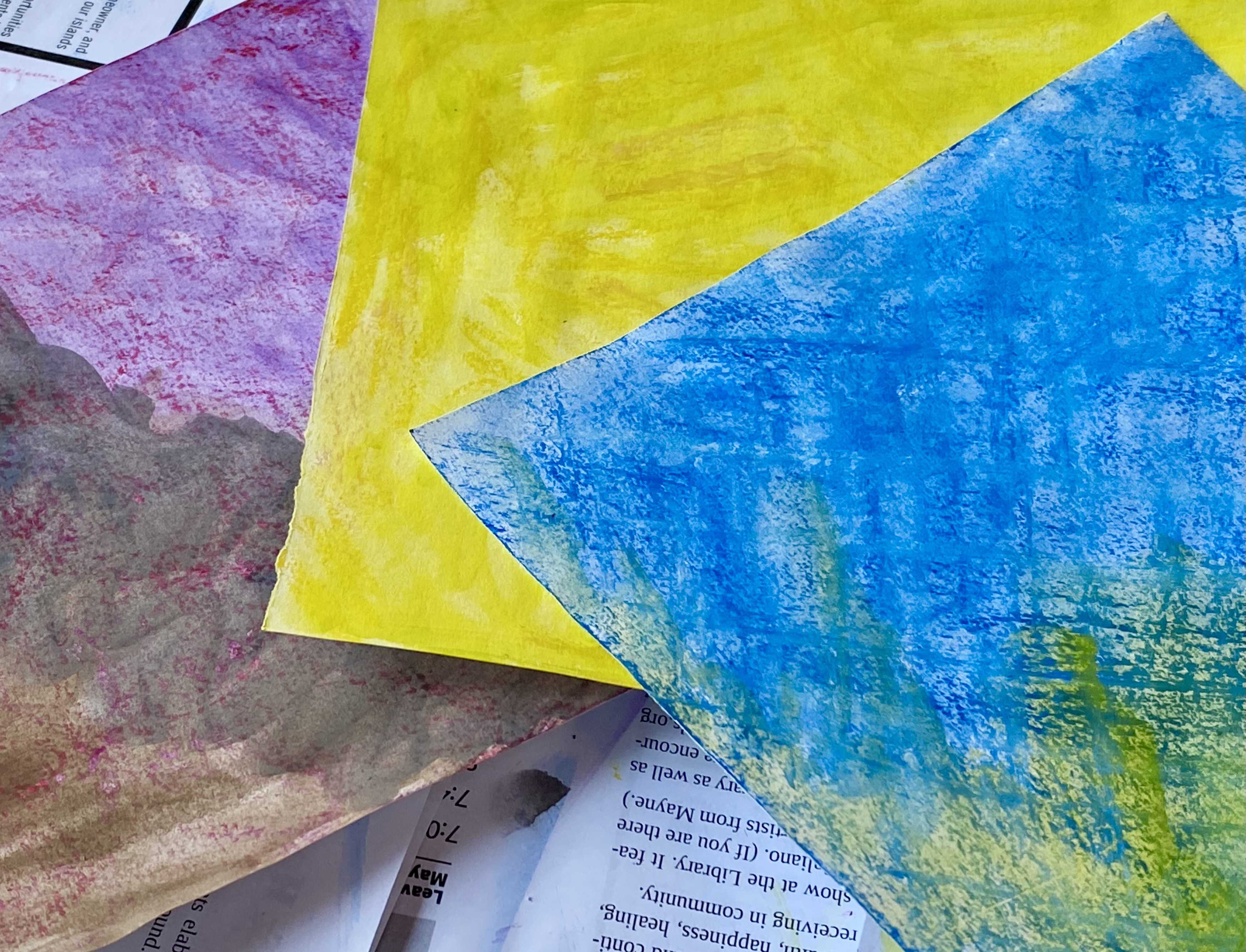
Three sheets of collage paper created by Terrill Welch. August 8, 2026.

Then I return again to my painting practice and its central role in making all challenging situations much more possible, pleasurable and endurable. This is especially true if I turn my painting practice directly towards what is challenging. In doing this, I seem to find my footing and my strength as well as my joy and pleasure with simply being alive.

These are the thoughts that came to mind as I created the collage paper, cut it up and then decided I wanted to paint instead. So, I packed up the paper cuttings and put them in a bag for another day.

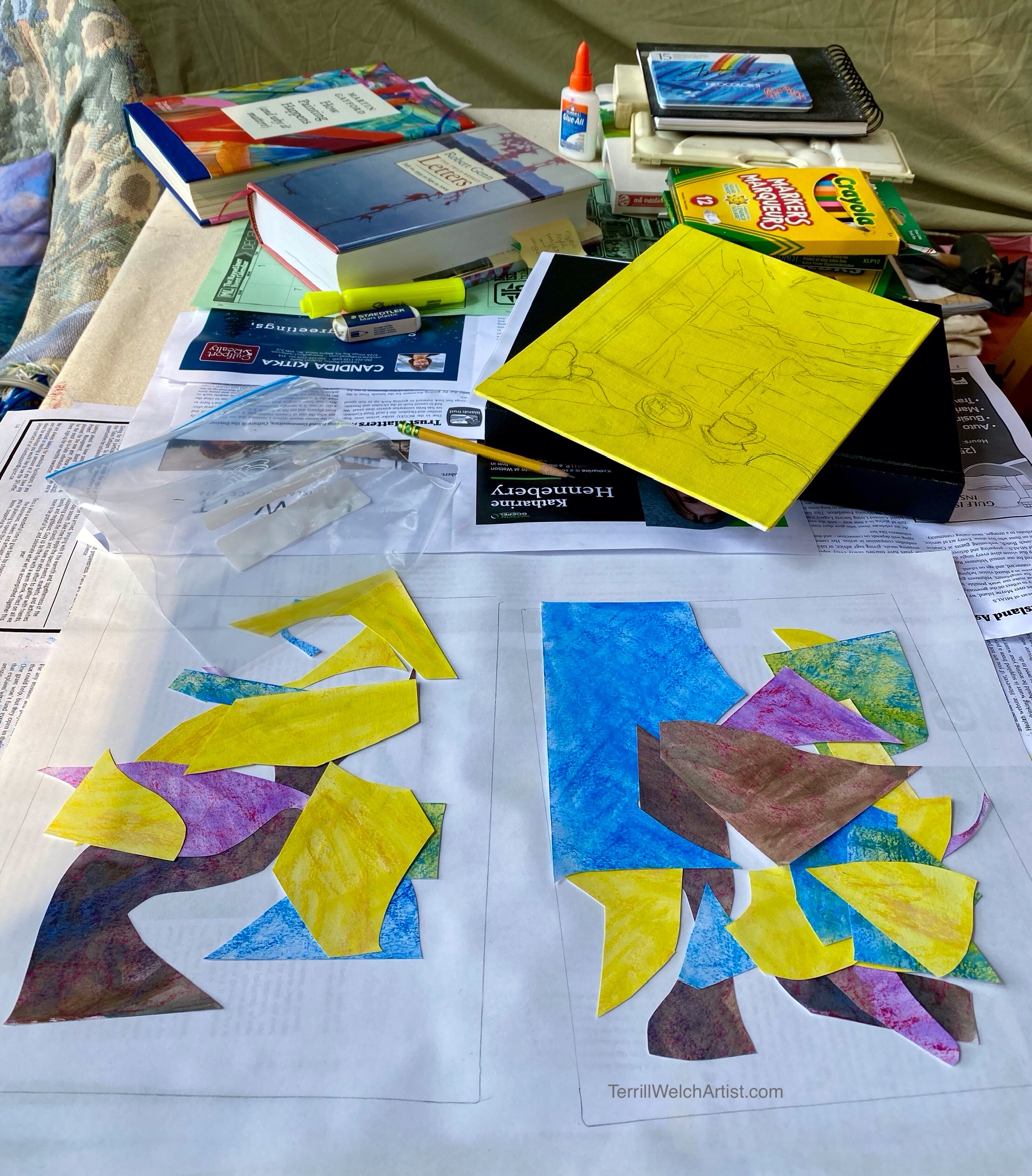
Collage paper cuttings and a sketched ready to paint in Terrill Welch’s art studio.

I expect to have much more to discover about my focus on “Close to Home” as I proceed but for now, it is time to work on a small painting sketch featuring morning coffee in my studio chair.