Harbouring Hope Painting Data Collection

Painting Data Collection 

Tuesday, 22 September 2026

Title: Harbouring HopeDate Completed: Monday, 21 September 2026
Materials: oil on linenSize: 23.6 x 27.5 inches (60 x 70 cm)

Figurative/Abstract Self Assessment Band-Scale Rating between 1-10: 5-8

This painting still has strong impressionist leaning in the reflections but it also has an overall abstract sensibility to the shapes at the top of the painting. 

Reference Gathering: 

My reference gathering was thoughtful but cut short. I hadn’t planned on painting this scene. It was just an irresistible moment, like when a dog spots a squirrel. Their reaction is predictable and almost involuntary. My leash was that my husband David needing a bathroom and the ones in the park were closed. So we packed up and headed for the ferry with me turning back several times to look at the boats in the marina as we walked along the path back to the car. Their abstract shapes formed an enticing composition that wouldn’t let go of me.

Here is one of those reference images.
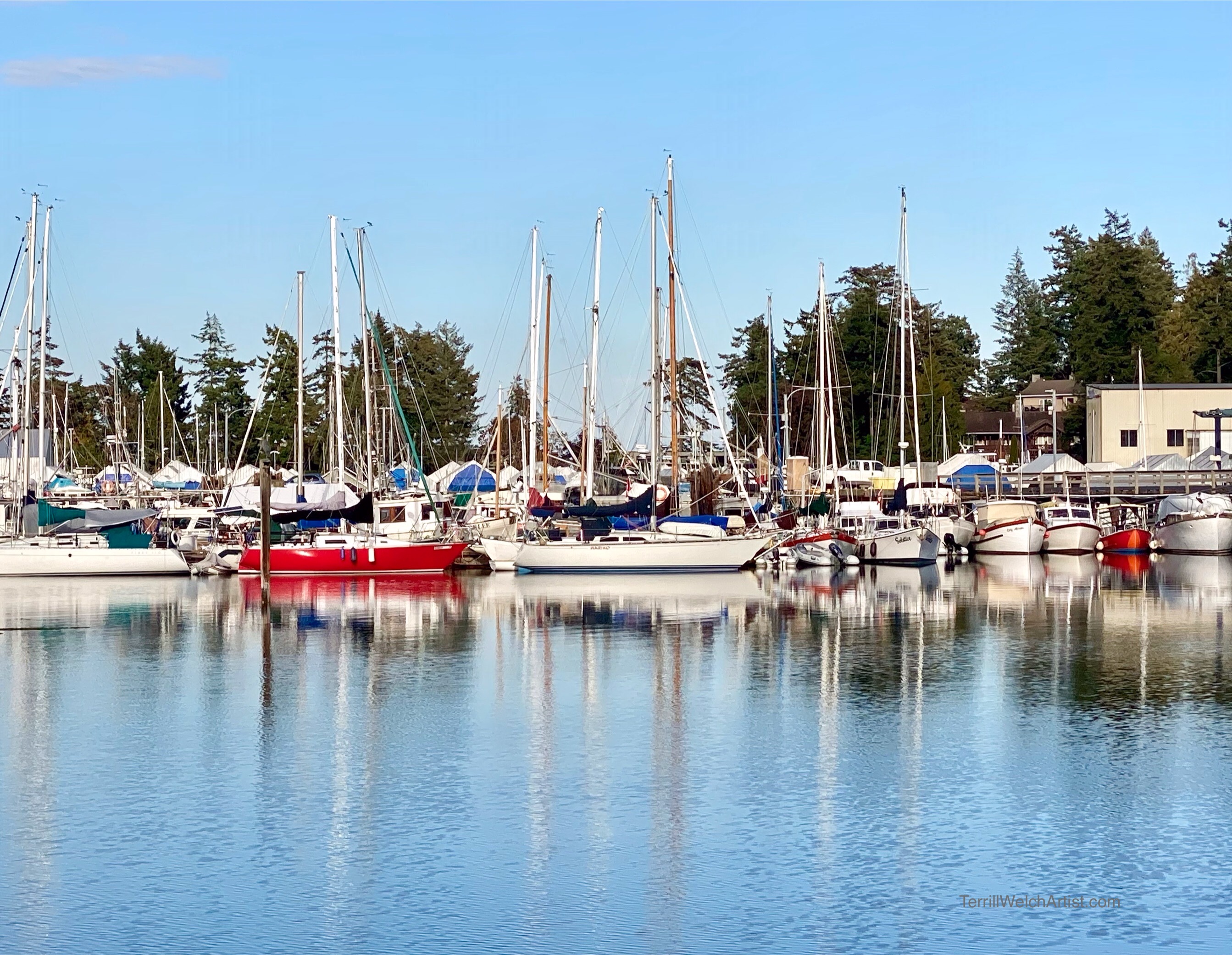
Marina at All Bay in Sidney, British Columbia mid September 2026. Photograph by Terrill Welch.

The next morning I pulled up the images and thought, if I just take this one small area here on the right, it will make a painting. That small suggestion from my mind to my heart was all it took. Now we have a painting! 

Making Process:

The making process was a process of simplifying to reach the core elements of my investigation and curiosity. 
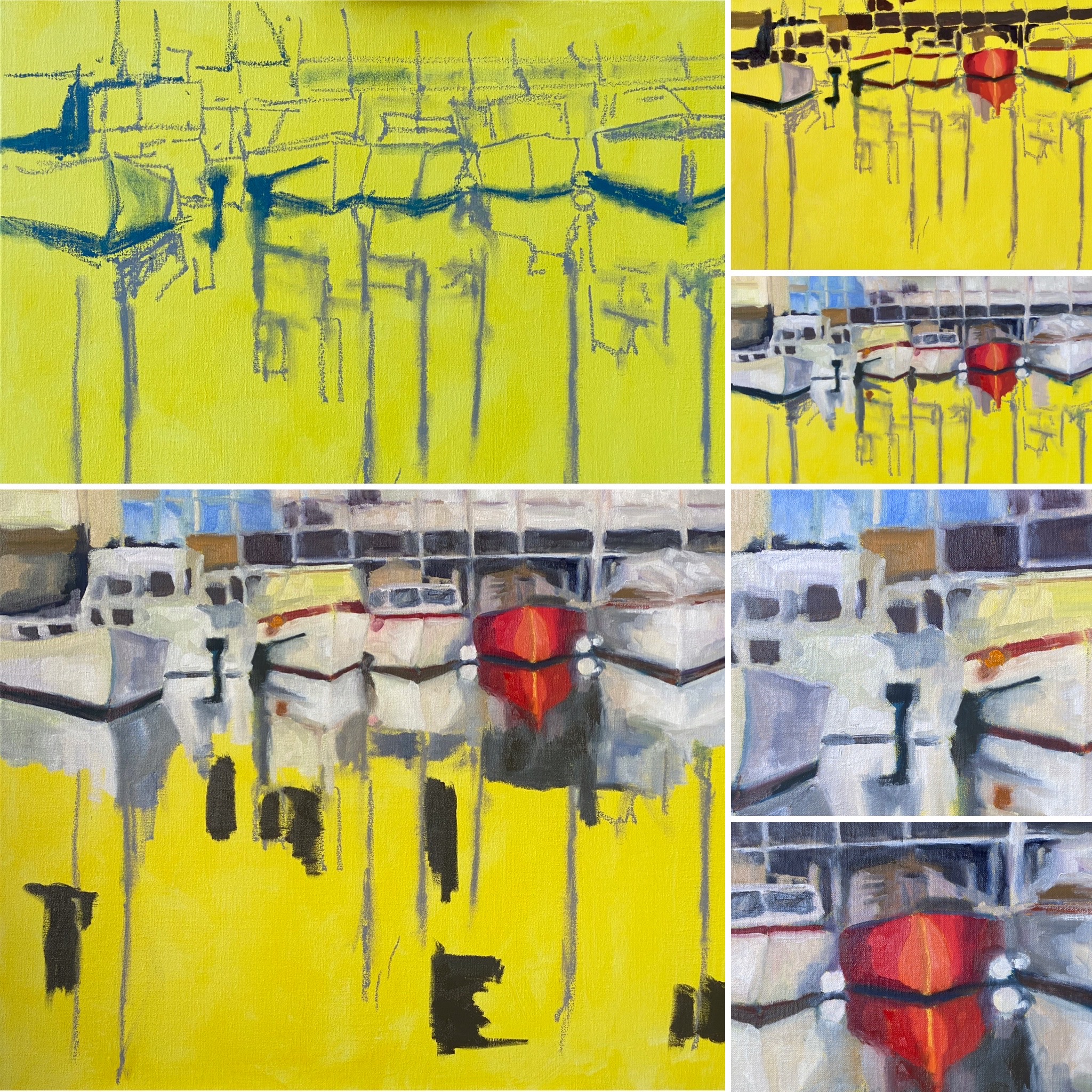
Work-in-progress on “Harbouring Hope” by Terrill Welch, 23.6 x 27.5 inches (60 x 70 cm) oil on linen. Sunday, 20 September 2026.

I took a step back and then leaned into the spaces between the shapes and the light. This gave breadth as well as depth for emotion and energy in the work. The painting took shape over a period of six days beginning with oil sticks over a yellow acrylic ground on stretched linen.

Finished Painting:
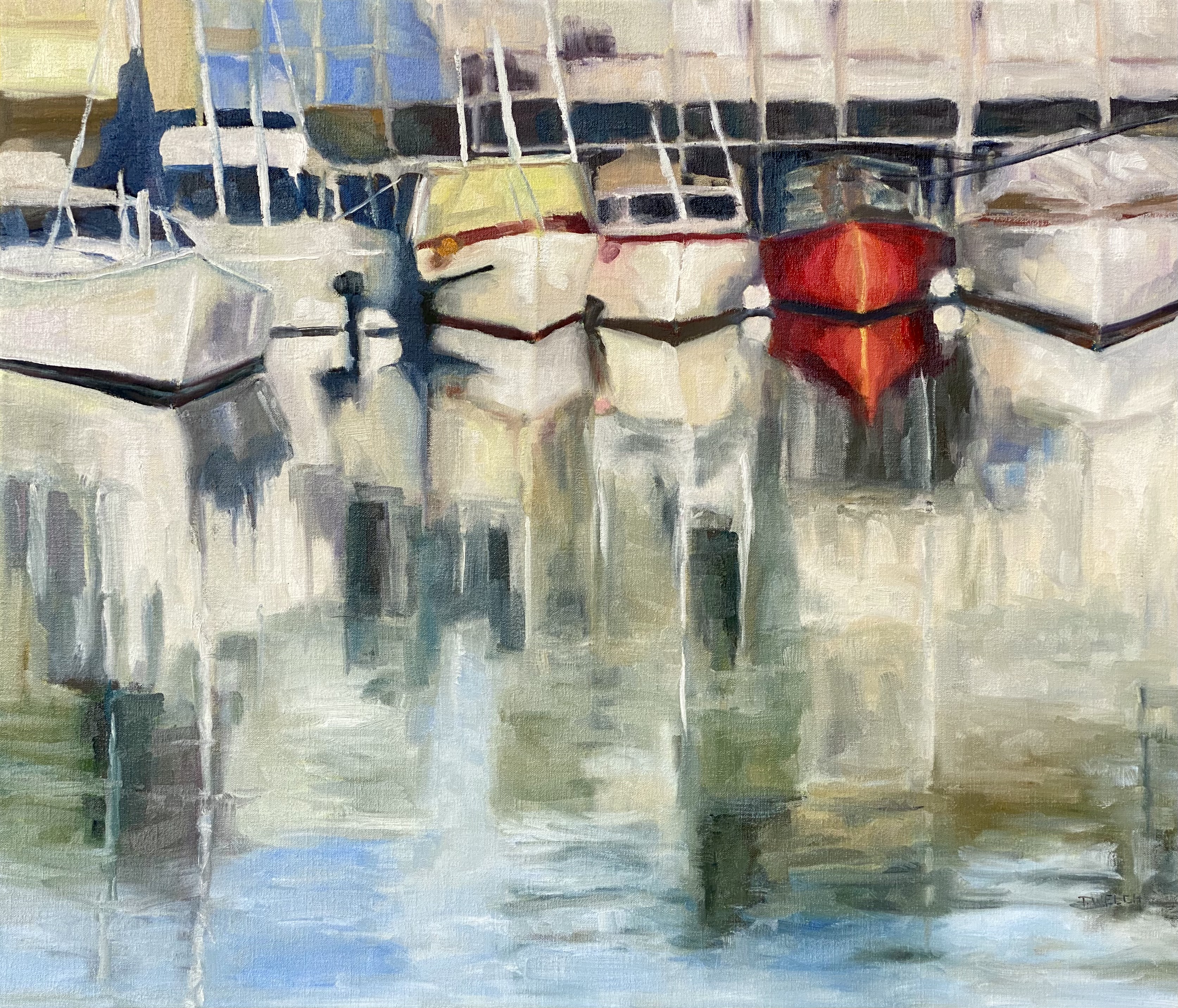
“Harbouring Hope” by Terrill Welch, 23.6 x 27.5 inches (60 x 70 cm) oil on linen. Monday, 21 September 2026.

Making Notes:

I had just come from visiting a friend in the hospital and we stopped to have a picnic dinner in the park beside the marina at (what is now called) All Bay in Sidney, British Columbia. I took some reference images because the shapes and colours felt hopeful and there was a peaceful, reflective, deep calm about munching on sandwiches and looking out into the bay. I want to investigate the big gestures and emotions in this moment without getting caught in the weeds of visual or thought preciseness.

Reflective Analysis:

The painting of boats in a harbour is an old subject and likely has been happening as long as there have been boats. The question is, can I offer something more or unique in my approach? I reach into the big abstract-like shapes of the boats to carry the emotion of the work through their soft reflections. I pushed the horizon line high and let the sea in the bay hold the sky for me. I focus on the feeling of the moment rather than the details which allows the structure of the work to read true without getting caught up in the weeds of specifics and my own thinking. To pull this off, my brushstrokes must be filled with concentration, intuition and repeatable, confident, decision making. No second guessing. Make a mark and leave it. Make another mark and leave it. Paint something out, then paint it back in with the same confidence. It is not about getting it right but knowing what must be left behind, from the first mark to the last mark. The relationship of the marks within the composition outweighs architectural accuracy. The boats may feel like they are floating in the painting but no boat maker would build them this way. The most important aspect is that the work, in my first viewer’s eyes, reads as emotionally and physically whole. 

Reflexive Analysis: 

I have been musing about how there are no shortcuts in painting as there is in life. I must bring my whole vulnerable self to the easel, every time. I must be willing to investigate and admit, at least to myself, why I paint what I paint. In this case, it is part of processing the illness and healing of a dear friend who is in the hospital. We have been friends for over thirty years and I feel we are somehow both too young to be faced with her circumstances. But in truth, age has nothing to do with it. Illness has no fixed criteria. The details are private and personal but the experience is universal to human kind. Again, my painting practice takes on an undeniable reparative or healing undercurrent that isn’t visible in either the painting process or the end result, unless I choose to share it. I don’t usually paint boats in a harbour. In fact, I know little about boating or marinas. But I do know the sun and the sea. The boats are simply supporting actors for using shapes, forms and colour to facilitate a harbouring of hope. 

Key Findings: 

There is an openness in the space offered in this paint through the boldness of the shapes. This reminds me of painting the seafloor and focusing on the close up views of the seafloor and allowing abstract elements to press against more figuratively mark making. 

Anything else: 

I like the freshness and the depth of this work. I couldn’t have stopped myself from painting this painting no matter the risks of the derivative nature of the subject. I am glad that critique didn’t create a barrier but was left as – duly noted, before I proceeded. 
Memories of Mornings by the Studio Window Painting Data Collection

Painting Data Collection 

Title: Memories of Mornings by the Studio WindowDate Completed: Wednesday, 19 August 2026
Materials: Acrylic on linen board
Size: 8 x 10 inches (25.4 x 20.32 cm)


Figurative/Abstract Self Assessment Band-Scale Rating between 1-10: 5

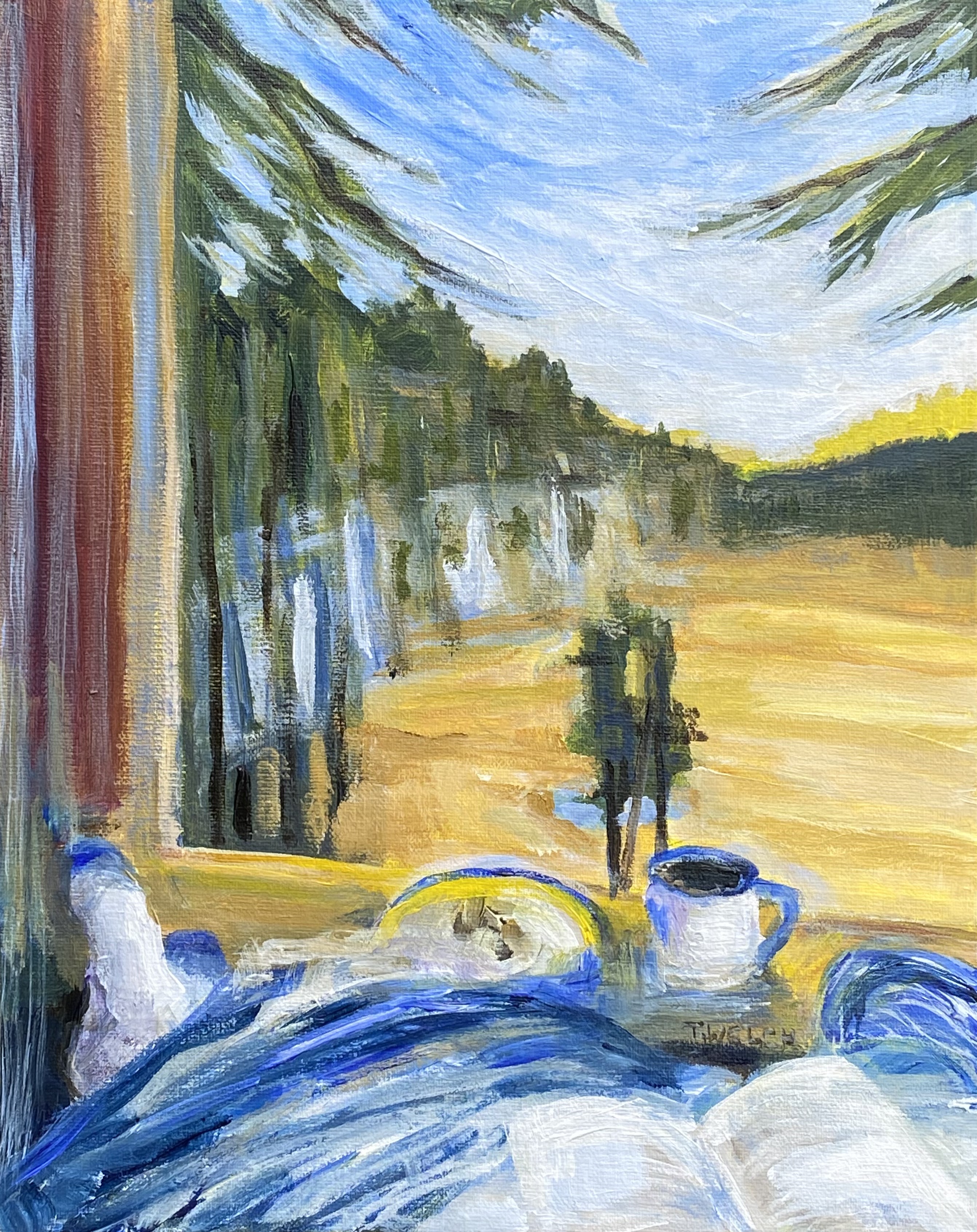
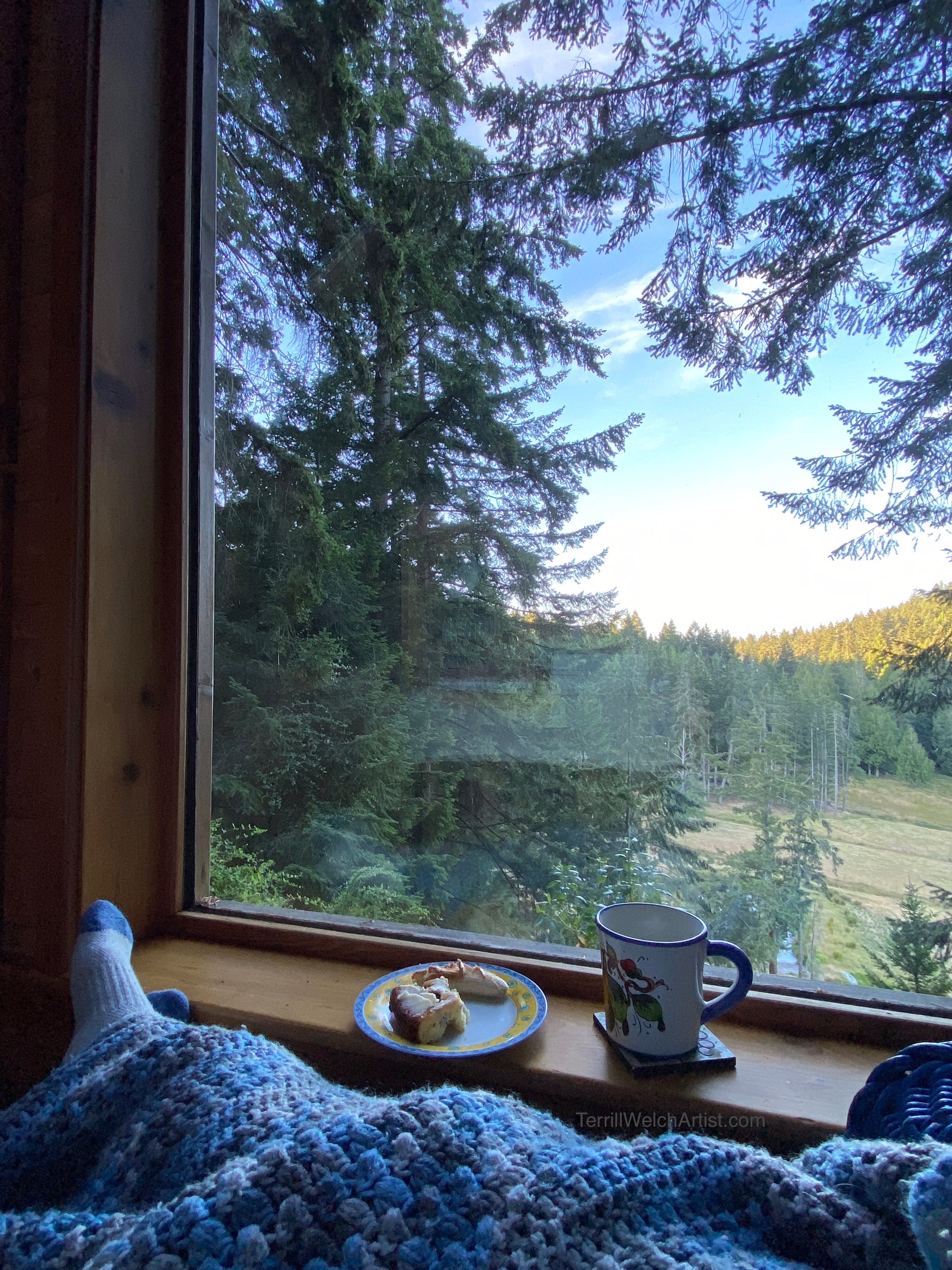
This work is a quick impressionist study. Attention has been paid to light, relationships between elements and sensory records of the fragrance of dark coffee, fresh morning air through an open window and the softens of wool socks cozying around bare feet sticking out from under the edge of a blanket. 

Reference Gathering: 

References for this study are minimal with most mark making relying on repeated mornings of similar moments that created a bank of memories. 

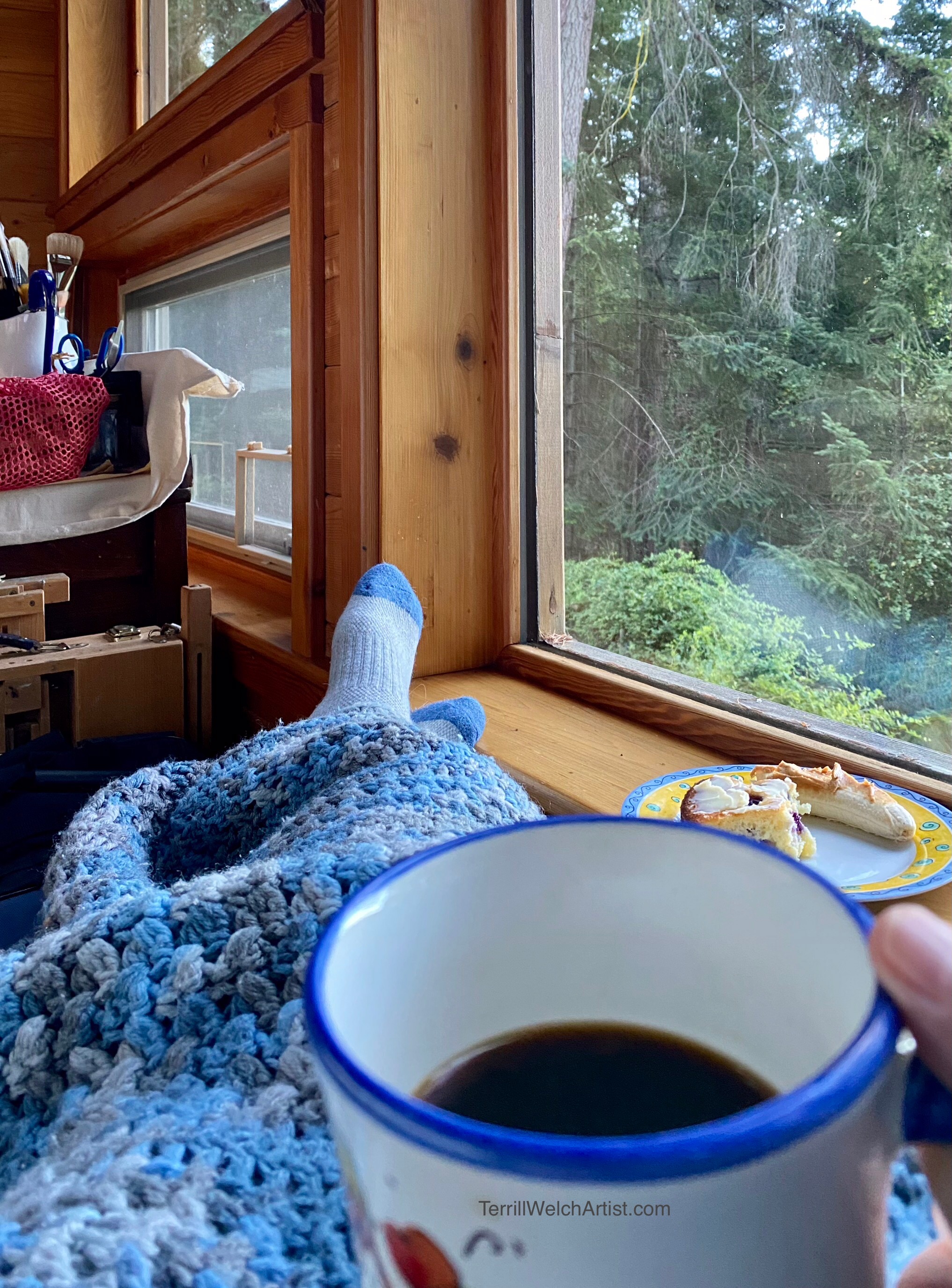
But there are two images that provide a starting point. 

Sun catching the hill as seen from the chair beside the studio window. Photograph by Terrill Welch Sunday 28 June 2026.
Mornings in the chair of the studio window. Photograph by Terrill Welch Sunday 28 June 2026.

Making Process:

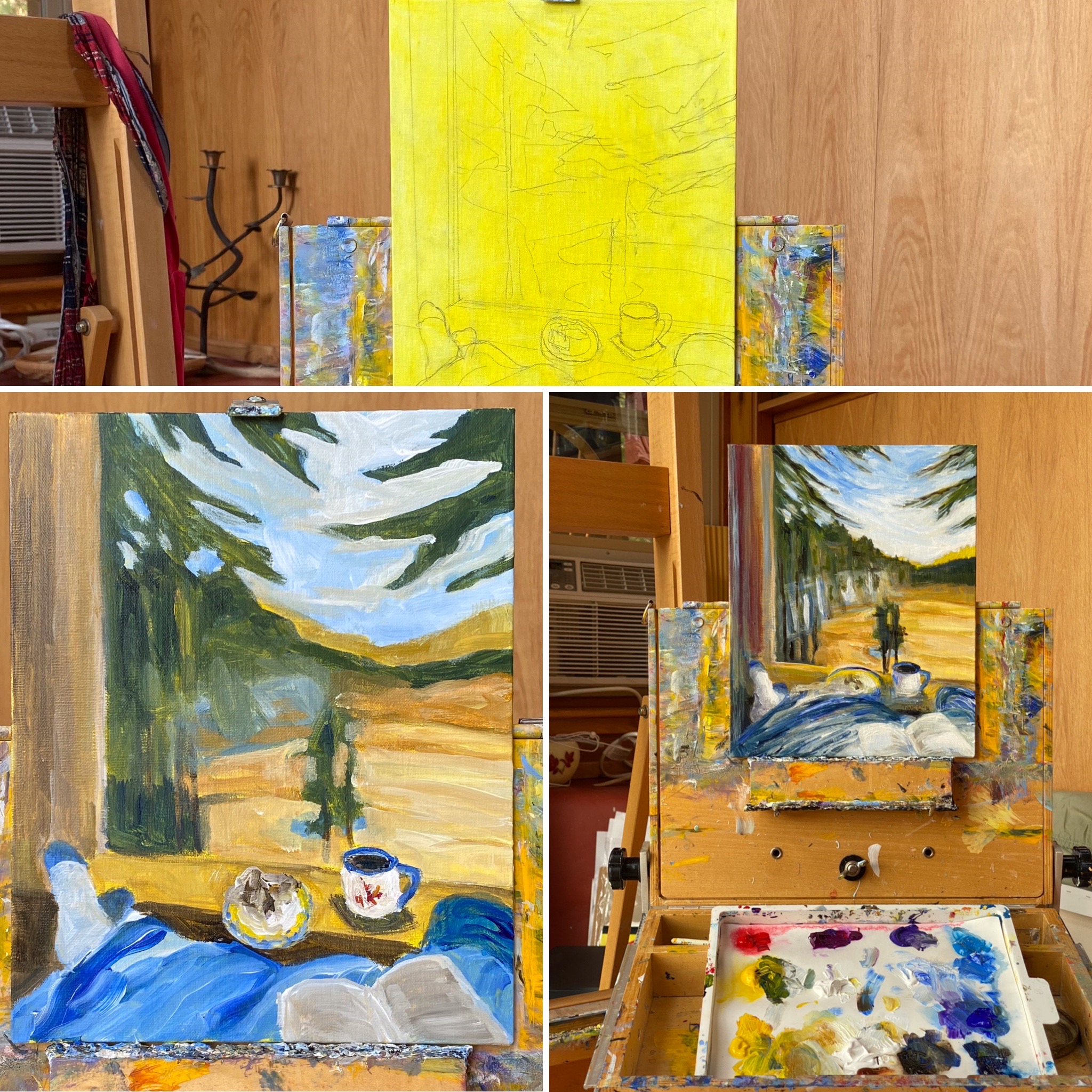
The making process is equally sparse because once I settled down to paint, I forgot to take many photographs as the work developed. But there are a few. 

Work-in-progress collage of images for Memories of Mornings by the Studio Window by Terrill Welch, 10 x 8 inch acrylic on linen board.

Finished Painting:

Memories of Mornings by the Studio Window by Terrill Welch, 10 x 8 inch acrylic on linen board. Completed Wednesday, 19 August 2026.

Making Notes:

So many mornings seated in the studio window with coffee and breakfast just like this morning. I worked from memory though there are references. My attention drifted from what I might be reading to the dark savoured bitterness of the coffee then over to where the rising sun is catching the far hill in the valley. The fields are cut and dry and a cool breeze is coming in the window next to the one I am sitting beside. There is a precious sense of optimism swinging on the branches of the fir trees. I sigh and blink my way into the day. This quick sketch is a brief reminder of something that as of yet has no words other than the importance of waking up.

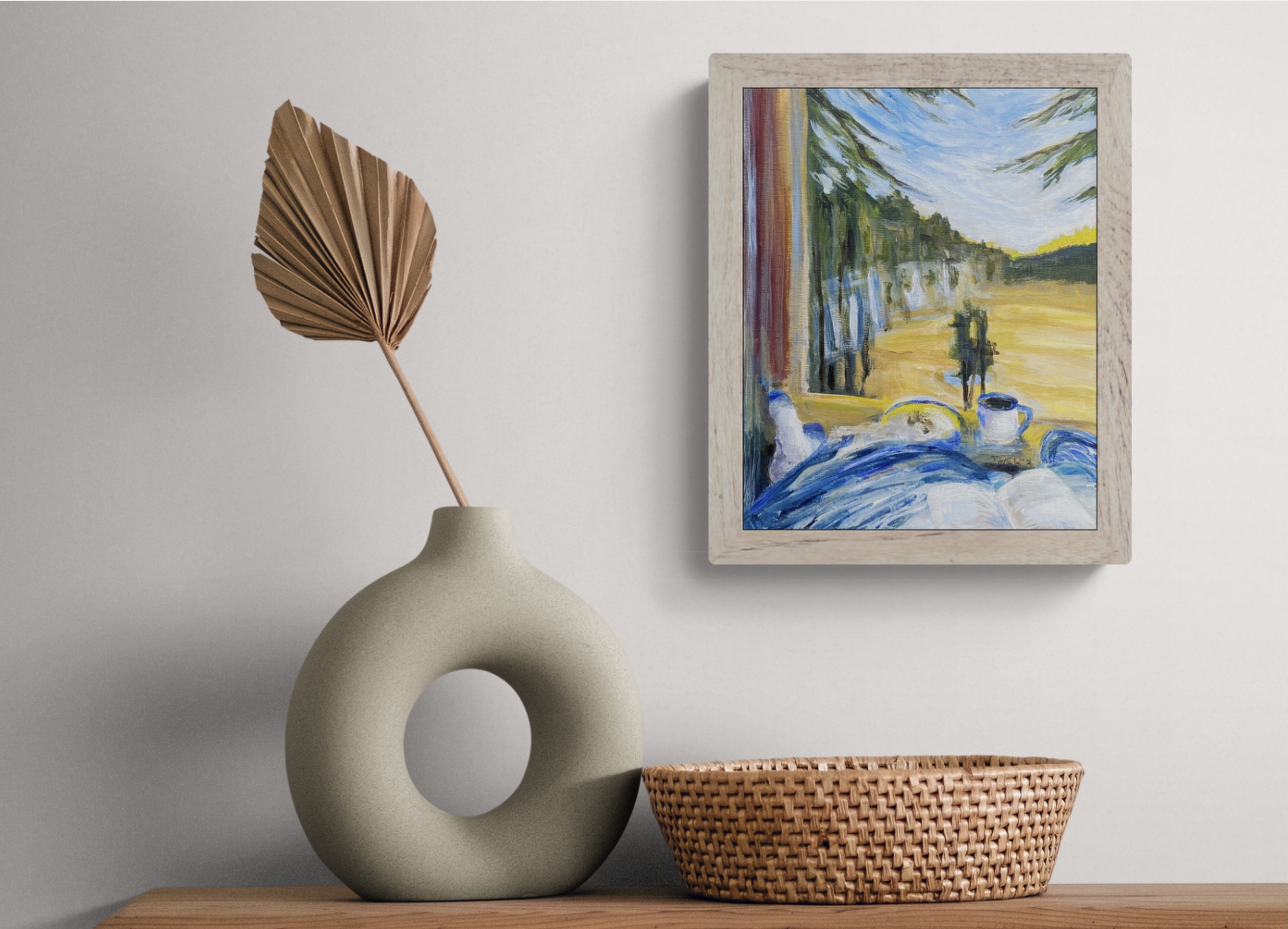
Here is a digital room view for size context. 

Digital viewing room with Memories of Mornings by the Studio Window by Terrill Welch, 10 x 8 inch acrylic on linen board.

Reflective Analysis:

Mornings have always been an important part of my day and this appreciation has deepened over the years. Though I most often rise early it is not a busy time of day. I like to wake up before others can have any demands on my time or my thoughts. Sometimes, this is only a brief ten minutes. Other times I can be gifted a couple of hours. It all feels like the intervention of chance really. I used to swear that my young children heard my eyes flutter open and then they leaped out of bed so as not to miss out on anything. Now, my partner often does the same. But there is always a chance that everyone will sleep just a little longer and I can watch the day begin, wrapped up cozy, from one window or the other. 

Reflexive Analysis: 

Strong dark roast black coffee is my morning beverage of choice and comes with a whole ritual of hand grinding (by hand, no electric whirring noises for me) locally roasted coffee beans. The beans are coarsely ground for a 30 year old stainless steel insulated French press. Once brewed, a cup is poured into a favourite Italian mug and the rest is put into a heated stainless steel thermos that takes me most of the morning to drink. This ritual is a mix of childhood references of the practices of my parents and a west coast of Canada coffee culture that started developing around about the late 1980’s, early 1990’s, while I was going to the University of Victoria with two young children as a single parent, who also worked part time while going to school full time. Now, when I sit peacefully in the art studio chair by the window, still in my pajamas, drinking my whole first cup of coffee while it is hot, without having it answer questions, sign notes for school, add a child’s birthday party coming up on the weekend to my calendar, be reminded to pick someone up after school, I feel particularly blessed. I loved parenting and yet, I am still thrilled when my mornings begin by easing into the day instead of starting at full throttle. 

Key Findings: 

When I think back, I remember one of my high school principals who picked me up while hitchhiking in our small village to the place I was living a few miles away in the rural farmlands. He was very clear that, though I had graduated grade twelve, I was going to grow up to be poor white trash. I was unmarried, pregnant with my first child and not yet 19 years old. I mean — who says this to a young kid finding her way after having made some difficult choices!? I am ever-so-glad that I simply just didn’t believe him. I have always had a strong inner self-motivating pull to problem-solve around ways to achieve whatever is of most driving interest to me. These ritualized morning coffees are the foundation for my thinking and of my organizing structures. It is when I prioritize the items written into my calendar into the order that either must be done that day or that I have the most desire to complete. It is also where I look ahead over the coming weeks and months and see what needs to be refined and it is when I measure how well I am fulfilling any intentions I might have set. This small sketch holds all of this for me. 

Anything else: 

It is usually the case that we can accomplish far more than we and others think we can. There is a cost of course and this can’t be discounted. This isn’t usually what stops us from trying. More often than not it is a fear of failure or fear of something awful happening. I have learned to ask myself during my morning coffee — what is the worst that can happen and can I live with it? What is the worst that will happen if I do and what is the worst that will happen if I don’t? If I can live with the worst in relation to the decision I most want to make, that will generally be the route I will take. Who knew a small painting study of a person sitting in a window having a morning coffee could hold so much?