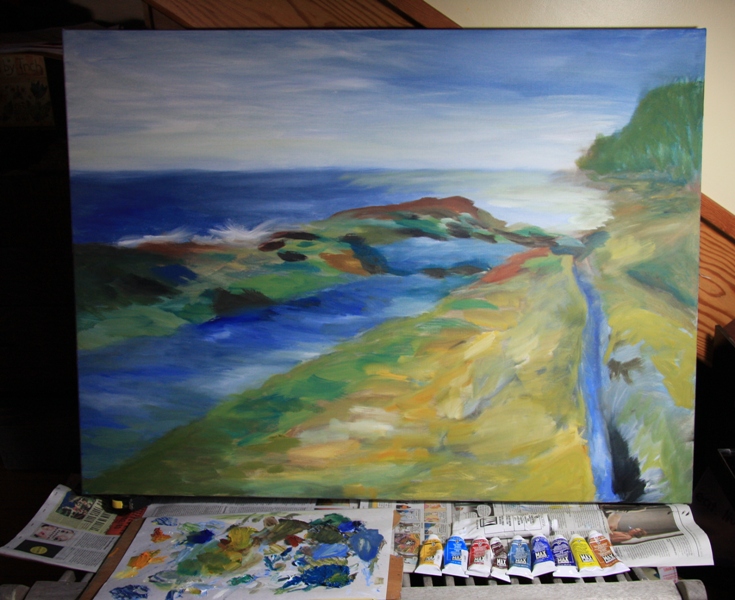
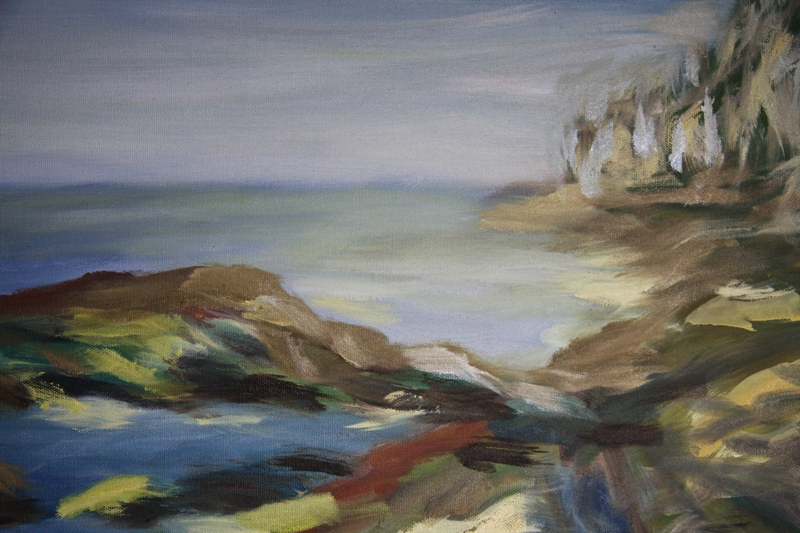
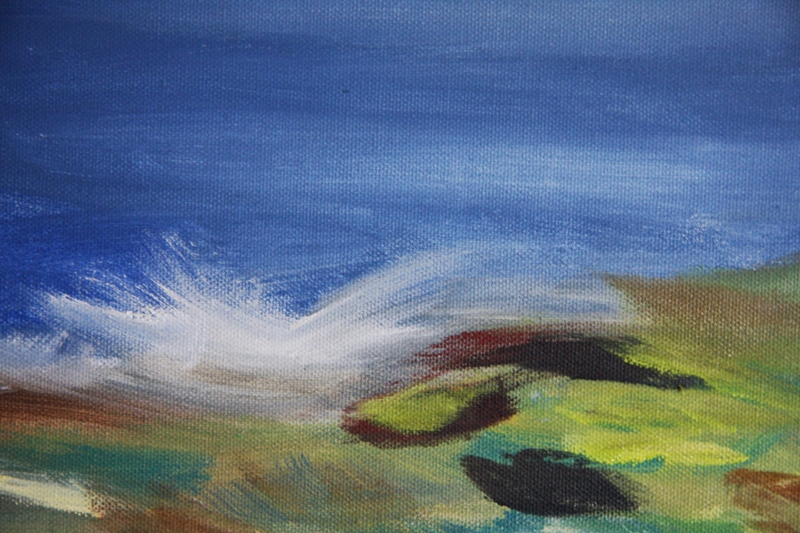
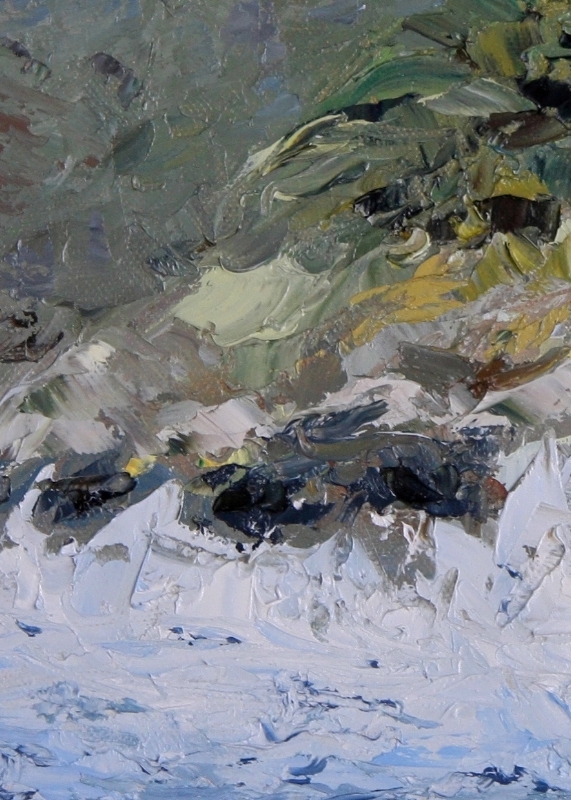
Starting with the underpainting, grab and sway the emotions of light, form and structure without pausing to add punctuation. Allow your brush to skip and fly across the canvas in bold strokes of unrefined passion and fragments of expression. Do not edit. Please do not edit at this time. Leave it be raw and calling.

There will be time later to decide how much to define. A paragraph or a single word will become clear only after this first brush with expression.
These are my guiding demands of self as I reach out to choose a brush, squeeze out the oil paint, set the canvas and I stand squarely to begin my painting day — a day that began with reading Laurie Buchanan’s post “Painting a Word Picture”
SEED: Laurie asked the question: Who is your favorite word painter? This got me to thinking about my relationship between painting, photography and writing. My reply is as follows:
My first choice is Colette and in particular a passage from BREAK OF DAY (1928)
“He bent his bare body, polished by sun and salt. His skin caught the light, so that he was green round the loins and blue on the shoulders, according as he moved, like the dyers of Fez. When I said “Stop!” he cut short the thread of golden oil and straightened himself, and I laid my hand caressingly for a moment on his chest, as one does with a horse. He looked at my hand, which proclaims my age — in fact it looks several years older — but I did not withdraw it. It is a good little hand, burnt dark brown, and the skin is getting rather loose round the joins and on the back.”
My second choice is Elizabeth Rosner and a short piece from BLUE NUDE (2006)
“He imagines this: cupping her breasts and testing their weight in his hands to be sure they fit when his mind has already predicted it and his palms already tell him Yes. To press himself against her, to fold themselves together seam to seam, the way certain insects mate into one flying being.
He imagines them ascending.
The body exists in space, he says to the class. There is something solid she is resting on; that shape is part of what makes her stand the way she is standing; her feet are on the ground, or she is sitting on a chair, or leaning against a wall, or reclining on pillows. The body is part of the world. Do you see?”
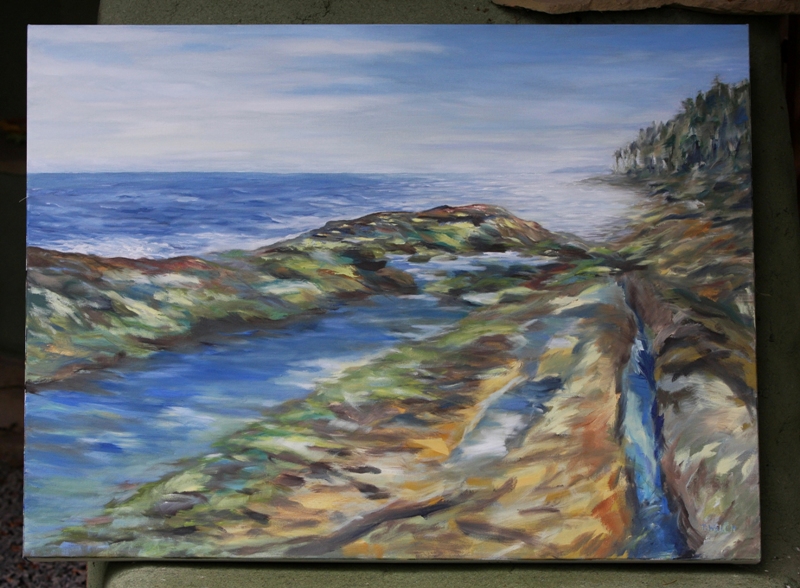
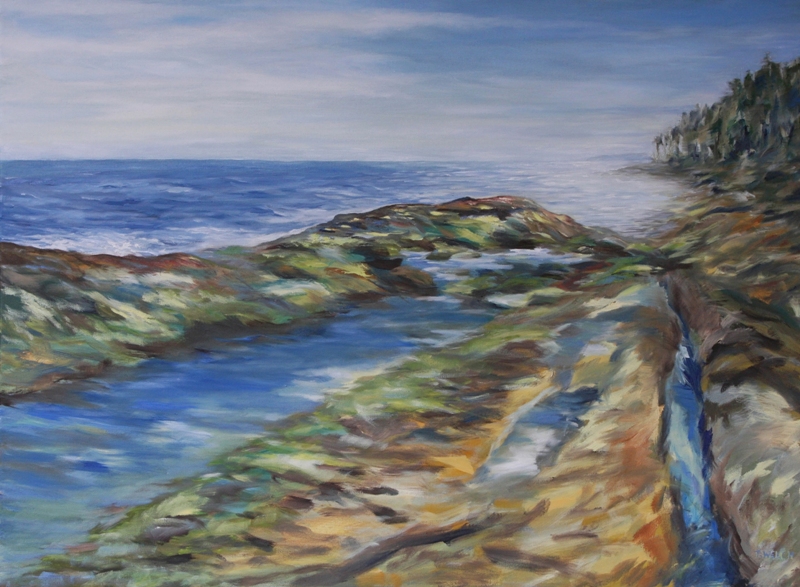
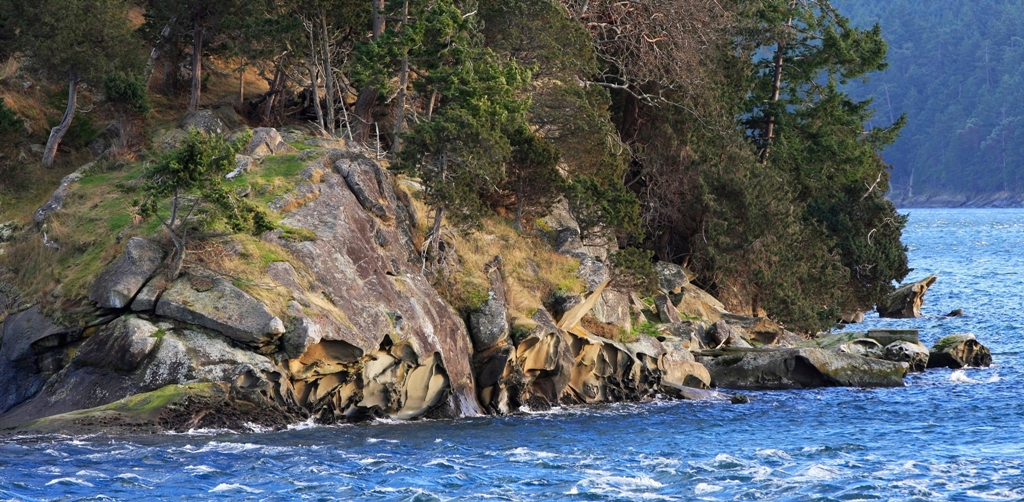
I have purposefully chose non-landscape or seascape passages. I wanted to share how word pictures can link our internal worlds to our external observations – that this combination is how we “see” and experience what is around us. Both of these writers do this extremely well as does the passage you have shared with us Laurie. As an artist both as a painter and a photographer I attempt to “write” this language in my visual work. Sometimes I add just a dash of words to assist me – word pictures combined with pictures expressing words. All forms expression – impressions left for the viewer to complete.
I now come back into my studio space and prepare to pick up my brushes.
SPROUT: Who is influencing your creativity today?
© 2012 Terrill Welch, All rights reserved.
Liberal usage granted with written permission. See “About” for details.
Purchase photography at http://www.redbubble.com/people/terrillwelch
Creative Potager – where imagination rules. Be inspired.
From Mayne Island, British Columbia, Canada
Terrill Welch online Gallery at http://terrillwelchartist.com



















 Creative Potager