Orange day

The garden is watered. David is making breakfast consisting of plain organic yogurt, local strawberries, blue berries and some lovely grapes and banana. I will add 3 tsp. of hemp seeds to mine. He will add a bit of organic blue agave to his. I expect that my writing will be interrupted to partake in his efforts. But until then, let me tell you about today and how it has become an orange day. You see on Tuesday our friend Laurie received some bad news. She didn’t tell us what it was but she reassured us that no one was hurt. Today she has written a blog post “Ice Water in my Veins” about her situation. After sending along sending calming and resilient energy, I went about my day. What showed up was orange. Not just any orange but a particular orange.

Oh! My breakfast is ready. I shall be back. There! I had a few delicious bites and now I will continue and finish the rest once I get this post up.

First, there were the two underpaintings I did in the afternoon. Here is an example of one.

There is a shadow on this 18X24 inch canvas but I chose to keep and use the photo anyway and I think you will see why shortly.

Then there was a particular calendula in the garden that seemed to be begging and pleading with me to take its photo. We were coming back from a walk at the beach where I found nothing that was particularly inspiring. As we closed the gate, there was the calendula… saying “I’m here! Take a photo of me!” So I did.

By the time I was done processing and editing the images into what was most pleasing to me, I realize it had been an orange day… a particular colour of orange kind of day.

As you can see, the shadows on the underpainting are creating the same gradient in colour as the shadows in the flower. I can tell you that thought of Laurie and “her news” off and on all day. Each time I would focus calming resilient energy her way. We did not speak to each other or exchange emails. There didn’t seem to be a need. She slipped back in yesterday to the “Sitting” post and said she was feeling much better and would post more on her blog today. So whether the orange is related to my focused intention or not I really have no idea… but I am suspicious that it might.

Laurie knows about the properties or meanings associated with colours so she may drop by and tell us what might be associated with this particular orange. We shall just need to wait and see.

Sprout Question: What colour or texture is pulling on your creative strings today?

© 2010 Terrill Welch, All rights reserved.

Liberal usage granted with written permission. See “About” for details.

Purchase photography at http://www.redbubble.com/people/terrillwelch

Creative Potager – where imagination rules. Be inspired.

From Mayne Island, British Columbia, Canada

Squishy hug of thanks WORDPRESS

Thank you WORDPRESS for your user-friendly interchange and freely hosting blogs that can become small virtual communities such as Creative Potager has become. A big squishy, passionate hug is coming your way through cyberspace!

As of this hour today the wordpress Creative Potager blog has met a new milestone. Since its first post, on Dec 27 2009, the Creative Potager blog has published 102 posts and 1,605 comments AND (drum roll please) has had over 12,000 views. I am doing the happy dance (ta, ta, ta) all around the social networks with friends, casual acquaintances and passionate lurkers who are Creative Potager regulars.

Thank you especially to those who regularly respond to the Sprout Question that accompanies each post. Thank you to all of you who comment above and beyond the Sprout Question.  Thank you to all readers who lurk in the shadows. Your views are counted. You are part of the Creative Potager community.

My life and creativity is richer because of each and every one of you. Thank you, thank you thank you.

May the sun continue to rise, in all its glory, over our creative inspiration.

I decided we need a little visual toe-tapping to help us celebrate offered up by Andy the Daft Hermit from the Black Bus in the Highlands of Scotland. The music starts about 30 seconds in so wait for it and enjoy Andy’s photography video…

With much humble appreciation.

Terrill:)

Sprout Question: If WORDPRESS is the host and Creative Potager the post, who are you?

© 2010 Terrill Welch, All rights reserved.

Liberal usage granted with written permission. See “About” for details.

Purchase photography at http://www.redbubble.com/people/terrillwelch

Creative Potager – where imagination rules. Be inspired.

From Mayne Island, British Columbia, Canada

Opening Up

In the deep peace of early dawn I wonder, dear readers, have you already seen enough images of flowers? I think you may have had enough. Yet, that is what I am working on – texture, colour, and composition of flowers blooming in my garden and other gardens.

How do I experience this African daisy?

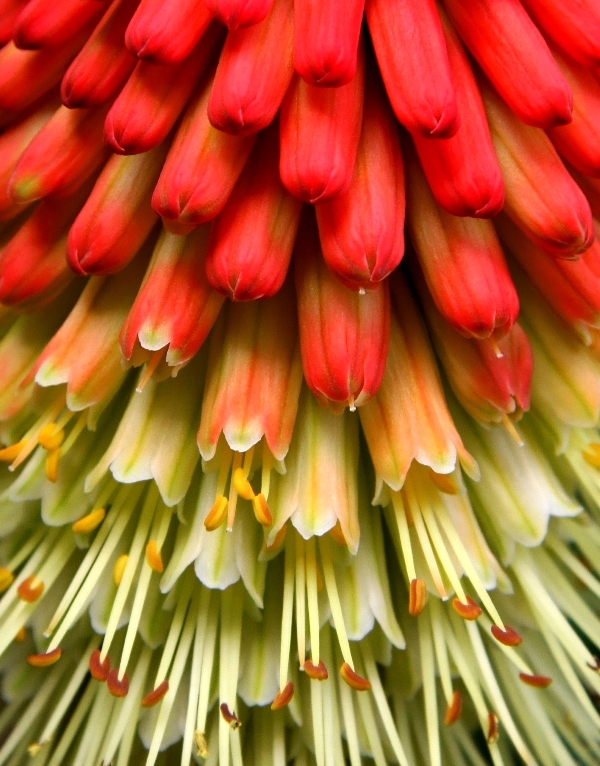
Or this red hot poker?

Mid-summer sun does not inspire me to take photos of great vistas but the bright petals of flowers draw me close to earth’s surface, dancing provocatively with me.

Waves of light caught in gently moving petals bring my nose close. My eyes check for small guests before framing the shots.

What is it about the tight fist of a day lily that gives us the distinct impression that it will open tomorrow?

Rustling brush of wind whispers through the soft foliage… I must wait. There. Now slowly squeeze the shutter.

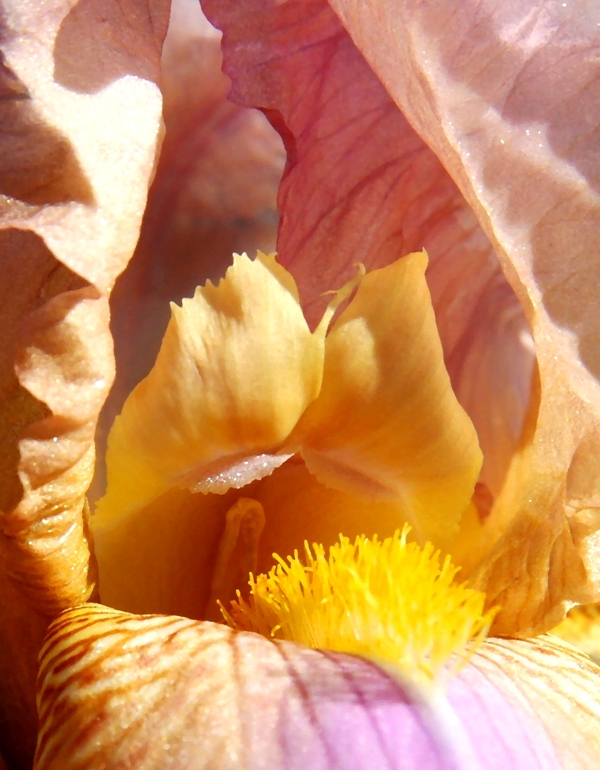
How many times can we look down the throat of an iris and still come away mesmerized by its intricate and sensual beauty?

But also I say this: that light

is an invitation

to happiness,

when it’s done right,

palpable and redemptive.

Inside the bright fields,

touched by their rough and spongy gold,

I am washed and washed

in the river

of earthly delight —

and what are you going to do —

what can you do

about it —

deep, blue night?

From Poppies by Mary Oliver

Sprout Question: What subject has most recently besieged your creative will?

© 2010 Terrill Welch, All rights reserved.

Liberal usage granted with written permission. See “About” for details.

Purchase photography at http://www.redbubble.com/people/terrillwelch

Creative Potager – where imagination rules. Be inspired.

From Mayne Island, British Columbia, Canada
New Paint Box


View and purchase full resolution image here.

Do you know that excited tingle you get with a new writing pen or journal or new lens for your camera or a new box of paints? Well, I found such newness where it had been all along – in my Paintnet.com program. I did the unthinkable and digitally painted on one of my photographs. Ahhhuhhhh! Yes, I can hear your gasp but it was so much fun… kind of like writing on the dining room wall with coloured felt pens (and much easier to clean up).

I was inspired by the work of Martha Marshall who creates digital art and collage as well as abstract paintings and regular collage… sometimes even using composted papers. Martha is a prolific artist with an outstanding blog “An Artist’s Journal” that captures the essence and strength of her keen eye for design, texture, patterns and composition. I encourage you to drop by for a browse and read.

Sprout Question: What is the latest new tool or technique you have used and who inspired you?

© 2010 Terrill Welch, All rights reserved.

Liberal usage granted with written permission. See “About” for details.

Purchase photography at http://www.redbubble.com/people/terrillwelch

Creative Potager – where imagination rules. Be inspired.

From Mayne Island, British Columbia, Canada

Uniquely Common Place


View and purchase full resolution image here.

An image search in Google for “blue iris” brings up 4 million possibilities. Why would I bother taking a photo of a blue iris? Why would I bother to show it to you? Because this iris captures a moment near the end of a day by the lighthouse on Mayne Island. This iris reminds me of a moment that was filled with the beauty and wonder of the world as I grappled with the devastating BP Gulf of Mexico oil spill. I was feeling overwhelmed with hopelessness about the extent of this tragedy. I was angry at humanity for its greed and stupidity. Then I saw the blue iris. I stopped and drank it in, and as I did, all my fears melted down into the ground beneath my feet. I had this one moment with this blue iris, a moment that stilled my anger – a moment that allowed a sad sigh to be released and replaced with a soft smile as I traced the spiral curves of the intricate blue petals with my eyes.

When we think about how many sunsets have been painted or how many survival stories have been written or how many love songs have been sung, or how many photos have been taken of babies and old people we could ask – do we need any more? But we don’t or at least I don’t. I don’t because these common place moments are part of humanity’s mind, body and spirit motif. I can always look at an iris, baby or the weathered face of an elder with fresh eyes. I can always read about a hero having survived a war and a trip over the Himalayas with an open heart. I can always listen to a love song with new ears.

Yet when creating, we are encouraged to offer something new, something fresh… something that has never been done before. How can we do this when these engaging topics have been presented and consumed some 4 million times, like the blue iris above? I believe the answer lies not in the frequency of an old tale but in the precise uniqueness of its moment of telling. There are no two moments that are the same. Trust that if you are present to the creative moment you are in that is all that is required. You will see, feel, hear, smell and sense your subject in the uniqueness of that moment. Moments are temporary. Little lasts from one moment to the next for us to revisit. That is the nature of living. As creative beings we can create, capture, write and sing as if this is the only moment there is… because it is. There will be no other like it.

Now there are four million and one images of a blue iris in a Google search.

Sprout Question: What is your favourite work by another about a topic that is common place?

© 2010 Terrill Welch, All rights reserved.

Liberal usage granted with written permission. See “About” for details.

Purchase photography at http://www.redbubble.com/people/terrillwelch

Creative Potager – where imagination rules. Be inspired.

From Mayne Island, British Columbia, Canada

Quiet Grace


View and purchase full resolution image here.

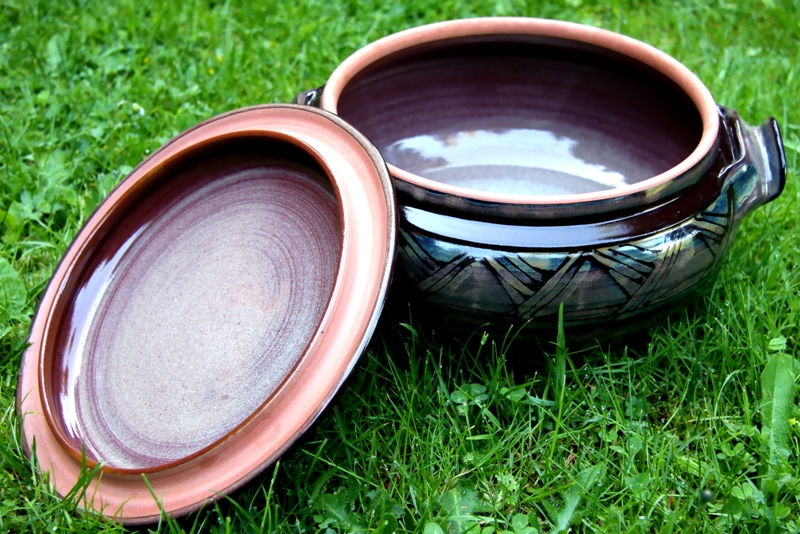
Often it is the quiet grace of a scene, individual or object that draws me in. There will be brighter hues in the evening sky, or a more colourful character at the cafe or a shinier pebble on the beach, each providing a flash of engagement. They are not the ones that hold me. I will be waiting for the softer moments to appear – ones that I can linger over and savour. The sunset in Dinner Bay above is a perfect example. And so is this pottery pot.

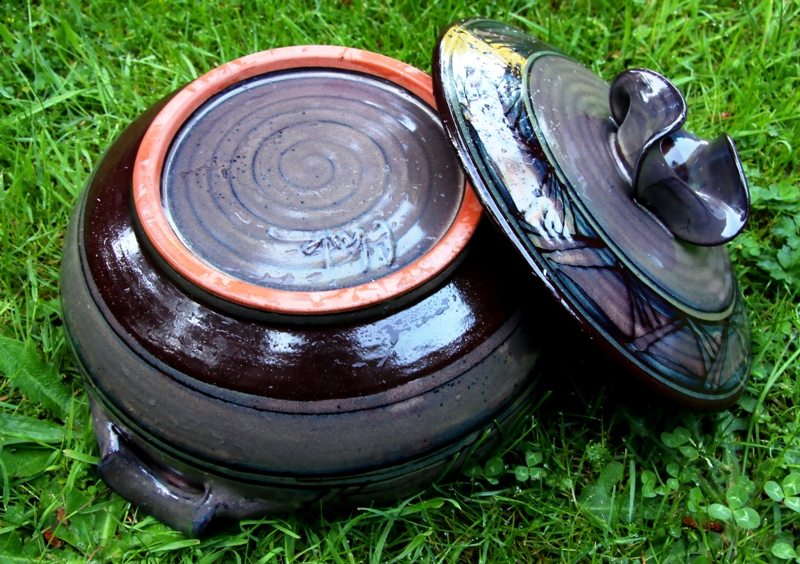
When you see this lovely pottery pot on the shelf with other more brightly coloured cousins it may be tempting to pass it by. But all you would need to do is pick it up to know and see its unmistakable beauty and quality. As with many of the potter’s pieces, it is multipurpose and can be used to cook a small roast, chicken or bake a stew, casserole or beans.

Just look at the detail on the lip of the lid which fits smoothly onto the pot.

Here is a dew-covered snapshot of the bottom. Are you smitten yet?

Mayne Island Quasimodo Pottery creates unique, extremely high quality craftsmanship and functional art in its pottery pieces.

Of course, there is no point in having a pot like this without a good recipe for homemade baked beans. This recipe is from my mom and given to her by her mom. It was my favourite dish as a child and I used to request it for my birthday dinner.

Homemade Baked Beans

1 lb dried beans (pinto beans)

1/2 tsp dried mustard

2 tbsp dolmolso (dark) molasses – I use about 3 tbsp with another tbsp maple syrup or bit of brown sugar but it is a matter of taste and what kind of pork you use will change sweetness.

A piece of unsliced bacon, salt pork, smoked pork hock, ham bone, (or beaver tail if that is all you have)

1 small onion

2 stalks celery (and I add a couple of carrots)

black pepper to taste

*Note: don’t add salt until partly cooked and tasted because of salty pork

Cover dried beans in lots of water add a dash of baking soda and soak overnight. In the morning, rinse beans add fresh water and simmer for about an hour on top of the stove. Then put beans in roaster or bean pot with other ingredients and enough of the liquid to cover. Bake at 250 degrees until done – probably will take all day. Add water if and as necessary – very important when using a roaster as beans tend to dry out more easily than in a bean pot.

This pot of beans was served with fresh wholewheat sourdough bread.

Sprout Question: How would you describe what attracts you in creativity?

© 2010 Terrill Welch, All rights reserved.

Liberal usage granted with written permission. See “About” for details.

Purchase photography at http://www.redbubble.com/people/terrillwelch

Creative Potager – where imagination rules. Be inspired.

From Mayne Island, British Columbia, Canada

Searching for lost and soft edges


When we see, we see around corners because of our rapid eye movements, our moving feet and bobbing head… and because we touch things.

Tuesday’s post “Seeing and Creating” talked about how the brain builds a visual field using rapid eye movement to create the image we are seeing. Some of the information that the brain uses to build an image comes from a history of spatial measurements that we have gathered through touch.

Seeing takes more than our eyes. We must learn spatial relationship, specifically our spatial relationship to other objects. We discover how to see where things are through practice using our hands and feet to touch and move around our world. Babies reach for our faces. Children will crawl, climb, run and jump with varying degrees of success as their brains and bodies learn to coordinate the distances of time and space. Our brain gathers and reuses these measurements in combination with information received from our eyes to provide context and relational information about what we are looking at. This complex relationship of gathering and building our visual field happens constantly and rapidly. Most often we are not even aware of the process.

However when we are creating it is helpful to understand and consider this information in our work. Some of our work in building a visual field will happen intuitively.  In fact, many situations a lot of our work in building a visual field will happen intuitively. We won’t know why we at first place a certain word in a particular sentence or why we paused the music on that particular note or why we made that particular mark off on the left side of the page or why we decided to include a particular boulder in our photograph. Mostly we just do what we do.

We can strengthen our work by increasing our conscious ability to build a visual field. A current practice of simplifying photographic images through noise reduction and sharpening and taking out what is not adding to the image is one way to play with how the visual field is built in the photograph.

Practices of adding, leaving or taking away in our creativity are not absolute creative positions but a tension we hold during the process of creating. It is in searching for lost and soft edges that I find I can most consciously building a visual field in my photography, painting and writing.

One tool or exercise we can use is to make marks or write words around your desired subject until it “appears” in your work. This helps us discover what clues or cues in the surrounding area are supporting our ability to see. In photography I do this by placing my desired object in various off-centre relationships in the frame. I change the height I take the image or the distance from the subject and so on.

Sprout Question: How do you know when less is no longer more?

Note: Here is a great reference I discovered as part of researching for today’s

The Senses of Touch: Haptics, Affects and Technologies by Mark Paterson (2007)

Also here is an online article that is also helpful – Eyes and Hands: The relationship between touch and space http://people.exeter.ac.uk/mwdp201/space.html

A question I can not answer is how people without use of hands or ability to walk develop spatial relationships in building their visual field. Does anyone know the answer or have a resource?

© 2010 Terrill Welch, All rights reserved.

Liberal usage granted with written permission. See “About” for details.

Purchase photography at http://www.redbubble.com/people/terrillwelch

Creative Potager – where imagination rules. Be inspired.

From Mayne Island, British Columbia, Canada
Seeing and Creating

“Bee in salal blossom” View and purchase full resolution image here.

Yesterday, I discovered a bookmark in my memory that gave rise to a set of questions, when I came across some notes from May 16, 2007 about building the visual field that I had made in an art class taught by Glenn Howarth. The following questions arise from my musings about these notes and the use digital and photoshop tools to create images.

What is this passion we have for cleansing images of anything less than perfect?


Can it possibly damage our ability to trust our viewer to see?

Let me explain, as best I can, without taking us too far down “the science of seeing” rabbit hole. When we “see,” the brain needs to imagine most of our reality through a system of expectation. This is because the human eye has only a 15 degree visual arc of acuity or sharp high-resolution colour visual field. We commonly believe that we “see” everything as if it were in this a 15 degree visual arc called fovea vision. This is not true. Our human eye must build a visual field using rapid eye movements and short-term memory so the brain can “create” the image we “see.” Most of the rest of our visual field has about 50 percent acuity and 50 percent colour perception with the far reaches of our peripheral vision seeing only movement in black and white.

Photographs like the bumble bee in a sala blossom image above hold more information in acuity than our eye actually can see at one time without using rapid eye movement to create the image for us. You may be able to notice how you look at this image and be able to catch the eye movement between the bee and the blossom both of which are in sharp focus and then notice how you can “see” the whole picture that is in focus.

Rapid eye movement happens very quickly, at about 3 times a second, and is something we are not consciously aware of, so if you don’t notice there is a reasonable explanation.

If you want to know more, I found this youtube video “Human Senses Touch and Visionhttp://www.youtube.com/watch?v=S2sWE0qaOjg&feature=related About 3 minutes in they explain and show how our eyes and brain build a visual field.

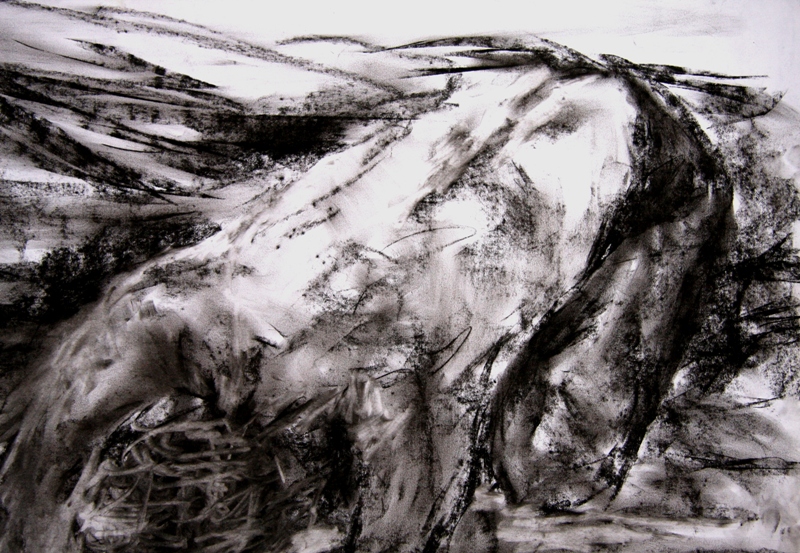
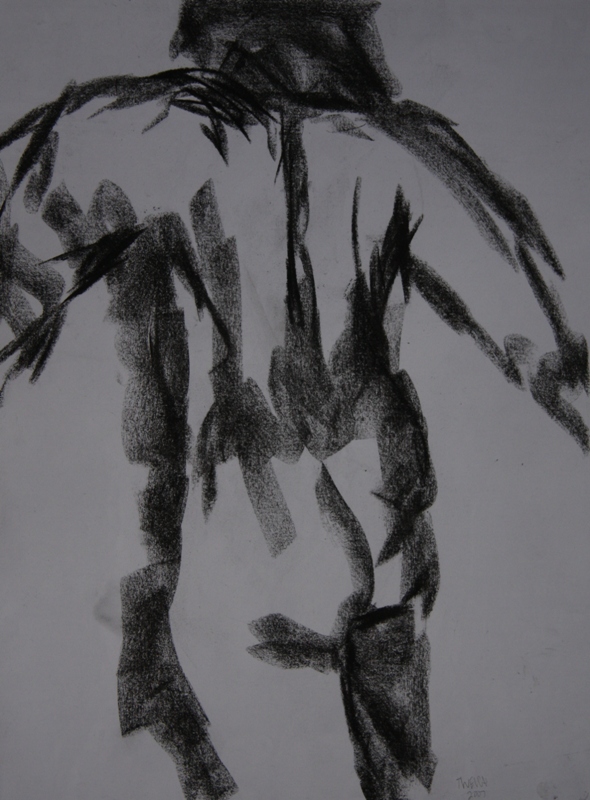
Because our brain must  “create” a sharp, coloured field of vision, it has a selection process for seeing. We fill in blanks and leave out information that history tells our brain is not relevant both consciously AND subconsciously. I am fascinated with the impact this has on our creativity whether it is visual, written or auditory. Here is a series of my quick charcoal sketches from 2007.

wooden forms for making shoes

I did these sketches while purposefully “seeing” using my sight beyond the 15 degree visual arc of acuity by paying attention to what is in my peripheral visual field allowing the hand to record the image with as little as possible interference from my fovea vision.

male nude sitting

This lesson stuck and I continue to create my work while exploring this way of “seeing” or consciously experiencing the world.

reading

It is not too much of a stretch then, to consider that when we create an image that has high-resolution colour and sharp focus over a larger area we are doing the work of the viewer’s brain “to see” or create that image. If we go the next step and take out “irrelevant information” we are also choosing for the viewer’s brain what is important to see. Your created work has become a powerful editing filter for the viewer. To some extent this is what happens anytime we create. The question I pose is more about how much of a filter is too much filtering and can it actually interfering with the viewer’s ability “to see” what we want to express? And can we hold the viewer’s attention when we do the work of the viewer’s brain to build most their visual field when experiencing our work?

Could it be that the gaps in our expression are of as much interest to the viewer as the sharp clarity? Like say this image….

finding the figure quickly

Sprout Question: How does your way of “seeing” impact your creativity?

On Thursday, I am going to explore further how our human visual system must learn to create spatial relationship between objects through touch and memory and what ways this learning may relate to our creativity.

© 2010 Terrill Welch, All rights reserved.

Liberal usage granted with written permission. See “About” for details.

Purchase photography at http://www.redbubble.com/people/terrillwelch

Creative Potager – where imagination rules. Be inspired.

From Mayne Island, British Columbia, Canada

what seen is not always there

Clouds break and the late sun rushes in, leaving its mysterious glow cascading across the valley. In this moment the turning of earth is visible and tangible – not just a known fact.

View full resolution and purchase image here.

Looking east finds the familiar last light from the west at the edge of the forest…

It is beautiful but not what I am feeling. Something is missing. I head to the digital darkroom musing about what the camera couldn’t catch. I went to work to find what it was I had experienced – teasing it out from between the pixels….

View full resolution and purchase image here.

Sprout Question: What do you do when your creativity on the outside doesn’t match what you are experiencing inside?

© 2010 Terrill Welch, All rights reserved.

Liberal usage granted with written permission. See “About” for details.

Purchase photography at http://www.redbubble.com/people/terrillwelch

Creative Potager – where imagination rules. Be inspired.

From Mayne Island, British Columbia, Canada

Eagle over the moon

Through joyful tears and laughter the gifts are opened.

Friends prepare for a round of games. I slip outside, where clouds break, allowing slivers of evening sun and a rainbow across the way.

View full resolution and purchase image here.

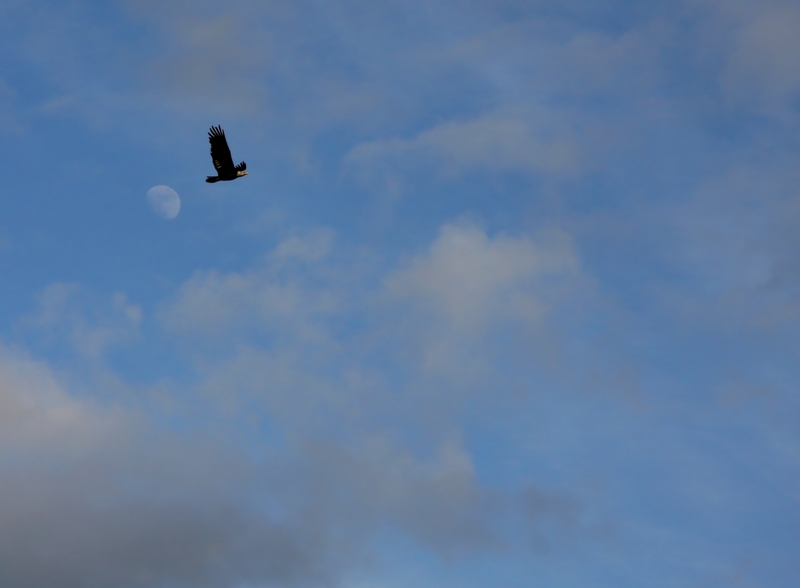
The ocean is within touching distance and the tide is on the ebb, bringing a young eagle closer to shore – hunting.

View full resolution and purchase image here.

A bridal shower and an eagle over the moon – a good omen I think.

Sprout Question: Where has your creativity recently found something new in the familiar?

© 2010 Terrill Welch, All rights reserved.

Liberal usage granted with written permission. See “About” for details.

Purchase photography at http://www.redbubble.com/people/terrillwelch

Creative Potager – where imagination rules. Be inspired.

From Mayne Island, British Columbia, Canada