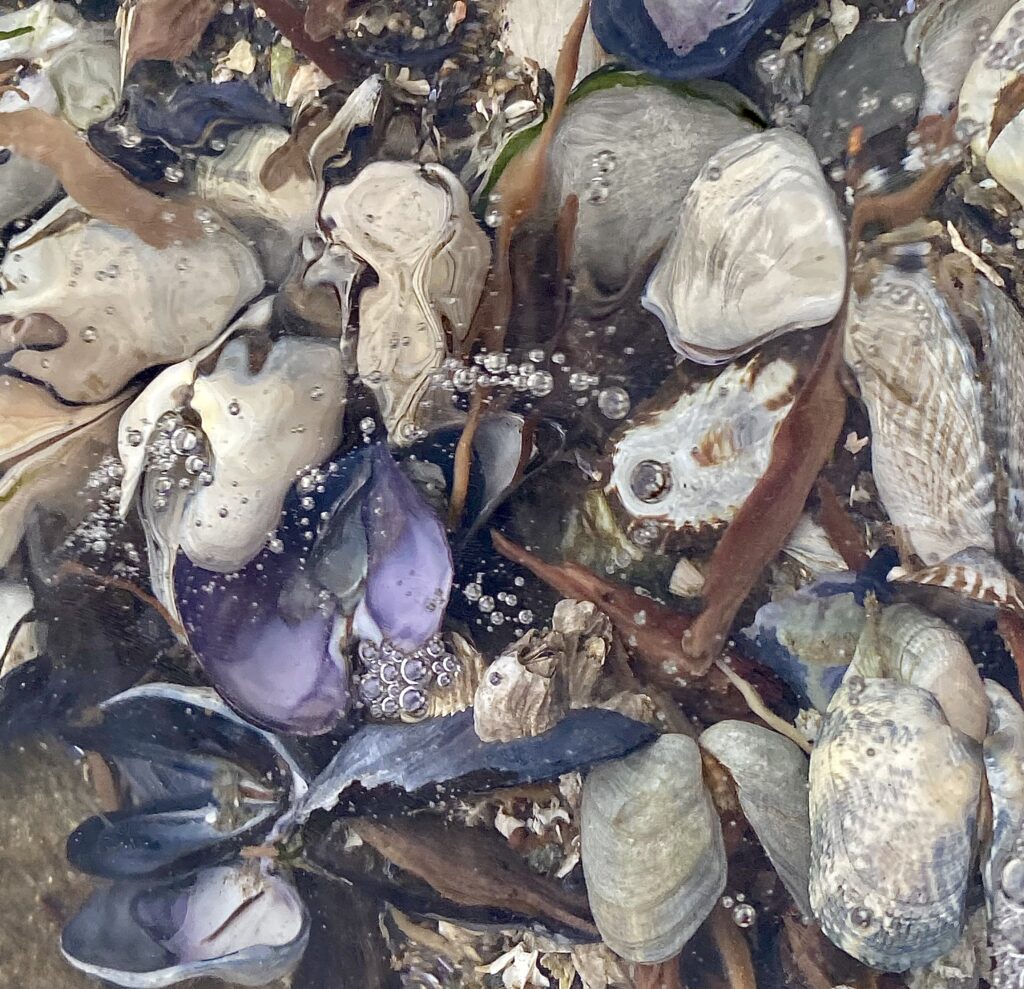
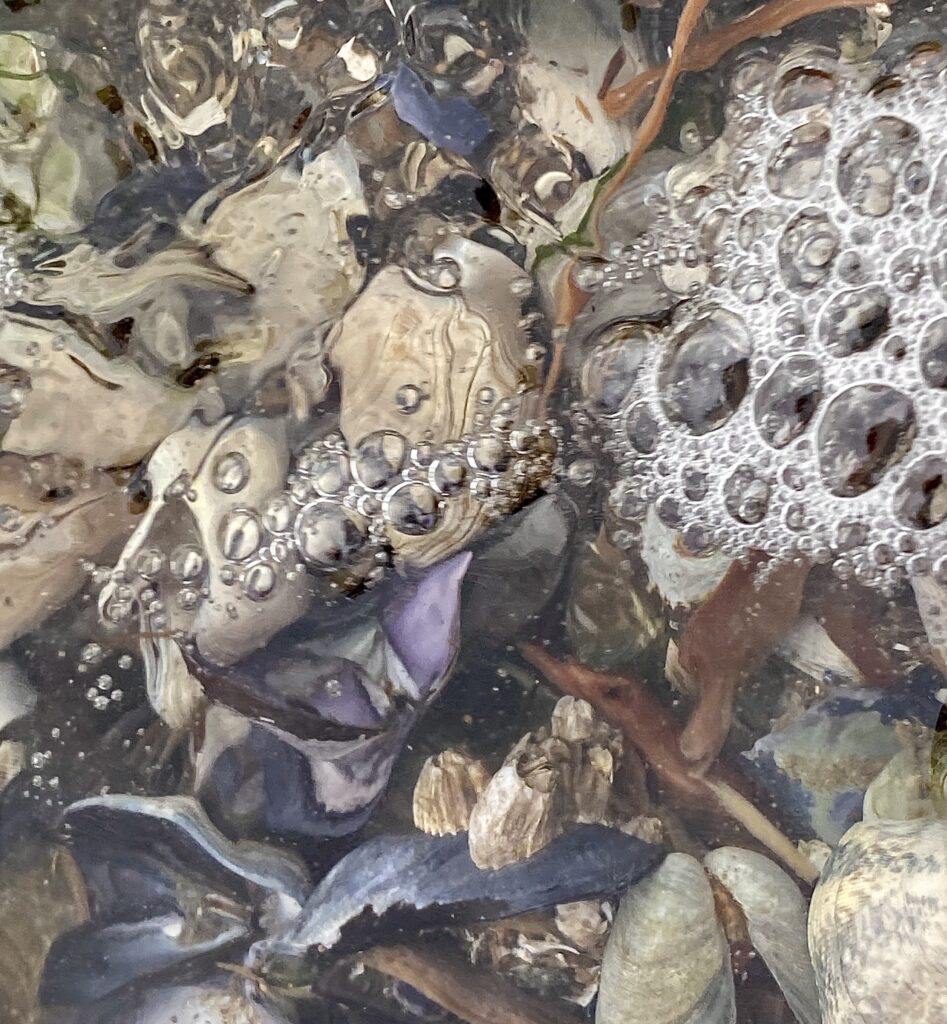
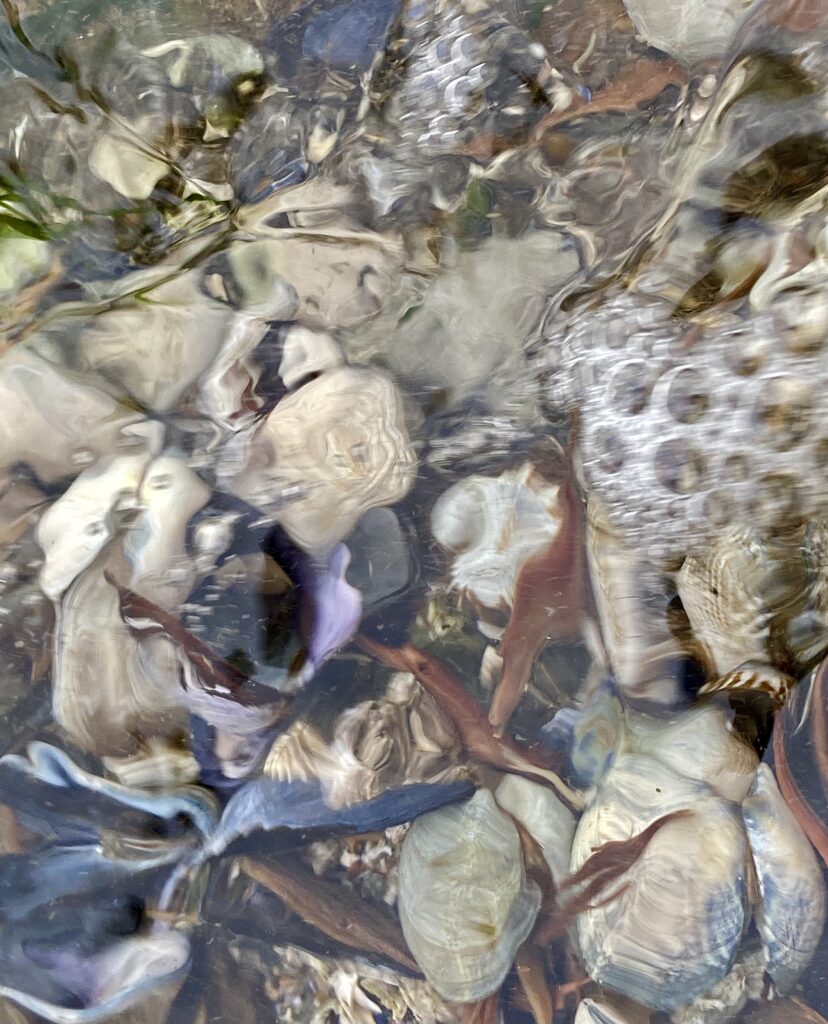
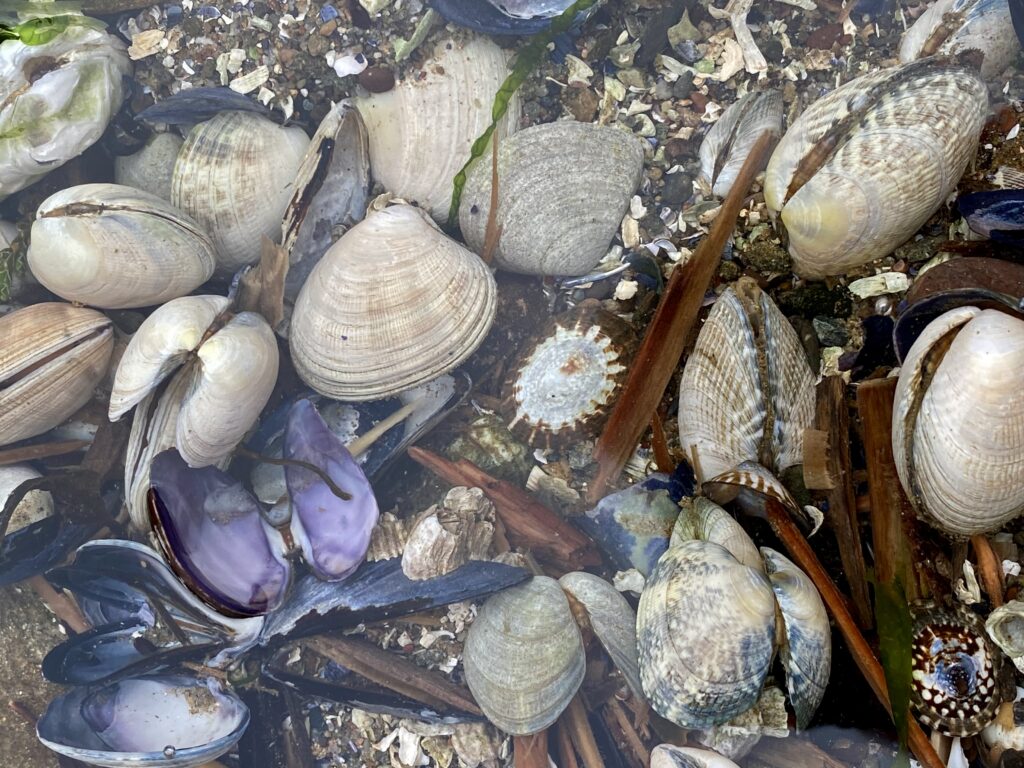
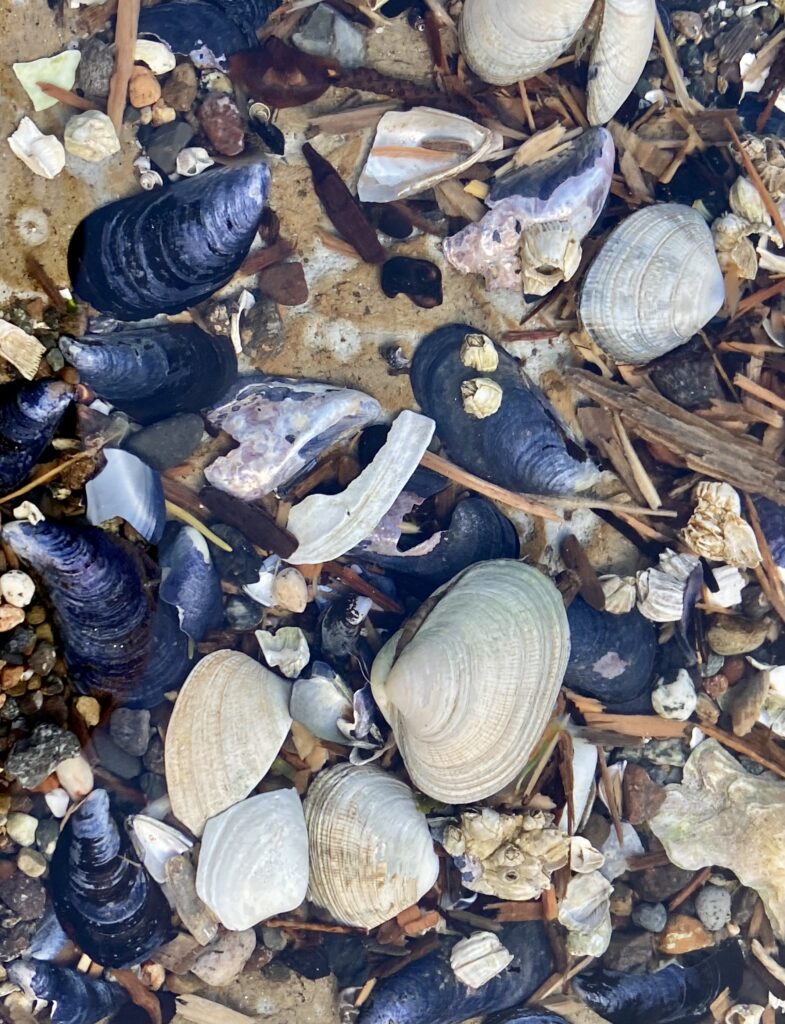
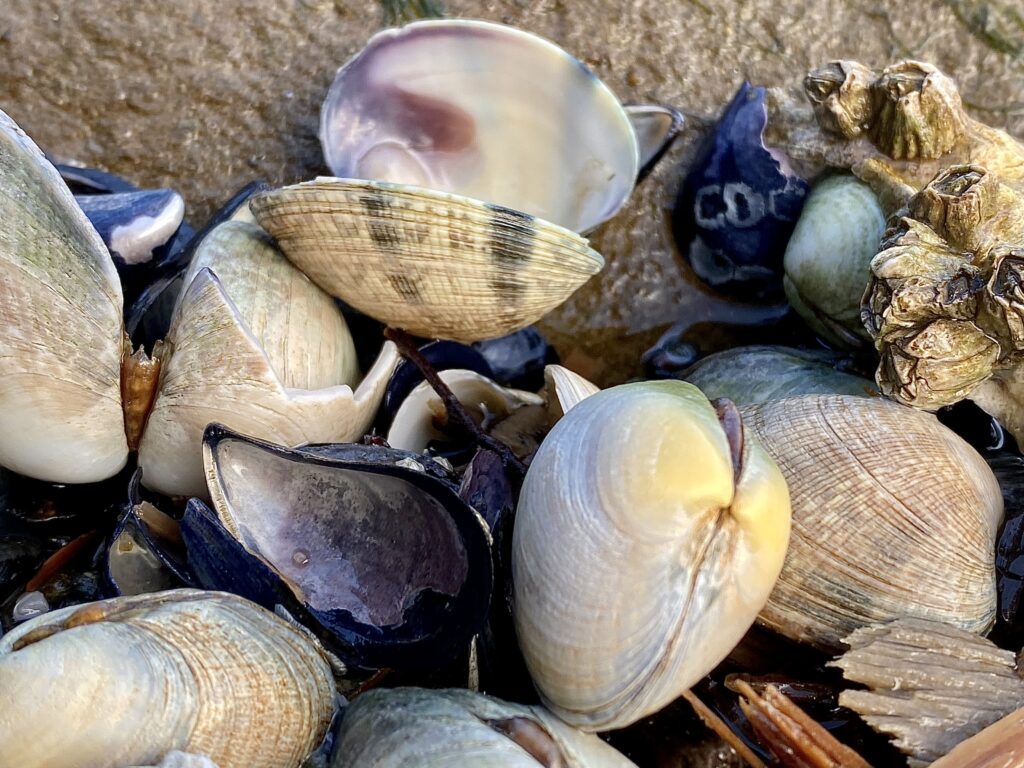
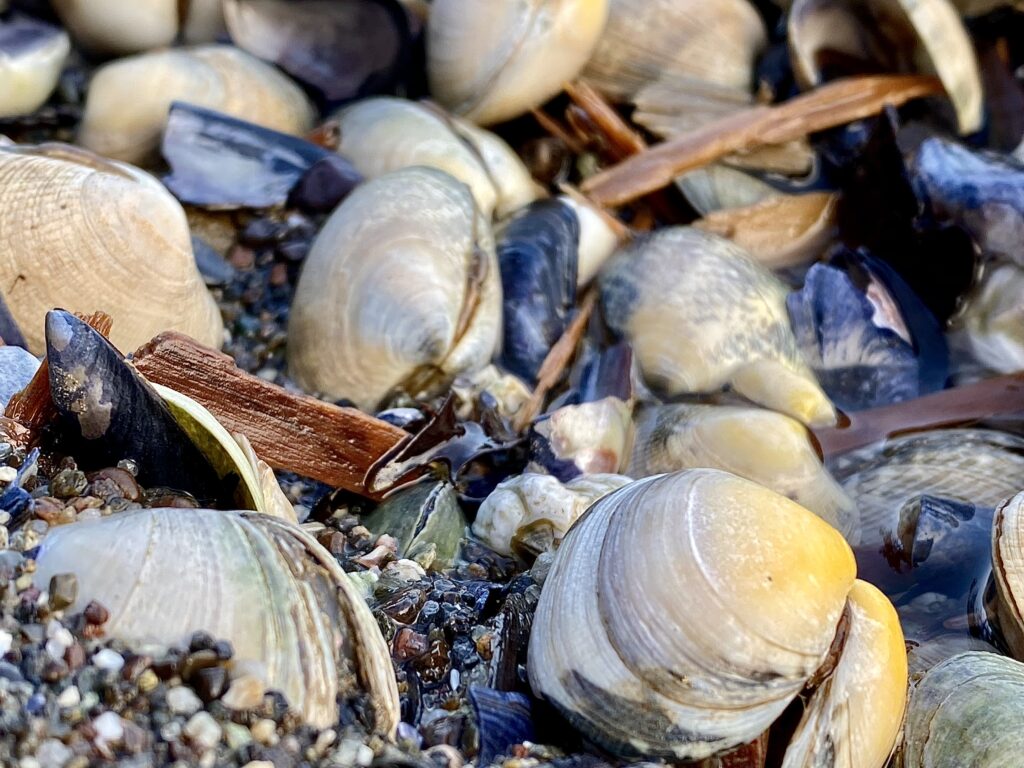
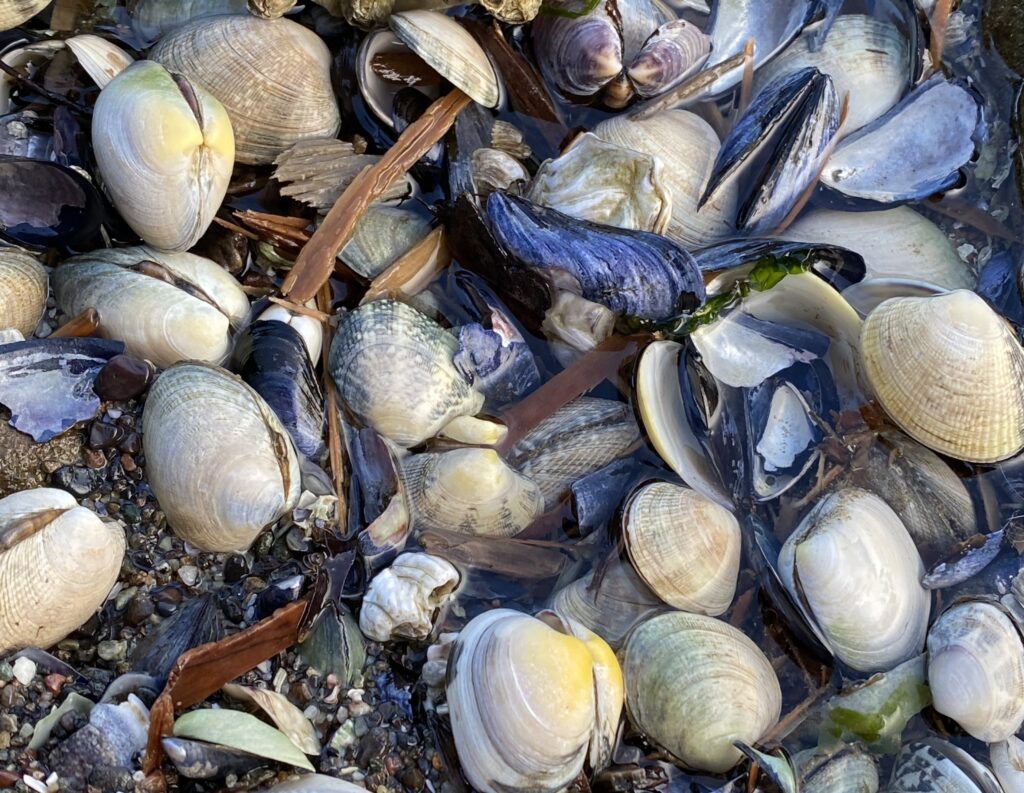
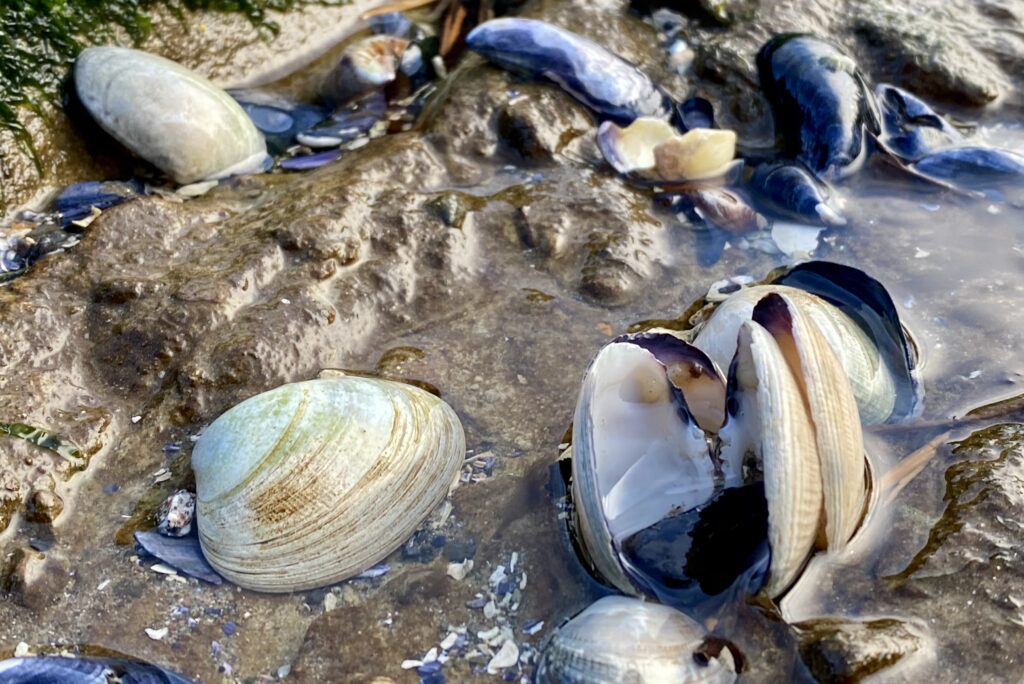
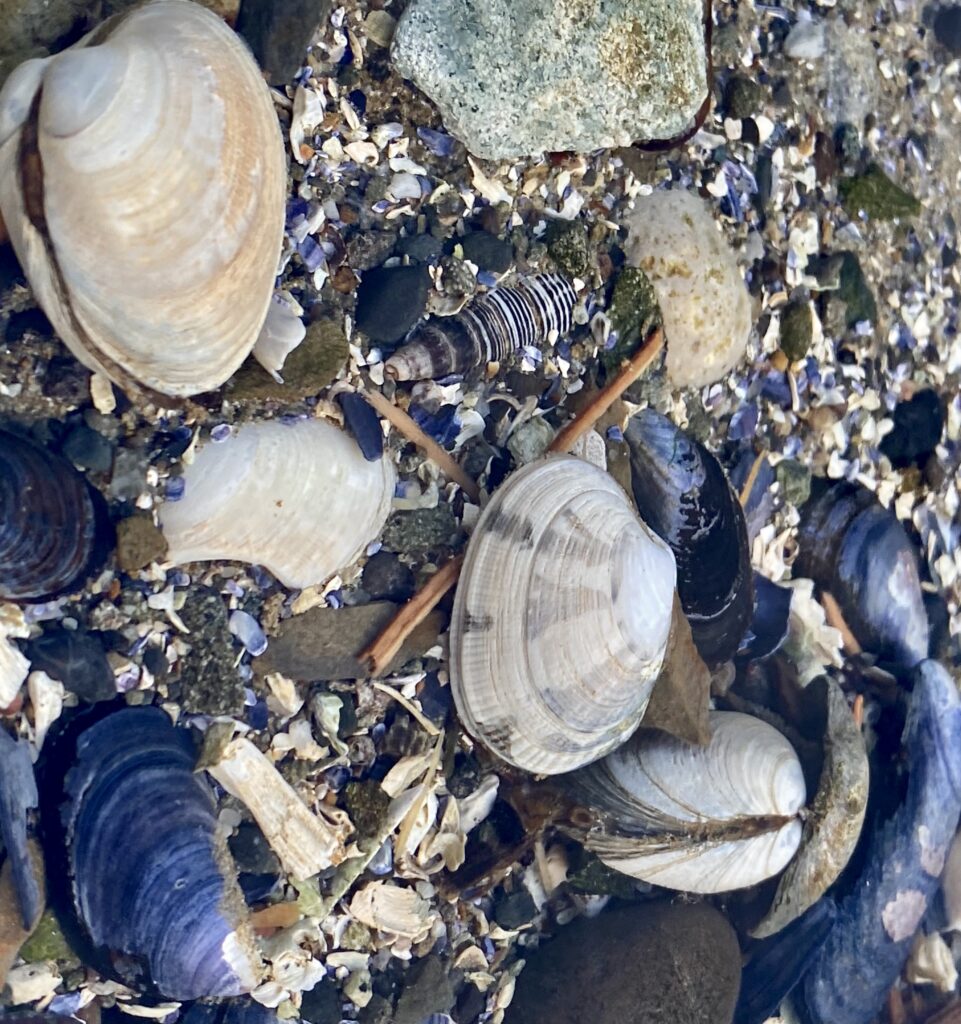
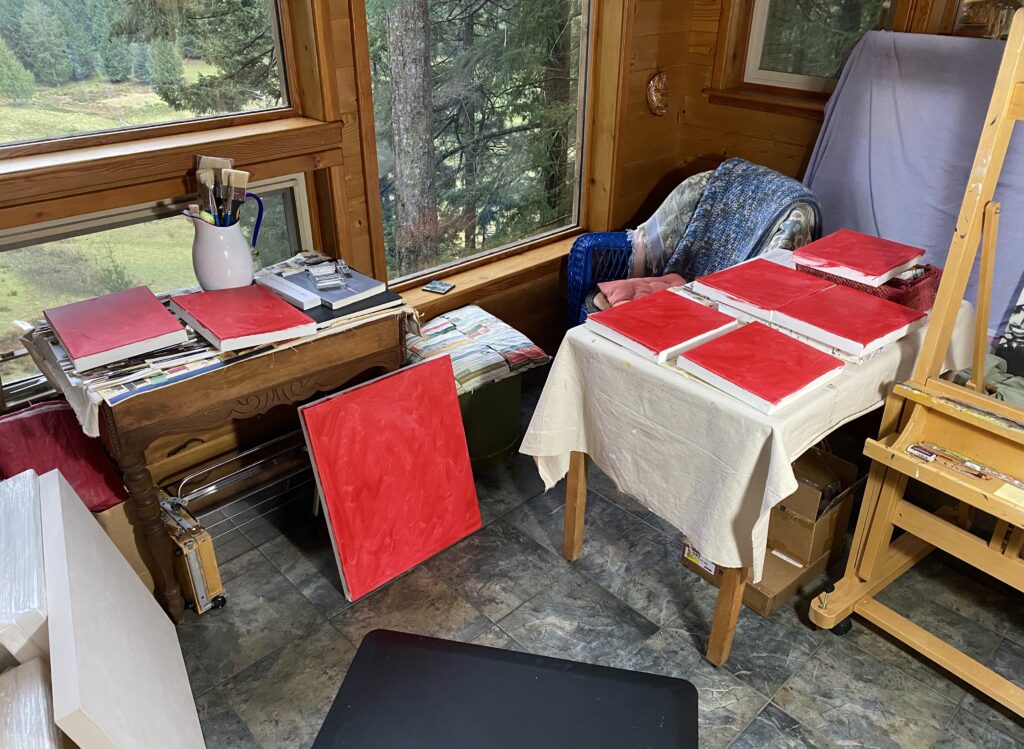
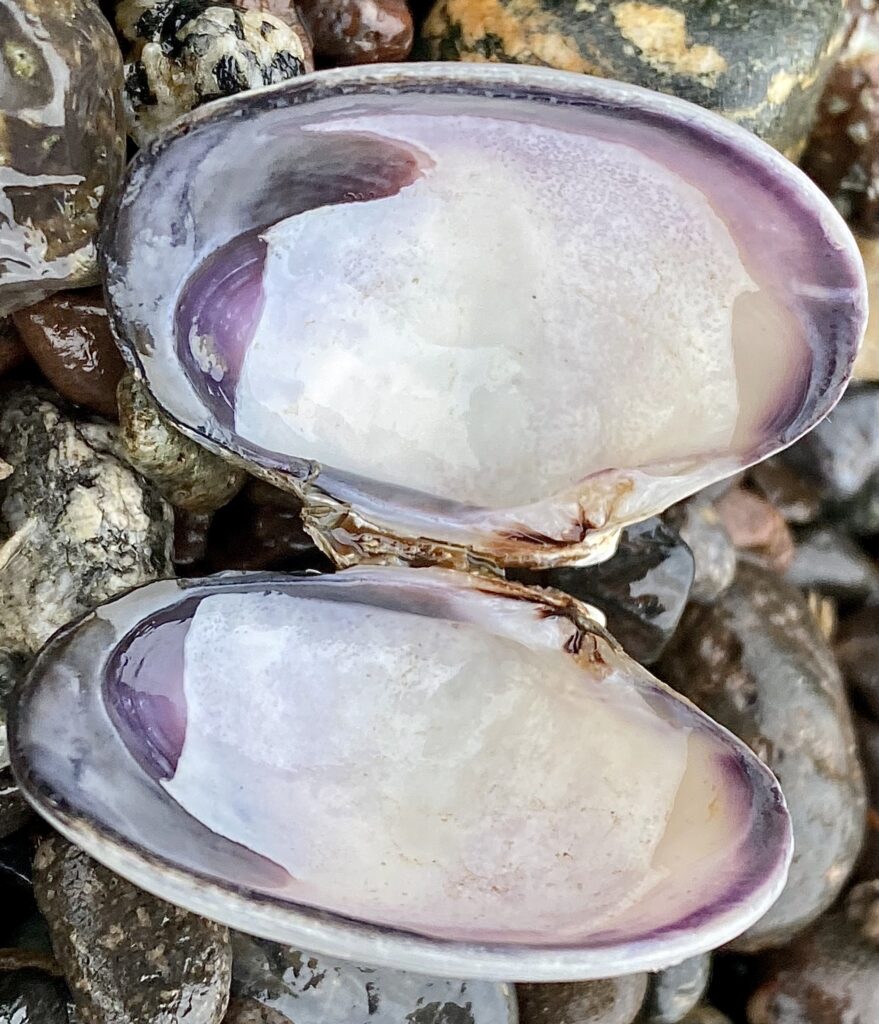
SEASHELLS AFTERNOON PAINTING PROCESS

Friday, 30 October 2026

This process and painting is still within the first of the three unites of my studies. I hadn’t yet fully developed my theory and research practice yet. The data collection template came later. In addition, I have included a short add on post as it doesn’t seem to fit anywhere else easily. Going back over these entries, I have to resist the temptation to add in things that I investigated and discovered later on. Exploration is incomplete by its intrinsic nature and I want to preserve this in these transferred art research journal posts.

Excerpts from Terrill Welch MA Fine Art Journal

Monday, 10 February 2025

My days are full to overflowing with painting, reading, class and peer discussions, and absorbing my first tutor feedback suggestions to further develop my painting project about the sea floor. These threads remain entangled as I keep theory, research and my painting practice woven tightly together.

The American philosopher Anthony Rudd in his book Painting Presence: Why Paintings Matter expands on the work of Russian philosopher and theologian Paul Evdokimov and adds an additional fourth element to the three already defined by Evdokimov.

In summary, Rudd concludes that every painting has the following four elements: 

  1. The artist as the maker of the painting,
  2. the work itself as a physical object,
  3. the viewer as the person who looks at the painting, and 
  4. the subject matter made present in its essential nature. (2022, pp. 226-229) 

Rudd’s fourth element is where I want to further expand or break open my investigation of the sea floor. The question is – how do I do this? 

The tutorial feedback suggests taking more in-progress images so as to better reflect on what is happening during the creation of a painting. This is offered primarily as a way of stepping back. I am guessing this is not in the physical sense of stepping back because I already have a well developed muscle memory practice of rhythmically stepping back in my actual standing painting process. I am taking this suggestion to step back to mean more of an interrogation of my painting decisions as a way of finding other points of departure or consideration. Since this is nearly impossible, at least for me, to do while actually painting, my idea is to capture the process more thoroughly while it is happening and then step back to find new points of entry into my practice. 

This takes unflinching, clear-eyed bravery which brings me to France and a letter dated Monday, June 24, 1906 by Rainer Maria Rilke to his wife Clara where he writes “After all, works of art are always the result of one’s having been in danger, of having gone through an experience all the way to the end, to where no one can go any further.” (2002, p.11)

My colleague, painter, linguist and writer, Dr. Elena Maslova-Levin, used this quote to anchor my work in her introduction to our shared exhibition catalogue Conversations on Edge published in 2018. Not surprisingly, this prospect of going “all the way to the end, to where no one can go any further” remains a guiding proposition in my practice. (Maslova-Levin and Welch, 2018)

This may appear as if I have moved away from the theoretical influences presented in the western philosophy of Plato and the eastern philosophy of Dōgen about painting and art. However, the opposite is more accurate. I will come back to this again later on.

For now, I have a 22 minute video that details the development of my latest painting on a 30 x 24 inch canvas using walnut oil paint called  “Seashells Afternoon”. This is also my journal entry for week 18 – documenting process.

Or view on YouTube at:

Note: The room view in the video of the painting is created using a digital tool called Canvy and it can be found at Canvy.com. The digital tool was created specifically for room views to show two dimensional artwork.

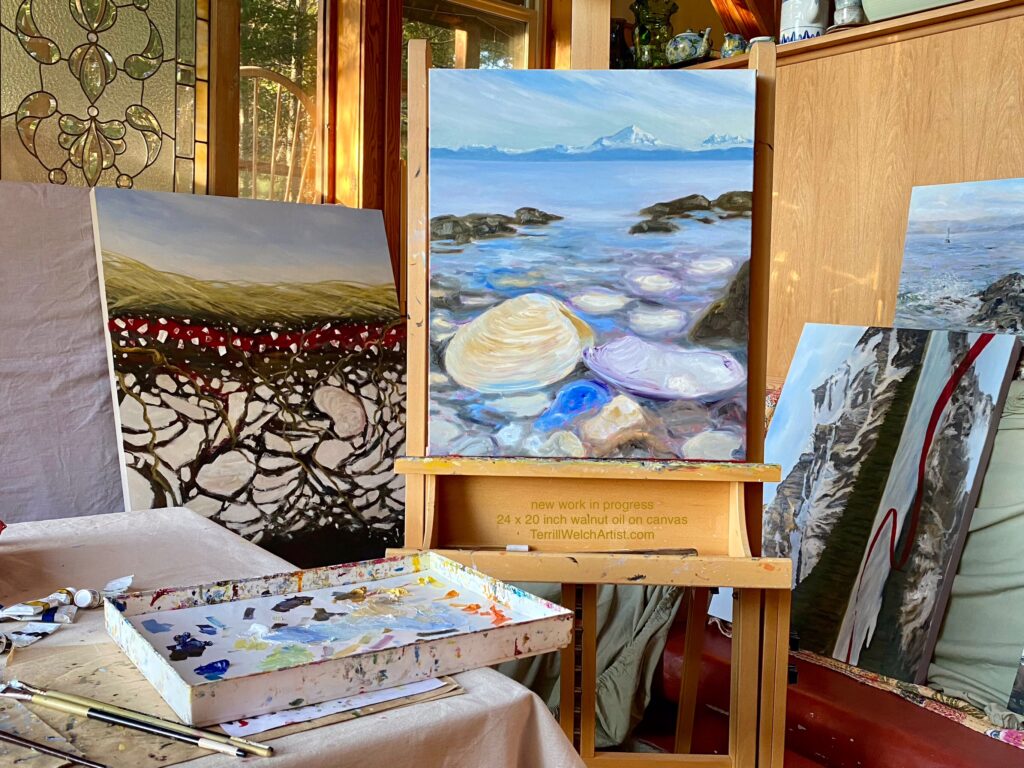
Here is the painting again while it is still on the easel.

Still on the easel in the studio – “Seashells Afternoon” by Terrill Welch, 30 x 24 inch walnut oil on canvas.

Review of My Painting Practice:

In reviewing my painting practice and creative process as outlined in the video above, I would like to further emphasize the aspect of painting being a translation of a conversation between my subject and myself that is then available to the viewer. However, the primary engagement is between me and the subject. My first point of reference is the specific nature of my focus. In general, the natural environment is my longest, most enduring and consistent relationship. This is the relationship with which I have the most familiarity and trust. All else in my painting practice is value-added and welcomed but also less critical to my process. What this means in practical terms is that art theory and research are additions to my established and developing painting practice. Therefore, theory and research are currently in service to my painting and must find their way around and within my discernment of the sea floor and moving brushes across a surface. I am not sure how useful this orientation is to my finding other points of departure or consideration in my painting practice  However, it where I am at the moment. To further explore the relationship between my chosen theoretical approach and my painting practice, I am going to do a small series of painting study sketches in acrylic as a way of slowing the painting process down to moments of full stop and to have an easy ability to paint over with limited drying time. This should provide me with more critical information and assessment about my painting practice than I have now and hopefully provide a stronger overt connection to my theoretical considerations.

For easy of reflection and review, I am going include a private viewing room link on Artwork Archive for all works completed so far in this unit. This includes detailed information for each piece such a medium and size and my artist notes.

https://www.artworkarchive.com/rooms/terrill-welch/0baa50

Note: If you are reading this as part of my art journal links assessment, to save time, you may want to wait and view the selected artworks instead of opening the link above.

For quick reference, here is a digital room view using Canvy that shows these same works to scale together.
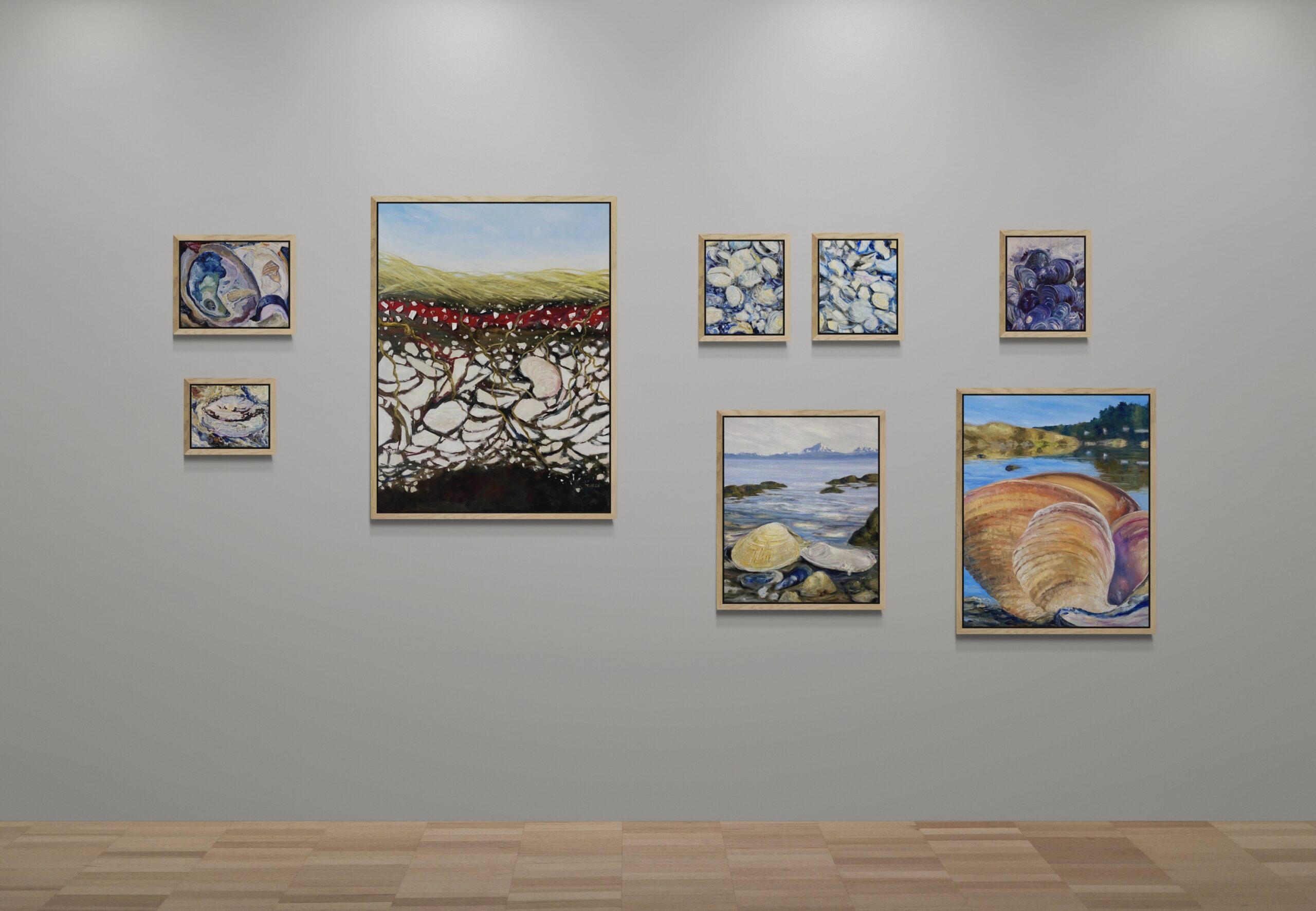

Thursday, 20 February 2025

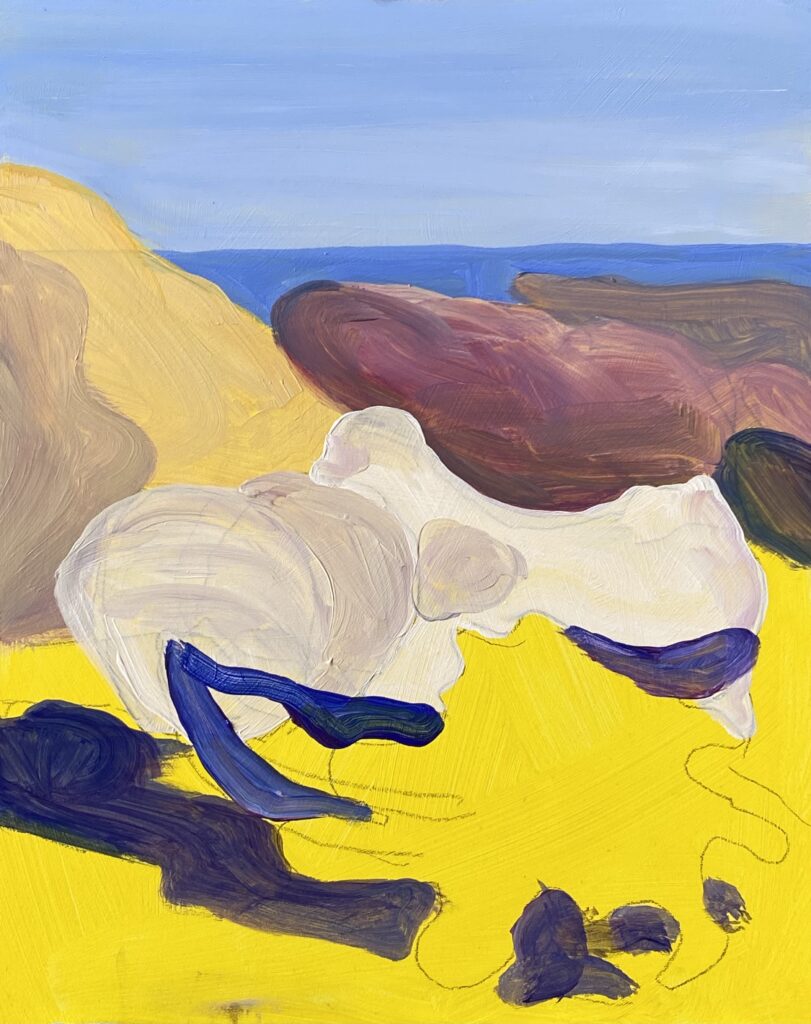
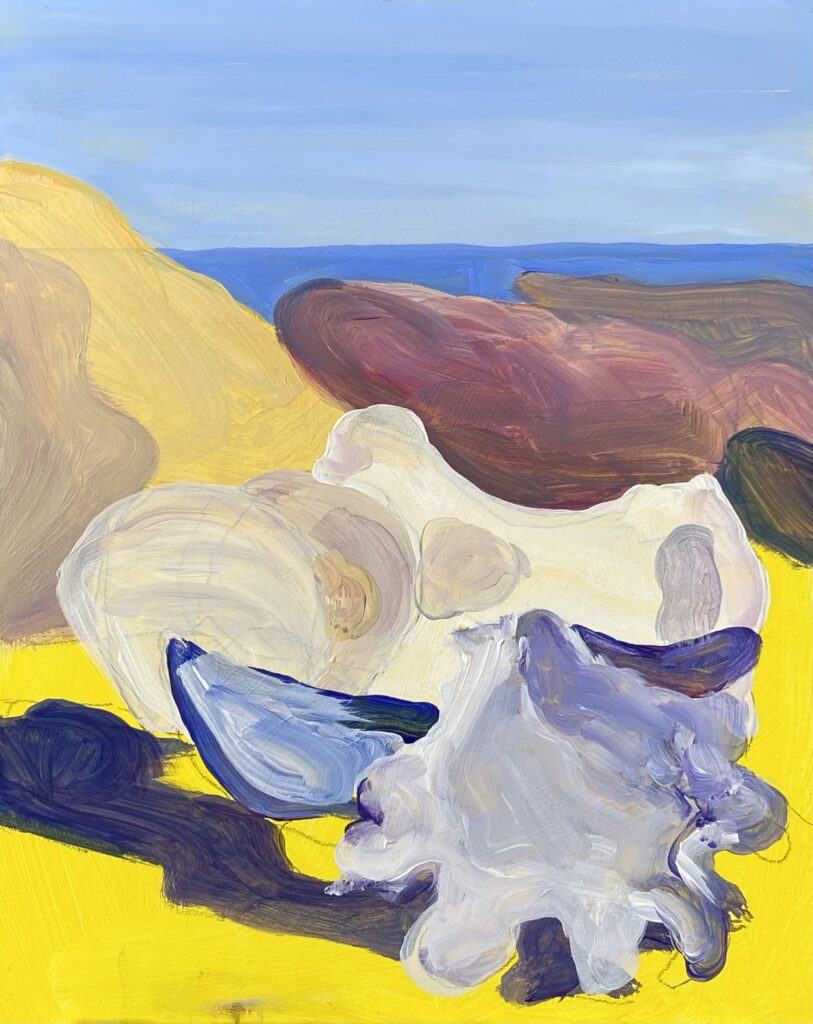
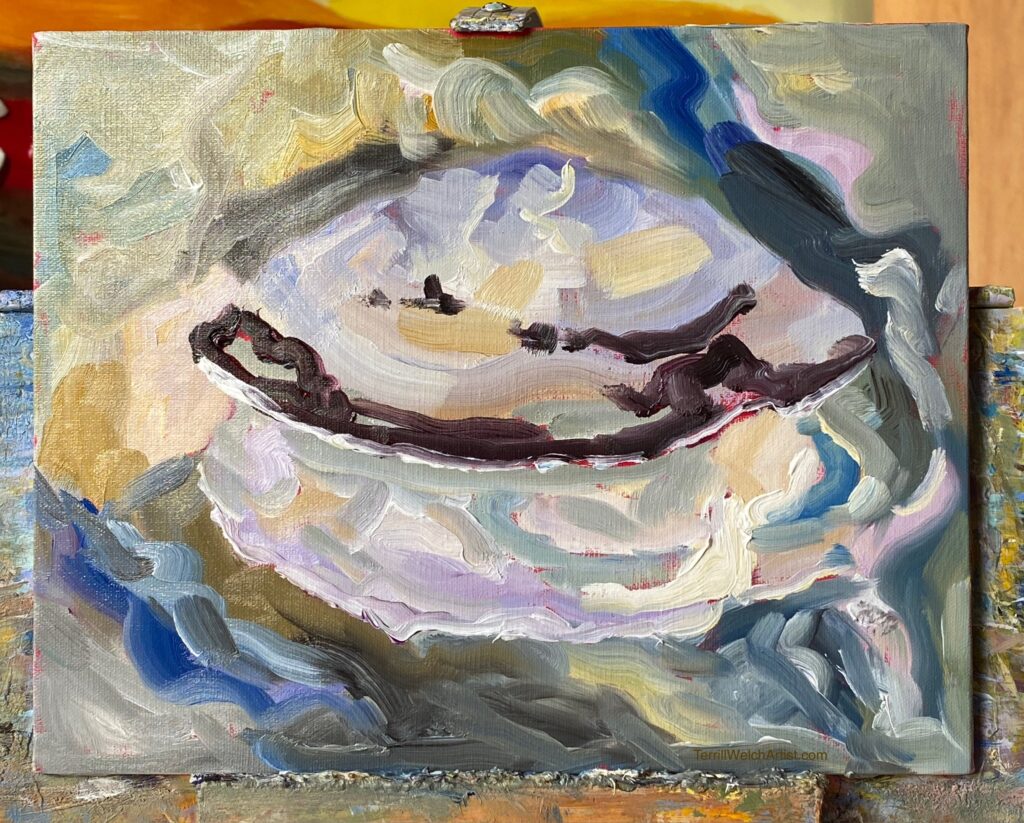
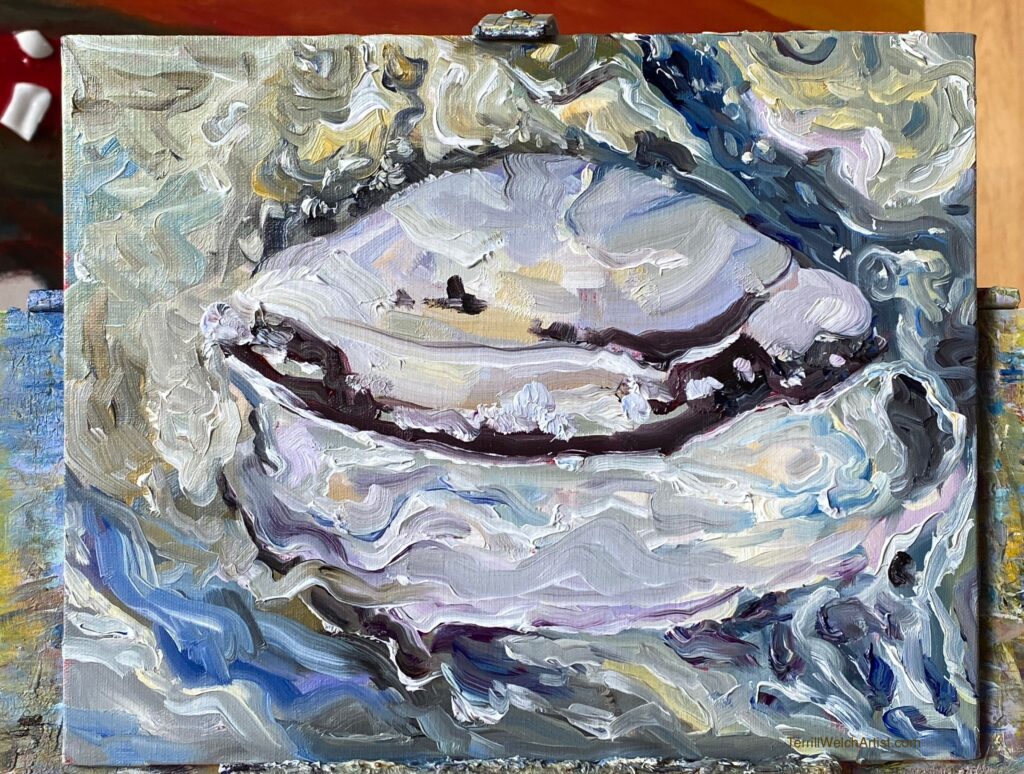
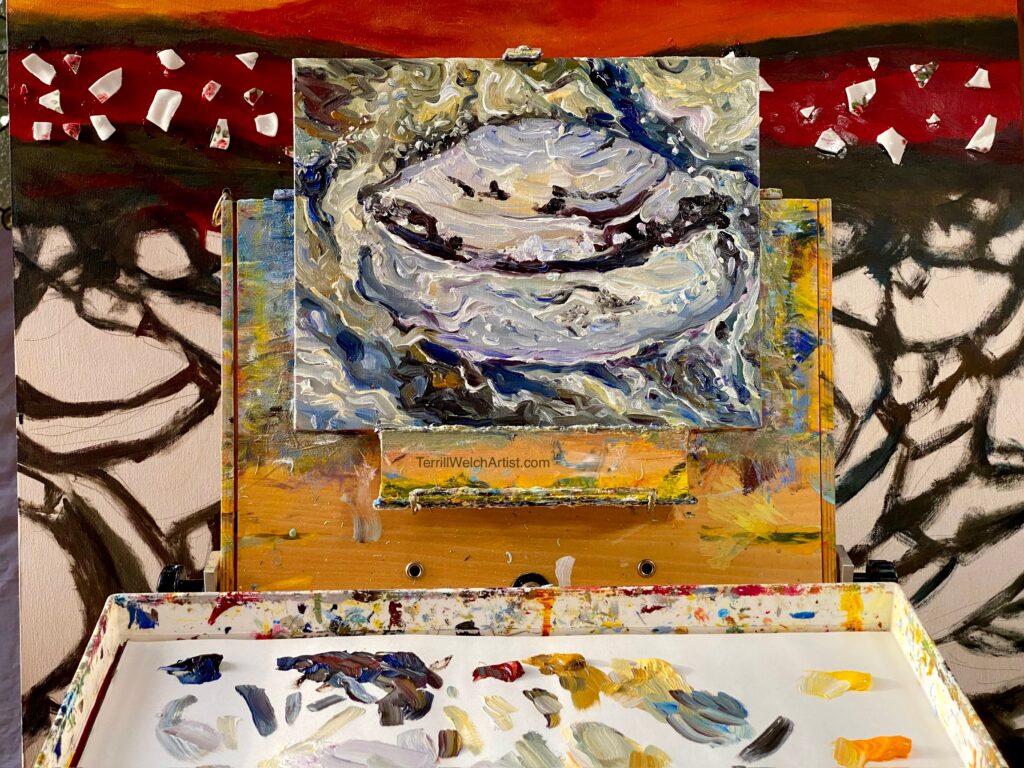
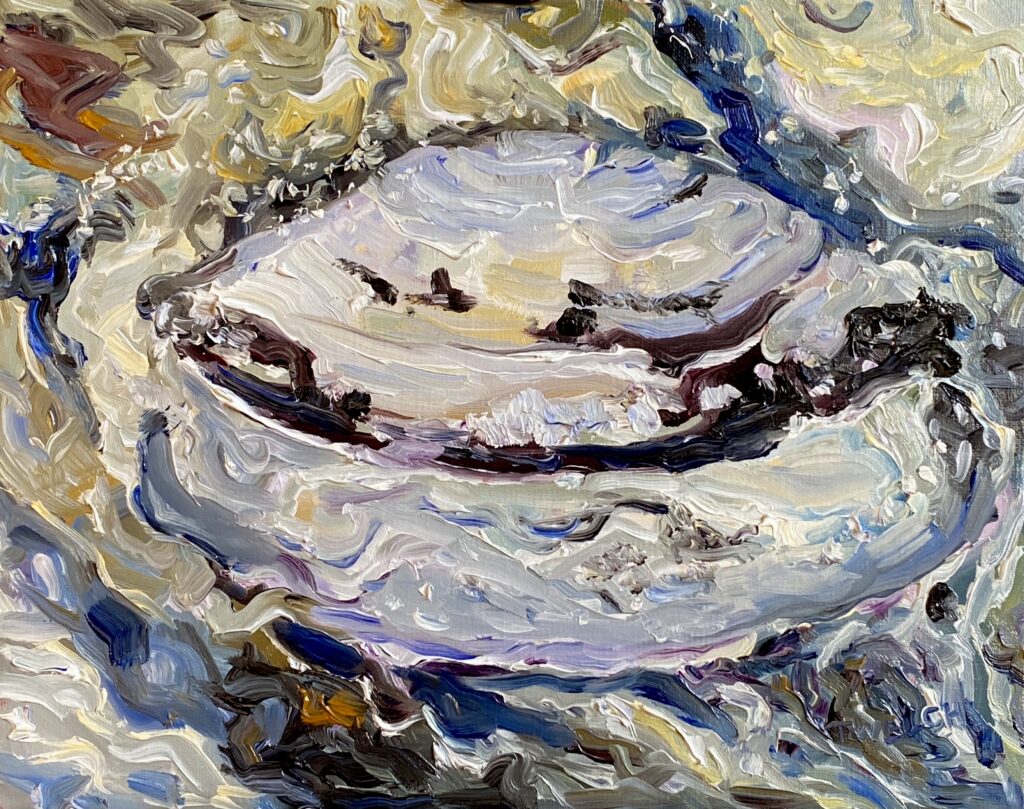
I want to include the first of acrylic painting sketch studies as it is a departure in paint from oil or acrylic and slightly different in process from the preceding work in the unit. Here is a tile gallery of the development of the work-in-progress on this 10 x 8 inch gessobord.
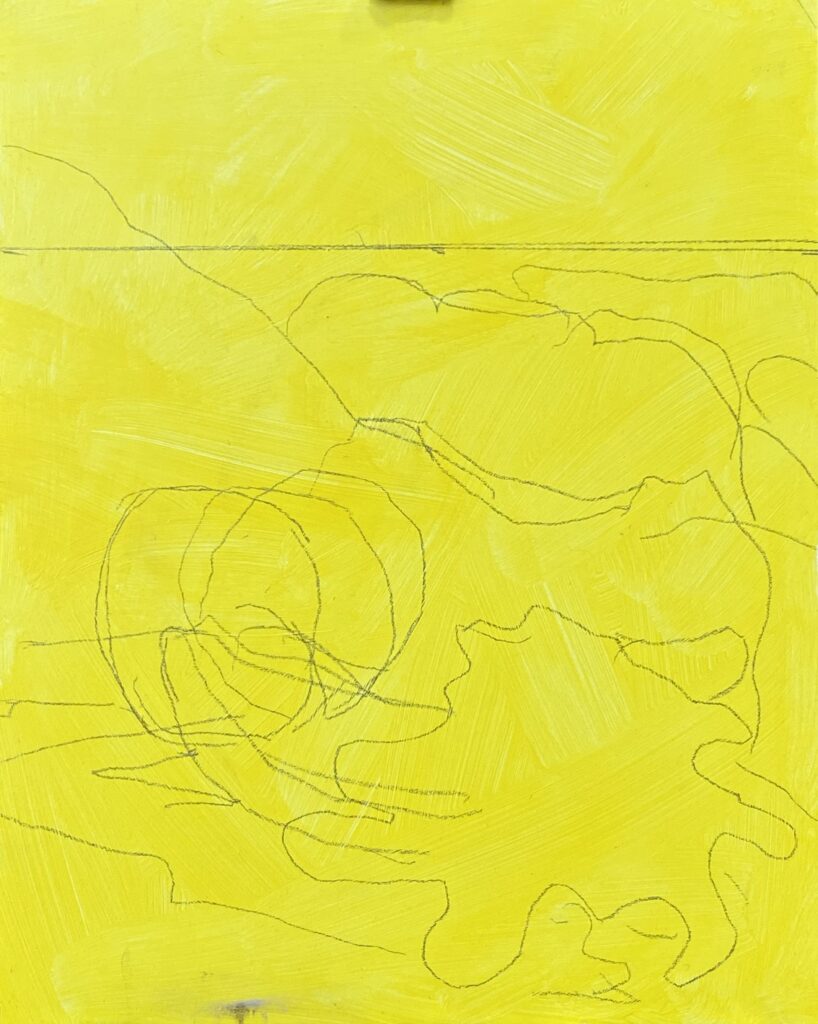
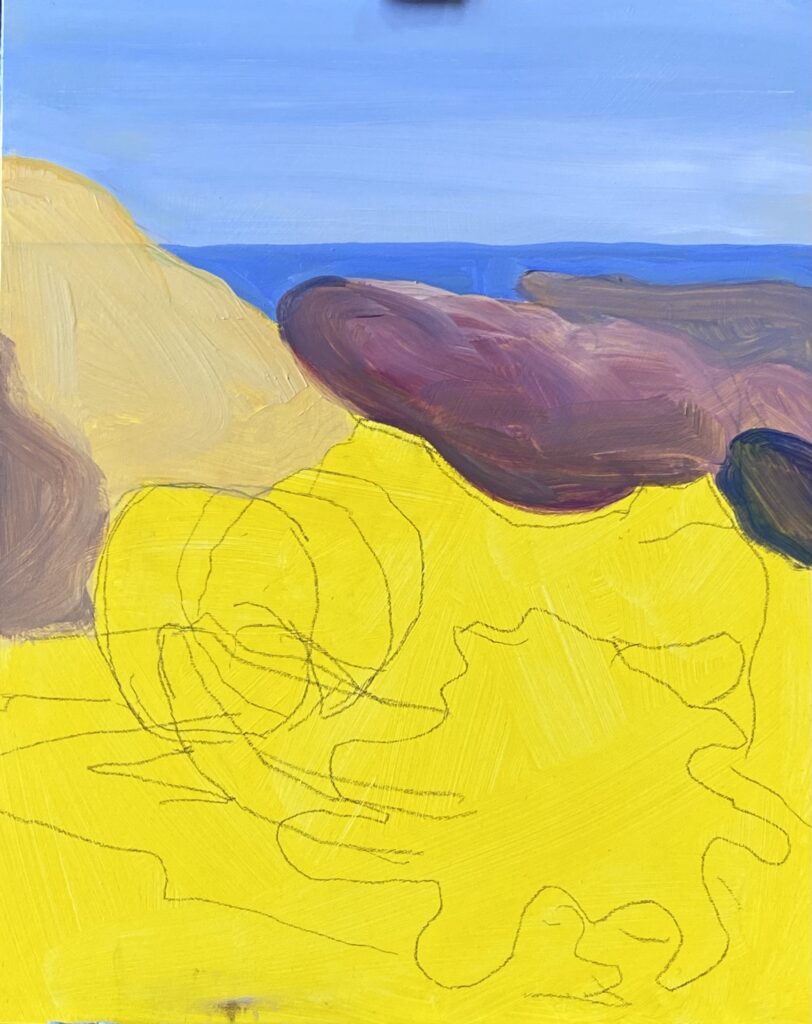
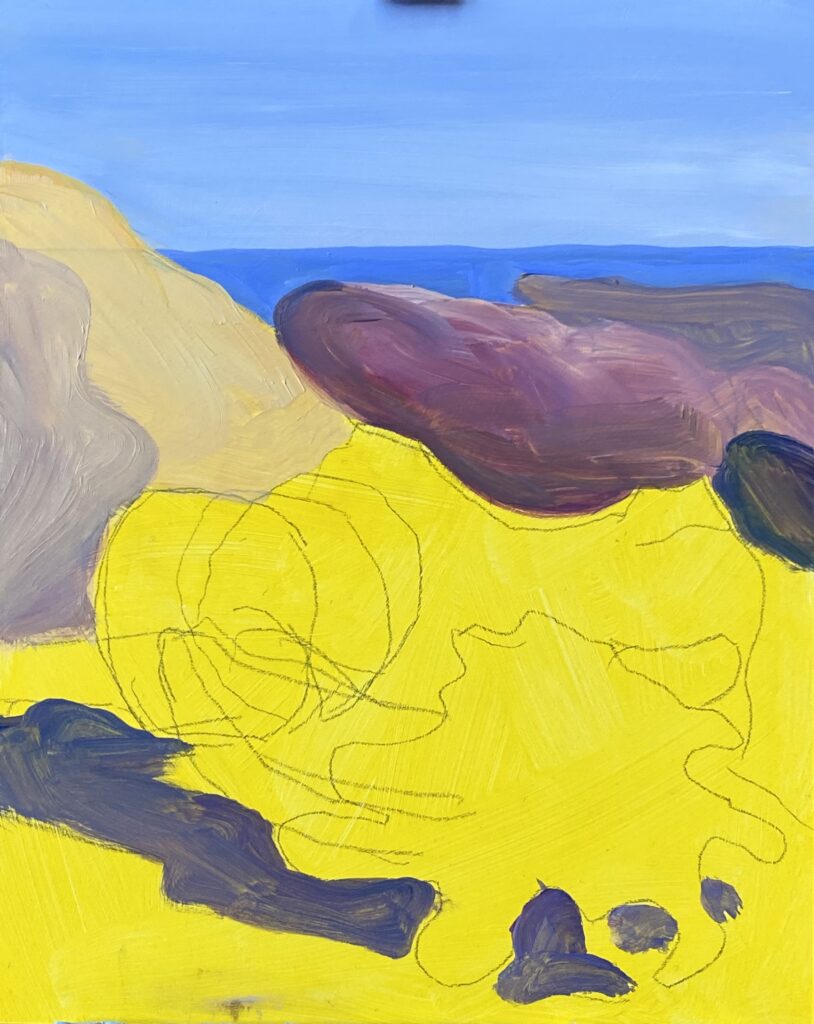
I stopped painting at this stage below.
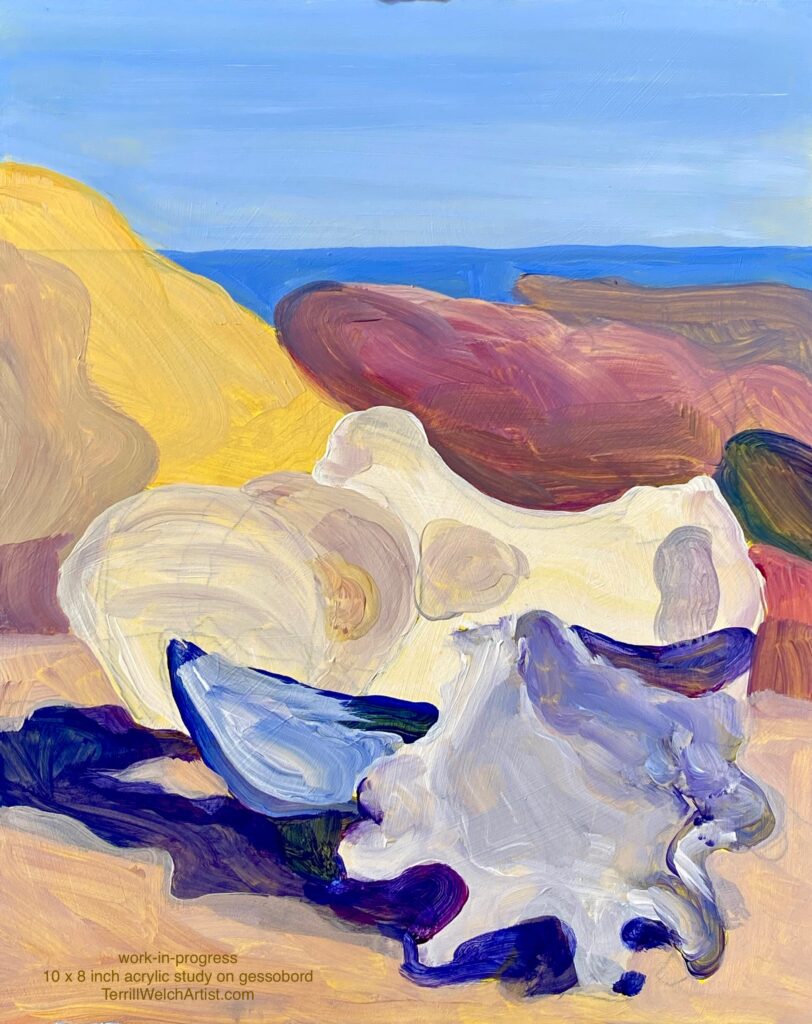

The painting sketch is still on the easel for now while I contemplate its character within my process.
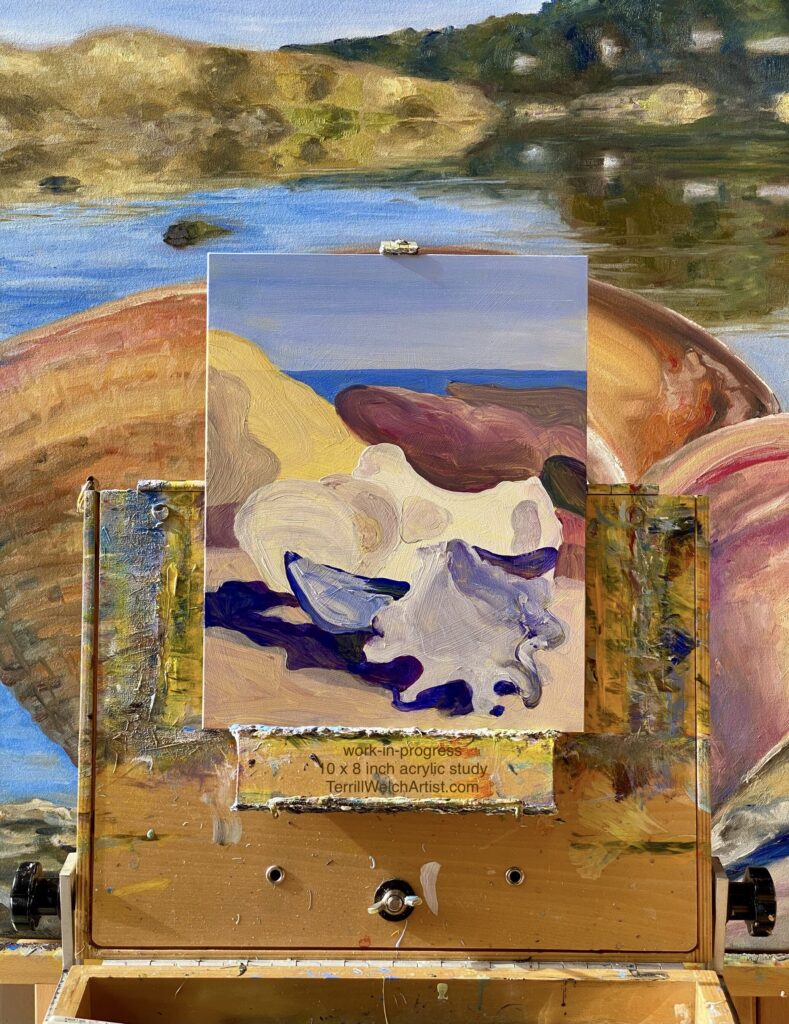

At this stage, the work has an immediacy of its history of development. Pencil marks show through. The ground is evident throughout. I look at it in all its raw nakedness and I remember how I held each shell while I was painting and then closed my right hand around it and continued painted. This part of the process is new. I remember that I used one of my references to assist with scale while doing the line drawing at the very beginning and then worked from memory as much as possible. This part of the process is familiar. I now am at a place of deciding whether or not to leave the work for now at this unfinished work-in-progress stage or if I keep going until I am satisfied that I have taken it as far as I can go. I haven’t decided yet because I am still assessing which will serve me more as I work to fracture or break open my practice for points of new discovery.

Reference list:

Canvy (2025). Canvy. [online] Canvy. Available at: https://canvy.com [Accessed 11 Feb. 2025].

Maslova-Levin, E. and Welch, T. (2018). Conversations on Edge . [online] Abebooks.com. Available at: https://www.abebooks.com/9781986742214/Conversations-Edge-Maslova-Levin-Elena-Welch-1986742210/plp [Accessed 9 Feb. 2025].

Rudd, A. (2022). Painting and Presence: Why Paintings Matter. [online] Oxford University Press eBooks. Oxford University Press. doi:https://doi.org/10.1093/oso/9780192856289.001.0001.

Welch, T. (2025). Seashells Afternoon Painting Process by Terrill Welch. [online] Youtu.be. Available at: https://youtu.be/ai_yr3lgyKk?si=h9IlQoQj6d0csmb5 [Accessed 11 Feb. 2025].

Element of Chance to Studying Seashells using Line Drawing

Thursday, 13 February 2025

I temporarily borrowed a few seashells from Reef Bay for this exercise to introduce an element of chance to studying seashells using line drawing. This exercise is an adaptation of an exercise offered by John Daido Loori in The Zen of Creativity: Cultivating Your Artistic Life called “Practice: Experiencing Without Identifying”. (Loori, 2005, pp.80-81) My intention is to place more emphasis on using my capacity of touch to determine shape and size by placing the shells out of view in a cloth bag and then reaching in with my right hand to choose one to draw while drawing with my dominant left hand. What I found most interesting was that more elements of chance were introduced than I had anticipated. Some of the pencils I had set out didn’t work very well. Sometimes I couldn’t find the shells in the cloth bag and I had to resist the urge to look and you can see me starting to lift open the cloth bag and put it down again several times when I was trying to find the shells. However, I did get to know the shells better even in this short exercise. 

What I Discovered: My takeaway is that it might be interesting to do this again without recording and setting time constraints. I could try a variation by using a combination of visually hidden touch study like in this exercise and combine it with visual observation time drawing that is repeated in a rhythmic pattern like the sea exposing and covering the shells. I could maybe do it by opening and closing my hand that is holding the shell. It might be interesting to do this with one of my video recordings observations offering the sounds of the sea at the same time or by drawing by the sea once it gets warmer. The idea is not to trick myself but to strengthen my relationship with touch as a source of sensory information in my painting practice. These are ideas for future exercises. For now, this video records what happened during this first line drawing practice exercise.

As I mention in the video, this could be done with any smaller objects. I chose the seashells because it is central to my project. I do not remove shells from the beach lightly because they are of significant importance to the health and wellbeing of the sea floor. For this reason, I will return them to where I found them now that I have finished the drawing exercise and will do the same if I do any further drawing exercises in the same manner. 

Reference: 

Loori, John Daido (2005). The Zen of Creativity: Cultivating Your Artistic Life. New York: Ballantine Books.
New Work – Seashells Midday at Reef Bay

Tuesday, 27 October 2026

It is worth noting that when I make these copy posts from my art journal, the gallery images make it to the online version but not the email that is sent which seems to randomly gather images from the media section instead. Therefore, I highly recommend when you get the email to click the “view ion the blog” option top right. I have attempted to fix it this time by converting them to a list of single images rather than a collage arrangement but we shall see.

Excerpt from Terrill Welch MA Fine Art Journal

January 20, 2025

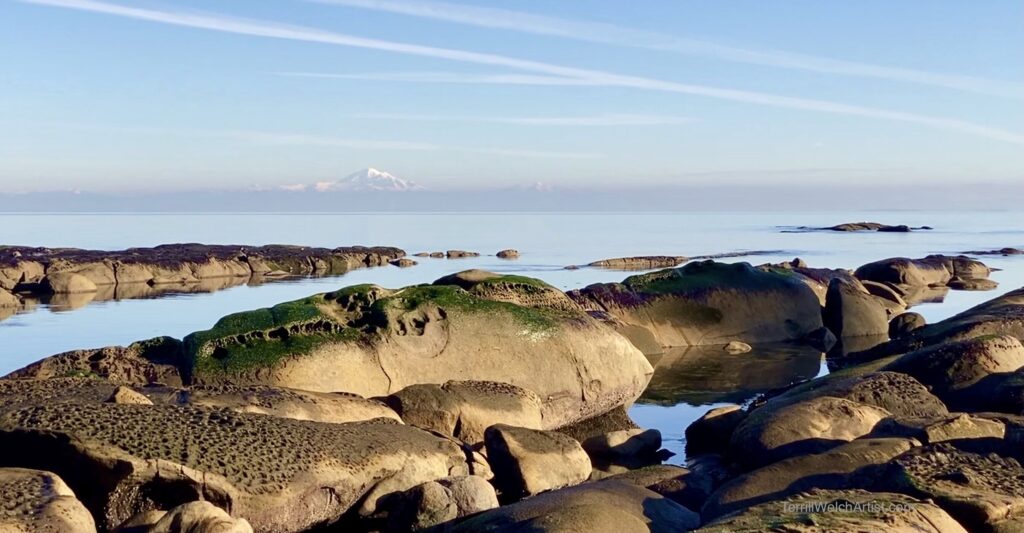
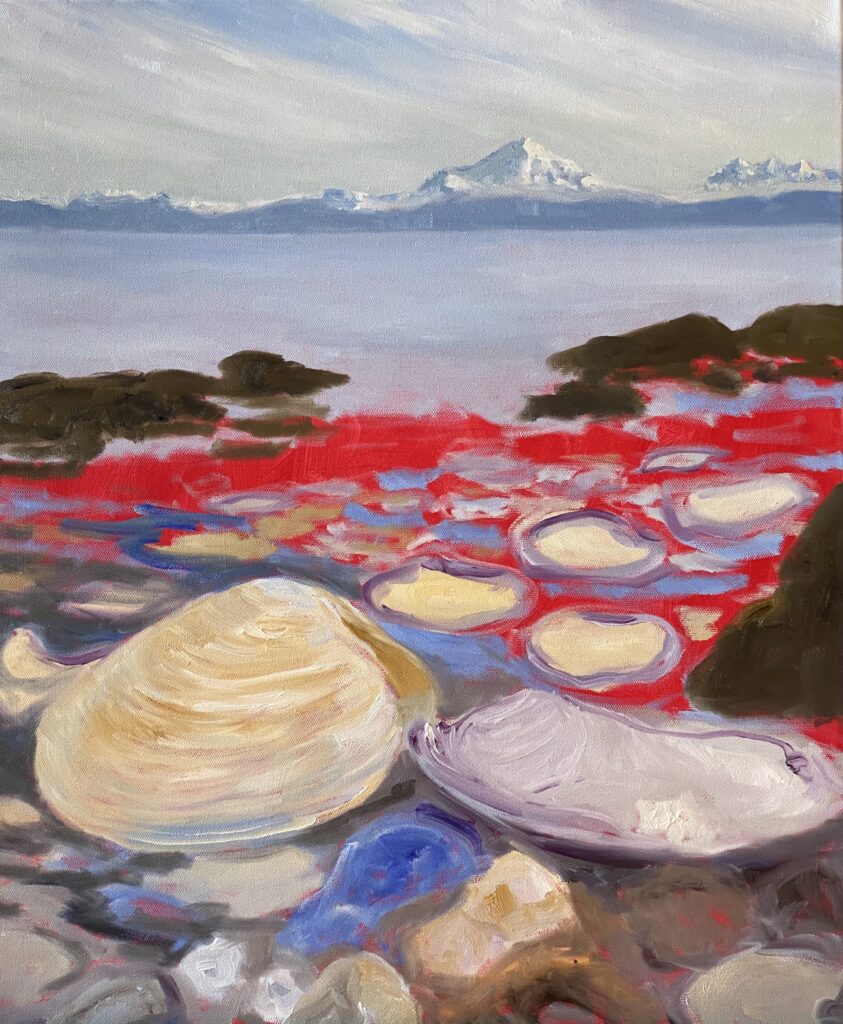
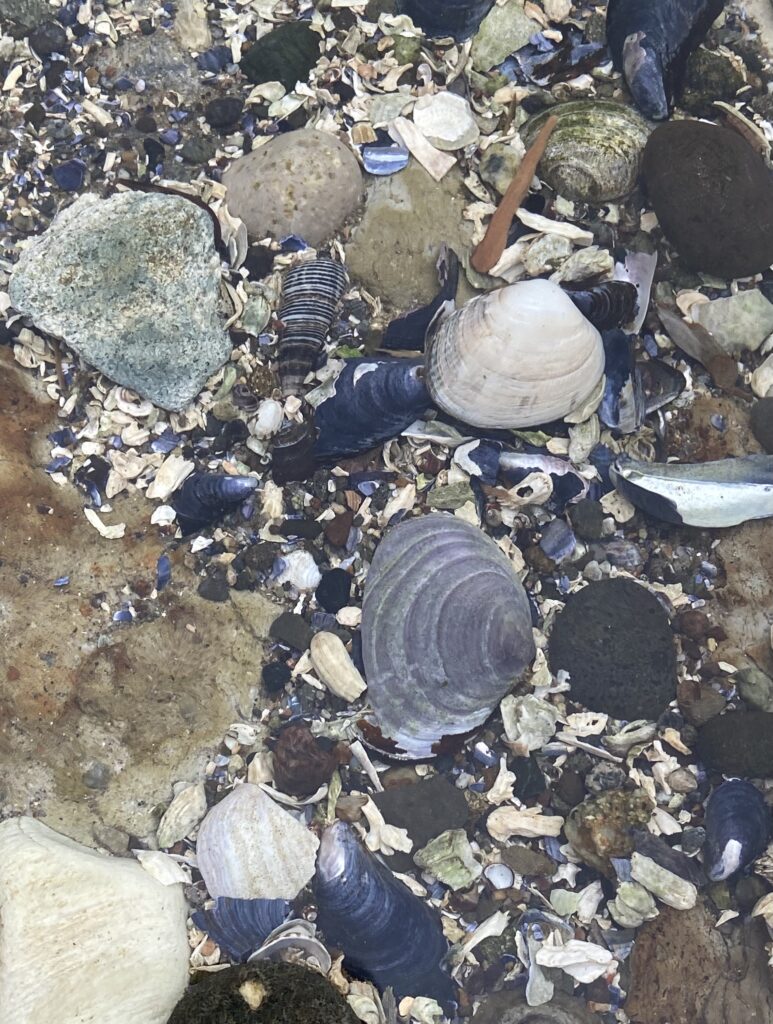
While I was finishing up the previous pair of paintings I began thinking about a way to get really low and do a landscape of the small at the water’s edge of the sea. I have been working most recently with the composition of all-over paintings of seashells and the sea floor by looking down rather than out. I started gathering a few references that I entangled together to come up with a workable composition.

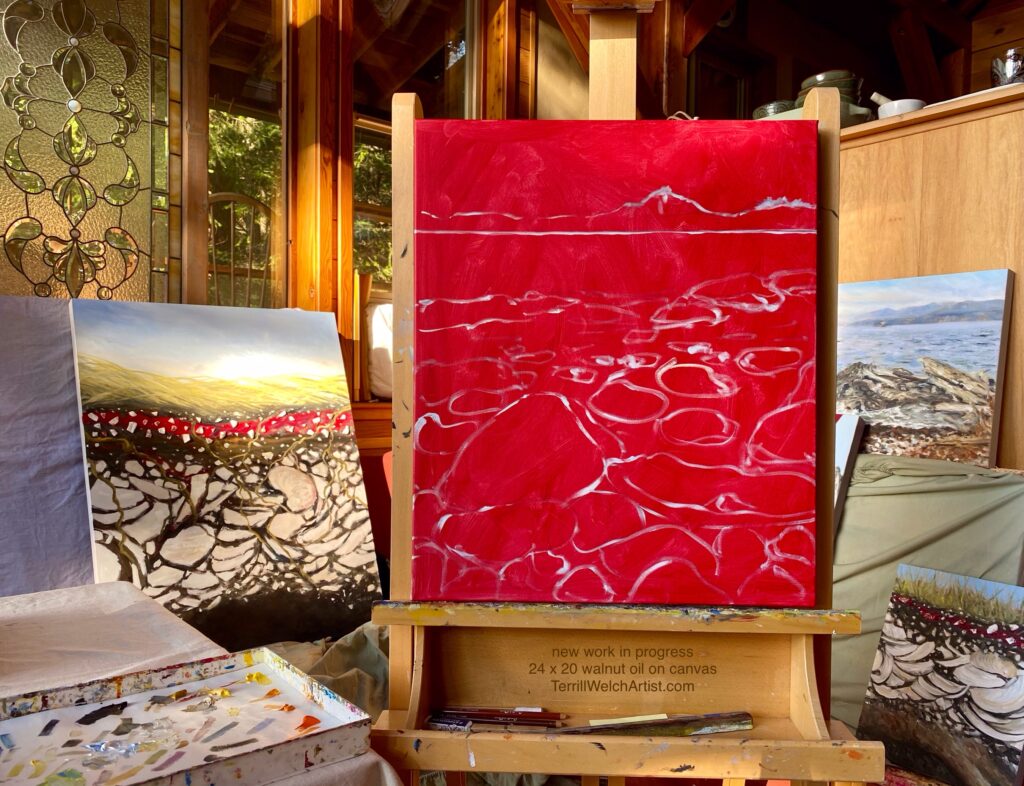
Then I spent the past week painting to see if I could get it to work. The canvas is 24 x 20 inches as I needed more elbow and visual room to test out this notion and as usual, I am working with walnut oils over a red acrylic ground.

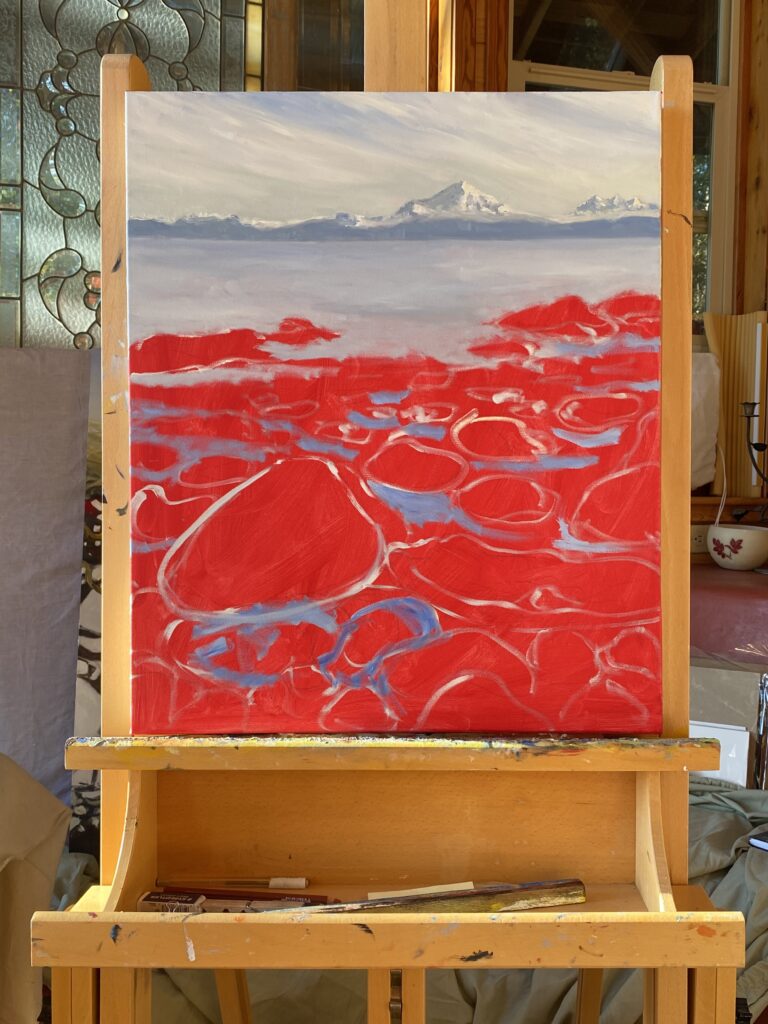
I started with the sky and distant mountains across the strait as these would hold the keys to the light for the rest of the painting.

Then I moved to the foreground before putting the darks in. This is a little of a reverse in oil painting practice but I didn’t want to lose or be heavy handed with the subtle value shifts between the far back and what is up close.

Now I can slip in those darks in relation to the rest of the work.

I kept painting until I had the whole canvas roughed in but it has taken me a while and the work is getting tacky.

I will now have to let it completely dry to the touch before continuing.

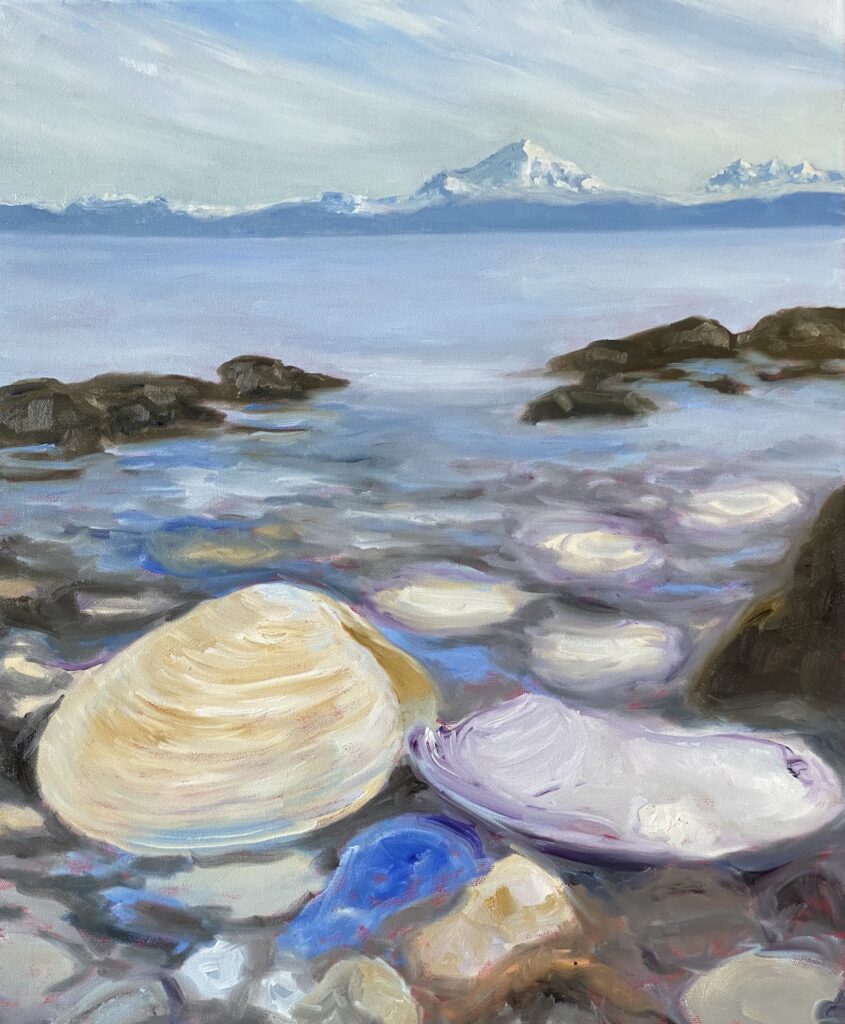
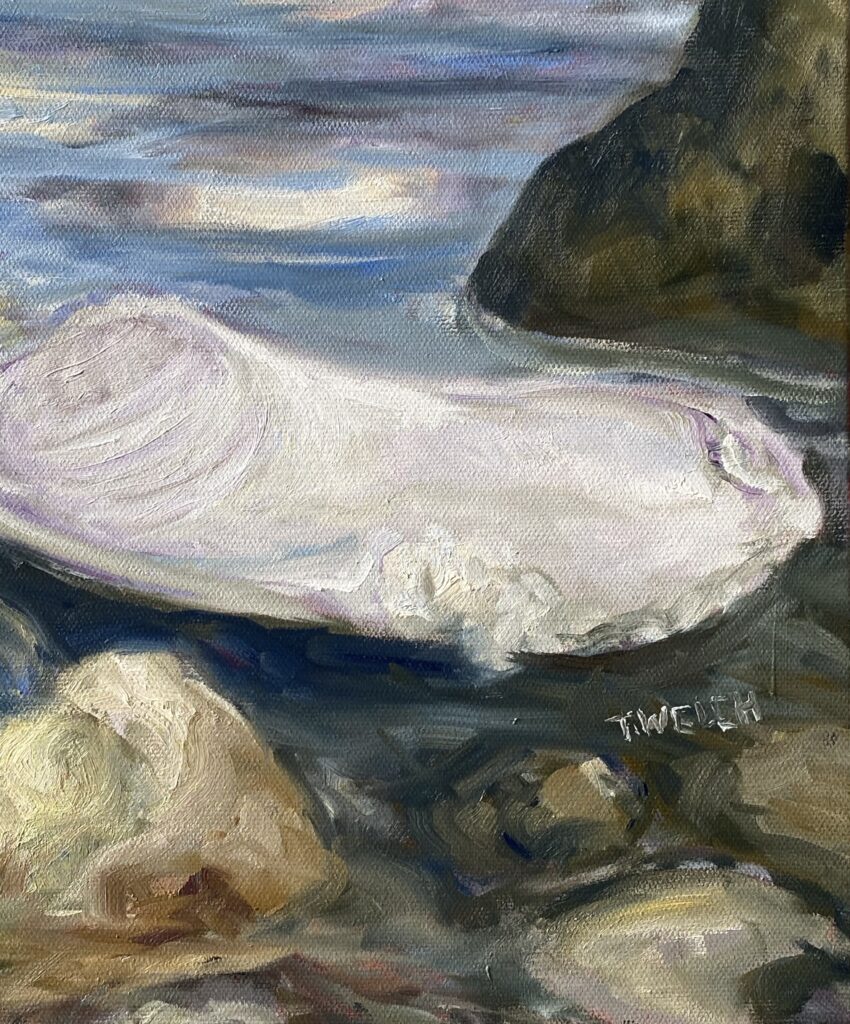
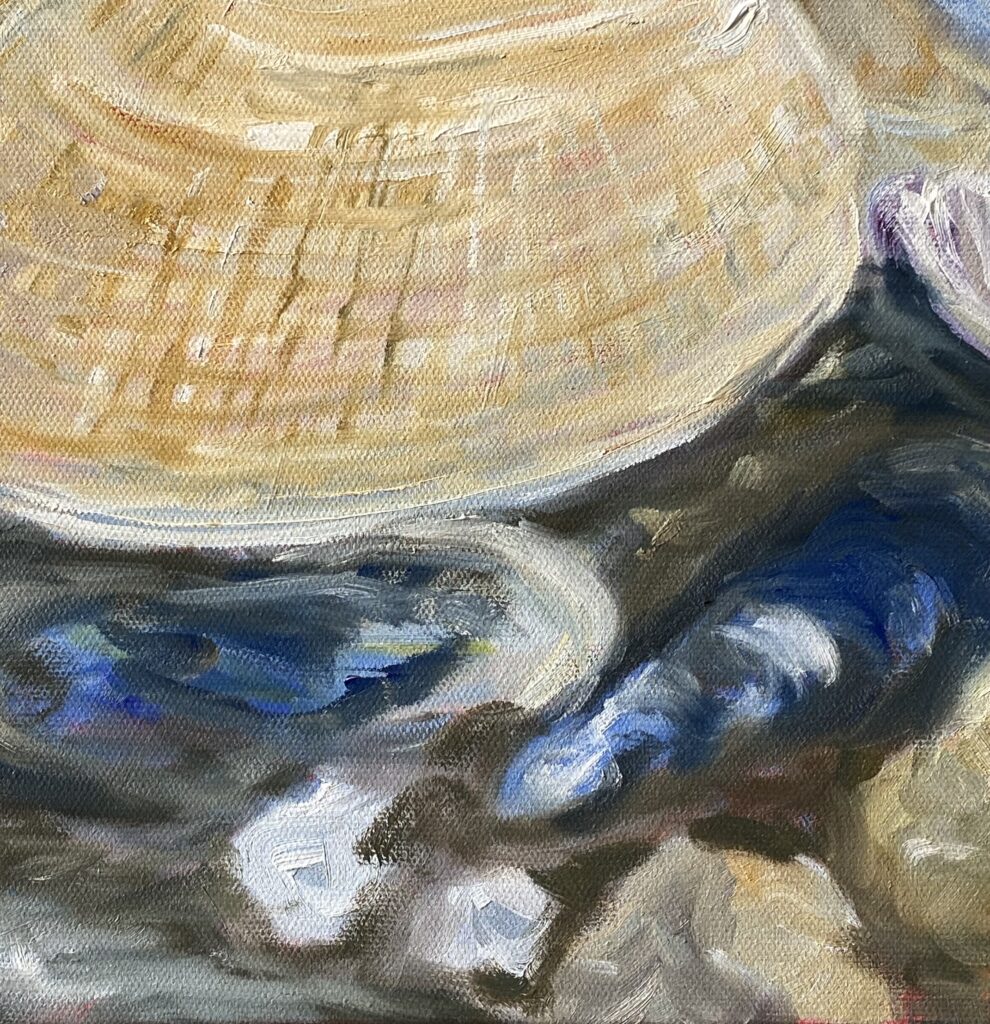
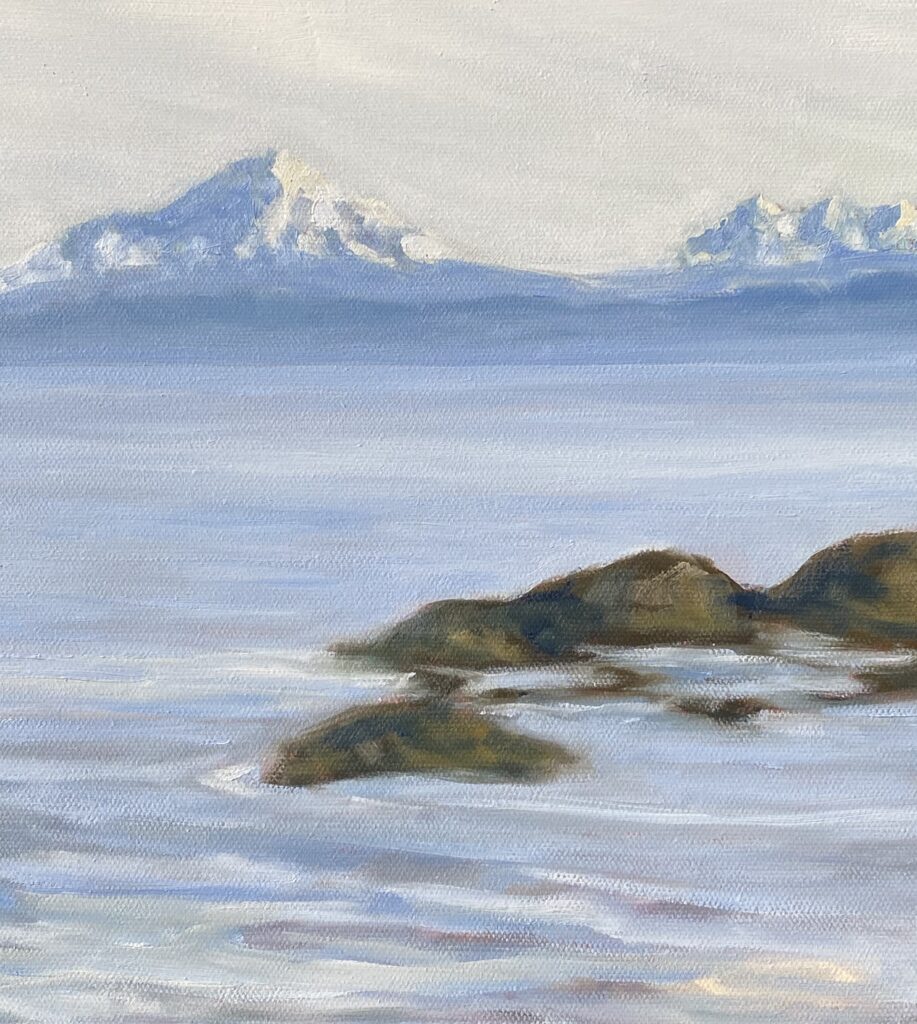
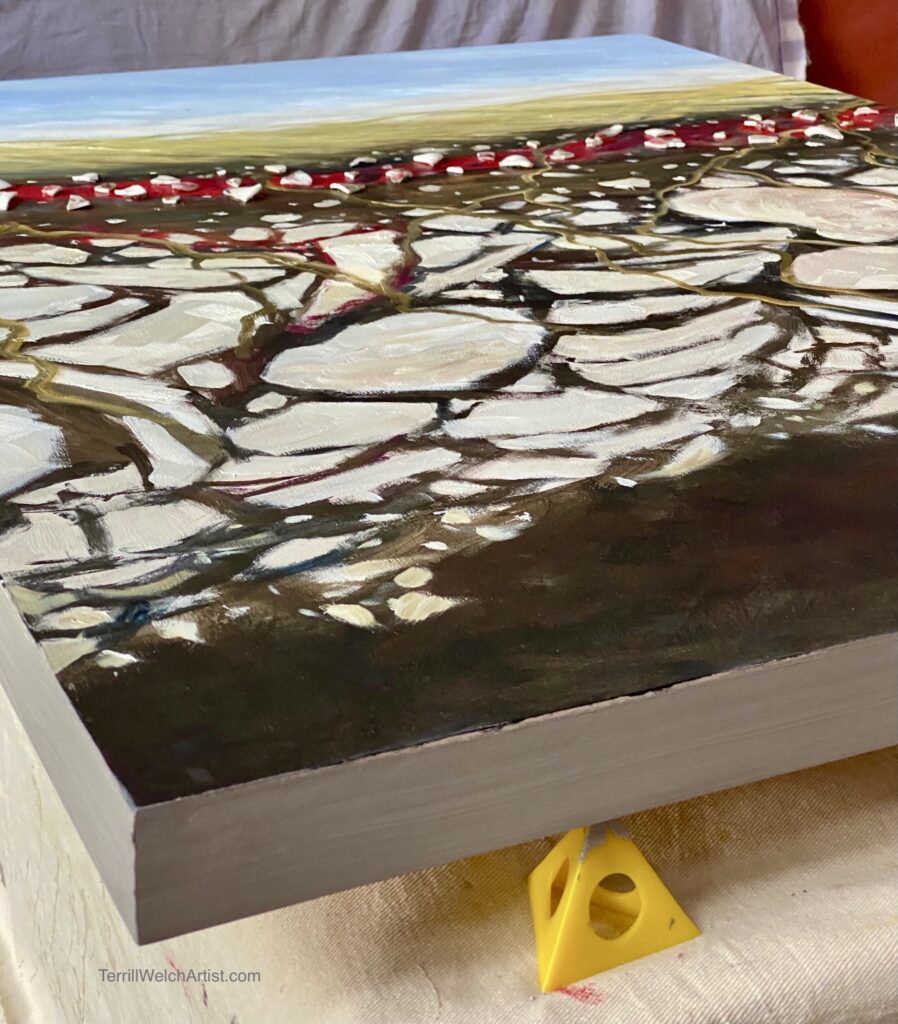
Several days later I settle in and work the whole canvas while making thoughtful changes including to the sky which was taking too much attention away from the foreground. Let’s start with a few details of the resting painting first.

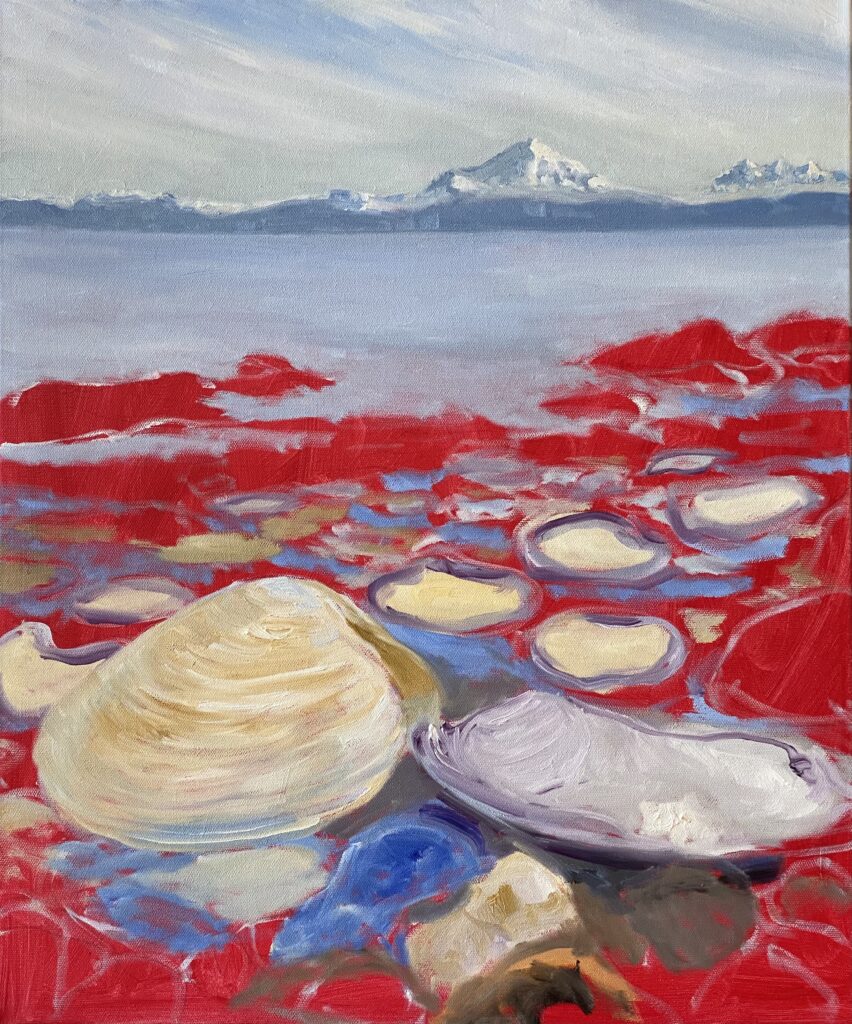
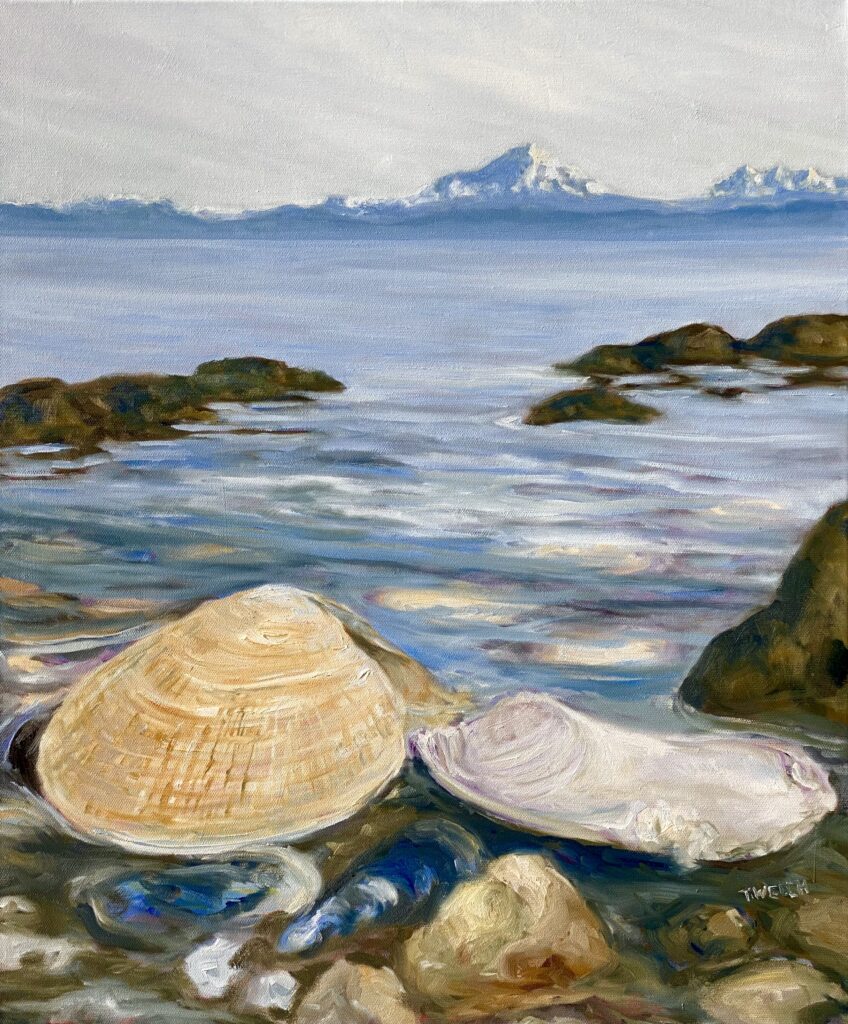
Here is the completed resting work but I am fairly confident that it is finished.

“Seashells Midday at Reef Bay” by Terrill Welch, 24 x 20 inch walnut oil on canvas. Completed Sunday, January 19, 2025.

Artist notes: I sink low to the shore and look out over a calm Salish Sea with mountains in the distance across the Strait of Georgia. When back in the studio, my brushes drift over the shapes and play with the colours while pulling the composition together in an imaginative way. It could be an actual moment in time but it isn’t really as memory and references are unreliable partners between artist and a canvas though the rhythms of the land, sea and sky remain constant.

I am satisfied that it makes a painting and is successful in this regard but I am not convinced that I have pushed the idea as far as it can go yet. I am going to try some further looser close ups to see if I can have us sitting small within a larger landscape. In this one, I feel we can still stand back and observe as a viewer and this isn’t what I want for the work. 

So closer, let’s go closer. I have a sense that if I do this, the painting will feel more abstract even though it is figuratively based. However, these are going to be small studies so let’s be adventurous! 

First Days of January 2025 reference gathering and painting

Wednesday, 21 October 2026

This post contains several excerpts from Terrill Welch MA Fine Art Journal because it is one steady flow of related notes in my painting practice for this time period.

Tuesday, 31 December 2025

I have only a short while to visit Reef Bay. A friend is staying with my husband so I can get groceries and come to gather references. Noon is not my favourite time of day but for the winter months it will work fine. The light is low. The sea is rough and the shells are plenty at the water’s edge. I took a short video and then settled into observing and waiting for moments to present themselves and, as always, they did…

I have my large Canon EOS 70D camera with a Canon zoom lens 70-200mm 1:2.8 IS II USM which in future will be called ”the big camera with the big lens”. My phone camera is an iPhone 11plus pro and is the tool I use most often when gathering references. Both cameras have their strengths and limitations. However, I find them excellent memory aids and an expressive art form all on their own.

I take a few images with both cameras for locational context and briskly walk back to the car.

On the 15 minute, slow 50 km drive home along windy forest-edged rolling roads, I think about how I only consider the physical context of my work for this project as being what is at the seashore. I do not include the drive or having left our strawbale timber frame constructed home with its in floor hot water heat and environmental friendly construction and living. The milk paint on the walls and seven skylights with large windows in three directions creating a seamless connection to the forests and fields around us remain invisible to the history of my work with the exception of my art studio that takes up the sunken room below the open kitchen. I wonder if these aspects of my creative environment matter. I know they matter to our life overall but do they have an impact on how I approach and do my making process? I write this to make this additional physical context visible. 

Wednesday, 1 January 2025

Usually on the first day of the year, go out to the edge of the sea on the east side of the island to watch the sunrise. This year it wasn’t possible so I went to Reef Bay later in the day. The cold air caught in the wind and sliced into my forehead and bare hands. I knew I wasn’t going to last long but it was great to be there. It is a little later in the afternoon. On this day my husband has managed his walker around the soft ground of the house and out to the car that is parked beside the gallery pod at the gate. We have come to the beach with a mocha for him and a peppermint tea for me and along with muffins from the bakery. We are pleased to be back doing some of our favourite things such as car picnics that allow him to sit and view the water and me as I walk along the shore gathering references. I am getting more time to focus on work as he heals from a fractured hip and regains his mental clarity to his previous level following the trauma of the break, surgery, opioids for pain and the confusion of the hospital. His brain injury from a previous large stroke left us unsure if he could regain his baseline. We are relieved that it has come to pass. I am still required to provide additional support and do extra work overall. But it is much better now than the first few weeks and my wellbeing has returned where I can think and hold new information unrelated to David’s health needs. I can feel a new normal settling back into my art practice and studies. 

I meander to the tidal edge and linger a little in the cold. It is good just to be alive and know that the people and places that I love are doing well. I settle low to the ground and gather just a few images with my phone. 

Friday, 3 January 2025

I have been reading and thinking and thinking and reading for the past few days. Some of that thinking is in my previous post about the theories of Dōgen and Plato. I have gone from secondary sources to translations of primary texts in my literature review. 

I go for a long hike down the central trail of Edith Point, a public conservation point that has the sea on each side with glimpses only on the north of the Strait of Georgia until the trail reaches the actual point. This is familiar land and shoreline to me. 

I have been hiking the 4.5km return trails for just about 18 years.

Still, I pause to visit with special arbutus trees while mentally making inventories of previous paintings that have yet to include this beauty. 

As I walk, I ponder. There is too much material to integrate immediately into my art practice and cover in a 3,000 word contextual study. I will have to choose and summarize the most important aspects for this point on my journey. 

Saturday, 4 January 2025

In the morning I paint red acrylic grounds on seven small 12 x 10 inch canvases for painting sketches and one larger 20 x 24 inch canvas. I have the beginnings of an idea to paint the seven smaller canvases as a series where one is a progression from the other. I am not exactly sure how this will work yet but I want the canvases ready regardless. I have again chosen the red ground for how it will provide depth under the overpainting of blues, violets and whites.


In the afternoon, we again go out and take the recycling to the nonprofit processing centre for the island’s extensive recycling efforts. After this, it is to the bakery for car picnic supplies and then to Reef Bay. I again step to the land and sea edge and squat low to the ground with my phone camera. This time I am invited to notice individual shells scattered along the edge of the tide line. 

These references, gathered over these past few days, are what I call photographic sketches. They are collected as sensory and memory aids and for exploring possibilities as they present themselves in the immediate present. I have no illusions about their purity and acknowledge that they are deeply entangled within the limits of the devices and within my life experiences, context and past gatherings and my musings about what use they will be in the future. Still, I want to collect them and desire them for their own record keeping capacities. 

Sunday, 6 January 2025

Today is a studio day. I decided to work flat on the table rather than the easel to do the painting sketches. This is an usual way for me to paint but it is also the most practical because these two surfaces are too small to easily secure side-by-side on my large easel and too large for my small easel. I move the easel around to the end of the table and paint in a direction in the studio I have never done before. It was perfect with the misty filtered light coming in the windows. 

I am still able to stand to paint and use my whole body in the painting process. Taking one of my images as a starting point I begin. 

While I am painting, I cannot help but think that Plato’s cautions about paintings being a copy of a copy that is further removed from his notion of ultimate reality by using my memory and photographic reference prompts. However, he would have the same criticism even if I was standing in front of my subject and painting. I keep thinking that his criticism about imitation and shadows of reality in relation to my inquiry into inner peace, wellbeing and resilience might have some merit. Still, I paint on while holding this intention. I curve the brush around the things we have named shells and feel the sea washing over them under my brush. I work the whole of both canvases.

Without conscious decision, I build up the paint and shapes on the left canvas.

Then I stopped. I have no reason for stopping. I just stopped. Something deep inside me has intervened. I walk away from the studio neither frustrated nor upset or even concerned. I wash my brushes, make a cup of peppermint tea and I start to ponder. What if I do not continue painting in the same manner? What if I try to expose the process of experiencing the sea floor from more than one perspective as if moving my eye and body alongside the rhythm of where the land and sea meet? What might this be like if I did this in a continuous manner with the seven small canvases? 

Monday, 6 January 2025

Could the world views of Dōgen and Plato meet together with the land and sea and my intention for inner peace, wellbeing and resilience somewhere in this making process? What might happen if I do this? Once I get this post up, I shall go back to the studio and see. 

Before I do this, I want to acknowledge to myself that I feel totally inadequate to the task at hand. I know little about philosophy and less about these two individuals and their work. I have only a sketchy understanding of both that has become coupled with a drive to bring what is ordinary in our natural environment to our collective consciousness as something of value to be cherished. Still, I will pick up my brushes and keep painting while I study and learn. I remind myself that new ideas and processes do not often come forth completely developed. They must brew in the rich soup of tidal half thoughts, partial ideas and incomplete processes. This is not only okay, it is necessary and the most useful way forward. 

Too Much For A Painter

Tuesday, January 7, 2025

Too Much For A Painter

Morning came with a vibrant assault.

Deep cadmium and mineral violet

flung themselves carelessly across the sky-soaked trees.

Such promise! 

I frittered it away…

going to the post office to ship a commissioned work to an art collector, 

choosing almost ripe pears at the grocery store, 

hanging a large painting in our local bakery,

visiting on zoom with a longtime artist friend in another country, and

reading passages by Plato and Dōgen. 

Sadly, my brushes remain helpless on the studio table. 

Regrettably, 

ignored.

Maybe tomorrow 

won’t begin with such brilliance.

~Terrill Welch, January 7, 2025

Research through Art Practice – reflection on lecture

Friday, 10 January 2025

In reflecting on the lecture by Dr. Michele Whiting, I find myself pausing at the youth of research and theory through art practice. My first thought was that my children, who are in their forties, are older than this discipline. There is a freshness and excitement that comes with this newness. Everything is still malleable and art research and theory can freely borrow and consider the best from other disciplines as well as developing and establishing its own nature. I remember this dynamic when I studied Sociology and Women’s Studies in the late 1980’s and then worked on a master’s degree in the 1990’s in Gender Studies. There were also smatterings of these same elements in the many positions of my various non-art careers where I repeatedly took on jobs without job descriptions and I later developed these positions through the process of doing so as to reach the desired outcomes. I find myself in a somewhat familiar place with research through art practice and I’m filled with great curiosity for what might be possible through rigorous exploration and critical thinking. I have no doubt that my painting practice will be the better for it, regardless of any other result, and this is the most important reason I am taking this MA of Fine Art. 

Now to the reflective questions:

My position as a researcher and maker – 

As a person with an established painting practice and who primarily works from my own references, imagination and inquiry, I am driven by a researcher’s attitude to making. What I am hoping for with this specific project is to create a formal structure for my inquiry that will result in a deeper understanding about how I get the results I endlessly seek and place them within the larger contemporary art field of research. Basically, I am seeking excellent company to propel my work forward! I sense that the approach of ‘Reflectivity and Reflection’ that is outlined in the lecture demonstrating a circular relationship between the studio and contextual and theoretical research is a particularly useful method of working for my inquiry and it is possibly the most natural fit with my personal sensibilities.

Has your understanding of research in a fine art context been changed, and if so, how?

Yes. Before starting this programme, I was only considering my actual making as my research and practice. I am now clear that my process of making needs to be considered from a much more inclusive perspective and take in my observation and reference gathering as well as the actual painting process.

How can you relate the lecture content to your own processes?

My endless iterations through reference gathering decisions in the field are where I have many chance encounters in my creative process occur. This process continues in the studio and then is taken back out to my field of inquiry and discoveries happen in my work through the wholeness of this process. Somehow, I had separated these two aspects as distinct processes and I have been considering only the later studio work as being valid a process and material for research inquiry. 

What would you change or work towards and why?

I will be taking a more wholistic approach going forward. 

Due to their importance, I have taken the liberty to gather together the references cited in Dr Michele Whiting’s recorded lecture ‘Research through Art Practice.’ There are a couple additions added from my research into the references and I did not include references to the quotes in the slides.  

Selected and Important Works Referenced in presentation and Additions:

Dufourcq, Annabelle. “The Imaginary as Introduction to Ontology and Then as Fundamental Ontological Model.” Contributions to Phenomenology, 1 Jan. 2024, pp. 343–350, https://doi.org/10.1007/978-3-031-73826-5_21. Accessed 11 Jan. 2025. (Speaks to Maurice Merleau-Ponty “For an ontology of the Perceived World” 1954-55)

Frayling, Christopher. “Research in Art and Design.” Royal College of Art Research Papers, vol. 1, no. 1, 1993, researchonline.rca.ac.uk/384/9/frayling_research_in_art_and_design_1993_OCR.pdf. Accessed 11 Jan. 2025.

“Front Page | Journal of Artistic Research.” Www.jar-Online.net, www.jar-online.net/en. Accessed 11 Jan. 2025.

Gray, Carole, and Julian Malins. Visualizing Research. 11 Feb. 2016, https://doi.org/10.4324/9781315547923.

Loveless, Natalie. “How to Make Art at the End of the World.” Dukeupress.edu, Duke University Press , 2019, www.dukeupress.edu/how-to-make-art-at-the-end-of-the-world. Accessed 11 Jan. 2025.

Merleau-Ponty, Maurice. The World of Perception. Routledge, 31 July 2004.

Puig de La Bellacasa, Maria. “Matters of Care.” University of Minnesota Press, 18 Mar. 2024, www.upress.umn.edu/9781517900656/matters-of-care/. Accessed 11 Jan. 2025.

Rose, Gillian. “Visual Methodologies: An Introduction to Researching with Visual Materials | SAGE Companion.” Sagepub.com, 2016, study.sagepub.com/rose4e.

Schön, Donald. The Reflective Practitioner. 1983. https://studenthublive.open.ac.uk/sites/studenthublive.open.ac.uk/files/reflective%20practitioner%20-%20schon.pdf

Verbeke, Johan. “The Intrinsic Value of Artistic Research.” Architecture, Design and Conservation – Danish Portal for Artistic and Scientific Research, 2025, pp. 123–125, adk.elsevierpure.com/en/publications/the-intrinsic-value-of-artistic-resrearch. Accessed 11 Jan. 2025.

Time between studio and another sea floor painting process

Sunday, January 12, 2014

As new oil paintings rest on my easel, the passage of time and space between studio and sea seems to narrow with purpose. I have gathered some of this flow in my reference material and the resting point of the works in progress.

In an early post I shared where I had stopped with this loosely diptych pair of studies…


The week has transitioned between reading about theories of objects and things, human perception, Plato’s constant abstract true reality and Dōgen’s continuous change in the particulars of ordinary life combined with my driving need for immersive time beside the sea and in the studio where I bring my conversations with the sea with me to share on the canvases. There is no doubt about our flawed and limited sensory information. I will expand on the science and specifics of this later on. However, this process of exposing, defining and creating meaning around these observation flaws beside the sea is a mystery that continues to sustain my art practice. It is within this process that I find inner peace, wellbeing and resilience. Still, that act of thinking about sensory experience does, as you will see, have an impact on what perspective I choose and how I curate my conversations with the sea on the shores of Reef Bay onto my canvases.

The following are snippets of observations between the full stop in the studio and the completion to resting of two small studies. In my painting practice “resting” is the place where I have completed all I can in that moment and I am waiting to see if the work demands anything more. I keep the work where I can look at it from time to time out of the corner of my eye. I wait. Then I make a final decision to either change something or call it done/completed/resolved. 

My next step after the full stop was to consider movement and the effects on what we observe and how my eyes try and catch glimpses of objects and shapes that can quickly be categorized and named… even if I get it wrong. My brain will make and hang onto a mistake until further information can refine my observations rather than leave a void. I develop the second canvas with this in mind.


I am disappointed. Now neither canvas works for me, either separate or together. What to do? I could still scrape them and start again. I decide against this and leave them to dry to the touch and return to the sea.

The sun softly lifted a heavy mist down at the bay. It had me thinking about how inner peace, wellbeing and resilience are something we put ourselves in a place to receive and then create from what is available. The three gifts from gratitude are always present and then form from our own making. This takes more effort if the materials are scarce but it is still possible and always necessary.

The midday winter tides are high and the long reef trenches of shells are outside of my reach.

A few days later, I go to sleep in evening thinking about big movements and large landscapes of the sea depicting small areas, something close and intimate and yet grand. I have an idea for my third study and a notion about changing the sea floor perspective from above to beside just as I would with a more expansive geography composition. First, I work on the pair of studies that I had started and continue to paint them together. Now I am more satisfied with the conversation being shared in these two.


I had found a way to attach the two canvases securely together to my small easel. I found I didn’t like working flat on the table at all. My trifocal lenses made it difficult to see properly and there is a glare on the surface that interferes with being able to read the values as I am working. Finally, my lower back complained about being held in the new position for several hours at a time.

I leave the painting sketches and head for Reef Bay again in the hopes I might find something to practice my new perspective idea.


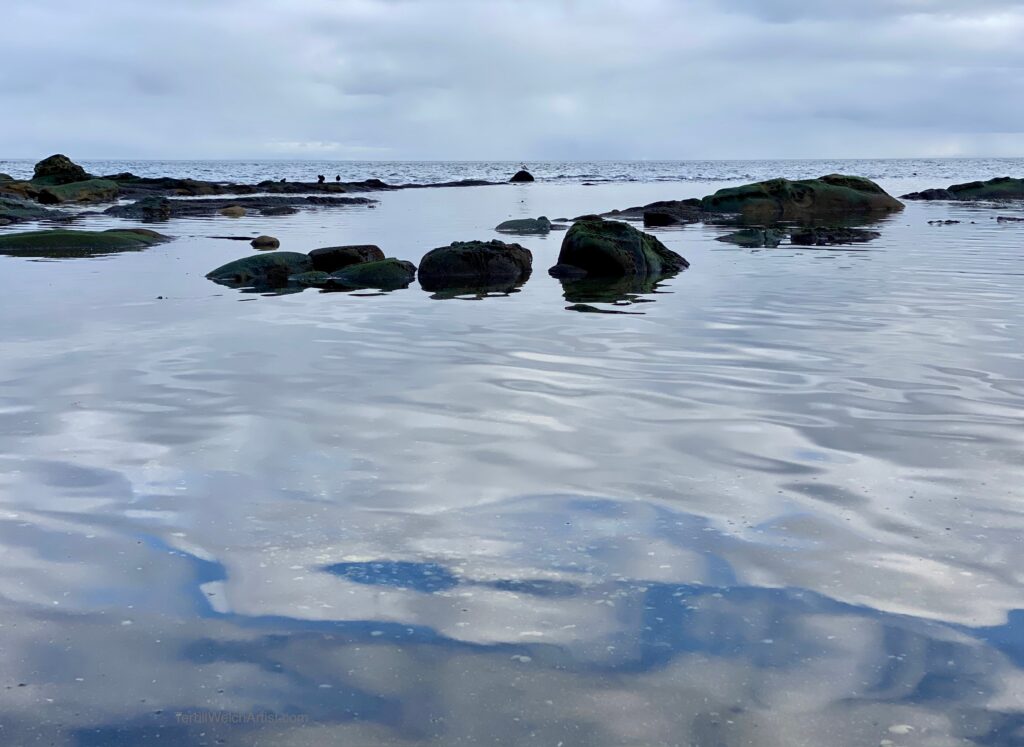
The tide is still higher than I would like but there are some interesting possibilities to explore.

At first I scan out from the shore.


A floating mussel shell catches my attention.


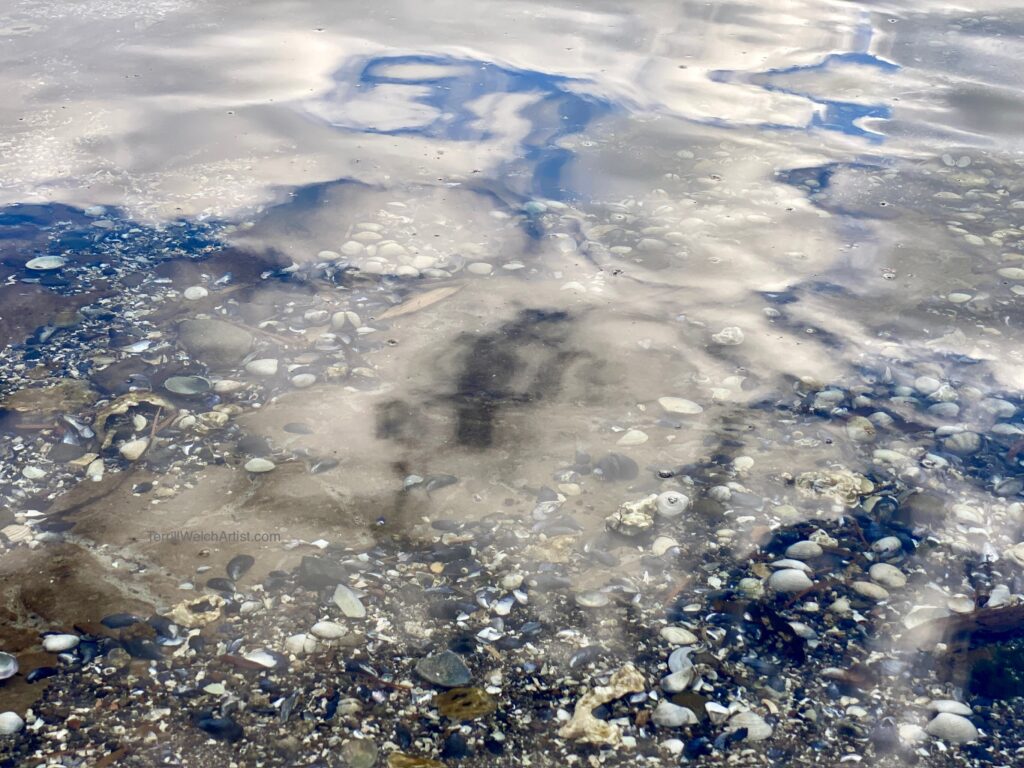
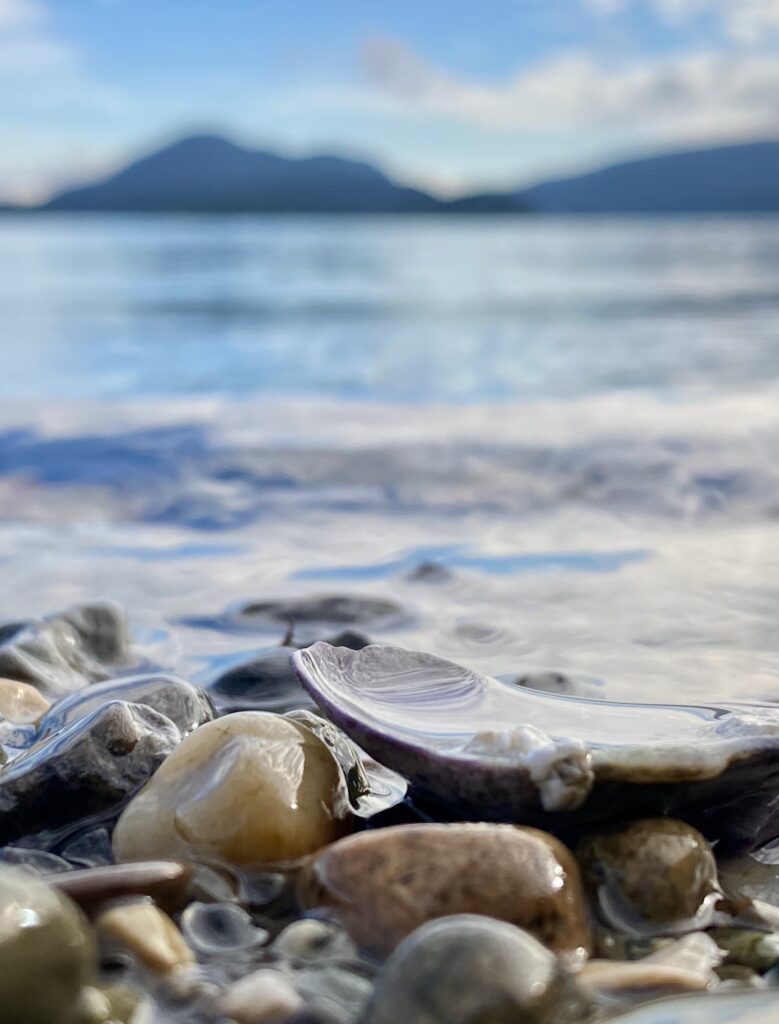
I drop the phone camera down as low as I can without getting it wet and wait as the sea wash moves back and forth.

Sometimes the seashell is completely covered providing more visual interaction between the sea and sky.

I move a little farther along to a collection of shells just close enough for me to reach. The seaweed flashes back forth with the movement of the tide.

I repeat the low angle perspective tilting the camera out towards an unseen horizon.

Hummm…. let’s go lower yet. There! Time and spacial relationships seem to entangle in the flawed camera rendering of a copy of the landscape depicting the small along the sea shore that is then further distorted in my own viewing as as my human eye and brain scramble to make meaning of what I observe.

This then, and a few close up captured cousins, will become my muse for my next painting study.

In the meantime, these two studies are resting together and a part.

They do seem to speak well together about my experience and conversation with the sea. Yet, they may need a little more space from each other as if they are two separate paragraphs in the same story rather than one long run on sentence.

“Butter Clamshells Near Shore I Study” by Terrill Welch, 12 x 10 inch walnut oil on canvas.

Artist notes: I stare into the winter sea tides and wonder at the rocking of the shells that shift with each incoming and outgoing wave.

“Butter Clamshells Near Shore II Study” by Terrill Welch, 12 x 10 inch walnut oil on canvas.

Artist notes: I stare again into the winter sea tides and wonder at the rocking of the shells that shift with each incoming and outgoing wave.

I have no idea if this new line of inquire in perspective of the landscape of the small will be fruitful in my exploration of how nature can instil inner peace, wellbeing and resilience but it is exciting to consider and so I shall.

Seafloor, Research, Theory and Practice presentation by Terrill Welch

Saturday, 17 October 2026

Much of this early research was set aside but some strands were pulled through to the end so I want to keep it here for future reference.

Monday, 30 December 2024

Full text and reference list for: Seafloor, Research, Theory and Practice presentation by Terrill Welch

Welcome! I am Terrill Welch. 

In my Sea Floor painting series, I will practice the Zen theory of seeing with the whole body and mind and moving through this awareness to be able to function in the ordinariness of our lives as discussed by John Daido Loori in 2004.

I also consider that art theory, as described by Cynthia Freeland, “involves the effort to organize a dizzying variety of phenomena so as to try to say what they have in common that makes them special.”  (Freeland, 2003)

In addition, in the words of bell hooks “… I find writing – theoretical talk – to be most meaningful that which invites readers to engage in critical reflection and to engage in the practice…” in her case “of feminism.” (hooks, 1991, p. 8) 

Though hooks is talking about writing and readers, I suggest that the same principle can apply to art theory being most meaningful when viewers are invited to engage in critical reflection and to engage in/with the practice of making art. 

I propose that art theory is embedded in our making practice and lived experiences where one continuously revises and informs the other. 

The purpose of my Seafloor series is to engage in an intimate conversation between land and sea and the art of painting with the intent that development and completion of a work will instil inner peace, wellbeing and resilience. However, this is not an isolated new beginning.

As a white, rural, post secondary educated mid sixties woman of settler ancestry living on the unceded lands of the Coast Salish People along the southwest coast of Canada, I was born after the 1940’s and 50’s American Abstract Expressionism movement which included the likes of Mark Rothko and before the gestural figurative and gauging work of Canadian painter Patterson Ewen in the 60’s and 80’s, which has then led me to the thrill of performance art such as the significant contemporary work of Joan Jonas and Dana Claxton and their powerful installation art. Through all of this, I have remained a practicing painter for the past 50 years with primarily figurative, semi-figurative, semi-abstract and impressionist leanings.

I can and do experiment with painting fully abstractly. However, the process and the results seem incomplete to me for the conversations I wish to have with my subjects in paint. Both figurative and abstract elements in my paintings are imperative to the depth, movement and full expression I want to create in my work. 

With this context in mind, I propose that positioning figurative versus abstract in contemporary art is possibly a false dichotomy. I suggest that in my painting practice for this series, figurative and abstract painting are on the same continuum and have an elastic tension between whole body and mind awareness and the functionality required within our ordinary lives. 

This both/and approach to figurative/abstract painting has strong historical beginnings with French painter Paul Cézanne (1839 – 1906) through to American painter Richard Diebenkorn (1922 – 1993) and Canadian painter Patterson Ewen (1925 – 2002) to those referenced in 2021 by Julian Delarange in contemporary art such as David Hockney (1937 -) , Gerhard Richter (1932 – ), Alex Katz (1927 – ) and the youngest at 65 years old, Peter Doig (1959 -).

In 2023, Camille Cohen continues to explore why figurative art has maintained its relevance through time citing the iconic work of Frida Kalho (1907 – 1954) and the figurative abstractions of Cecily Brown (1969 – ). (Cohen, 2023)

However, there are risks within this making approach. As Loori cautions, once we name something, by giving it figurative meaning, we risk no longer noticing how what we have named is perpetually changing. (p. 73 Loori, 2004) We risk missing what else our subject is and what it might yet become. 

I address this risk by beginning again and again, breath by breath, brushstroke by brushstroke through to the quivering notion of naming before it is named – leaving room in each painting for future possibilities and discoveries. 

Video publicly available to view on YouTube: https://youtu.be/LOOo6ipMBcg?si=koFBO4x6UMfu9MfH


Reference list

Claxton, D. (1997) Buffalo Bone China, Dana Claxton. Available at: https://www.danaclaxton.com/artwork/buffalo-bone-china (Accessed: 6 December 2024).

Cohen, C. (2023) What is Figurative Art ? A comprehensive guide, COHLE GALLERY. Available at: https://www.cohlegallery.com/blogs/stories/what-is-figurative-art (Accessed: 20 December 2024).

Delagrange, J. (2021) Contemporary Figurative Painting: A Complete Overview – CAI, Contemporary Art Issue. Available at: https://www.contemporaryartissue.com/contemporary-figurative-painting-a-complete-overview-and-list/ (Accessed: 20 December 2024).

Diebenkorn, R. (1957) Sea Wall [Oil on Canvas]. Available at: https://diebenkorn.org/objects/220/?group=52ae518792775b11d5b4a4cddb7f6f80 (Accessed: 20 December 2024).

Drouin-Brisebois, J. and Diviney, D. (2024) JOAN JONAS: WE COME FROM THE SEA, Gallery.ca. National Gallery of Canada. Available at: https://www.gallery.ca/magazine/your-collection/joan-jonas-we-come-from-the-sea (Accessed: 20 December 2024).

Ewen, P. (1983) Ice Floes at Resolute Bay [acrylic on gouged plywood].

Freeland, C. (2003) Art Theory: A Very Short Introduction. Oxford University Press. Available at: https://doi.org/10.1093/actrade/9780192804631.001.0001.

Griffin, K. (2018) ART SEEN: Only British bone china allowed for Buffalo Bone China, vancouversun. Vancouver Sun. Available at: https://vancouversun.com/news/staff-blogs/art-seen-only-british-bone-china-allowed-for-buffalo-bone-china (Accessed: 21 December 2024).

Hatch, J.G. (2018) Paterson Ewen: Life & Work, Art Canada Institute – Institut de l’art canadien. Available at: https://www.aci-iac.ca/art-books/paterson-ewen/biography/ (Accessed: 13 November 2024).

hooks, bell (1991) Theory as Liberatory Practice bell hooks. Yale Journal of Law & Feminism: Vol. 4: Iss. 1, Article 2., pp. 1–12. Available at: https://www.ias.edu/sites/default/files/sss/pdfs/Crisis-and-Critique-2018-19/hooks_theory.pdf.

Joan Jonas: Good Night Good Morning (2024) The Museum of Modern Art. MoMA. Available at: https://www.moma.org/calendar/exhibitions/5367 (Accessed: 19 November 2024).

Jonas, J. (2023) Joan Jonas in ‘Fiction’ – Season 7 – ‘Art in the Twenty-First Century’ | Art21, YouTube. Available at: https://youtu.be/x2WkckhWRxw?si=NhphxzLbyAm498tq (Accessed: 19 November 2024).

Loori, John Daido (2007) The Zen of Creativity: Cultivating Your Artistic Life. New York: Ballantine Books.
Lynk, M. (2024) ‘We come from the sea’: American artist Joan Jonas on the pull of oceans and Cape Breton, CBC. Ideas in the Afternoon, Radio One. Available at: https://www.cbc.ca/radio/ideas/artist-joan-jonas-cape-breton-and-oceans-1.7358491 (Accessed: 19 November 2024).

Meiers, A. (2020) How the Rothko Chapel Creates Spiritual Space, JSTOR Daily. Available at: https://daily.jstor.org/how-the-rothko-chapel-creates-spiritual-space/ (Accessed: 30 October 2024).

Trant, A.J. et al. (2016) ‘Intertidal resource use over millennia enhances forest productivity’, Nature Communications, 7(1). Available at: https://doi.org/10.1038/ncomms12491.

Welch, T. (2022a) Future Fragments Study [acrylic and oil on gessobord]. Available at: https://www.artworkarchive.com/profile/terrill-welch/artwork/future-fragments-study (Accessed: 30 December 2024).

Welch, T. (2022b) Sandstone Serpents at the Entrance of Active Pass [acrylic and pencil crayon on gessobord]. Available at: https://www.artworkarchive.com/profile/terrill-welch/artwork/sandstone-serpents-at-the-entrance-of-active-pass (Accessed: 30 December 2024).

Welch, T. (2024a) A Long Land and Sea Story [acrylic, walnut oil and bone china on wood].

Welch, T. (2024b) Drifting with Seashells in a Receding Tide [digital sketch using Art Set App].

Welch, T. (2024c) Late August Morning [oil on canvas]. Available at: https://www.artworkarchive.com/profile/terrill-welch/artwork/late-august-morning (Accessed: 30 December 2024).

Welch, T. (2024d) Rhythms on the Sea Floor with Crab [acrylic on gessobord]. Available at: https://www.artworkarchive.com/profile/terrill-welch/artwork/rhythms-on-the-sea-floor-with-crab (Accessed: 30 December 2024).

Welch, T. (2024e) Sea and Seals [oil, ceramic tiles, screws and wire on wood]. Available at: https://www.artworkarchive.com/profile/terrill-welch/artwork/sea-and-seals (Accessed: 30 December 2024).

Welch, T. (2024f) Sea Floor at Reef Bay [walnut oil on canvas]. Available at: https://www.artworkarchive.com/profile/terrill-welch/artwork/sea-floor-at-reef-bay (Accessed: 30 December 2024).

Welch, T. (2024g) Sea Floor, Research, Theory and Practice presentation by Terrill Welch, YouTube. Available at: https://youtu.be/LOOo6ipMBcg?si=6a_eNxmBZWSAjdKi (Accessed: 30 December 2024).

Welch, T. (2024h) Shells Gathering Study [walnut oil on gessobord]. Available at: https://www.artworkarchive.com/profile/terrill-welch/artwork/shells-gathering-study (Accessed: 30 December 2024).

Welch, T. (2024i) Strait of Georgia Blues [walnut oil on gessobord]. Available at: https://www.artworkarchive.com/profile/terrill-welch/artwork/strait-of-georgia-blues (Accessed: 30 December 2024).

Welch, T. (2024j) Varnish Clamshell in the Flow [walnut oil on linen]. Available at: https://www.artworkarchive.com/profile/terrill-welch/artwork/varnish-clamshell-in-the-flow (Accessed: 30 December 2024).

Rough capture of research considerations

Tuesday, 10 December 2024

I am beginning to muse about research considerations.

Do I restrict geographic site or sites for my field work?

Are there other materials and ways of engagement other than paint and a surface that are compelling to me when having a conversation with nature?

How does being with nature, specifically the sea instil inner peace, wellbeing and resilience.

What marks or rhythms of marks and shapes on a painting surface convey inner peace, wellbeing and resilience?

Action: Must investigate theories and research – My biases are that these aspects of self engagement, realizations or vibration achieved by both the maker of the work and the viewer of the same work allows for the best opportunity for living a full, rich life with compassion, accountability,  and endurance. I question whether this is true or simply long held assumptions.

Now to get on with some painting in the studio. It is only 9:30 and I should be able to get a couple of hours in at least. Then we have the “Making Day” tomorrow for school. This should make for a nice warm up for then.

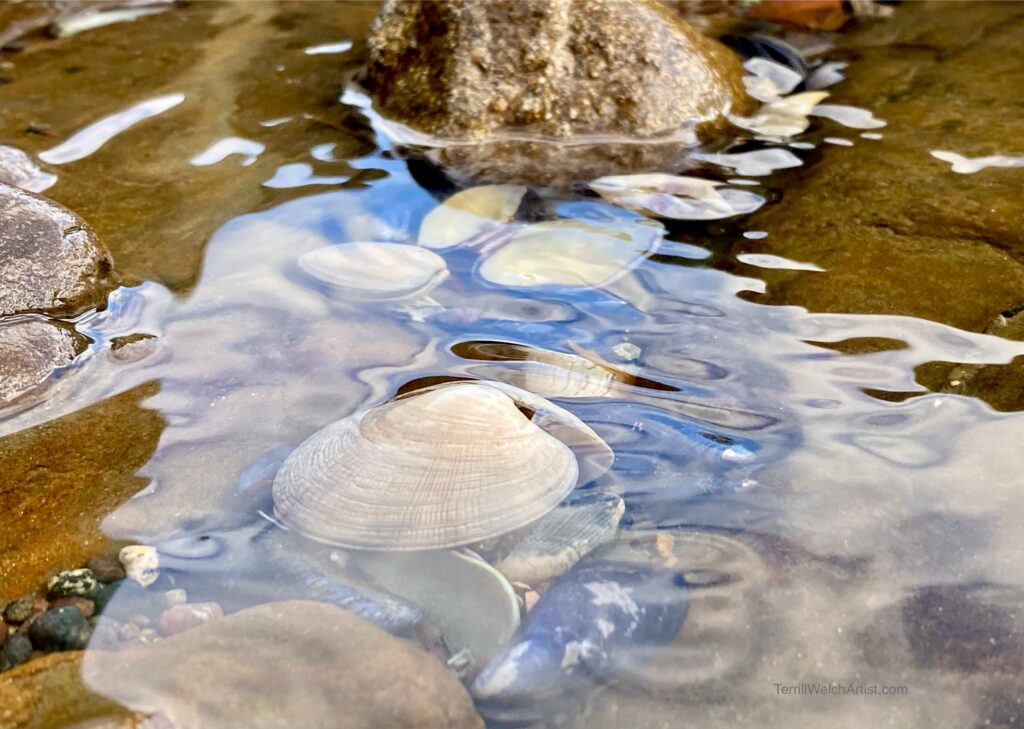
Latest small work of a varnish clamshell in a seasonal stream at the tide line

Wednesday, December 11, 2024

The making process begins with a few paint marks in walnut oils on an 8 x 10 inch linen on board surface with a solid oil red ground. I wanted the solid foundation this deep red will offer to the much lighter overpainting.

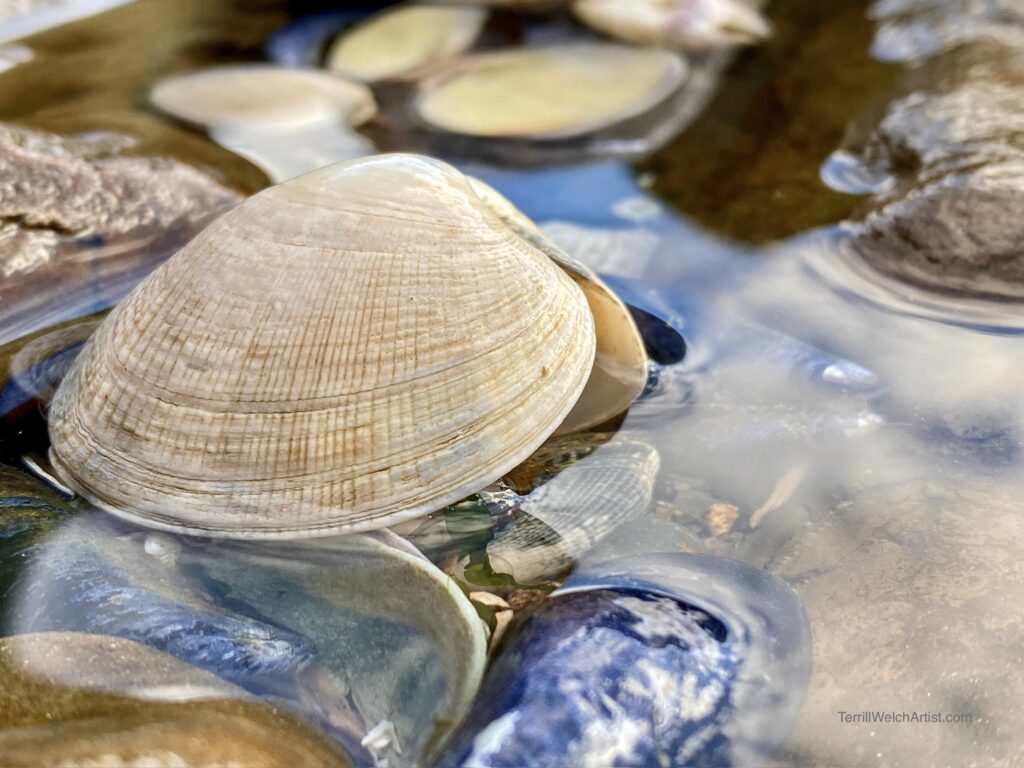
I have a short video from my field work and reference gathering that I play several times as I work. It is the shapes and movement balanced by the flashes of light sparkling in the water that most interesting me. I reach down into the soft ripples of water caressing the clamshell and set down the broadest of brush marks onto the surface.

My intention for this work is to instil a sense of inner peace, resilience and wellbeing. The work is a reminder of who I am after a stressful and tumultuous couple of weeks. I need this making process almost as much as I need to breathe. I can feel myself centre and my shoulders relax as I work.
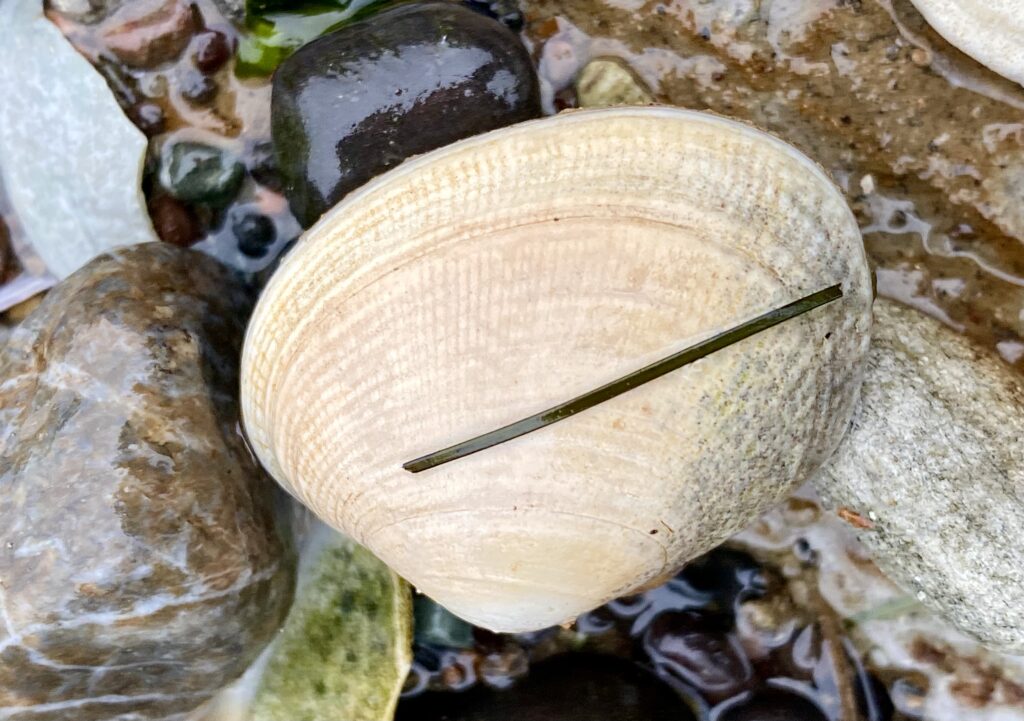
I now sit writing these notes as the December afternoon low sun streams into the studio and across the kitchen beside where I am sitting. The house is quiet. A soft breeze moves the branches gently on the large for trees outside the window. I am grateful for this rural bounty. I am grateful for life. I am grateful for the technology that allows me to capture bits of my world and the tools to create passages of conversation with our surrounding environment, particularly the sea, the Salish Sea if I want to be more specific. Even when I cannot physically get there, the sea remains close to me as the tides move back and forth against the edges of my memory. The small work now rests in front of the larger painting I will continue working on before daylight tomorrow.


“Varnish Clamshell in the Flow” by Terrill Welch, 8 x 10 inch walnut oil on linen board. Completed December 10, 2024


Artist notes: I had gone to Bennett Bay and along the beach to where a season creek was flowing into the sea and washing over seashells along the way. They varnish clamshells created a light musical sound as the water passed over them. The beauty of the shapes and sounds created a textured resonance in my being. For those moments inner peace is held, in those shapes, in those colours and sounds. I find inner peace in the abstracted loosen of the brushstrokes, gifted to the linen surface without misgivings or hesitation. This is the full body experience I aim to capture in this small painting completed in oil, wet-in-wet, in the studio a month later. 
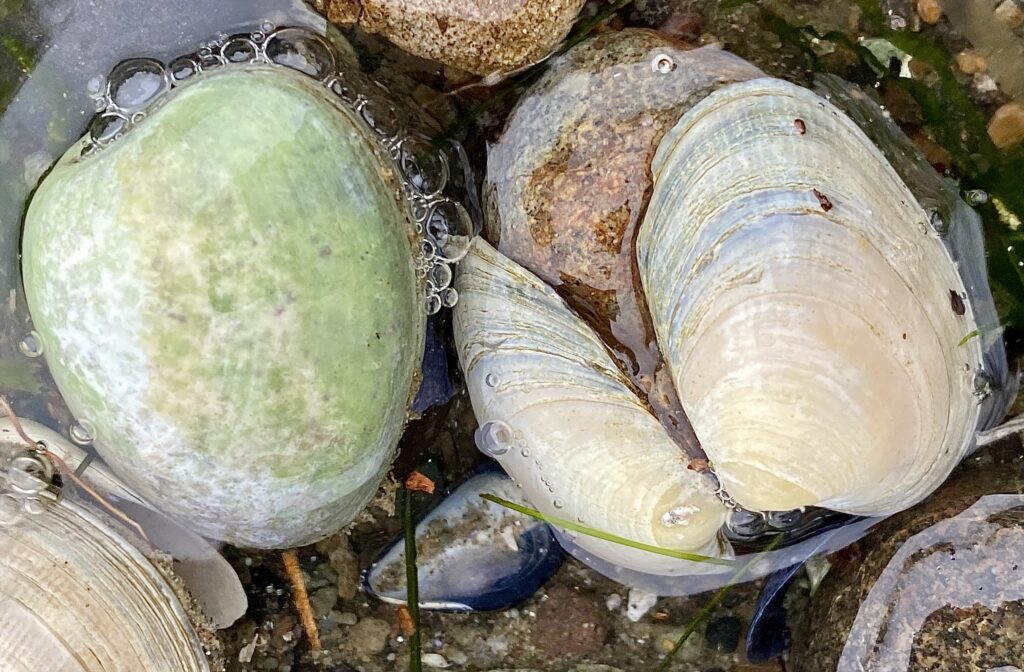
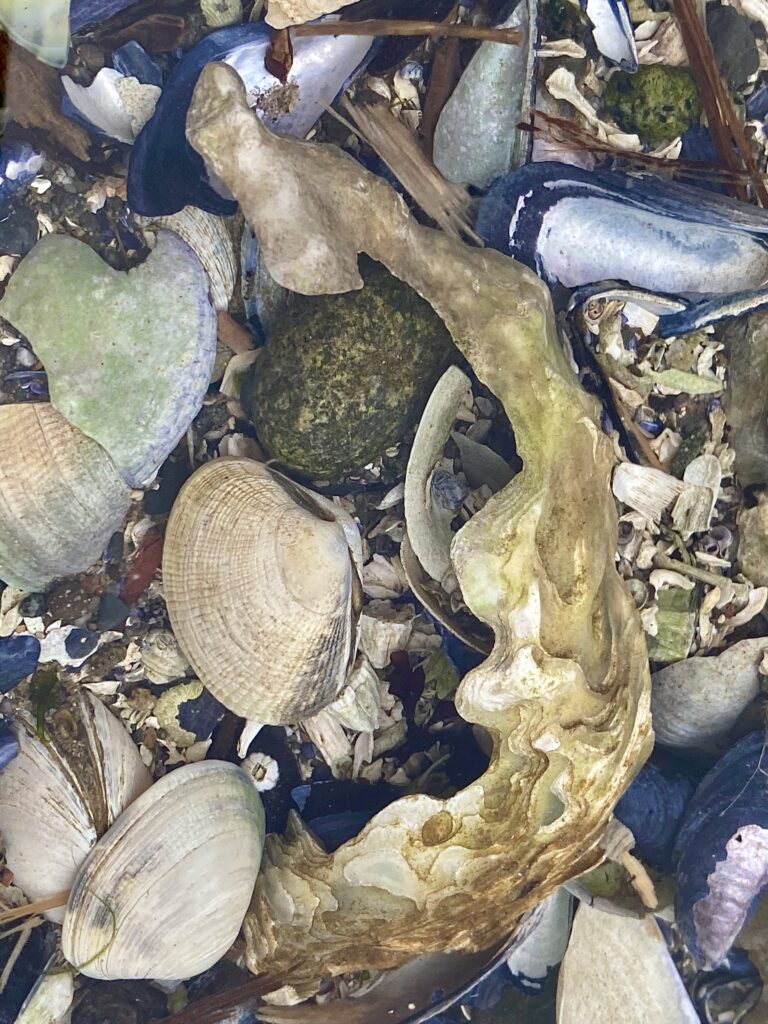
It feels good to be back working in my physical studio again!

New Small Painting Study of Mussels and Waves

Monday, 12 October 2026

It is Canadian Thanksgiving today and I have begun a new painting about something that I do not already know how to do. It is an experiment, not unlike this early painting in my nature-centric, reparative Seafloor series.

Excerpt from Terrill Welch MA Fine Art Journal

Saturday, January 25, 2025

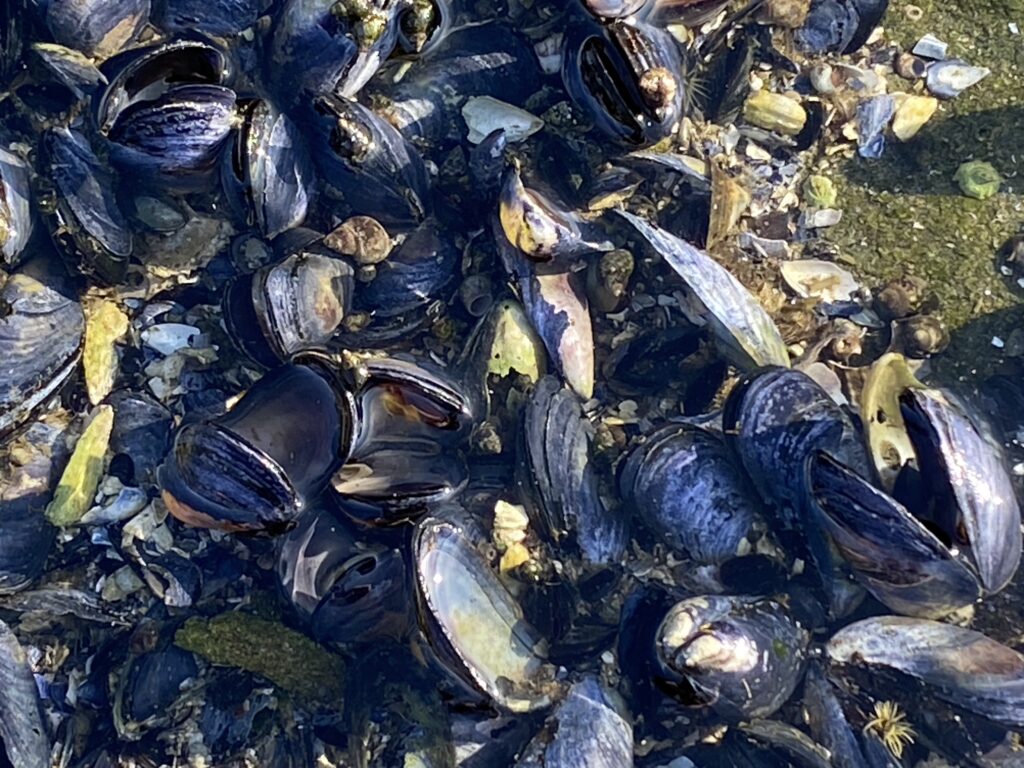
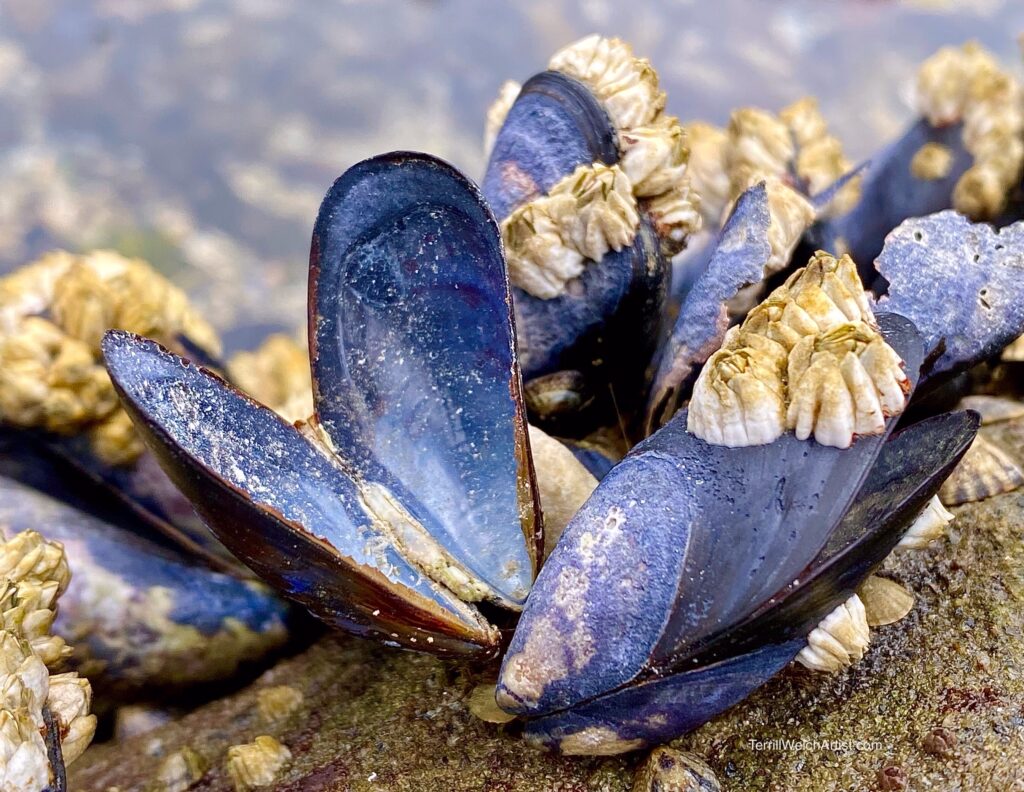
This week on Tuesday, January 21, 2025, I followed through in my commitment to go closer in my sea floor landscape series. I had several reference options and decided on mussels as my subject. I gathered together a few images from my observations, some from as recent as this week. There are hours and hours of pleasurable meanderings and sitting and observing behind this selection that spans a period over the last ten months.

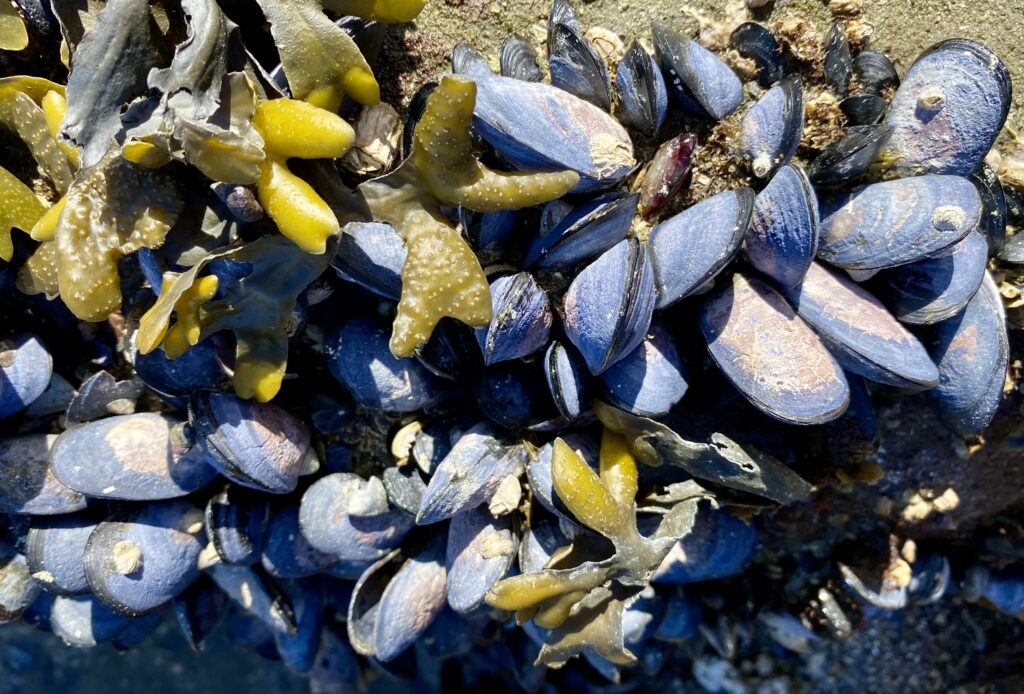
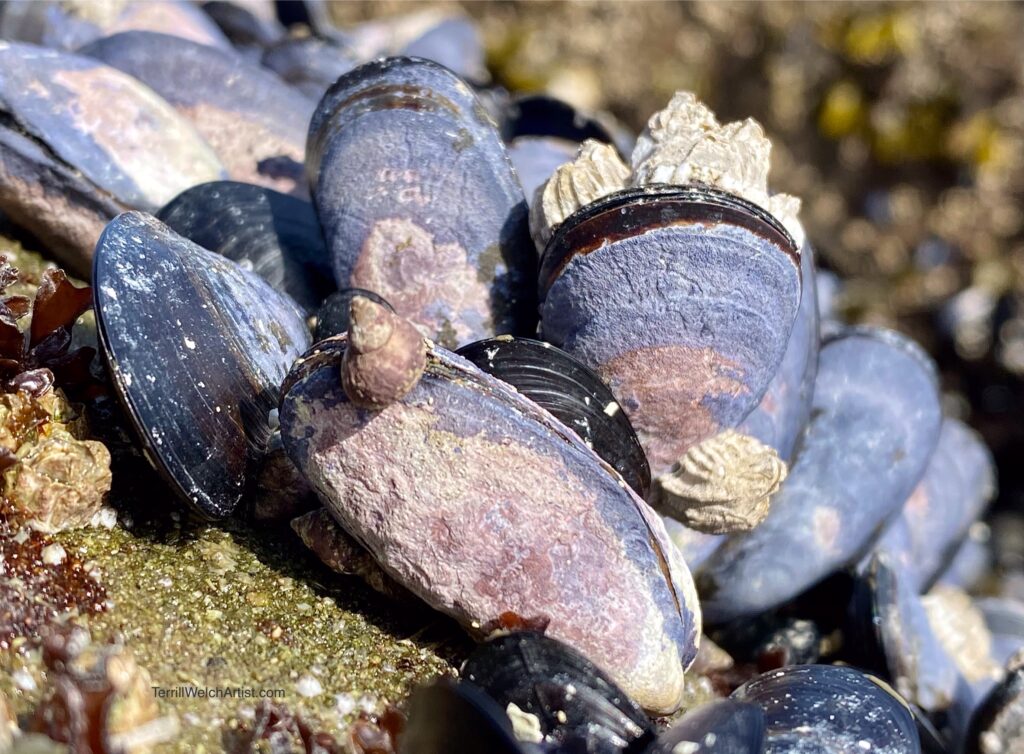
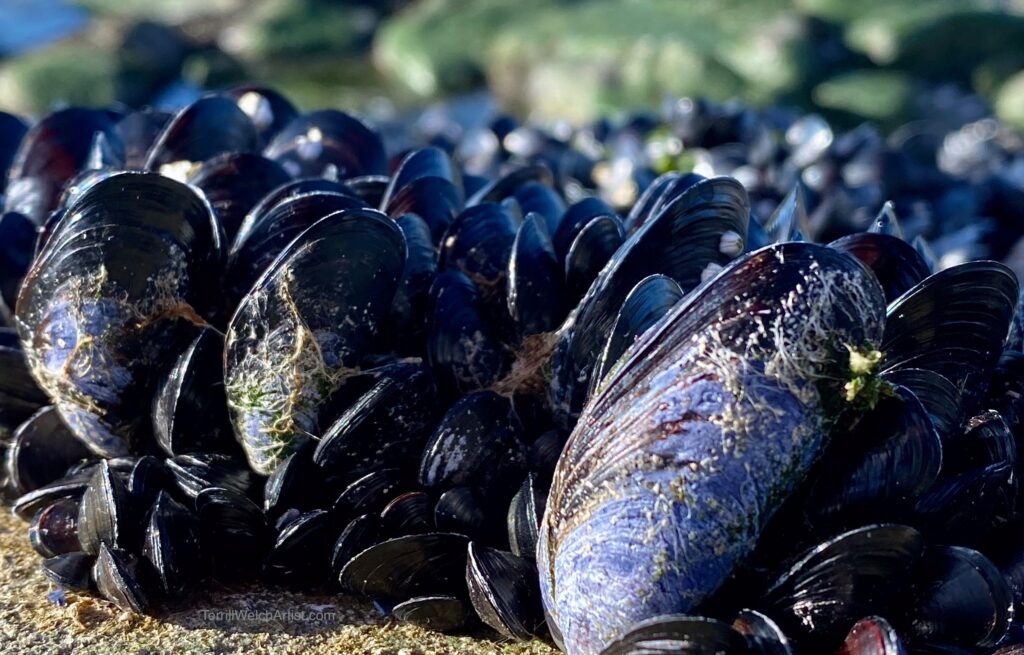
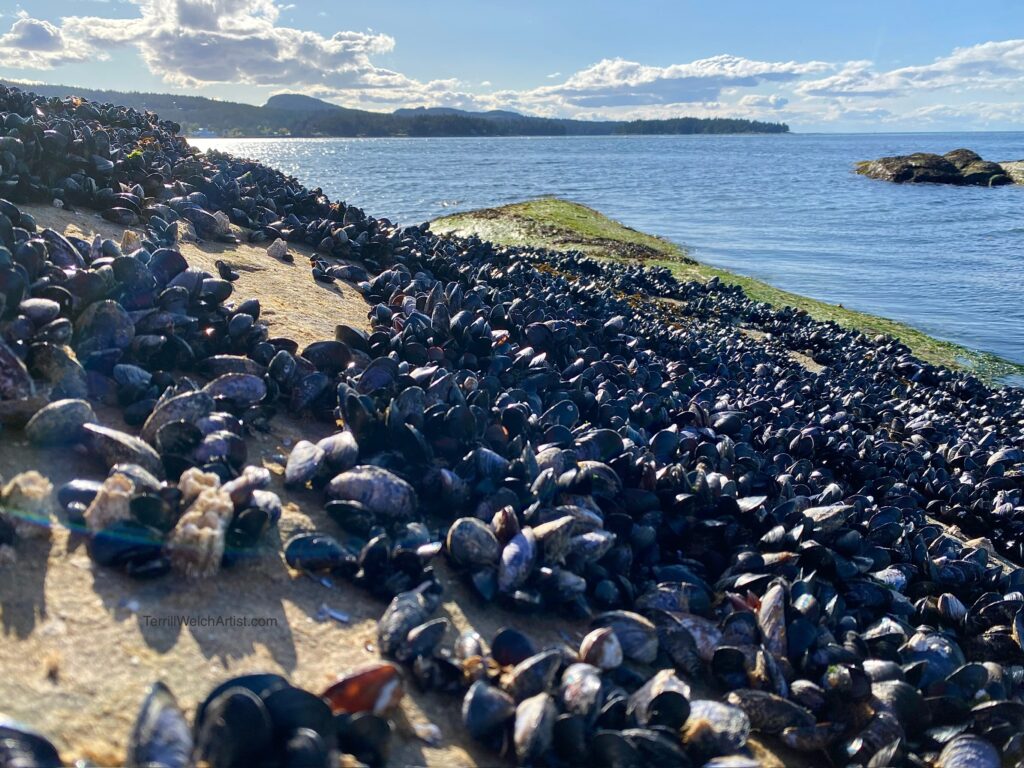
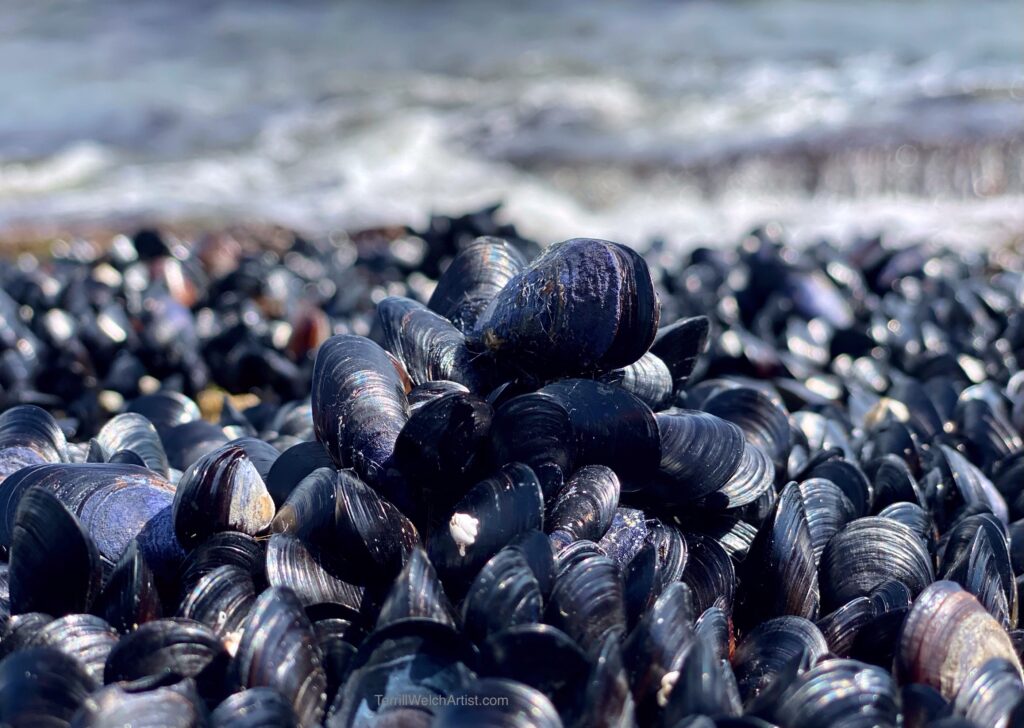
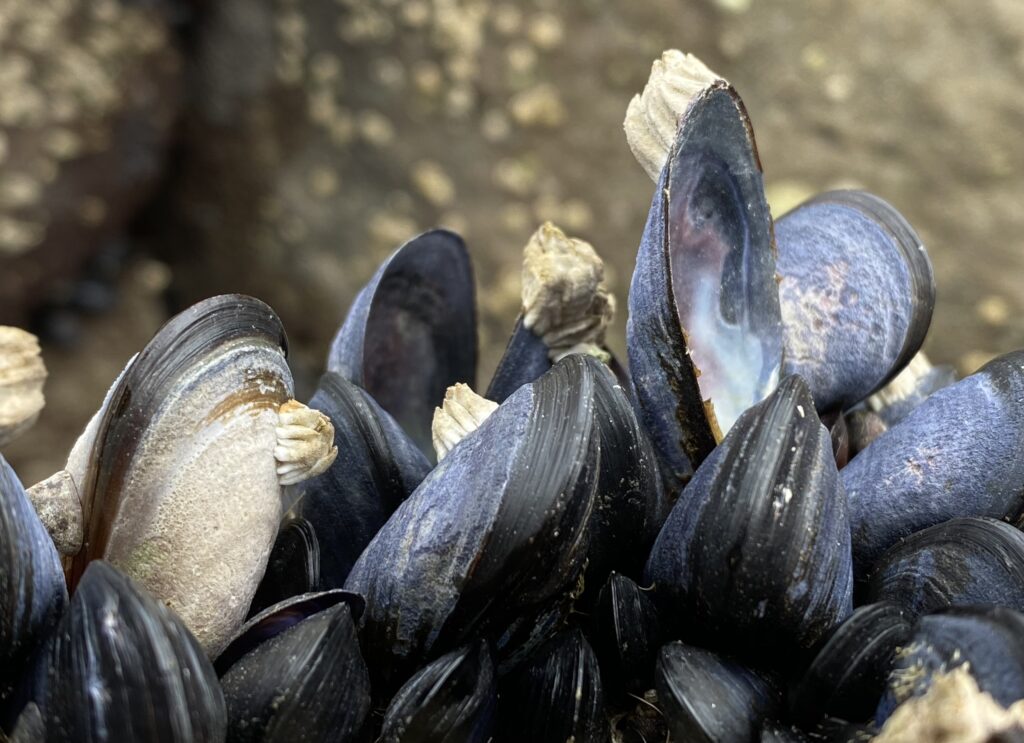
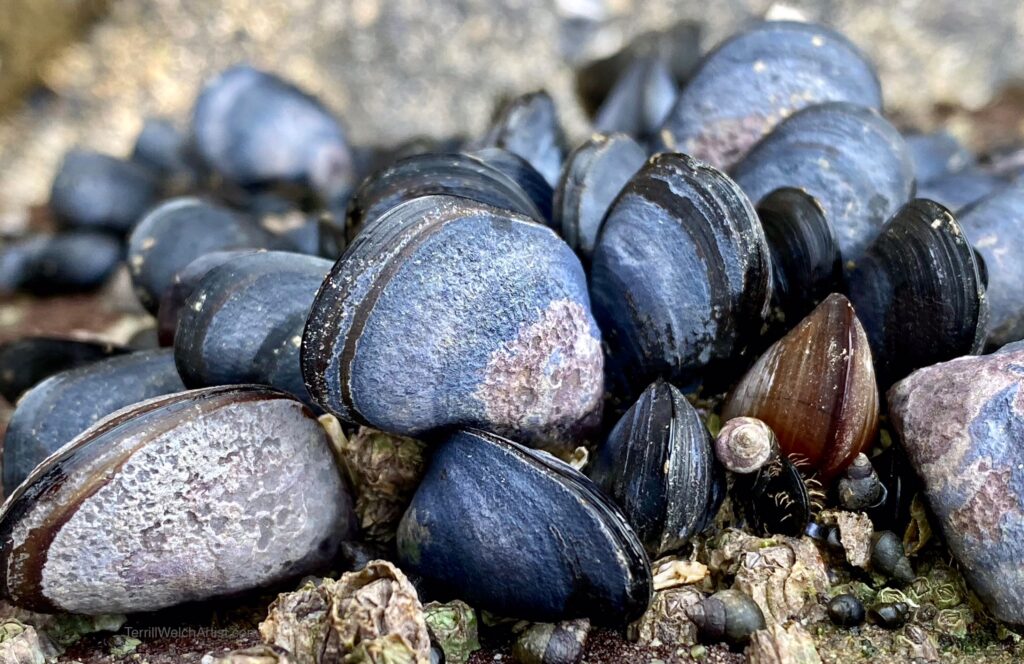
In the end, I decided to pull from this image from the beginning of June as a primary source of inspiration. It is the outside reef along the Strait of Georgia in the Salish Sea at Reef Bay.

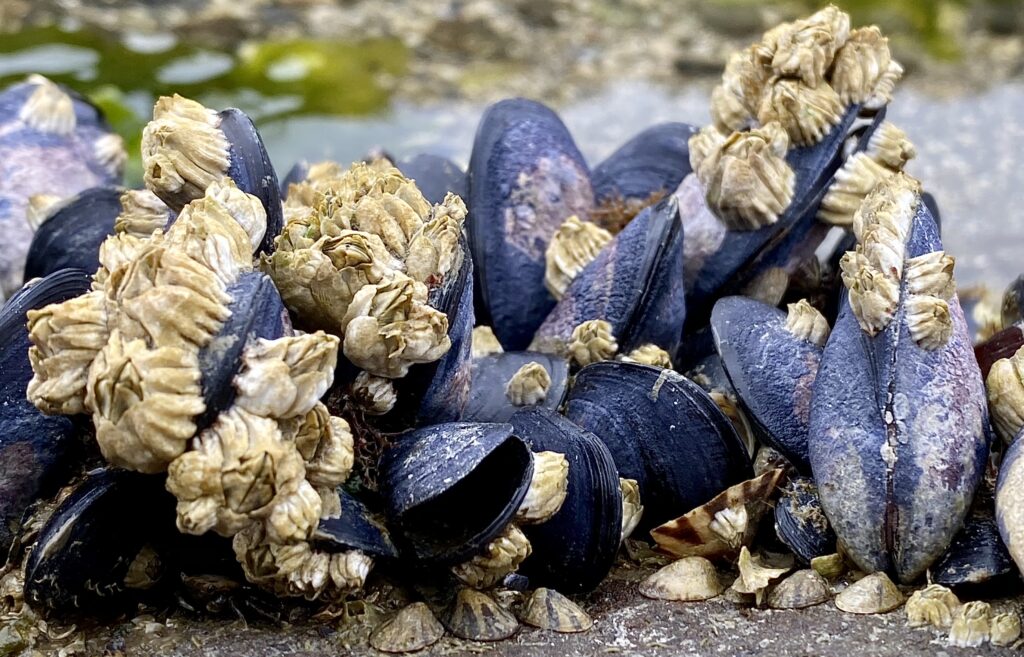
I can still feel the sun on my back and the sound of the rhythmic wash of the sea over the mussels that brushes the salty air towards me as I crouch low to the barnacle-covered sandstone.

I decide on a close intimate view and begin to shape it onto a 12 x 10 inch acrylic red ground. 

The darks must go in first on this one. Even then, it will be a challenge to hold them to the end and round the forms while still keeping the life of the work.

The painting is blocked in swiftly on the small canvas.

I settle in painting while moving the easel around the studio, up onto the kitchen area and then around that room several times to stay out of the direct bright low midday winter sunlight. It didn’t seem to matter much. I used the adjustments as visual breaks and kept painting. The whole process from beginning to end took only a couple of hours.

I separate out and frame just the still shiny and wet painting to share to my social media followers along with my artist notes, as is my usual practice.

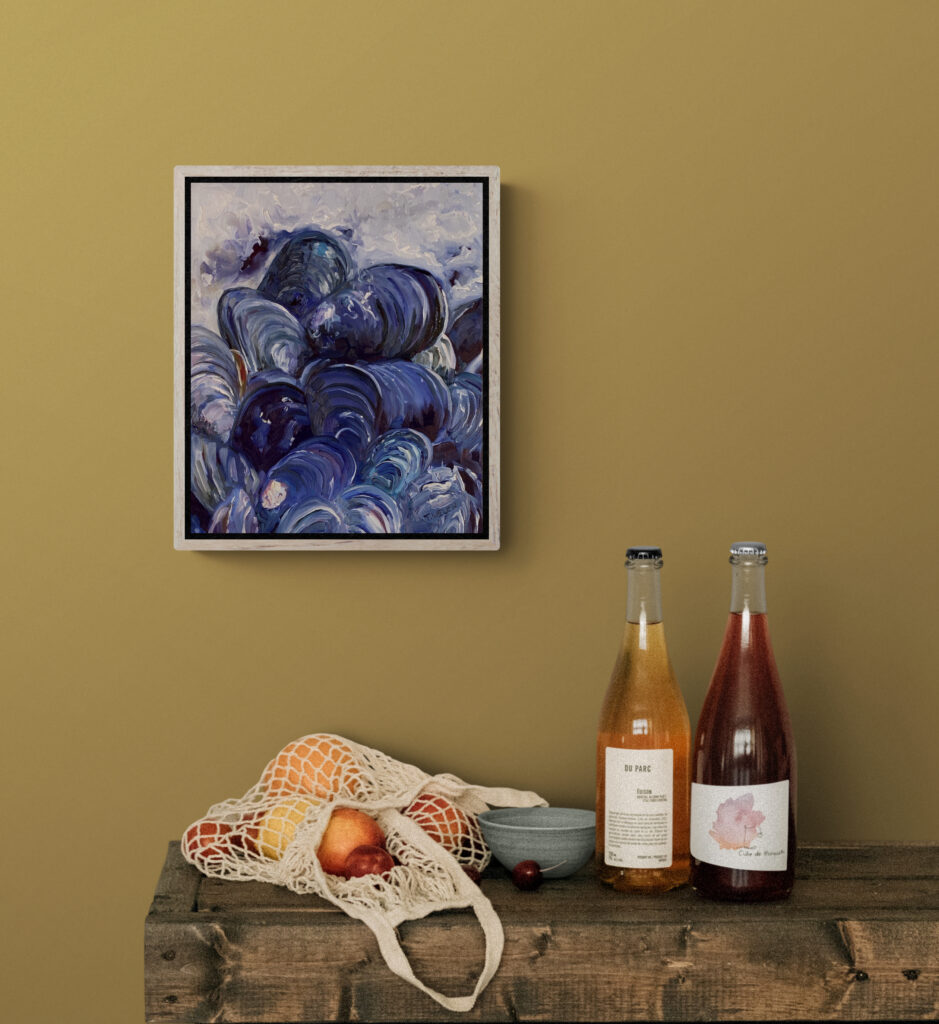
“Mussels and Waves” by Terrill Welch, 12 x 10 inch walnut oil on canvas.

Artist notes: Soft waves wash over the mussels and recede and then wash forward again to the tune of the Salish Sea. Sun sparkles like tiny bells of joy off the wet mussels. I am building inner peace, wellbeing and above all resilience. This unassuming painting is my protest against our collective darkness.

A significant U.S. art collector of my small paintings inquires and then purchases the painting the next morning. This is her comment that I share with her permission:

I really fell in love with this one.  Even without reading your description, I understood the painting immediately.  Somehow I connect into your spirit so easily and I am thankful for such a gift.

There is no greater honour than having the stewardship of one of my paintings be taken up by an art collector. However, the best and most significant piece of this feedback is knowing that my intention for the work reached through to the viewer.  

I now have the edges painted (and those of five other recent works) while I hustling to get this one ready to ship before February 1st and the risk of a 25% tariff being proposed by the new U.S. administration. 

If this happens, it may possibly be the last painting of mine that is imported for a while. We shall see. Yes, sales are not everything as an artist. That said, I am a full-time independent artist with an art business that brings in revenue for living expenses and my continued education. This does not drive or even particularly influence my creative output… but it does fund it. Thankfully, the last few years have been reasonably good. There are no immediate concerns for now. 

Let’s take one last look at this small study in a digital room view provided by Canvy before it is sent off on an adventure of its own!

Now, I am off to work on my contextual study for the week while painted edges dry.

Yes, this is still one of my least favourite painting task but it does get easier as the years go by.