Searching for lost and soft edges


When we see, we see around corners because of our rapid eye movements, our moving feet and bobbing head… and because we touch things.

Tuesday’s post “Seeing and Creating” talked about how the brain builds a visual field using rapid eye movement to create the image we are seeing. Some of the information that the brain uses to build an image comes from a history of spatial measurements that we have gathered through touch.

Seeing takes more than our eyes. We must learn spatial relationship, specifically our spatial relationship to other objects. We discover how to see where things are through practice using our hands and feet to touch and move around our world. Babies reach for our faces. Children will crawl, climb, run and jump with varying degrees of success as their brains and bodies learn to coordinate the distances of time and space. Our brain gathers and reuses these measurements in combination with information received from our eyes to provide context and relational information about what we are looking at. This complex relationship of gathering and building our visual field happens constantly and rapidly. Most often we are not even aware of the process.

However when we are creating it is helpful to understand and consider this information in our work. Some of our work in building a visual field will happen intuitively.  In fact, many situations a lot of our work in building a visual field will happen intuitively. We won’t know why we at first place a certain word in a particular sentence or why we paused the music on that particular note or why we made that particular mark off on the left side of the page or why we decided to include a particular boulder in our photograph. Mostly we just do what we do.

We can strengthen our work by increasing our conscious ability to build a visual field. A current practice of simplifying photographic images through noise reduction and sharpening and taking out what is not adding to the image is one way to play with how the visual field is built in the photograph.

Practices of adding, leaving or taking away in our creativity are not absolute creative positions but a tension we hold during the process of creating. It is in searching for lost and soft edges that I find I can most consciously building a visual field in my photography, painting and writing.

One tool or exercise we can use is to make marks or write words around your desired subject until it “appears” in your work. This helps us discover what clues or cues in the surrounding area are supporting our ability to see. In photography I do this by placing my desired object in various off-centre relationships in the frame. I change the height I take the image or the distance from the subject and so on.

Sprout Question: How do you know when less is no longer more?

Note: Here is a great reference I discovered as part of researching for today’s

The Senses of Touch: Haptics, Affects and Technologies by Mark Paterson (2007)

Also here is an online article that is also helpful – Eyes and Hands: The relationship between touch and space http://people.exeter.ac.uk/mwdp201/space.html

A question I can not answer is how people without use of hands or ability to walk develop spatial relationships in building their visual field. Does anyone know the answer or have a resource?

© 2010 Terrill Welch, All rights reserved.

Liberal usage granted with written permission. See “About” for details.

Purchase photography at http://www.redbubble.com/people/terrillwelch

Creative Potager – where imagination rules. Be inspired.

From Mayne Island, British Columbia, Canada

Seeing and Creating

“Bee in salal blossom” View and purchase full resolution image here.

Yesterday, I discovered a bookmark in my memory that gave rise to a set of questions, when I came across some notes from May 16, 2007 about building the visual field that I had made in an art class taught by Glenn Howarth. The following questions arise from my musings about these notes and the use digital and photoshop tools to create images.

What is this passion we have for cleansing images of anything less than perfect?


Can it possibly damage our ability to trust our viewer to see?

Let me explain, as best I can, without taking us too far down “the science of seeing” rabbit hole. When we “see,” the brain needs to imagine most of our reality through a system of expectation. This is because the human eye has only a 15 degree visual arc of acuity or sharp high-resolution colour visual field. We commonly believe that we “see” everything as if it were in this a 15 degree visual arc called fovea vision. This is not true. Our human eye must build a visual field using rapid eye movements and short-term memory so the brain can “create” the image we “see.” Most of the rest of our visual field has about 50 percent acuity and 50 percent colour perception with the far reaches of our peripheral vision seeing only movement in black and white.

Photographs like the bumble bee in a sala blossom image above hold more information in acuity than our eye actually can see at one time without using rapid eye movement to create the image for us. You may be able to notice how you look at this image and be able to catch the eye movement between the bee and the blossom both of which are in sharp focus and then notice how you can “see” the whole picture that is in focus.

Rapid eye movement happens very quickly, at about 3 times a second, and is something we are not consciously aware of, so if you don’t notice there is a reasonable explanation.

If you want to know more, I found this youtube video “Human Senses Touch and Vision” http://www.youtube.com/watch?v=S2sWE0qaOjg&feature=related About 3 minutes in they explain and show how our eyes and brain build a visual field.

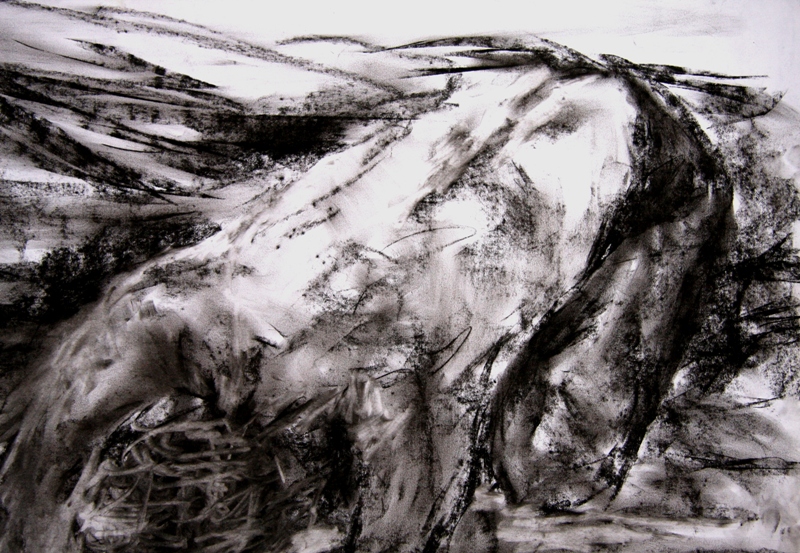
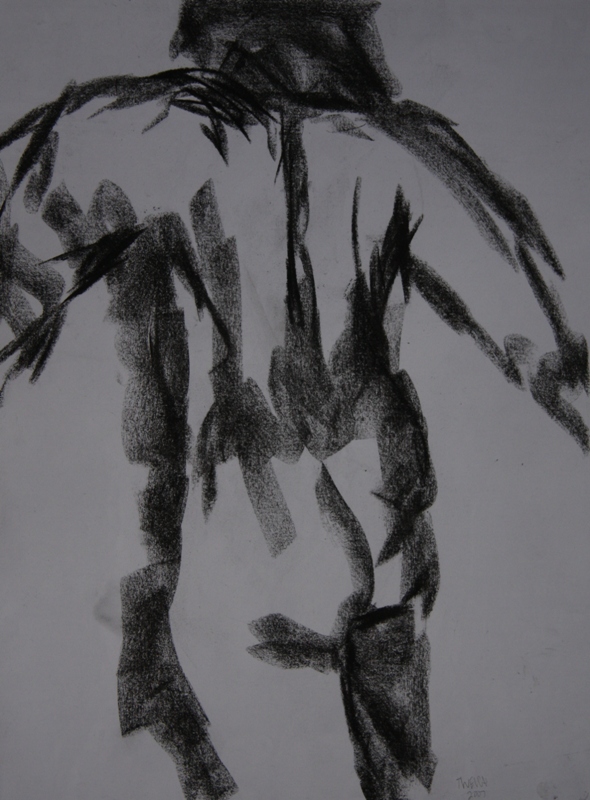
Because our brain must  “create” a sharp, coloured field of vision, it has a selection process for seeing. We fill in blanks and leave out information that history tells our brain is not relevant both consciously AND subconsciously. I am fascinated with the impact this has on our creativity whether it is visual, written or auditory. Here is a series of my quick charcoal sketches from 2007.

wooden forms for making shoes

I did these sketches while purposefully “seeing” using my sight beyond the 15 degree visual arc of acuity by paying attention to what is in my peripheral visual field allowing the hand to record the image with as little as possible interference from my fovea vision.

male nude sitting

This lesson stuck and I continue to create my work while exploring this way of “seeing” or consciously experiencing the world.

reading

It is not too much of a stretch then, to consider that when we create an image that has high-resolution colour and sharp focus over a larger area we are doing the work of the viewer’s brain “to see” or create that image. If we go the next step and take out “irrelevant information” we are also choosing for the viewer’s brain what is important to see. Your created work has become a powerful editing filter for the viewer. To some extent this is what happens anytime we create. The question I pose is more about how much of a filter is too much filtering and can it actually interfering with the viewer’s ability “to see” what we want to express? And can we hold the viewer’s attention when we do the work of the viewer’s brain to build most their visual field when experiencing our work?

Could it be that the gaps in our expression are of as much interest to the viewer as the sharp clarity? Like say this image….

finding the figure quickly

Sprout Question: How does your way of “seeing” impact your creativity?

On Thursday, I am going to explore further how our human visual system must learn to create spatial relationship between objects through touch and memory and what ways this learning may relate to our creativity.

© 2010 Terrill Welch, All rights reserved.

Liberal usage granted with written permission. See “About” for details.

Purchase photography at http://www.redbubble.com/people/terrillwelch

Creative Potager – where imagination rules. Be inspired.

From Mayne Island, British Columbia, Canada

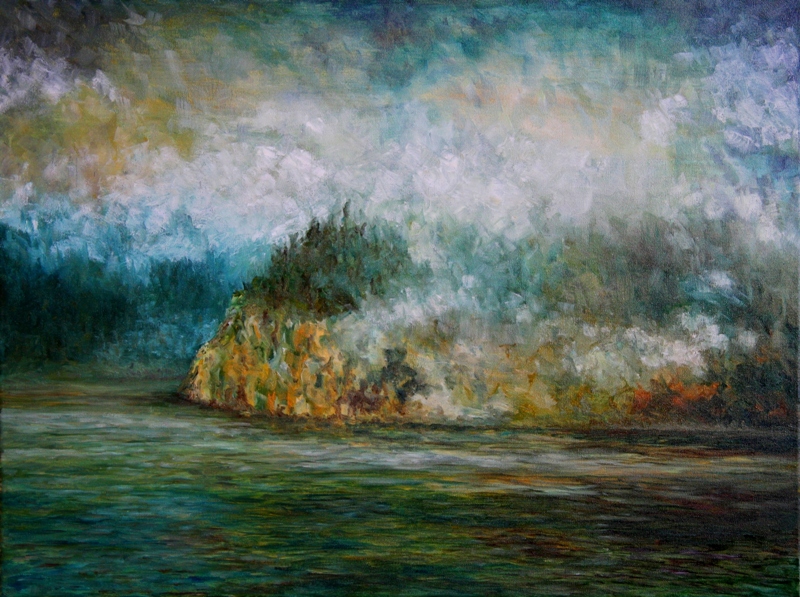
Winter Sun Oil Painting

There is something about the late dawn of winter sun, a bruised heaviness that seeps across the sky. I started this painting thinking it might be abstract and lighter, maybe even cheerful, but my subconscious seems to know where to take the brush. Though the quick marks of paint give impressions rather than detail… it is clearly not an abstract painting. And though colourful, I am not sure it is cheerful. In fact, I’m sure this painting is deeply melancholy with bittersweet recognition that the sun is rising… lifting, lifting, lifting us into another, and possibly, better day.

I started by brushing water (it would have been spirits but I’m using water miscible oils) and linseed oil onto the canvas. Then I began adding colour, an underpainting of sorts…

I never let it completely dry but kept working the paint into the canvas as I added more colour.

Using a good sized brush (10) I swished the sky and clouds on and softened them with a cloth and feathery brush. Then I flipped the rocks and sea loosely into place and left them like that.

I came back yesterday and tidied up a bit … as I listened to kd lang’s performance of Leonard Cohen’s “Hallelujah” at the Canadian Songwriters Hall of Fame induction of Leonard Cohen in 2006.

You might want to do that too as you take in “Winter Sun”

18X24″ by 1 3/4″ water miscible oil painting on 100% natural cotton canvas

There are a few more small edits which I will make and then replace this last image, but it is close enough to complete to share with you.

Sprout Question: What has been your latest personal discovery through your creativity?

© 2010 Terrill Welch, All rights reserved.

Liberal usage granted with written permission. See “About” for details.

Purchase photography at http://www.redbubble.com/people/terrillwelch

Creative Potager – where imagination rules. Be inspired.

From Mayne Island, British Columbia, Canada

Whole Body Creativity

“There are painters who transform the sun into a yellow spot, but there are others who, thanks to their art and intelligence, transform a yellow spot in the sun.”

– Pablo Picasso

What does it mean to use your whole body in your creativity? The answer is likely related to your awareness and ability to converge all the information from your five senses. For example in the image above, I wanted you to hear the waves. I hope just for a moment you can smell the sea and feel the sand under your feet with a soft breeze on your cheek. I want you to experience a moment of play and confidence through the Canada goose strutting in the waves.

What you don’t know is that this goose just chased a sea otter back into the sea. I am not sure what the scrap was about but it was fascinating hear and to watch.

However my photos are poor. I was too far away and I couldn’t get close enough fast enough. Yet, I somehow wanted to catch that excitement and triumph with the goose, and the waves and the sunlight. The goose in the shallow waves is my attempt to turn a yellow spot into the sun.

Sprout Question: Tell me about a yellow spot you have turned into the sun?

© 2010 Terrill Welch, All rights reserved.

Liberal usage granted with written permission. See “About” for details.

Purchase photography at http://www.redbubble.com/people/terrillwelch

Creative Potager – where imagination rules. Be inspired.

From Mayne Island, British Columbia, Canada

Summer is coming

Creative Potager’s summer blog schedule begins the first week of May

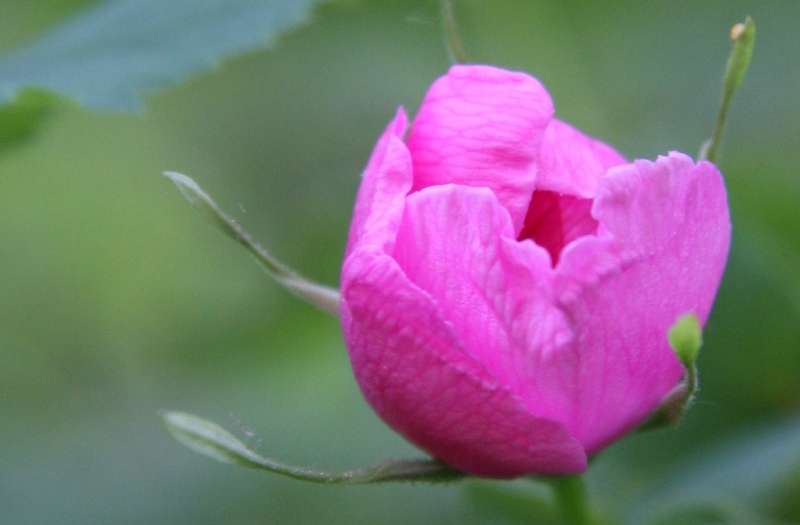
budding possibilities - wild rose

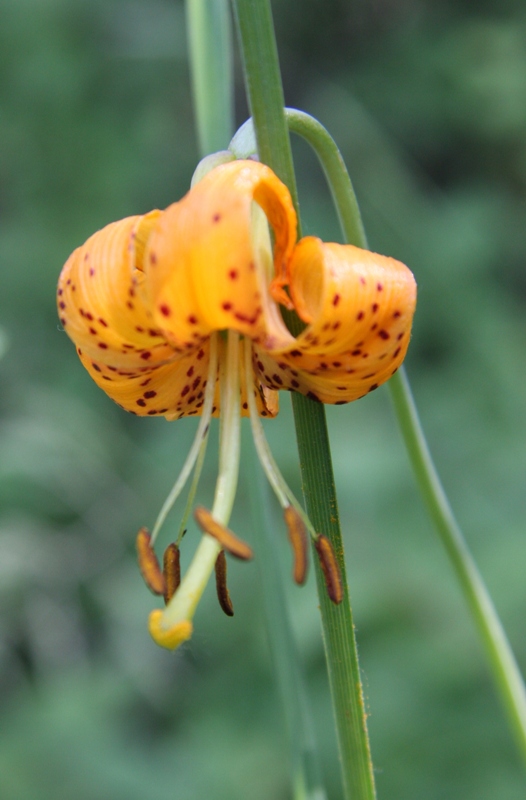
The first post for Creative Potager was December 27, 2009. I have been posting a blog Monday to Friday, except for power outages caused by windstorms battering our little island in the Pacific Northwest. Including today, there are 83 posts each with their own sprout question. There are 1,165 comments documenting our creative conversations and 8, 596 times you have come to visit. Creative Potager has become an enjoyable habit to wake up to during the week where I say to myself “what shall I post today?” However summer is coming. I yearn to be outside in the garden, tramping the trails and painting on site rather than inside snuggled up to my laptop. Like the summer wild flowers in this post, I bloom best in untamed places.

each day is precious - wild tiger lily

So after giving it some serious thought, I am changing my posting schedule to twice a week on Tuesdays and Thursdays from the beginning of May until the beginning of September. I may on occasion post an additional submission. But these will be bonus or value-added posts rather than an expectation.

petite lady slipper

I am hoping you can live with this change and that we both will benefit from my scrambling around in the valleys and on the hills and down the beaches of Mayne Island and afar. I am hoping that we can still have rich and engaging conversations between posts even during the long days of summer. I am hoping that the sprout questions will be juicy enough to keep us inspired for the in-between times. I am hoping that you will trust that winter will come with its short days and unpredictable weather and we shall again be glad for our Monday to Friday sprout conversations fueled by the fruits of summer experiences.

drops of rain on white fawn lilies

Please let me know what YOU are hoping and what you think of this change – because most of the fun of this blog is my conversations with you!

Sprout Question: Does your creativity have a summer schedule?

© 2010 Terrill Welch, All rights reserved.

Liberal usage granted with written permission. See “About” for details.

Purchase photography at http://www.redbubble.com/people/terrillwelch

Creative Potager – where imagination rules. Be inspired.

From Mayne Island, British Columbia, Canada
A Study

After yesterdays eclectic group of photos, today is a sparse offering.

These lovely little canvas prints from my East Point Images I shared with you in February the “Simplicity” post. They arrived in yesterday’s mail. I am starting to gather together material for my September solo exhibit and these are going on a particular spot above the books in the library which is hard show.

Like many people I feel physically, emotionally and spiritually naked when I bring my work into the public. This is particularly so do a reading from my writing such as on this coming Saturday or when I have my canvases on the wall in such as the September show. Yet, I have learned that it is a part of “the business of creativity” which must be navigated. So vulnerable or not, the show will go on…

Sprout Question: How do you prepare for a public viewing or listening of your work?

© 2010 Terrill Welch, All rights reserved.

Liberal usage granted with written permission. See “About” for details.

Purchase photography at http://www.redbubble.com/people/terrillwelch

Creative Potager – where imagination rules. Be inspired.

From Mayne Island, British Columbia, Canada

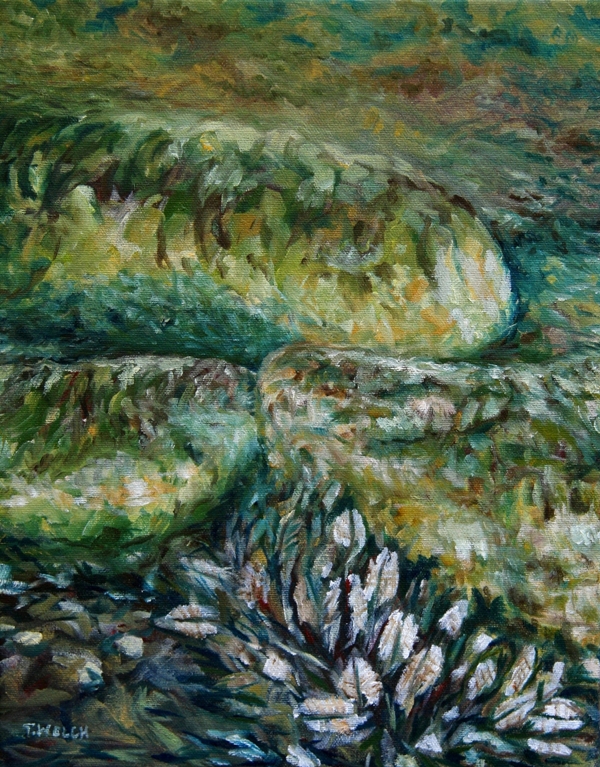
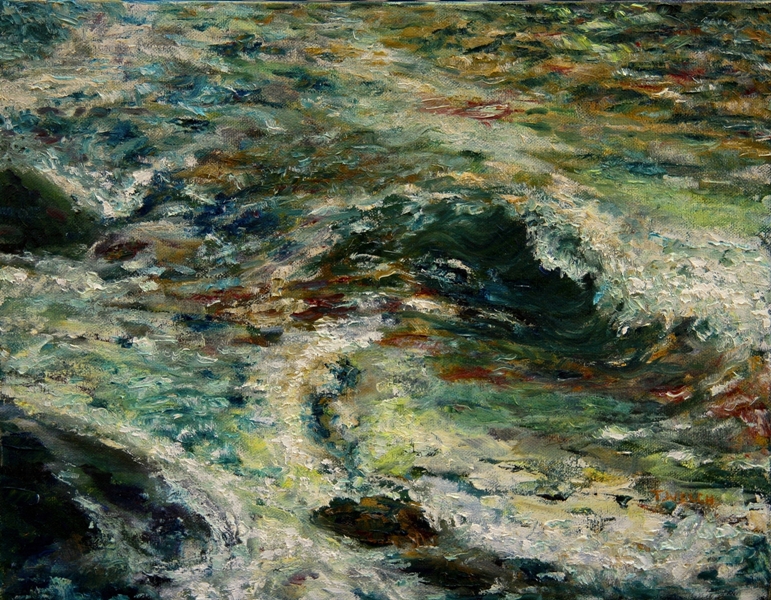
rocks and mussels

"rocks and mussels" oil painting by Terrill Welch

11X14 by 1.5 inches water miscible oil painting.

View full resolution image here.

“rocks and mussels” is inspired by a piece of remote the beach at Point No Point on south western Vancouver Island. It is a rugged area close to the end of the Strait of Juan de Fuca and open sea. The rocks are of mixed texture and form. Some are large hard slate black stones rubbed smoothed from the surf and others are smaller, rounded and warm ochre and cream in colour. Seaweed seems to drape themselves over either. Though the when you look closely mussels appear to like the darker rocks. But since they are sometimes clustered together it is often hard to tell.

I have been coming to this area for over twenty years, sometimes for lunch and a stroll through the trails and other times to stay for a few days in one of the cabins. The last time I was there was in December 2009 for our honeymoon.

I had set a challenge when painting this piece to be able to paint the darker seaweed on top of the lighter rocks. However when I look closely, the light was the dark seaweed just at the crest of the rocks. Which made much more sense to me but the painting was still very challenging. I wanted us to feel like we were the sea about to wash over the mussels, the rocks and the seaweed. I also came to understand that the rocks are often washed away from the bottom quicker than the top as the sea pushes its way over the sand and withdraws back into itself. This leaves the stones with overhangs where there is no sand and the shadows seep in.

At some point this painting took on a life of its own and became separate from my reference images and slide down a path that was more about remembering how it felt, the smell of seaweed, the salt air, and the roar of the surf on distant rocks with the sun on my back lifting the mist off the trees on the bank above me.

Sprout Question: Have you ever discovered something different than what you thought you knew while creating?

© 2010 Terrill Welch, All rights reserved.

Liberal usage granted with written permission. See “About” for details.

Purchase photography at http://www.redbubble.com/people/terrillwelch

Creative Potager – where imagination rules. Be inspired.

From Mayne Island, British Columbia, Canada

San Francisco 1906

Well it is Friday and I sometimes like to do something a little different – maybe a wee bit on the lighter side for the last day of the week. Today I have special surprise sent to me by a friend here on Mayne Island. I have a short film taken from a street car going down Market Street in 1906 just four days before an earth quake destroyed the area. There are cars, people, horse, teams of horses and this amazing interaction with the street car as it moves along.

The video is posted in a gazillion places on the web with this paragraph but I could not find a definitive source to credit.

This film, originally thought to be from 1905 until David Kiehn with the Niles Essanay Silent Film Museum figured out exactly when it was shot. From New York trade papers announcing the film showing to the wet streets from recent heavy rainfall & shadows indicating time of year & actual weather and conditions on historical record, even when the cars were registered (he even knows who owned them and when the plates were issued!). It was filmed only four days before the quake and shipped by train to NY for processing.

If anyone has a good source link, let me know and I will add it in.

Sprout Question: If you could time travel where would you want to go and in what year?

© 2010 Terrill Welch, All rights reserved.

Liberal usage granted with written permission. See “About” for details.

Purchase photography at http://www.redbubble.com/people/terrillwelch

Creative Potager – where imagination rules. Be inspired.

From Mayne Island, British Columbia, Canada

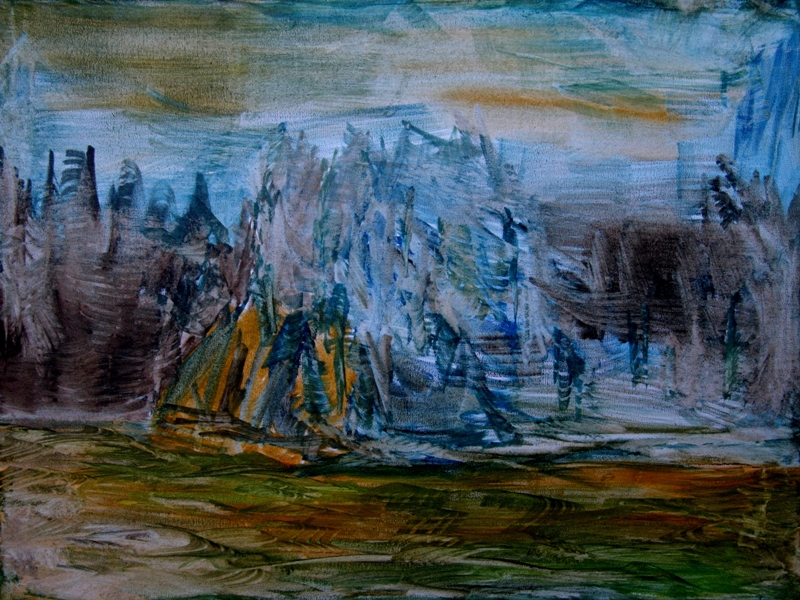
More Painting

Power outage lends itself to another day painting

We had another power outage (due to winds knocking over a huge arbutus tree on Village Bay road at 1:40 am). I awake at 7:00 am. The power is still out. I decide to see if I can find a coffee before doing anything else. Ah yes! The bakery is serving coffee using generator power. Armed with to-go thermos cups filled with black gold, I return home and prepare our usual fruit, yogurt and grain cereal for breakfast. With few alternatives, I settle on my favourite activity of the moment – painting.

The wild underpainting had dried on my 18X24 by 2 inch canvas.

I go to work. At one o’clock this afternoon the power comes on again and I am ready to take a break and share the progress with you.

There is more to do but it is a good start.

Sprout Question: What is your creative activity of choice when the power goes out?

Note: My apologies for being late with today’s post but you will have to take it up with the wind and the arbutus tree… they have let me know they are taking full responsibility for the delay.

© 2010 Terrill Welch, All rights reserved.

Liberal usage granted with written permission. See “About” for details.

Purchase photography at http://www.redbubble.com/people/terrillwelch

Creative Potager – where imagination rules. Be inspired.

From Mayne Island, British Columbia, Canada
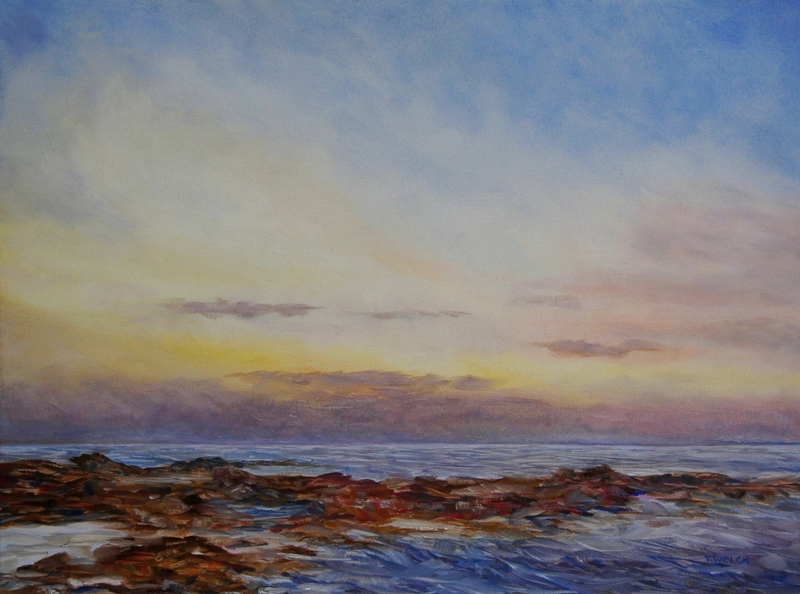
Evening Sea Oil Painting

The sea hag swished her skirts then drapes them elegantly over dark rocks. Embracing the shore she pauses – then glides away, only to return again. Ah what a temptress. With the last light of a sunset sky caught in her folds, she lays the sea before us.

“Evening Sea” is painted on 100% natural cotton, 11X14 inches by one and a half inches.

View full resolution image here. (much more detail)

I do not have any process shots of “Evening Sea” beyond the initial underpainting that I shared earlier. It is one of those times that I settled in and painted until I was done and then fussed a bit around the edges the next day. This doesn’t happen often when painting but it did this time. I still look and see something that I might want to change but the roll of the sea is caught in the patterns of reflection and the movement is trapped in the paint showing through from underneath. So I don’t touch it. I leave it and watch the sea in its evening beauty.

Sprout Question: Can you tell us about a piece you created with ease?

Note: If anyone has any tips for photographing oil paintings, I am all ears (or eyes). They are much more difficult to get “true” then my watercolour paintings and I’m struggling a little with it – okay I’m struggling a lot (it took about 20 shots to get this the way I wanted it) but a person has to start someplace.

© 2010 Terrill Welch, All rights reserved.

Liberal usage granted with written permission. See “About” for details.

Purchase photography at http://www.redbubble.com/people/terrillwelch

Creative Potager – where imagination rules. Be inspired.

From Mayne Island, British Columbia, Canada